
Do roof shingle coatings actually work on asphalt shingles?
The short answer: most don't, and the industry's top authorities say you should avoid them. Both ARMA and GAF strongly advise against applying any field-applied coating over installed asphalt shingles. This isn't a fringe opinion. It's the official position of the Asphalt Roofing Manufacturers Association, which represents the majority of asphalt shingle manufacturers in the United States.
Here's what the evidence shows about roof shingle coating on asphalt roofs:
- Moisture damage. Asphalt shingles are engineered to breathe. A non-breathable film traps moisture vapor inside the roofing system, leading to deck rot and mold growth.
- Shingle curling and cupping. Coating liquid cures and shrinks under tension, breaking the manufacturer's adhesive seals and leaving shingles vulnerable to wind damage.
- Granule loss. The same shrinkage loosens the mineral granules that protect shingles from UV rays.
- Voided warranties. Every major manufacturer treats field-applied coatings as an unapproved modification, immediately voiding your warranty coverage.
- Code violations. State and local building codes in many jurisdictions prohibit field-applied coatings because they can compromise fire classification and impact resistance ratings.
- Unproven benefits. Marketing claims about energy savings, extended roof life, and leak repair lack credible documentation.
The approved alternative is a certified penetrating treatment, not a surface coating. Shingleroofrenewal uses Fresh Roof Green Soy Technology, which restores shingle flexibility at the molecular level without forming a film layer, preserving breathability and protecting your warranty.
What types of roof shingle coatings are on the market?
Understanding the difference between coating types helps you see exactly why most products create problems on asphalt roofs.
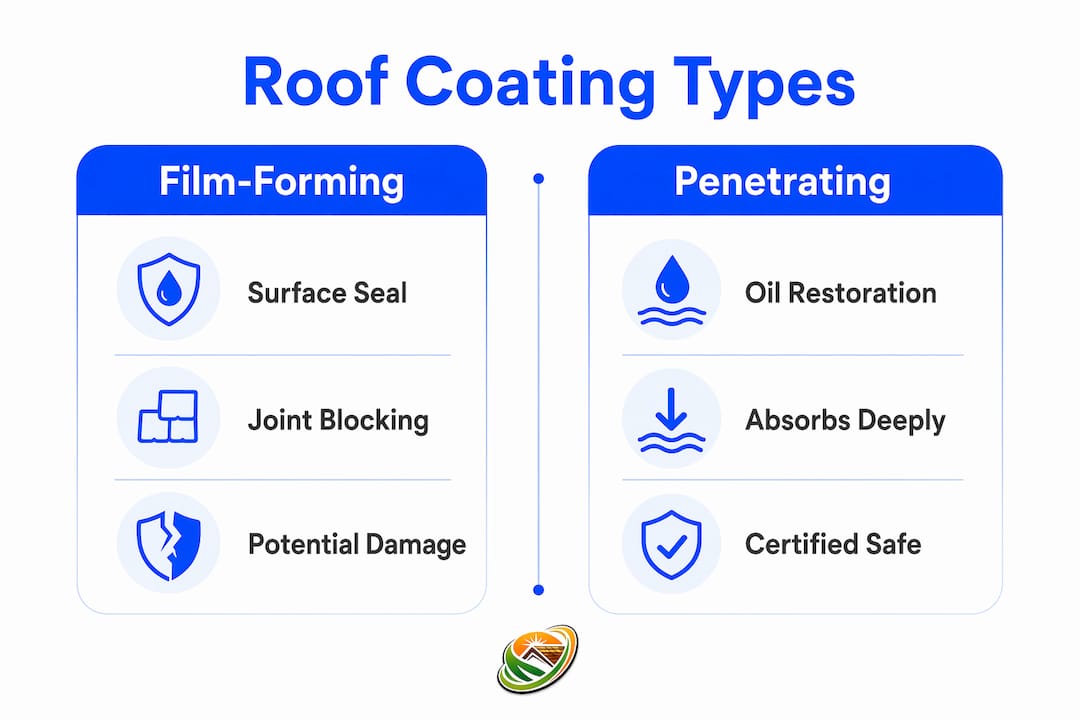
Film-forming coatings
These are the most widely marketed products for DIY homeowners. They include:
- Acrylic and elastomeric coatings. Water-based latex formulas that cure into a flexible membrane. They perform well on low-slope commercial roofs but create a vapor-retarding layer when applied over asphalt shingles.
- Silicone coatings. Excellent waterproofing on flat roofs, but compatibility with individual asphalt shingles is not warranted by most manufacturers.
- Elastomeric coatings with ceramic technology. Marketed for insulation and soundproofing benefits. Still film-forming, still problematic on shingles.
All film-forming products share the same core flaw on steep-slope asphalt roofs: they seal the joints between shingles, cutting off the drainage paths that water needs to escape and blocking vapor from venting out.
Penetrating treatments
These work differently. Instead of coating the surface, they absorb into the asphalt itself, restoring the oils that dry out over time. Products like Roof Maxx use a soy methyl ester-based emulsion for this purpose. An Ohio State University technical report on Roof Maxx noted that treated samples showed improvement in granule adhesion and flexibility, though the report used cautious language throughout, stating results "suggest" and "imply" improvement rather than confirming it. Experts and independent consultants remain skeptical about long-term performance claims.
What about ArmorRoof and ArmorGarage?
ArmorRoof and ArmorGarage market coating systems for various surfaces, including roofing applications. Like most film-forming products, their use on installed asphalt shingles falls outside what ARMA and shingle manufacturers recommend. No established "best" coating exists for asphalt shingles precisely because the shingle system itself is not designed to accept field-applied surfacings.
Pro Tip: Before purchasing any shingle roof treatment, call your shingle manufacturer directly and ask whether the specific product voids your warranty. Get the answer in writing.
How are roof shingle coatings applied, and what does proper preparation look like?
If a coating is being applied to a surface where it is appropriate (a flat commercial roof, for example), the process follows a clear sequence. Understanding these steps also helps you recognize when a contractor is cutting corners.
- Inspect the roof first. Assess shingle condition, flashing integrity, and deck soundness. A coating applied over damaged shingles will fail quickly and may hide problems that worsen underneath.
- Clean the surface thoroughly. Remove all dirt, algae, moss, and loose granules. Pressure washing is standard, but it must be done carefully on shingles to avoid accelerating granule loss.
- Allow complete drying. The surface must be fully dry before any product goes down. Moisture trapped under a coating accelerates the exact deck rot the product claims to prevent.
- Apply primer if required. On asphalt surfaces, a primer blocks oils from bleeding through and causing the topcoat to blister or delaminate.
- Apply the coating in appropriate weather. Most products require temperatures above 50°F, no rain in the forecast, and humidity within a specified range. Initial cure times typically run 12–72 hours depending on the product.
- Apply multiple coats. Most systems require at least two coats. Applying the second coat perpendicular to the first helps eliminate gaps in coverage.
- Plan for reapplication. Many coatings require repeated maintenance applications to maintain appearance and performance. Factor that cost into any budget comparison.
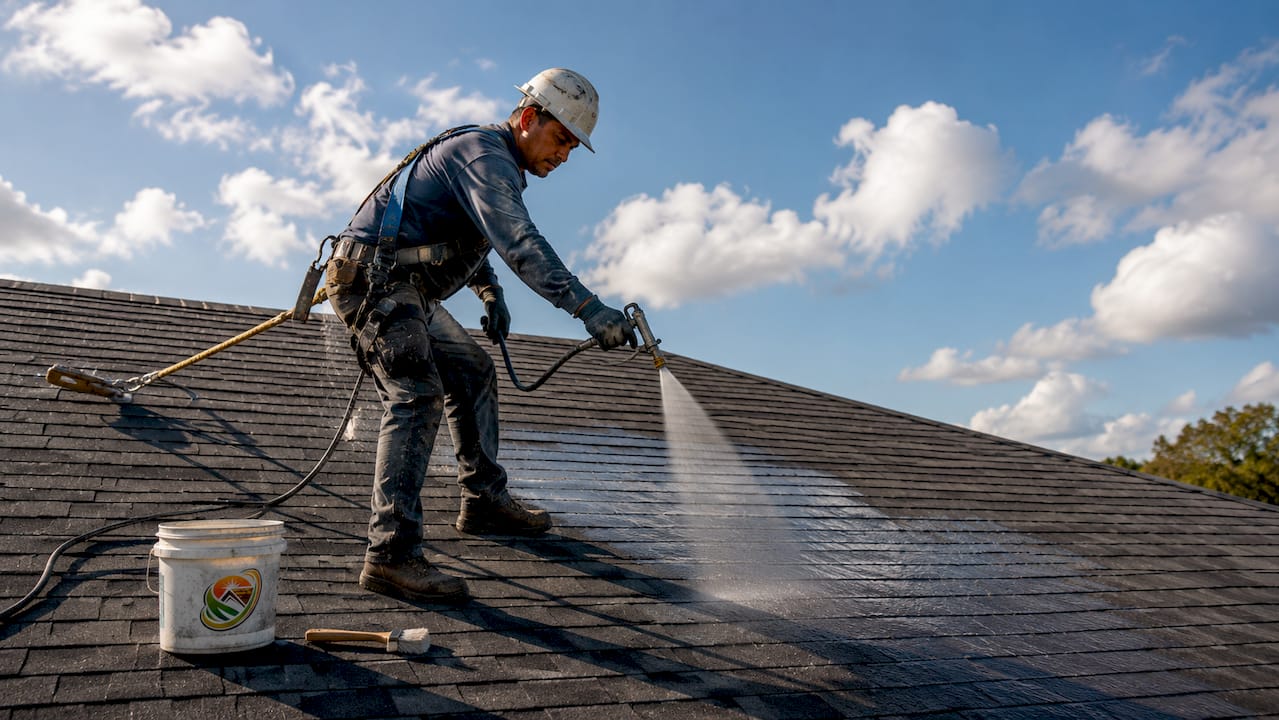
Application methods include brush, roller, and airless sprayer. Professionals use sprayers for uniform coverage. Safety equipment should include non-slip footwear, fall protection, eye protection, and respiratory protection when using solvent-based products.
Pro Tip: Check with your local building and zoning department before any coating application. The 2007 Florida Building Code, for example, addressed restrictions on field-applied coatings over asphalt shingles. Your municipality may have similar rules.
Professional treatments vs. DIY spray coatings: what's the real difference?
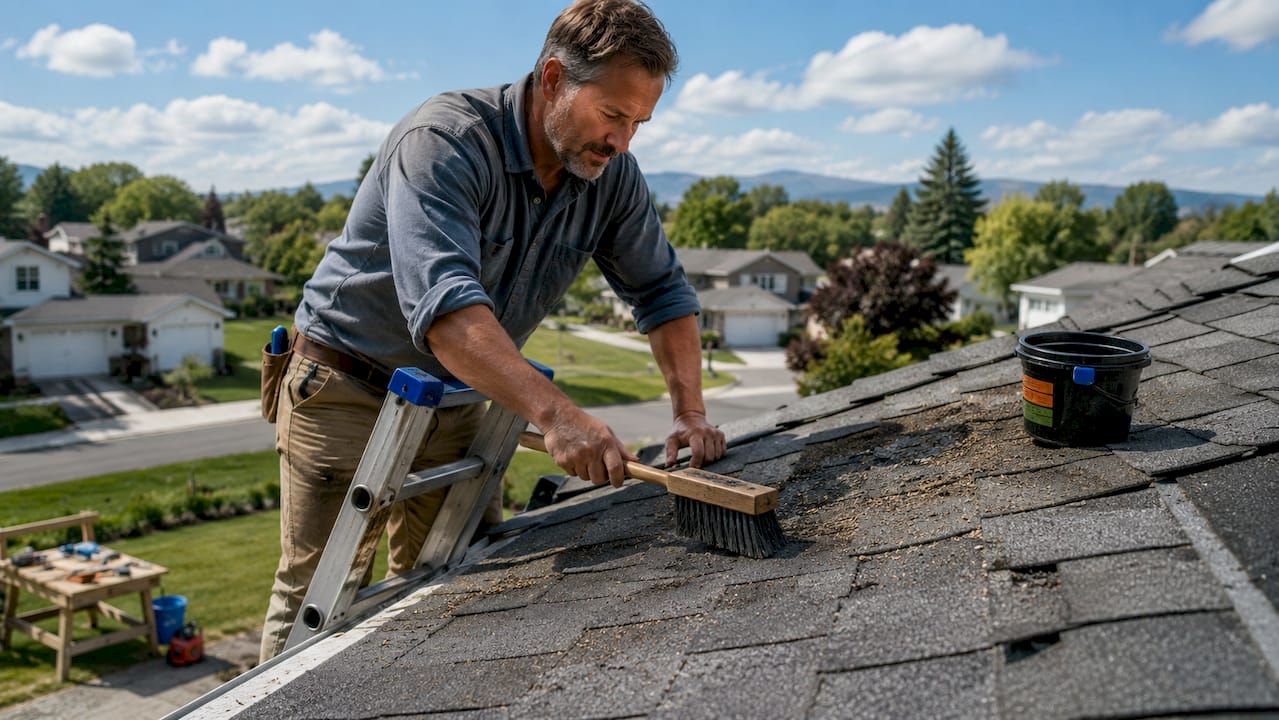
This is where homeowners most often make a costly mistake. A DIY spray coating from a home improvement store looks like a bargain compared to a professional treatment. The actual cost comparison tells a different story.
| Factor | Professional penetrating treatment | DIY film-forming spray coating |
|---|---|---|
| Application method | Certified applicator, calibrated equipment | Brush, roller, or consumer sprayer |
| Shingle breathability | Preserved | Compromised |
| Warranty impact | Depends on product approval | Typically voided |
| Moisture risk | Low | High — deck rot possible |
| Expected benefit duration | Up to 10–15 years (certified treatments) | May fail within a few years |
| Code compliance | Verified before application | Often not checked |
| Cost vs. replacement | Up to 80% savings (certified programs) | Short-term savings, long-term costs |
The homeowner who chooses a DIY coating to avoid a costly replacement often ends up paying more. Rotted decking requires full tear-off and replacement, and contractors charge a premium for the added danger of working on a structurally compromised roof. The warranty is voided the moment an unapproved product touches the shingles, and insurance claims related to coating damage are routinely denied.
Professional evaluation before any treatment is the only way to know whether your roof qualifies for a preservation approach or genuinely needs replacement.
What do ARMA, GAF, and industry experts actually say?
The industry consensus on asphalt shingle coating is unusually unified. That alone should tell you something.
GAF echoes this position directly, stating that coating over asphalt shingles can degrade the shingle and cause ventilation problems that lead to moisture buildup. The National Roofing Contractors Association (NRCA) also does not recommend coating shingles.
The consequences of ignoring this guidance have been documented. Between 2007 and 2009, Florida Power & Light incentivized 4,700 Miami homeowners to coat their shingles for energy efficiency. The program later resulted in a class action lawsuit because of the widespread damage it caused. Homeowners who thought they were protecting their roofs ended up with rotted decks and failed roofing systems.
The NIST technical report on shingle coatings confirms the underlying physics: asphalt shingles are breathable systems by design. Sealing them promotes hidden moisture damage that builds silently until the deck fails. The average household generates significant moisture daily from cooking, showering, and breathing. When a coating seals the shingle joints, that vapor has nowhere to go.
What experts recommend instead:
- Get a professional roof assessment before pursuing any treatment.
- Obtain written approval from your shingle manufacturer before any product application.
- Verify local building code compliance before signing any contract.
- Choose certified penetrating treatments over film-forming coatings when preservation is the goal.
Shingleroofrenewal's approach is built around these principles. We assess your roof's condition first, then recommend whether it qualifies for renewal using Fresh Roof Green Soy Technology, a certified treatment that penetrates rather than coats.
How much does roof shingle coating cost, and is it worth it?
Cost is where the coating pitch sounds most attractive. But the numbers only hold up if the treatment actually works.
A DIY acrylic or elastomeric coating product typically runs low cost per square foot in materials alone. For an average roof, product costs can be modest before considering labor. Professional application adds a significant amount, bringing total costs to a moderate range for a typical home.
A certified penetrating treatment from a program like Shingleroofrenewal costs a fraction of full replacement. Full asphalt shingle replacement in South Florida can be very expensive. A qualifying preservation treatment may offer substantial savings compared to full replacement, often backed by a multi-year transferable warranty.
The math on DIY coatings breaks down fast when you account for reapplication cycles, warranty voidance, and the risk of deck rot. A roof that needs full tear-off after a failed coating costs more than a straightforward replacement would have, because contractors charge more to work on structurally compromised decks. Spending money on a coating that fails in a few years and triggers a major repair is not a savings strategy.
For homeowners weighing options, the cost-effective path is a professional assessment first, then a certified preservation treatment if the roof qualifies, and replacement only when the roof has genuinely reached the end of its serviceable life.
Environmental impact: are roof coatings actually the greener choice?
The environmental pitch for coatings is real but often overstated. Here's what holds up and what doesn't.
What's accurate:
- Reflective coatings on appropriate surfaces (flat commercial roofs) do reduce cooling loads and lower energy consumption.
- Extending a roof's serviceable life by any legitimate means reduces landfill waste from shingle tear-offs. Asphalt shingles are one of the largest contributors to construction and demolition waste in the United States.
- Penetrating bio-based treatments like Fresh Roof Green Soy Technology use plant-derived materials, reducing reliance on petroleum-based products.
What's overstated:
- Film-forming coatings on asphalt shingles that fail within a few years generate waste from both the failed coating and the accelerated shingle deterioration underneath. A product that shortens roof life is not environmentally responsible, regardless of its reflectivity claims.
- Energy savings from reflective coatings on steep-slope residential roofs are harder to document than on flat commercial roofs. The geometry is different, and attic ventilation plays a larger role in residential cooling loads.
The genuinely sustainable approach to asphalt shingle roofs is preservation through certified treatments that extend the roof's life without creating new failure modes. Keeping a qualifying roof in service for an additional 10–15 years eliminates one full replacement cycle, which means fewer shingles in landfills and less raw material consumed. That's the environmental case Shingleroofrenewal makes, and it's grounded in what the shingle lifespan research actually supports.
Is your roof a candidate for preservation? Find out before it's too late.
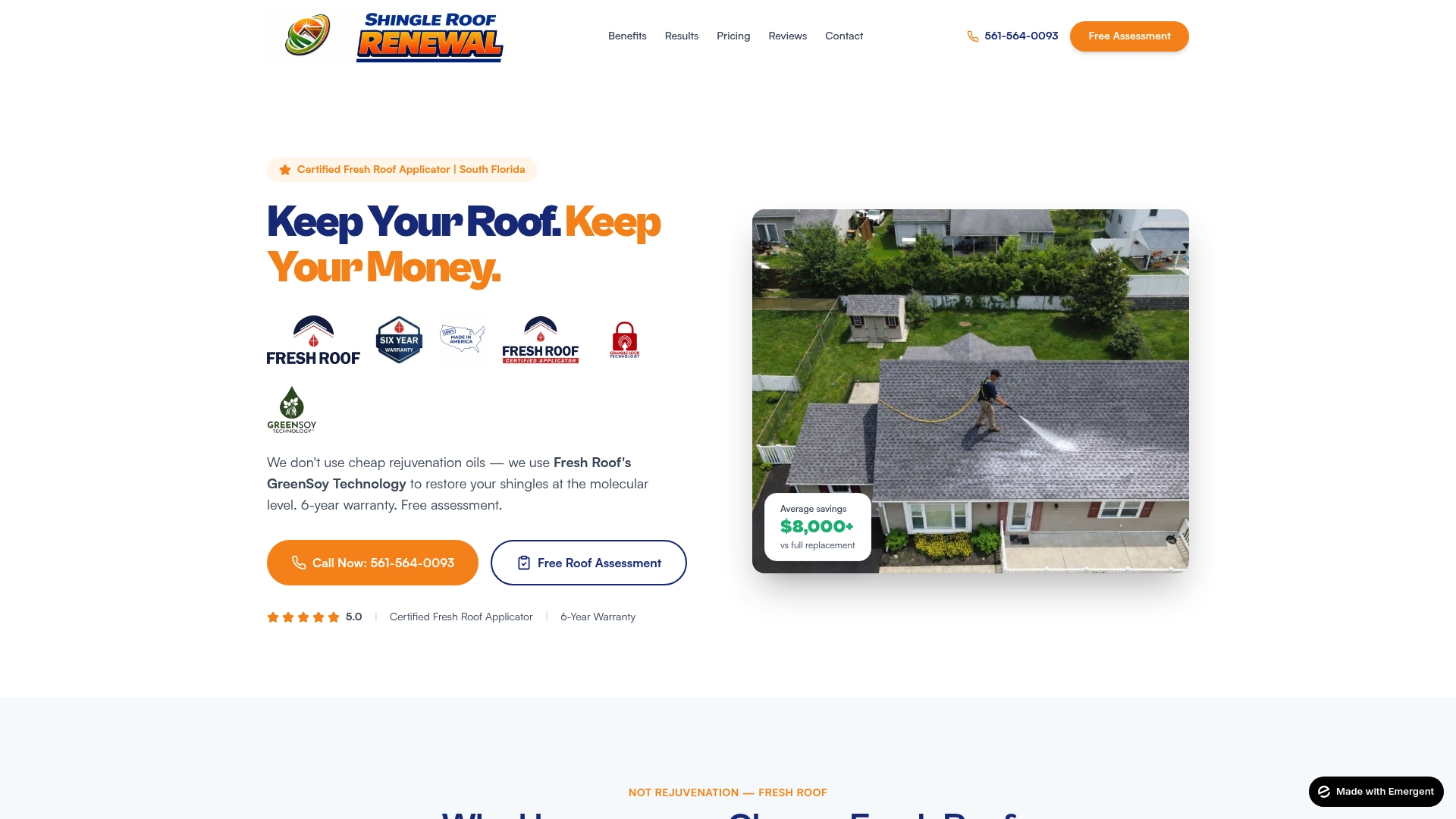
Most homeowners in Broward and Palm Beach County don't realize their roof can still be saved. Florida's sun, heat, and storms dry out shingles faster than almost anywhere else in the country, causing brittleness, curling, and granule loss years before a full replacement is truly necessary.
Shingleroofrenewal is not a roofing company. We are the call you make before the roofer. We inspect your roof, assess its condition honestly, and tell you whether it qualifies for renewal using certified Fresh Roof Green Soy Technology. If it qualifies, you could save up to 80% compared to replacement, backed by a 6-year transferable warranty.
Schedule your free roof inspection today at shingleroofrenewal.com and find out if your roof qualifies.
Key Takeaways
Applying a film-forming coating to asphalt shingles typically causes more damage than it prevents, and both ARMA and GAF officially advise against it.
| Point | Details |
|---|---|
| Industry consensus is clear | ARMA and GAF both officially advise against field-applied coatings on installed asphalt shingles. |
| Moisture damage is the core risk | Film-forming coatings trap vapor inside the roofing system, leading to deck rot and mold. |
| Warranties are voided immediately | Every major manufacturer treats field-applied coatings as an unapproved modification. |
| Miami class action is a real warning | A 2007–2009 Florida coating incentive program affecting 4,700 homeowners ended in a class action lawsuit. |
| Certified preservation offers substantial savings | Qualifying homeowners can often avoid significant replacement costs through certified penetrating treatments. |