

Most shingle granule loss is just your roof aging on schedule, not an emergency. If the loss is heavy, sudden, or clustered right after a storm, that's a different story and it deserves a closer look this week.
Start with two things today. Check your gutters for granule buildup, and photograph any noticeable piles or bald patches you can see from the ground.
- Walk the downspouts and gutter corners; a handful of granules is normal, a cup or more after one storm is not.
- Check recent weather through NOAA to see if hail or high wind passed through recently.
- Note your roof's age. Granule shedding in the first one to two months after installation is expected, while heavy loss on a five-year-old roof is not.
Pro Tip: If you find a mound of granules right after a storm and your roof is under ten years old, treat that as a flag worth documenting, not something to shrug off until next spring.
Key Takeaways
Shingle granule loss usually reflects normal aging, but sudden heavy or clustered loss after a storm signals possible functional damage that needs prompt inspection.
| Point | Details |
|---|---|
| Read the pattern first | Even, gradual loss across the roof suggests aging; clustered loss after a storm suggests hail or wind damage. |
| Match loss to roof age | Light shedding in the first decade is normal; heavy loss past 20 years tracks with expected wear. |
| Know the insurance standard | Adjusters look for a fractured shingle mat, not granule loss alone, when evaluating storm damage claims. |
| Watch for bald spots | Exposed asphalt typically leads to cracking or leaks within one to three years and should trigger replacement planning. |
| Consider preservation first | Roofs with sound decking may qualify for treatments that restore flexibility and lock in granules instead of a full reroof. |
Table of Contents
- What Causes Shingle Granule Loss
- How to Inspect Your Roof for Granule Loss Safely
- How Much Granule Loss Is Too Much?
- DIY Fixes and Their Limits
- Professional Repair, Reroofing, or Preservation
- Preventing Faster Granule Loss
- Why This Matters: Author and Brand Background
- The Real Lesson in Granule Loss
- Frequently Asked Questions
- Sources
What Causes Shingle Granule Loss
Granules protect the asphalt mat underneath from UV rays, and they wear off in patterns that tell you what actually happened. Learning to read those patterns saves you a guessing game later.
- Normal aging and UV exposure. Sun-driven photo-oxidation breaks down the asphalt binder slowly over decades, releasing granules in a gradual, even way across the whole roof.
- Hail impact. Hail leaves random, circular bruises where granules are knocked loose in small clusters, often with soft spots you can feel underfoot.
- Wind damage. Strong gusts lift shingle edges and corners, causing granule loss concentrated along ridge lines and roof edges rather than the field of the roof.
- Foot traffic. Technicians, satellite installers, or anyone walking the roof creates linear scuff trails of granule loss along the paths they took.
- Manufacturing or installation defects. A bad batch shows up as uniform premature thinning across whole pallets of shingles, often on one slope or section installed together.
- Slope and orientation. South and west facing slopes in direct sun typically shed granules faster than shaded north-facing sections.
How to Inspect Your Roof for Granule Loss Safely
You don't need a ladder to get useful answers. Most of the diagnostic work can happen from your yard and your gutters.
- Do the gutter grab test. Scoop a handful of granules from the downspout elbow and spread them on white paper. Matching colors point to recent loss from one shingle; a mix of colors suggests gradual buildup over years.
- Sweep the roof with binoculars. Look for bald spots, dark or shiny patches where asphalt shows through, and any color shift compared to the rest of the roof.
- Read the pattern. Scattered clusters right after a storm point to hail or wind. Even, gradual thinning across the whole roof points to normal aging.
- Match findings to roof age. Granule loss that's light in the first decade, moderate from years 15 to 20, and heavier past 20 years tracks with expected wear.
- Document everything. Photograph piles, note the date, and pull NOAA storm records for your area before calling anyone.
Pro Tip: Take the white paper granule test seriously. It's a five minute check that tells you whether you're looking at one storm event or years of slow, ordinary wear.
How Much Granule Loss Is Too Much?
Age matters as much as quantity. A handful of granules on a two-year-old roof after a big storm is worth a call. A cup of mixed-color granules on a 22-year-old roof is just that roof finishing its life cycle.
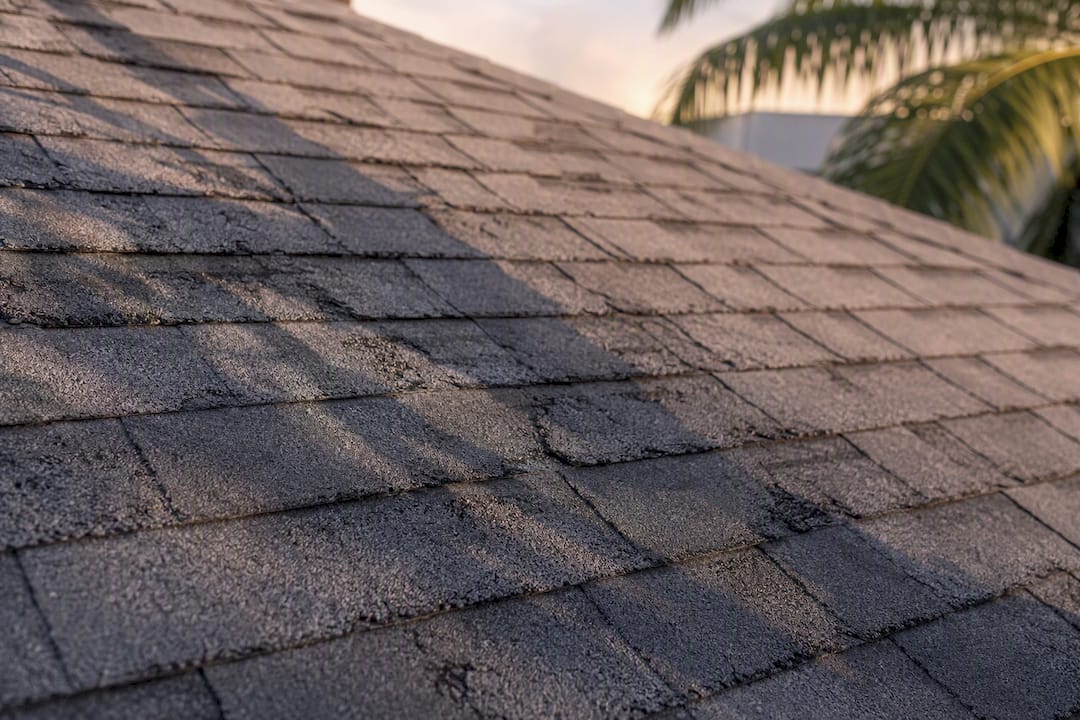
Insurance companies draw a sharp line here. Granule loss alone, without damage like fractures or bruises to the shingle mat, is generally not considered functional damage in an adjuster's eyes, even when the loss looks dramatic. Tests by Haag Engineering found no measurable drop in service life even after removing large amounts of granules from glass fiber mat shingles in controlled conditions. Hail that actually cracks or punctures the mat is a different category entirely, and that's the damage insurers pay to fix.
Once bald spots appear and asphalt is visibly exposed, the clock starts ticking. Exposed asphalt typically leads to UV degradation that can cause cracking or leaks within a few years, which is your cue to start budgeting for replacement rather than waiting for a leak to force the decision.
- Get an independent inspection and written report before filing any claim.
- Photograph the pattern of loss, not just the piles in your gutter, since adjusters weigh pattern heavily.
DIY Fixes and Their Limits
A few things genuinely help, and a few things people try genuinely don't. Knowing the difference saves you money and a wasted weekend.
- Clean gutters and downspouts regularly. Trapped granules and debris hold moisture against the shingle edge, which speeds up abrasive wear right where you least want it.
- Replace an individual damaged shingle if needed. Match the color and style closely; a mismatched patch is cosmetic but a poorly sealed one invites water underneath.
- Skip the coatings and spray paint. Broad cosmetic fixes don't restore granule adhesion or asphalt flexibility, and they can trap moisture or void a manufacturer warranty.
- Treat any patch as temporary. A single shingle swap or gutter cleanout typically buys you a season or two, not years, on a roof already showing wear.
If you're patching more than one or two spots a year, that's your signal to start planning for something more permanent instead of chasing the next bald spot.
Professional Repair, Reroofing, or Preservation
A documented professional inspection typically runs between $150 and $300 and gets you an unbiased report you can use for insurance or for making a real decision, rather than a sales pitch disguised as an estimate. Ask for photos, a written condition summary, and a clear recommendation with reasoning behind it.
From there, your roof usually falls into one of three buckets:
- Targeted repair. Makes sense when damage is isolated and the deck underneath is sound.
- Partial or full reroof. Warranted when the deck has rot, multiple slopes show heavy wear, or the mat itself is fractured, not just granule-thin.
- Preservation and renewal. For roofs with sound decking and mat that are simply aging, treatments like Shingleroofrenewal's certified Fresh Roof Green Soy Technology restore flexibility to the asphalt and help lock remaining granules in place, extending usable life on qualifying roofs without a full tear-off. You can read more about how the 3-step assessment process determines eligibility.
Advanced lab diagnostics like SEM imaging and granule retention testing exist too, but those tools belong to contractors and forensic reviews, not something you need to arrange yourself. Whatever path you choose, get the inspection report, before-and-after photos, and warranty terms in writing.
Preventing Faster Granule Loss
Slowing granule loss is mostly about controlling heat and moisture, not fighting the sun directly. A few habits make a real difference over years, not months.
- Clear gutters and roof debris at least twice a year, more often under overhanging trees.
- Check attic ventilation and insulation, since poor airflow drives thermal cycling that accelerates granule loss from the underside of the deck up.
- Keep foot traffic off the roof unless it's necessary, and use walk boards to spread weight if someone must go up.
- Schedule a professional check once a year, or twice if you're past the 15 year mark, covering flashing, ventilation, and granule condition together.
Pro Tip: Fixing attic ventilation doesn't undo granule loss you already have, but it measurably slows the rate of future loss, which matters most on a roof you're trying to preserve rather than replace.
Why This Matters: Author and Brand Background
This article is written by Daniellison. Author background and credentials are outlined here.
Preservation treatments that restore binder flexibility can delay replacement on qualifying roofs and cost meaningfully less than a full reroof when the deck and shingle mat are still structurally sound.
Shingleroofrenewal is a certified applicator of Fresh Roof Green Soy Technology, built around a three step process: inspect, assess, and recommend. Homeowners whose roofs qualify get a documented path to extending roof life instead of an automatic push toward replacement, backed by a six year transferable warranty.
The Real Lesson in Granule Loss
Most articles on this topic scare homeowners first and explain second. That's backward. The honest read of the evidence is that granule loss by itself, even a lot of it, rarely means your roof is failing. What matters is whether the pattern is even and gradual or sudden and clustered, and whether the shingle mat underneath is still intact.
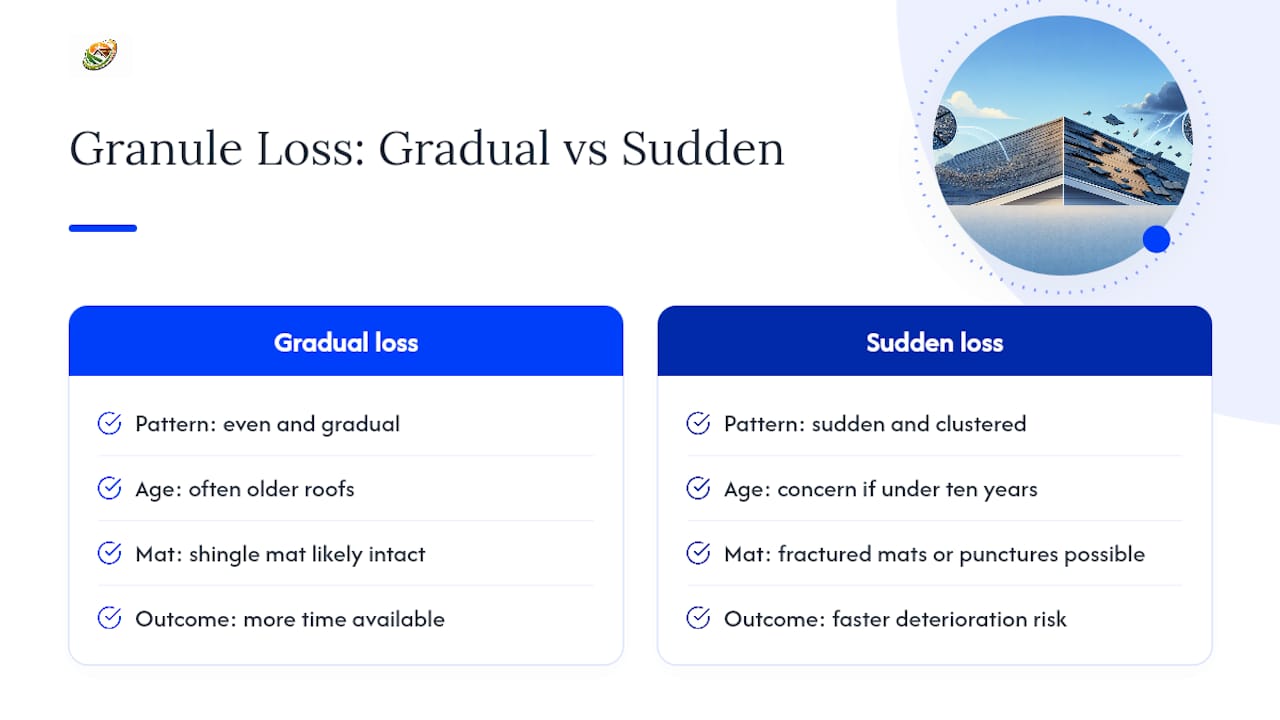
Conventional advice tends to treat any granules in the gutter as a five-alarm event, which pushes homeowners toward premature replacement decisions they didn't need to make. The insurance industry's own guidance backs this up: adjusters look for fractured mats and punctures, not granule counts.
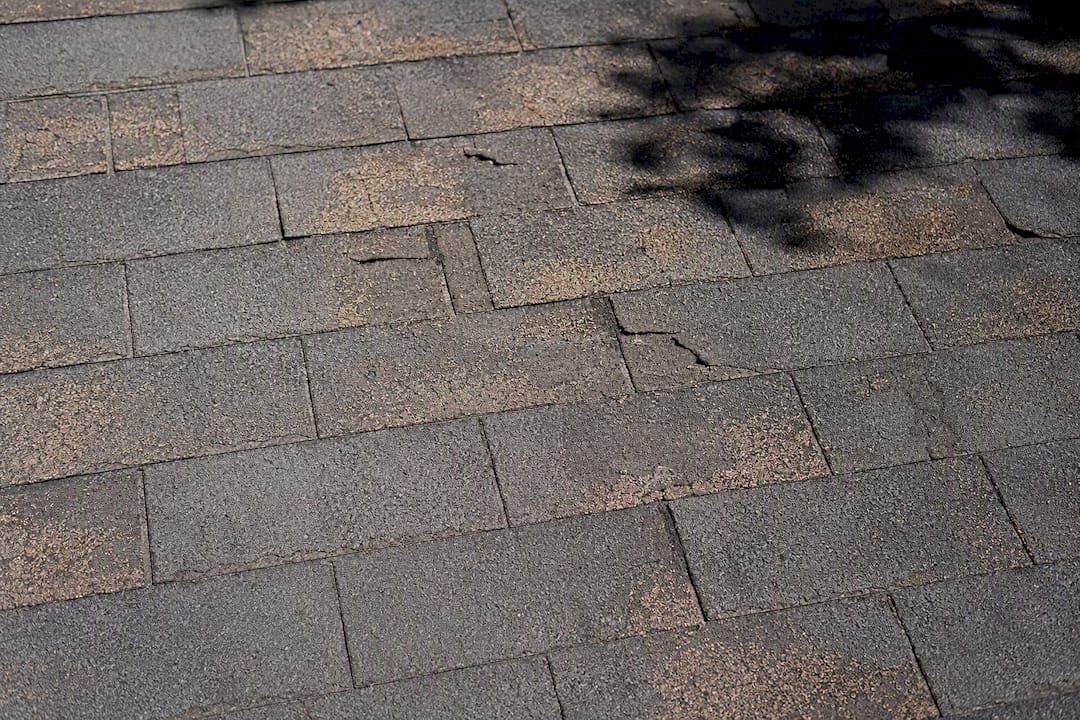
Prioritize the pattern test and the age check before anything else. If your roof is under ten years old and you're seeing heavy, sudden loss, get it inspected fast. If it's older and the loss is gradual, you likely have more time than you think, and a preservation approach may extend that time further without the cost or waste of a full tear-off.
Frequently Asked Questions
Is it normal for a new roof to lose granules? Yes. Light granule shedding in the first one to two months after installation is common as loose factory granules wash off. Heavy loss beyond that window, especially after a storm, is worth checking.
How many granules in the gutter is too many? Context matters more than volume. A handful on a 15-year-old roof is unremarkable; a cup or more on a roof under five years old, especially after a storm, warrants an inspection.
Will my insurance cover granule loss? Usually not by itself. Insurers generally require evidence of a fractured or punctured shingle mat, not granule loss alone, to classify damage as functional and eligible for a claim.
Can granule loss be reversed? Lost granules themselves can't be replaced, but treatments that restore flexibility to the remaining asphalt can slow further loss and extend the roof's usable life on qualifying roofs.
When should I call a professional instead of monitoring it myself? Call one when you see bald spots exposing asphalt, sudden clustered loss after a storm, or when your roof passes the 15 to 20 year mark and you want a documented condition report before deciding on repair, replacement, or preservation.
Ready to find out if your roof still has life left in it? Schedule a free inspection with Shingleroofrenewal and get a straight answer before you call a roofer.
Sources
- Hail damage to composition shingles | Haag Engineering
- Roof granules in gutter: new, aging or hail damage? | The Roofing Brief
- Asphalt shingle granule loss — InspectAPedia
- What causes accelerated granule loss & failure patterns | RoofPredict