
TL;DR:
- Dark streaks on shingles indicate active mold growth, which can cause structural damage and health risks if left untreated. Preventive measures like prompt leak repairs, gutter cleaning, and improved attic ventilation are essential to control moisture and inhibit mold development. Early professional intervention can extend roof lifespan and save homeowners up to 80% on replacement costs by targeting underlying moisture issues.
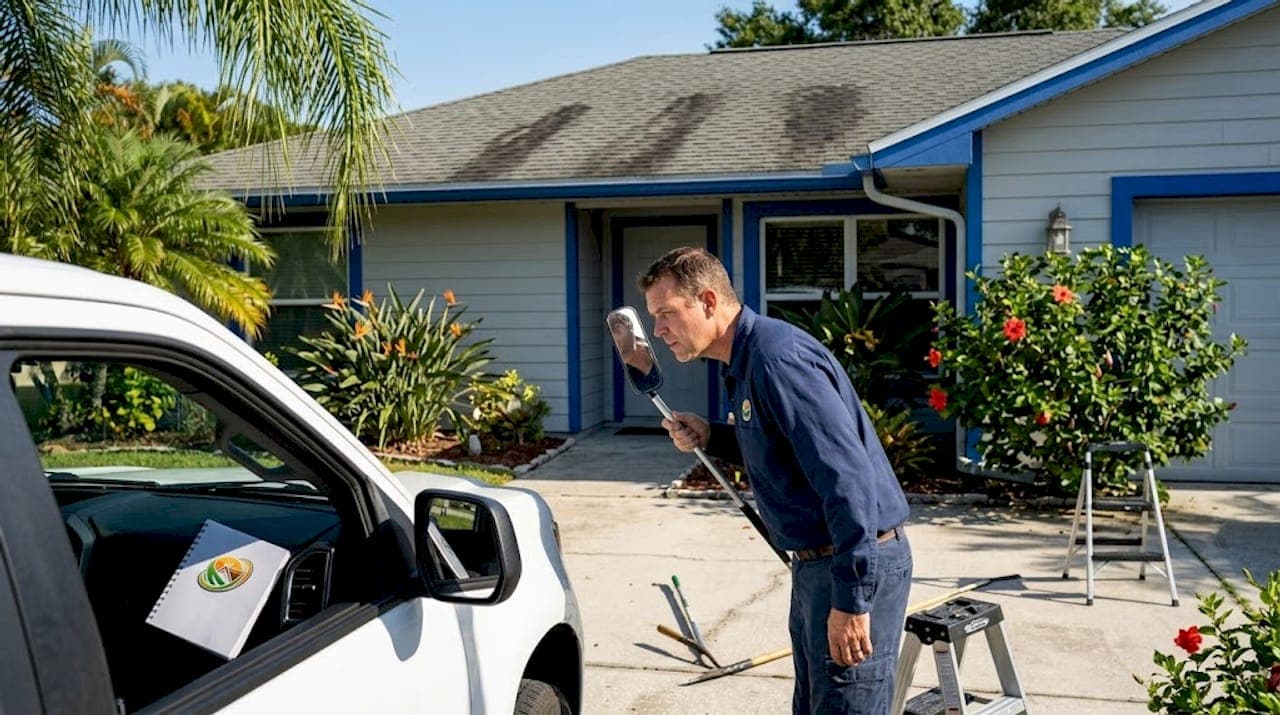
That dark streak running across your shingles is not just a cosmetic issue. For homeowners in Broward and Palm Beach Counties, understanding shingle roof mold risks explained properly can mean the difference between a simple cleaning and a $20,000 roof replacement. South Florida's relentless heat, frequent afternoon storms, and year-round humidity create conditions where mold growth on shingles accelerates faster than almost anywhere else in the country. This guide walks you through what mold actually does to your roof, why it matters for your family's health, and what you can do right now to stop it before it gets expensive.
Table of Contents
- Key Takeaways
- What mold is and why it grows on South Florida shingles
- The real risks mold poses to your roof and your family
- Smart prevention strategies for South Florida homeowners
- Safe roof mold removal methods that protect your shingles
- Why early action protects your wallet and your roof's future
- My perspective on mold and South Florida roofs
- Protect your roof before mold takes over
- FAQ
Key Takeaways
| Point | Details |
|---|---|
| Mold is more than cosmetic | Mold actively breaks down shingle surfaces, causing granule loss and structural deterioration over time. |
| Health risks are real | Mold spores can enter attic and living spaces, triggering respiratory problems for sensitive family members. |
| Act within 48 hours post-storm | Mold can begin growing within 24 to 48 hours of water intrusion, so fast action after storms is critical. |
| Prevention beats removal | Controlling moisture, clearing gutters, and improving ventilation costs far less than mold remediation or replacement. |
| Renewal beats replacement | Early intervention through roof renewal can extend your roof's life 10 to 15 years and save up to 80% versus a full replacement. |
What mold is and why it grows on South Florida shingles
Most homeowners assume the dark staining on their roof is algae. Sometimes it is. But mold and algae are different organisms, and both can be present on the same roof at the same time. Algae typically shows up as blue-green or black streaks and feeds on the limestone filler in asphalt shingles. Mold is a fungus. It produces spores, penetrates porous surfaces, and actively breaks down organic material — including the materials that hold your shingles together.
Mildew is another term you will hear. It is a surface-level fungal growth, less destructive than mold, but still a sign that moisture is sitting where it should not be. When you see mildew, mold is usually nearby.
So why does mold grow so aggressively on South Florida roofs? A few reasons:
- Humidity. Broward and Palm Beach Counties regularly hit humidity levels above 80%, especially from May through October. That moisture settles into shingle surfaces every night and does not fully evaporate before the next day's heat cycle begins.
- Shade. Trees near homes block sunlight that would otherwise dry out the roof. Shaded sections stay damp longer, giving mold the wet environment it needs.
- Storm debris. Leaves, dirt, and organic material pile up in valleys and around flashings after storms. Debris holds moisture against shingles for days.
- Poor attic ventilation. When hot, humid air cannot escape your attic, it backs up into the roof deck, keeping moisture levels high from the inside out.
Dark molds thrive specifically when moisture, shade, and poor drainage combine — exactly the conditions that describe a large percentage of homes in South Florida. As shingles age past 10 to 15 years, their surface becomes more porous and more vulnerable to mold taking hold.
Pro Tip: Check your roof after every major storm. Look specifically at north-facing slopes and shaded sections — those are the first spots where mold growth on shingles typically starts in South Florida homes.
The real risks mold poses to your roof and your family
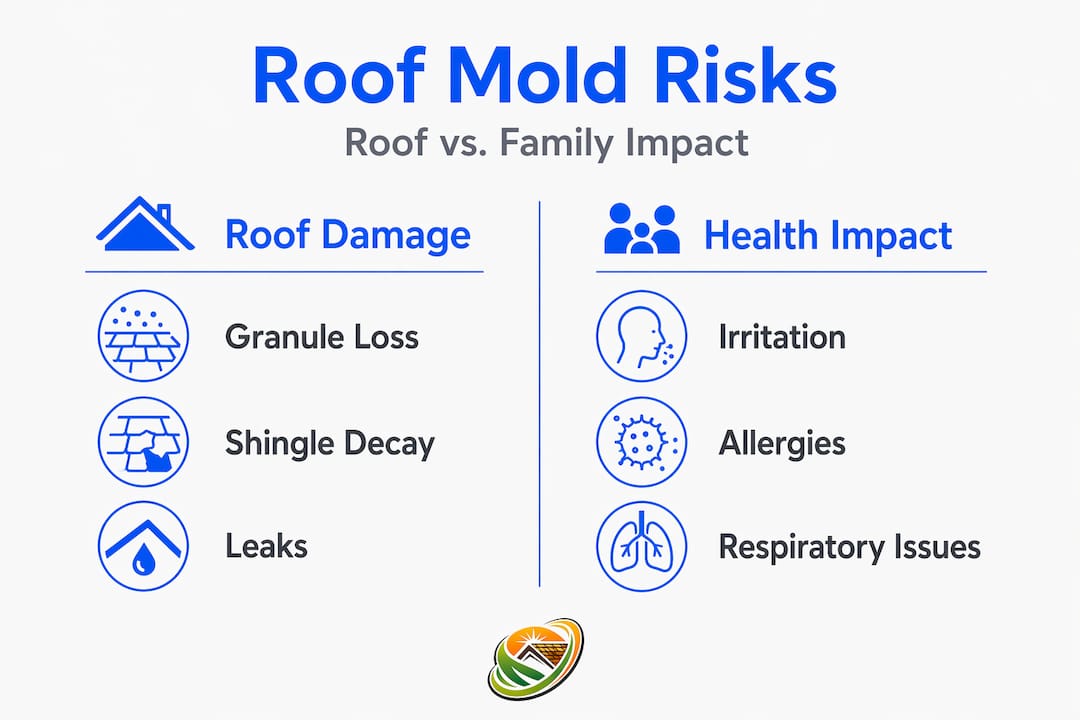
Here is where the conversation gets serious. Mold is not just ugly. It is actively damaging your home on two fronts: the roof structure above you and the air quality inside your home.
How mold destroys aging shingles
Mold accelerates granule loss by eating away at the protective surface of asphalt shingles. Granules are the small mineral particles embedded on the surface of every shingle. They block UV radiation and protect the asphalt layer underneath. Once mold begins breaking down the shingle surface, granules loosen and wash off in the rain. With granules gone, the underlying asphalt dries out, cracks, and curls.
That curling and cracking is not just cosmetic either. It creates gaps where water can get under the shingles and into your roof deck. From there:
- Water saturates the wood decking, which leads to rot.
- Rot weakens the structural support under your shingles.
- Moisture travels down into attic insulation, reducing its effectiveness.
- Persistent leaks allow mold colonies to establish inside the attic space itself.
- Interior ceiling stains and structural damage follow.
What started as dark streaks on your shingles can become a full interior water damage situation within one or two rainy seasons if left alone.
"Mold infestations often indicate hidden moisture problems such as attic leaks and ventilation issues. Treating the surface alone without addressing those underlying causes leads to the same problem returning within months." — US EPA Mold and Moisture Guidance
The health risks you cannot see
Mold spores infiltrate homes through attic spaces, causing eye, skin, nose, and throat irritation. For family members with asthma, allergies, or compromised immune systems, even low-level mold exposure can trigger real symptoms. Children and elderly family members are especially vulnerable. You may not connect a persistent cough or aggravated allergies to what is happening on your roof, but the connection is direct when mold has made its way into your attic and HVAC system.
Smart prevention strategies for South Florida homeowners
Preventing roof mold is significantly cheaper than treating it. Here is what actually works in Broward and Palm Beach County conditions:
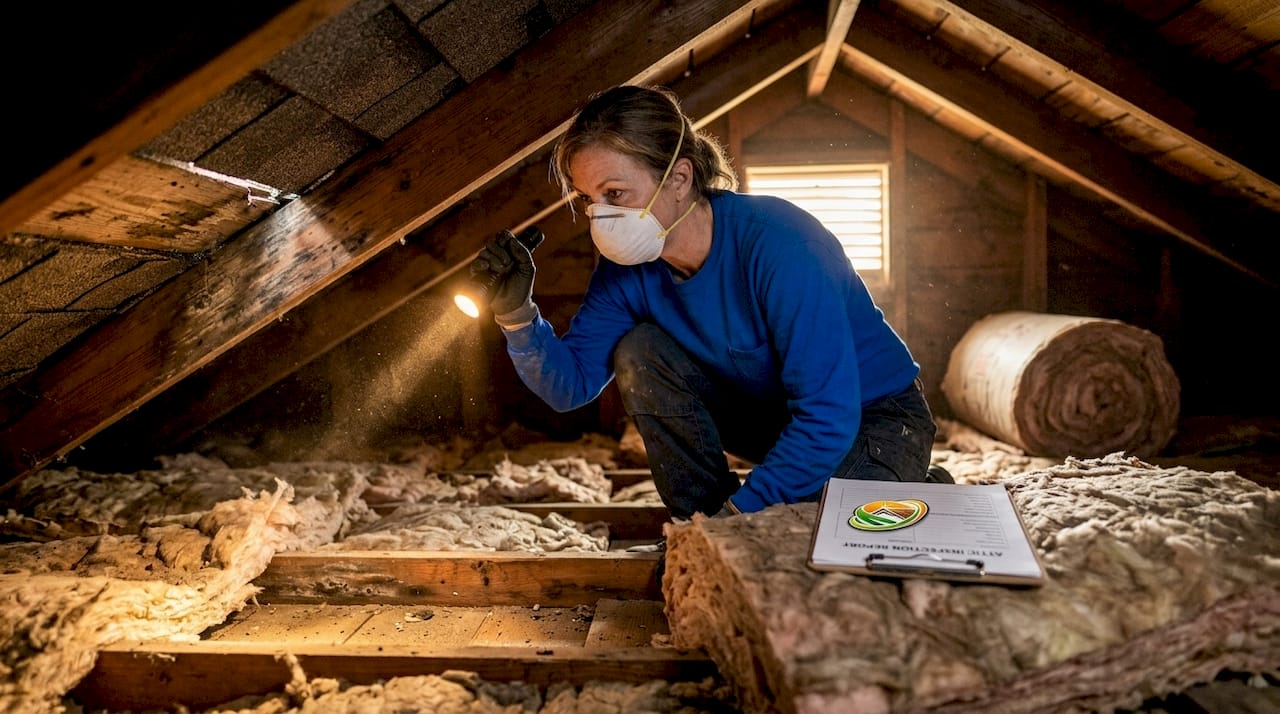
- Fix leaks within 24 to 48 hours. Mold begins growing within 24 to 48 hours after water intrusion. After any storm, check your attic for wet insulation or staining. Speed matters.
- Keep gutters clean. Gutter clearing and debris removal directly reduces the moisture retention spots where mold colonies start. In South Florida, clean gutters at least twice a year, and after every major storm.
- Improve attic ventilation. Balanced airflow reduces moisture accumulation under shingles significantly. Ridge vents, soffit vents, and attic fans work together to keep temperatures and humidity in check. If your attic feels like a sauna in July, your ventilation needs attention.
- Trim overhanging trees. More sunlight on your roof means faster drying. Cutting back branches also reduces the organic debris that holds moisture against shingles.
- Apply mold-resistant treatments. Zinc or copper strips installed near the ridge line release trace minerals each time it rains, naturally inhibiting mold and algae growth across the entire slope below.
Pro Tip: Controlling indoor humidity below 60% also reduces moisture migration into your attic. Run exhaust fans consistently in bathrooms and kitchens, especially during Florida's rainy season. Small habits inside the house directly affect what happens to your roof.
Here is a quick comparison of prevention approaches to help you prioritize:
| Prevention method | Cost range | Effectiveness | Best for |
|---|---|---|---|
| Gutter cleaning | $100 to $200/visit | High | All homes |
| Attic ventilation upgrade | $300 to $800 | Very high | Older homes with poor airflow |
| Zinc/copper strip installation | $150 to $400 | Moderate to high | Roofs with recurring algae/mold |
| Professional soft wash treatment | $300 to $600 | High short-term | Active mold or algae growth |
| Roof renewal treatment | Fraction of replacement | Very high long-term | Aging shingles needing full protection |
For a deeper look at weatherproofing your shingle roof specifically for South Florida conditions, the options go further than most homeowners realize.
Safe roof mold removal methods that protect your shingles
Identifying whether you have mold or algae matters before you start any treatment. Here is what to look for:
- Black or green streaks running in one direction are usually algae (Gloeocapsa magma is the most common culprit on Florida roofs).
- Fuzzy or powdery patches in gray, white, or greenish tones that appear clustered rather than streaked are more likely mold.
- A musty smell near roof overhangs or in your attic is a strong indicator that mold has taken hold, not just algae.
Once you have identified the problem, the removal method matters as much as the detection.
| Method | Safe for shingles? | Addresses moisture source? | Notes |
|---|---|---|---|
| Professional soft wash | Yes | No | Must fix moisture source separately |
| DIY bleach application | Not recommended | No | Bleach damages shingles and does not prevent recurrence |
| Pressure washing | No | No | Strips granules and voids warranties |
| Mild detergent and water | Yes (surface only) | No | Suitable for minor surface mold only |
| Mold-resistant coating | Yes | No | Preventive, not curative |
The EPA specifically discourages biocide use for roof mold because it does not fully eliminate the problem and can damage the surface. Professional soft washing uses low pressure and appropriate cleaning solutions that kill mold without stripping granules or shortening shingle life.
The single most important rule in roof mold removal: fix the moisture source first. Cleaning mold off a surface that remains wet just means the mold returns within weeks. Whether the source is a failing flashing, a clogged gutter, or poor attic ventilation, that problem must be corrected before or immediately after cleaning. Persistent mold on the same section of your roof year after year is your roof telling you there is a moisture pathway that has not been closed. You can learn more about restoring shingle flexibility after treatment to understand why addressing the underlying condition matters long-term.
Why early action protects your wallet and your roof's future
Here is the financial reality that most homeowners in Broward and Palm Beach County do not realize until it is too late. A new asphalt shingle roof in South Florida typically costs between $15,000 and $30,000. Addressing mold early, before it degrades your shingles past recovery, can reduce that cost dramatically.
Consider the timeline:
- You notice dark streaks on your roof. Cleaning costs a few hundred dollars.
- You ignore the streaks for two to three seasons. Granule loss accelerates. Shingles begin curling.
- Your insurance adjuster does a drive-by inspection. Visible deterioration leads to a non-renewal notice.
- You are now facing a full replacement on a compressed timeline, at full cost, with fewer options.
Roof renewal can save homeowners up to 80% compared to replacement, extending roof life by 10 to 15 years. That kind of savings changes the conversation entirely. Scheduling a post-storm inspection is not just good maintenance, it is financial protection. A roof longevity checklist built around South Florida conditions gives you a concrete schedule to follow so nothing slips through the cracks.
Insurance companies in Florida have become increasingly strict about roof condition. Visible mold, granule loss, or algae staining can trigger non-renewal of your homeowner's policy. Keeping your roof clean and well-maintained is not just about protecting the structure. It is about keeping your coverage in place.
My perspective on mold and South Florida roofs
I have seen a lot of roofs across Broward and Palm Beach Counties, and the pattern I keep encountering is this: homeowners wait too long because the problem looks minor from the ground. A few dark streaks, maybe some slight discoloration near the gutters. It does not feel urgent.
What I have learned is that those streaks are almost never just surface-level. In my experience, recurring mold on the same section of a roof almost always points to something structural: a poorly sealed flashing, a gutter that has been overflowing for two years, or attic ventilation that was never adequate for Florida's climate. The mold is a symptom. The moisture problem is the disease.
I have also seen homeowners spend $300 on a bleach treatment they applied themselves, only to watch the same mold come back darker within six months. That is not a cleaning failure. That is what happens when the underlying issue goes uncorrected.
My honest advice is simple. Treat the first sign of mold as a warning that something deeper deserves a closer look. Get a professional inspection. Not because the situation is necessarily dire, but because knowing exactly what you are dealing with puts you in control. Most of the time, the news is better than homeowners fear. The roof can be saved. But that window does not stay open forever, and South Florida's climate does not give you the luxury of waiting through another rainy season.
— Daniellison
Protect your roof before mold takes over
If you are seeing dark stains, granule buildup in your gutters, or curling shingles anywhere on your roof, do not wait to find out what comes next.

Shingleroofrenewal is a certified applicator of Fresh Roof's GreenSoy Technology, specifically serving homeowners in Broward and Palm Beach Counties. Our process restores aging asphalt shingles at the molecular level, stopping deterioration and extending roof life by 10 to 15 years. For homeowners in areas like Boca Raton and Delray Beach, this means saving thousands on roof costs instead of facing a full replacement. If your roof qualifies, you could save up to 80% compared to replacement, all backed by a 6-year transferable warranty. Schedule your free roof inspection today and find out where your roof actually stands.
FAQ
What does mold on shingles actually look like?
Roof mold typically appears as fuzzy or powdery patches in gray, white, or greenish tones, often clustered in shaded areas. Black streaks running down the slope are more commonly algae, though both can appear together.
How fast can mold spread on a South Florida roof?
Mold can begin growing within 24 to 48 hours after water intrusion. In South Florida's humid climate, a single storm event can create conditions that allow mold to take hold before the roof fully dries.
Is bleach safe to use for removing roof mold?
Bleach is not recommended for asphalt shingles. The EPA discourages biocide use because it can damage shingle surfaces and does not address the moisture source, meaning mold typically returns within weeks or months.
Can roof mold affect my health indoors?
Yes. Mold spores travel from attic spaces into living areas through gaps in insulation and HVAC systems. Mold exposure causes irritation of the eyes, skin, nose, and throat, and can worsen asthma in sensitive family members.
How do I know if my roof needs renewal or full replacement?
If your shingles still have structural integrity but show granule loss, surface mold, or early curling, renewal is often the right choice. A professional inspection from Shingleroofrenewal determines whether your roof qualifies, typically saving you up to 80% compared to a full replacement.