
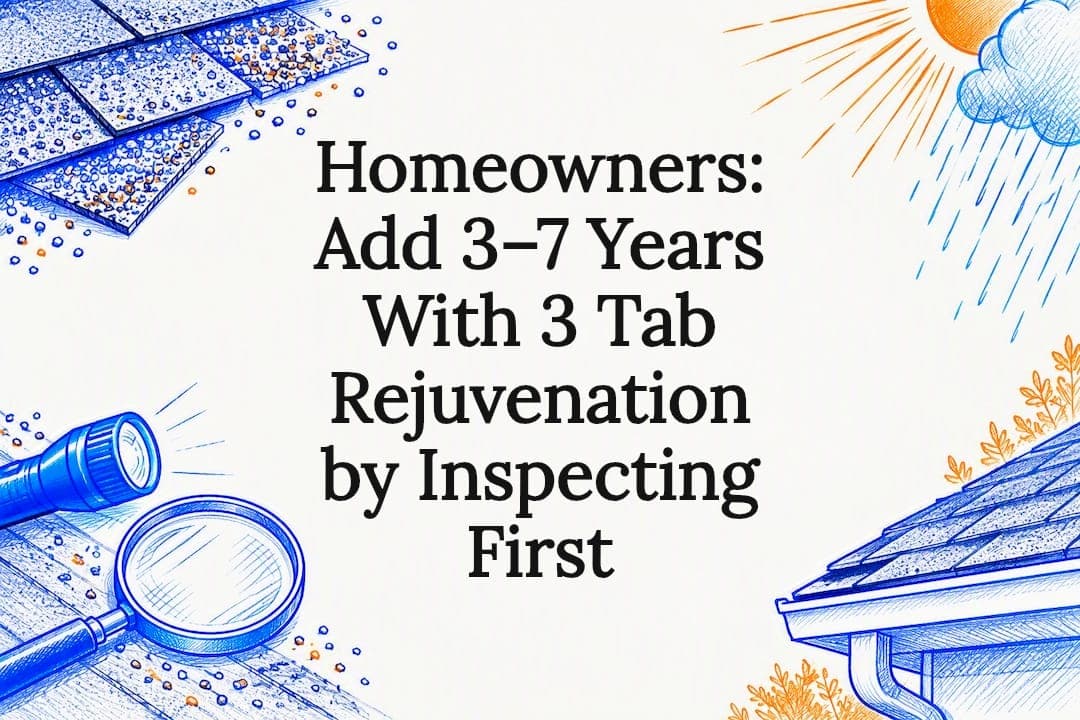
Yes. When a 3-tab asphalt shingle roof is intact and not leaking, professional rejuvenation can extend its service life by several years. If the roof is cracked, curled, or already leaking, rejuvenation won't help. Replacement becomes the responsible choice. The only way to know which category your roof falls into is a professional inspection.
TL;DR:
- Rejuvenation works best on 8- to 15-year-old roofs with flexible, non-cracked shingles and no active leaks or structural damage.
- Proper application requires a thorough inspection, dry weather, and careful coverage to ensure the treatment restores flexibility and slows granule loss.
- Most roofs receive an additional 3 to 7 years of service life from rejuvenation, with results influenced by climate and initial condition.
- The treatment costs significantly less than replacement, making it practical for roofs with no active damage and moderate aging.
- Rejuvenation is not suitable for roofs with rotten decking, active leaks, or brittle shingles, where replacement is the responsible choice.
Table of Contents
- What Is 3-Tab Rejuvenation, and How Is It Different From Coatings or Replacement?
- Does Your 3-Tab Roof Qualify for Rejuvenation?
- What Happens During a Rejuvenation Treatment?
- What Rejuvenation Actually Delivers, and What It Doesn't
- What Does Rejuvenation Cost Compared to Replacement?
- When Should You Skip Rejuvenation and Replace the Roof Instead?
- Shingleroofrenewal's Inspection-First Approach to Rejuvenation
- The Honest Take on 3-Tab Rejuvenation
- Request a Free Roof Assessment From Shingleroofrenewal
- Sources
- FAQ
What Is 3-Tab Rejuvenation, and How Is It Different From Coatings or Replacement?
Roof rejuvenation is a treatment absorbed into aged asphalt shingles to restore the oils that keep them flexible. Over time, sun and heat cook those oils out, leaving shingles brittle and prone to cracking. A rejuvenator soaks into the shingle mat itself rather than sitting on top of it.
That's the key difference from a roof coating, which forms a surface film and behaves more like a bandage than a treatment. Replacement, by contrast, tears everything off and starts fresh. Rejuvenation sits in the middle: it's maintenance, not a permanent fix, and not a cosmetic layer either.
Homeowners who qualify for treatment typically notice:
- Shingles that bend instead of snap during inspection
- Less granule shedding in gutters and downspouts after rain
- A slightly darker, more uniform shingle color
- Reduced brittleness around nail heads and shingle edges
Engineered soy-derived rejuvenators are built to interact chemically with aged asphalt binder, which is why proper mix rates and dry application conditions matter so much for restoring flexibility.
Does Your 3-Tab Roof Qualify for Rejuvenation?
Age is the first filter. Rejuvenation tends to work best on roofs between 8 and 15 years old, according to the National Roofing Contractors Industry Association. Beyond that window, the asphalt has often lost too much of its original oil content to respond to treatment.
Run through this checklist before you call anyone out:
- Check for curling or cupping at shingle edges. Curling shingles indicate advanced granule and oil loss.
- Look for cracking across the shingle surface. Cracks mean the mat is already compromised, not just dry.
- Inspect for active leaks in the attic. Water stains on decking or insulation are an automatic disqualifier.
- Confirm attic ventilation is adequate. Poor airflow accelerates shingle aging from underneath.
- Check flashing around chimneys, vents, and valleys. Damaged flashing needs repair regardless of shingle condition.
Decking condition matters just as much as the shingles themselves. A roof can look fine on the surface while rotten plywood sits underneath, which is why a visual check from the ground never replaces a hands-on inspection.
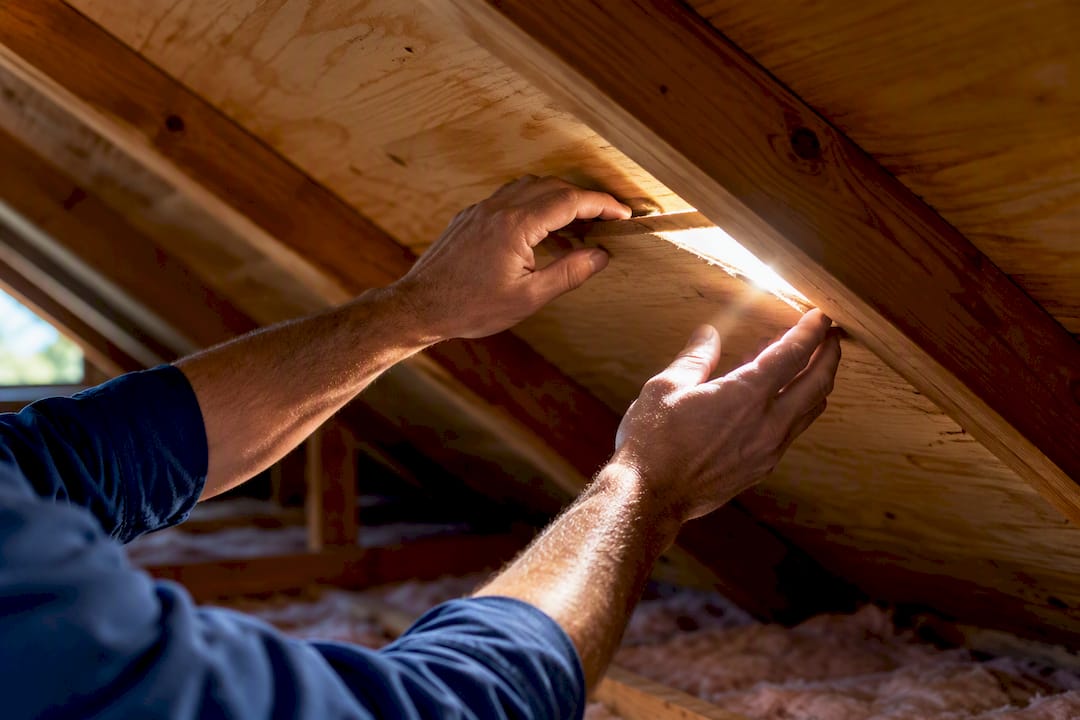
Pro Tip: Walk your attic on a sunny afternoon and look for daylight coming through the decking. It's a five-minute check that can save you a wasted service call.
What Happens During a Rejuvenation Treatment?
A legitimate rejuvenation job follows a sequence, and skipping steps is where most poor outcomes come from. Here's what a proper process looks like.
-
Inspection first. A technician checks for the disqualifiers above and repairs anything minor, like a loose flashing seam, before treatment begins.
-
Weather and dryness checks. Shingles need to be fully dry, and forecasts need a clear window, since rain during application ruins the treatment and wastes material.
-
Runoff control. Because the treatment is applied by spray, crews typically protect landscaping, gutters, and downspouts from overspray and runoff.
-
Application at set coverage rates. Manufacturers specify how much product goes down per square, and applying too little undermines results while too much wastes money.
-
Cure time. The treatment needs time to fully absorb before it's exposed to heavy rain or foot traffic, usually measured in hours, not days.
-
Reinspection. A follow-up check confirms even coverage and catches any missed sections.
Ask for documentation of the inspection findings, the product used, application rate, and warranty terms in writing. A contractor who won't put warranty scope on paper is a contractor to avoid. Proper prep and dry conditions are non-negotiable, since treating a wet or damaged roof risks poor absorption and uneven results.
What Rejuvenation Actually Delivers, and What It Doesn't
Rejuvenation restores flexibility, slows granule loss, and gives shingles a modest boost in short-term water resistance. Those are real, measurable benefits. What it isn't is a leak repair or a substitute for replacing a roof that's already failing structurally.
On qualifying roofs, rejuvenation commonly adds 3 to 7 years of useful life, with engineered products often citing figures near the 5-year mark for warranty purposes.
Climate plays a role in results, too. In hot, high-UV regions, some regional service data points to life extensions in the 3 to 5-year range on qualifying shingles, which tracks with how much faster Florida heat degrades asphalt oils compared to milder climates.
Warranties on rejuvenation treatments are typically limited in both scope and duration, usually covering restored flexibility rather than leak prevention, since the treatment isn't designed to seal existing damage. That's a meaningfully different promise than a replacement warranty, and it's worth reading closely before you sign anything.
There's an environmental upside too: every roof that gets a few more years out of rejuvenation is one less tear-off filling a landfill, and one less set of shingles manufactured to replace it.
What Does Rejuvenation Cost Compared to Replacement?
Rejuvenation costs a fraction of full replacement, which is the entire financial case for considering it. Industry pricing typically falls in the low hundreds to a few thousand dollars depending on roof size and location, while a full tear-off and reroof often runs into the tens of thousands.
Here's how the math usually plays out:
- A roof needing only 3 to 5 more years before a planned sale or renovation is a strong rejuvenation candidate financially.
- A roof with 10+ years of remaining need, but no active damage, can also benefit, buying time while you budget for eventual replacement.
- A roof already showing structural issues makes rejuvenation a poor investment. You'd spend money now and still face replacement soon after.
The return on investment question isn't complicated: if your roof qualifies, treatment costs a small percentage of what replacement does. For a deeper cost breakdown by roof size, this cost comparison guide walks through real scenarios.
When Should You Skip Rejuvenation and Replace the Roof Instead?
Some conditions make the decision easy, and pretending otherwise just delays an expensive problem.
- Active leaks anywhere on the roof. No rejuvenation product repairs a leak; it only treats intact shingle material.
- Rotten or soft decking underneath the shingles. Treating the surface while the structure underneath is failing solves nothing.
- Delaminated or brittle shingles that crack under light pressure. Once the mat separates, absorption treatments have nothing solid left to restore.
If an inspector uses language like "beyond serviceable life" or "structural concern," that's your signal to start getting replacement quotes rather than maintenance estimates.
Shingleroofrenewal's Inspection-First Approach to Rejuvenation
Every roof gets evaluated before anyone talks treatment. That's the whole philosophy behind Shingleroofrenewal's process: inspect, assess, then recommend, in that order, never the reverse.
Homeowners get a free roof assessment first. If a roof shows the disqualifying signs covered above, that's stated plainly rather than glossed over to close a sale.
For roofs that qualify, The company applies a green soy-based treatment described as working at the molecular level to restore shingle flexibility and improve resistance to wind and fire. Treatments carry a transferable warranty lasting several years.
The Honest Take on 3-Tab Rejuvenation
Most of the marketing around roof rejuvenation oversells it as a miracle fix, and that's the biggest disservice to homeowners in this whole industry. It isn't a miracle. It's maintenance, and maintenance only works when it's timed correctly.
The uncomfortable truth is that most homeowners wait too long; following a shutter maintenance schedules: a practical guide mindset about inspection timing can help prevent that delay. They call once shingles are already curling or a leak has shown up, at which point rejuvenation is off the table and replacement is the only honest recommendation. The conventional advice, "wait until something's wrong," is backwards for a roof that ages gradually and predictably.
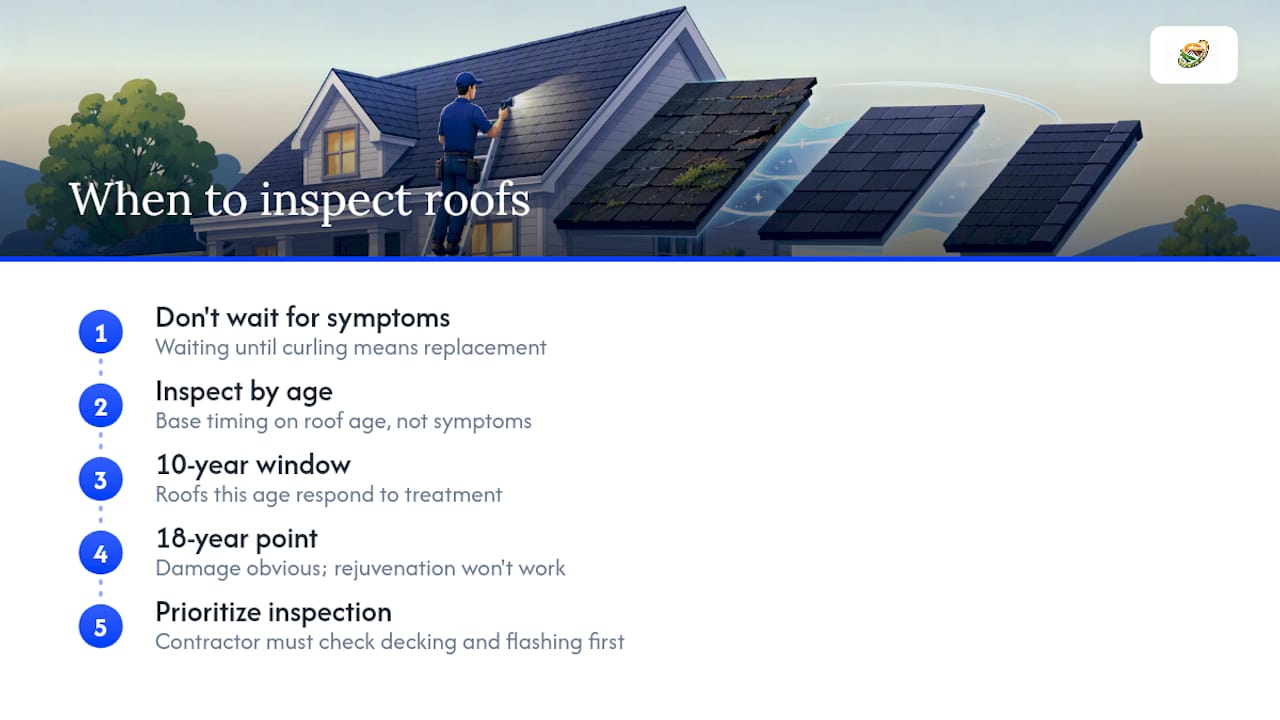
What actually matters is timing the inspection to your roof's age, not its symptoms. A 10-year-old roof with no visible problems is exactly the roof that benefits most from rejuvenation, because there's still enough oil content in the shingles to respond to treatment. Waiting until year 18, when the damage is obvious, is waiting past the point where rejuvenation can do anything.
Prioritize the inspection over the product. Any contractor pitching a treatment before checking your decking and flashing isn't solving your problem.
— Daniellison
Request a Free Roof Assessment From Shingleroofrenewal
If your 3-tab roof is somewhere between "still looks fine" and "starting to worry you," the smartest next step costs nothing. Shingleroofrenewal is the option to call before you call a roofer, because a free assessment tells you honestly whether your shingles qualify for preservation or whether replacement is the responsible path.
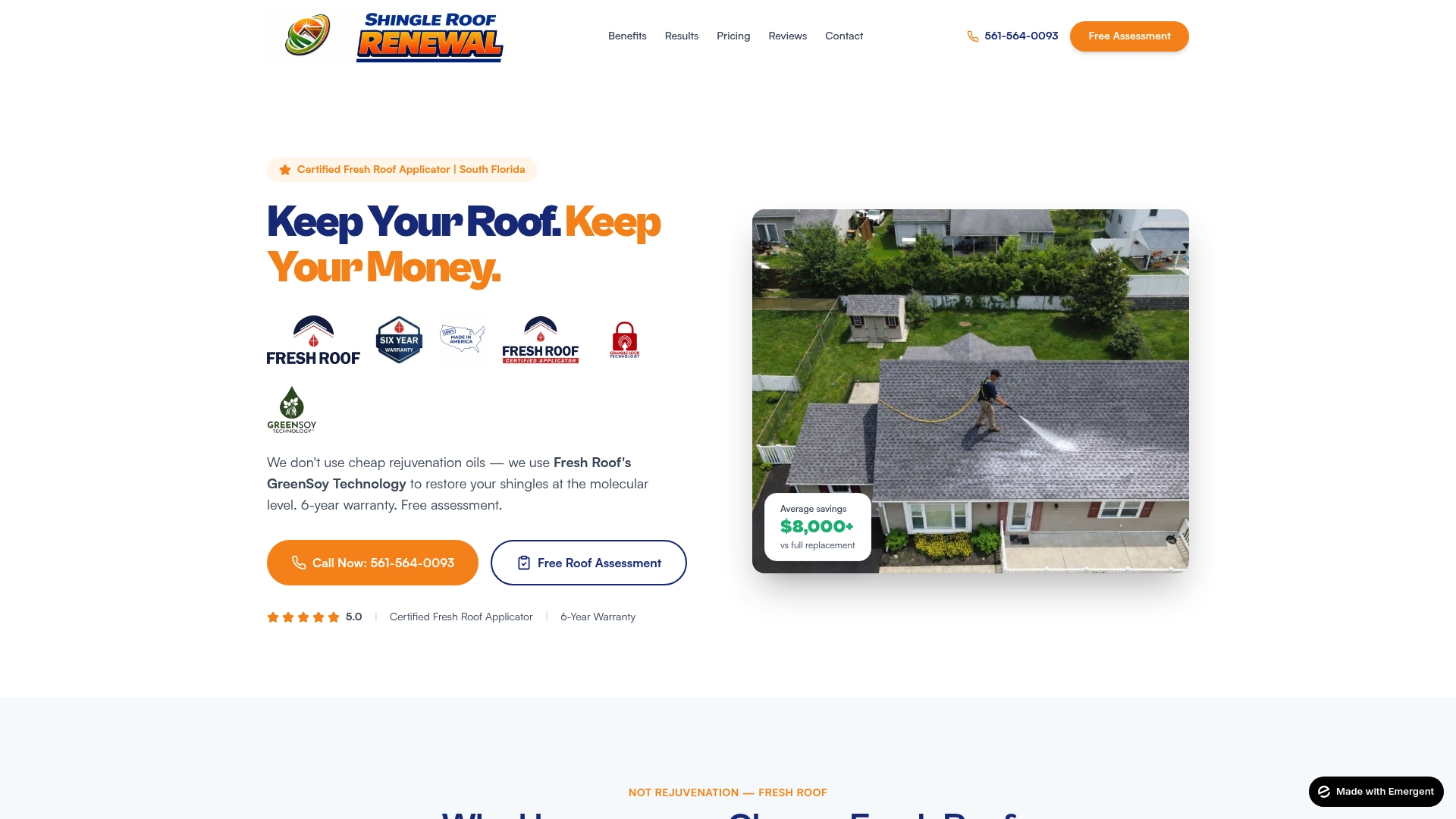
The assessment includes a full inspection of shingle flexibility, granule condition, flashing, ventilation, and decking, the same checklist covered throughout this guide. If your roof qualifies, treatment with Fresh Roof Green Soy Technology comes backed by a 6-year transferable warranty, well beyond what standard rejuvenation products typically offer. As a certified applicator, Shingleroofrenewal focuses specifically on roofs in Palm Beach and Broward counties, where sun and storm exposure age shingles faster than in milder climates.
You don't need to guess whether your roof still has life left in it. Schedule your free roof assessment and get a straight answer, backed by an inspection, not a sales script.
Sources
Claims in this guide draw on trade research from the National Roofing Contractors Industry Association, cost and performance data from New England Metal Roof, and rejuvenator chemistry explainers from Soylei. These sources are useful for readers who want to verify figures independently.
- Are Roof Rejuvenation Products a Good Investment for Asphalt Roofs? - NRCIA
- Is Roof Rejuvenation Worth It: Benefits, Costs, and When To Choose It – New England Metal Roof
- A Deeper Dive Into Roof Rejuvenation - Soylei
FAQ
Are 3-Tab Shingles Still Available?
Yes, 3-tab shingles are still manufactured and sold, though architectural shingles have become more popular for new installations. If you already have a 3-tab roof, rejuvenation and repair options remain widely available regardless of current market trends.
What Is the Difference Between Rejuvenation and Repair Options?
Rejuvenation restores flexibility and slows aging across the whole roof surface, while repairs fix specific damaged spots like a torn shingle or failed flashing seam. Most qualifying roofs benefit from addressing minor repairs first, then treating the remaining shingles with a rejuvenation product.
How Much Does 3-Tab Shingle Rejuvenation Cost?
Rejuvenation typically costs a fraction of full replacement, with industry pricing commonly landing in the low hundreds to a few thousand dollars depending on roof size and location. Shingleroofrenewal's exact pricing is available after a free assessment confirms your roof's condition.
How Long Does 3-Tab Rejuvenation Last?
Most qualifying roofs gain 3 to 7 years of additional service life after treatment, though results depend on the roof's starting condition and local climate. Shingleroofrenewal backs its Fresh Roof Green Soy Technology treatment with a 6-year transferable warranty.
Can Any 3-Tab Roof Be Rejuvenated?
No. Roofs with active leaks, cracked or curled shingles, or rotten decking don't qualify and need repair or replacement instead. A professional inspection is the only reliable way to confirm whether your roof is a good candidate.