

Asphalt shingle aging is the gradual breakdown of a shingle's oils, granules, and structure caused by UV light, heat, and moisture cycling, and it starts long before your roof leaks. NIST laboratory testing confirms this shows up as measurable chemical change years before visible failure. If you see granules collecting in your gutters, curling edges, or cracking on the surface, schedule an inspection now, not next spring.
TL;DR:
- Shingle aging accelerates significantly with higher temperatures, with every 18°F increase roughly doubling the oxidation rate that embrittles the material.
- Signs like granule loss, curling, cracking, blistering, and bald spots indicate progressing deterioration, with extensive damage often requiring replacement.
- Proper attic ventilation and correct installation can slow aging, while climate factors, especially in hot areas, shorten shingle lifespan well below warranty expectations.
- Preservation treatments can extend service life if applied early in the incipient or accelerating stages and are often more cost-effective than full replacement.
- Regular inspections, including checking gutters for granules and visually assessing roof surfaces, help identify early signs of wear before major leaks or structural failure occur.
Table of Contents
- What Is Asphalt Shingle Aging? The Three Stages Homeowners Should Know
- What Causes Shingles to Age? The Science Behind the Deterioration
- Visible Signs of Deterioration: What to Look For and What It Means
- How Long Do Shingles Really Last? Lifespan, Warranties, and Climate
- Factors You Can Control That Slow Shingle Aging
- Repair or Replace? Clear Rules for Making the Call
- Can Aging Shingles Be Preserved Instead of Replaced?
- Your Homeowner Inspection Checklist
- What Happens to Old Asphalt Shingles? Disposal and Environmental Impact
- Common Misconceptions About Asphalt Shingle Aging
- Does Roof Pitch or Orientation Affect Shingle Aging?
- Author Perspective: Prevention Beats Replacement
- Get a Free Roof Assessment Before You Call a Roofer
- Sources
- FAQ
What Is Asphalt Shingle Aging? The Three Stages Homeowners Should Know
Roofing researchers at InterNACHI break shingle deterioration into three phases, and knowing which one your roof is in tells you how urgently to act.
- Incipient stage: The first few years after installation. Minor granule loss and settling are normal here as the shingle finishes curing in the sun.
- Accelerating stage: Oils evaporate, the mat stiffens, and granule loss speeds up. Curling, cracking, and blistering typically show up in this window.
- Decelerating stage: Structural failure sets in. Bald spots, exposed mat, and leaks become common as the shingle loses its ability to shed water.
The jump from incipient to accelerating rarely happens on a fixed schedule. Heavy sun exposure, poor attic ventilation, or a hailstorm can push a roof into the accelerating stage years ahead of schedule. That's the stage worth catching early, because it's often still preventable.
What Causes Shingles to Age? The Science Behind the Deterioration
Granules aren't decoration. They're the shield that keeps ultraviolet light from cooking the asphalt underneath. Once enough granules wear away, UV rays reach the asphalt directly and trigger photo-oxidation, a chemical reaction that hardens and embrittles the material.
Heat makes everything worse. The lightweight oils that keep a shingle flexible slowly evaporate through a process called volatilization, and that process speeds up dramatically as temperatures climb. IBHS Roof Aging Farm testing recorded shingle surface temperatures that can peak well above surrounding air temperature on sunny days.
Roughly every 18°F rise in sustained temperature can significantly accelerate the aging rate
Chemistry follows a rule of thumb here: a roughly 18°F increase in sustained temperature can roughly double the rate of the oxidation reactions that harden asphalt. That's why a roof in Phoenix wears out faster than an identical roof in Minneapolis. Field-aged samples in some studies lost more than half their original tear strength compared to unaged shingles, which is why an old roof that looks intact can still fail under storm-force wind.
Visible Signs of Deterioration: What to Look For and What It Means
Most of what you need to know about your roof's condition, you can see from the ground with a pair of binoculars.
- Granules in the gutters or on the driveway. A light dusting after a new install is normal. Handfuls after storms, or a steady accumulation over years, means the protective coating is thinning out.
- Curling or cupping shingles. Edges that lift up (clawing) or tabs that cup at the center usually signal oil loss and are one of the clearest markers of the accelerating stage.
- Cracking, especially in a spiderweb pattern. Fine, random cracks are often normal weathering. Straight-line cracks following the shingle's shape usually point to a manufacturing defect or premature failure.
- Blistering. Bubbles that form and then pop, exposing the mat underneath, often follow trapped moisture or poor ventilation.
- Bald spots and exposed black mat. This is late-stage failure. Water is getting a direct path to the decking.
- Dark streaking or algae staining. Usually cosmetic, though heavy staining can trap moisture against the surface over time.
A roof with a few of these signs scattered lightly across the surface is often still a maintenance candidate. A roof with bald spots, widespread cracking, and repeated leaks has crossed into replacement territory. When in doubt, that's the call worth making before a bigger repair bill shows up.
How Long Do Shingles Really Last? Lifespan, Warranties, and Climate
Advertised warranty life and real-world lifespan are two different numbers, and the gap between them catches most homeowners off guard.
- Typical service life ranges from about 15 to 40 years, depending on shingle grade, installation quality, and climate, even when the product is labeled a "30-year" or "40-year" shingle.
- A "30-year" shingle is a durability grade, not a guarantee. Manufacturers test materials under standardized lab conditions, not your actual roof, sun exposure, and attic setup.
- Hot climates shorten real lifespans significantly. Inspectapedia's climate data shows shingles in Yuma, Arizona averaging around 12.6 years in service, well below cooler-climate averages.
- Dark colors absorb more heat than light colors, which can push surface temperatures higher and accelerate the oxidation process described earlier.
Lab testing under ASTM-related protocols tells you how a material performs under controlled stress. It doesn't promise how long your specific roof, on your specific house, in your specific climate, will actually hold up.
Factors You Can Control That Slow Shingle Aging
Not everything about shingle aging is out of your hands. Attic ventilation matters more than most homeowners realize: a poorly vented attic traps heat underneath the roof deck, which raises shingle surface temperatures from below as well as above, compounding the sun's effect.
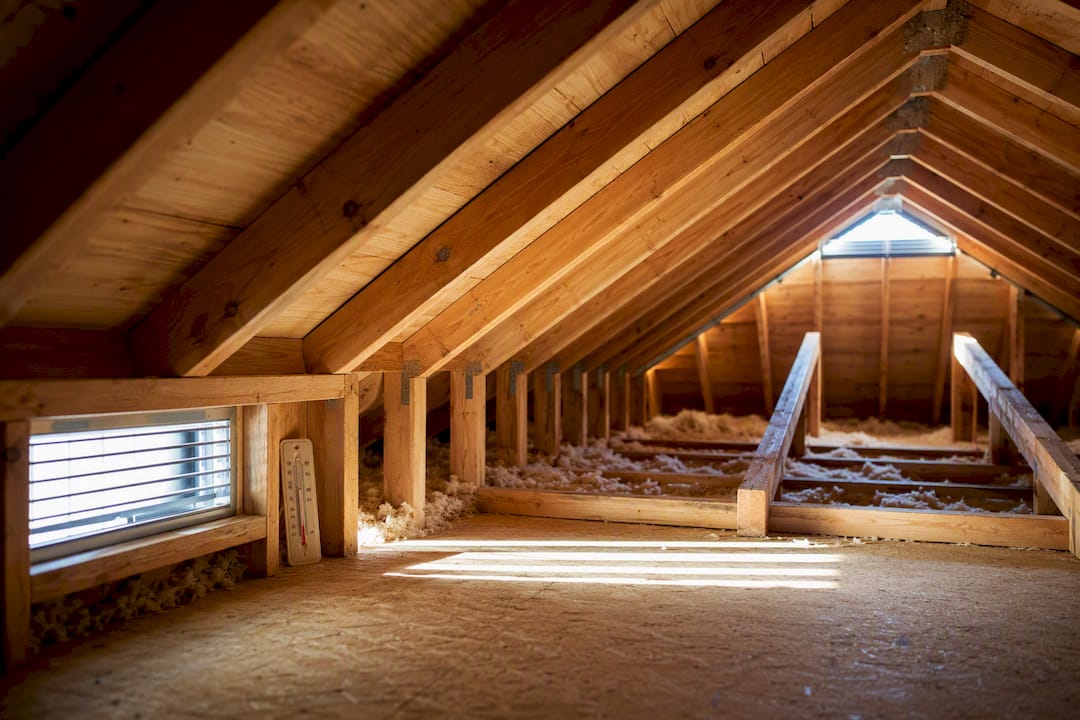
Installation errors compound the problem. Shingles nailed too high, stacked wrong on a pallet before installation, or installed over uneven decking all age faster and less evenly than a properly installed roof.
Here's what's within your control:
- Keep gutters clear so water doesn't back up under the shingle edges.
- Keep roof and attic vents unobstructed year round.
- Limit foot traffic on the roof; every walked-on shingle loses a few more granules.
- Trim overhanging branches that scrape shingles in wind and dump extra debris and shade-driven moisture onto the surface.
- Address attic insulation and airflow together, since insulation and ventilation work as a system rather than two separate fixes.
Pro Tip: Walk your gutters after the first hard rain each season. A handful of granules is normal; a cupful is your roof telling you it's entering the accelerating stage.
Repair or Replace? Clear Rules for Making the Call
Homeowners often wait too long or replace too soon, and both mistakes cost money. Here's how to draw the line.
- Under 10% of the roof affected, with isolated curling or cracking: Targeted repair or preservation treatment is usually enough.
- 10% to 30% affected, with scattered bald spots but no active leaks: This is the window where preservation and rejuvenation options make the most financial sense, before the damage spreads further.
- Repeated leaks in different locations, or widespread bare asphalt: Replacement is the safer long-term choice at this point.
- Check your warranty and insurance policy before deciding either way. Some warranties are voided by unapproved repairs, and some insurers require documentation of storm damage versus normal wear before they'll pay a claim.
Can Aging Shingles Be Preserved Instead of Replaced?
Preservation treatments work by re-introducing oils and flexibility into shingles that have started losing them, and the evidence shows this can meaningfully extend service life on roofs that qualify. Not every roof does.
- Roofs with open delamination, saturated decking, or structural sagging are past the point where surface treatment helps.
- Penetration depth matters: a treatment that only coats the surface won't reach the oxidized layers underneath.
- Roofs still in the incipient or early accelerating stage respond best, since there's more original material left to restore.
Shingle Roof Renewal has built its process around this distinction. We inspect the roof, assess its actual condition, and determine whether it qualifies for preservation using our certified Fresh Roof Green Soy Technology before recommending anything. Roofs that qualify get treated; roofs that don't get an honest answer instead of a sales pitch. That's the "call us before you call the roofer" approach: find out if the roof in front of you is a repair candidate, a preservation candidate, or a true replacement job in that order.
Your Homeowner Inspection Checklist
Run this checklist once a year and again after any major storm.
- Check gutters and downspouts for granule buildup.
- Scan the roofline from the ground for curling, cupping, or missing shingles.
- Look for daylight or water stains in the attic, especially near vents and chimneys.
- Confirm attic vents aren't blocked by insulation or debris.
- Photograph any visible damage immediately, with a date stamp, for insurance and warranty records.
- Request a professional roof-level inspection every few years, or sooner after hail or high wind.
Keeping dated photos on hand makes insurance claims and warranty disputes far easier to resolve later.
What Happens to Old Asphalt Shingles? Disposal and Environmental Impact
Torn-off asphalt shingles are one of the largest sources of construction debris in the country, and most of them still end up in landfills. That's a real cost, both financially and environmentally, and it's part of why catching aging early matters beyond just your repair bill.
Many municipalities now require or encourage shingle recycling rather than landfill disposal. Reclaimed asphalt shingles get ground down and reused in road paving mixes, a practice several state transportation departments have adopted to reduce virgin asphalt demand. Not every area has recycling infrastructure in place, though, so availability depends on where you live. Some regions also regulate how shingle waste containing older sealants or coatings must be handled, since certain older roofing materials fall under different disposal rules than modern products.
The simplest way to reduce your own environmental footprint here isn't recycling logistics. It's avoiding an unnecessary tear-off in the first place. Every roof that gets preserved instead of replaced is one less load of shingles headed to a landfill, and one less set of virgin materials manufactured to replace it. That's a meaningful piece of why preservation matters as a first option, not just a cost-saving one.
Common Misconceptions About Asphalt Shingle Aging
A lot of what homeowners believe about their roof turns out to be wrong, and it usually costs them money in one direction or the other.
"A 30-year shingle will last 30 years no matter what." This is the most common misunderstanding, and it's simply not how the rating works. The number reflects a lab-tested durability grade under standardized conditions, not a promise tied to your climate, ventilation, or installation quality.
"If it's not leaking, it's fine." Leaks are a late-stage symptom. By the time water is getting through, the shingle has often been in the accelerating or decelerating stage for years.
"All cracking means the roof needs replacing." Fine, random spiderweb cracking is often normal weathering. Straight cracks following the shingle tab shape are the ones that signal a real problem.
"Dark streaks mean the shingles are failing." That staining is usually algae or lichen growth, a cosmetic issue rather than a structural one, though heavy growth can trap moisture over time.
"Rejuvenation and replacement are basically the same cost, so why bother?" Preservation treatments on qualifying roofs typically cost a fraction of full replacement, which is exactly why the inspect-first approach matters before assuming replacement is the only option.
Does Roof Pitch or Orientation Affect Shingle Aging?
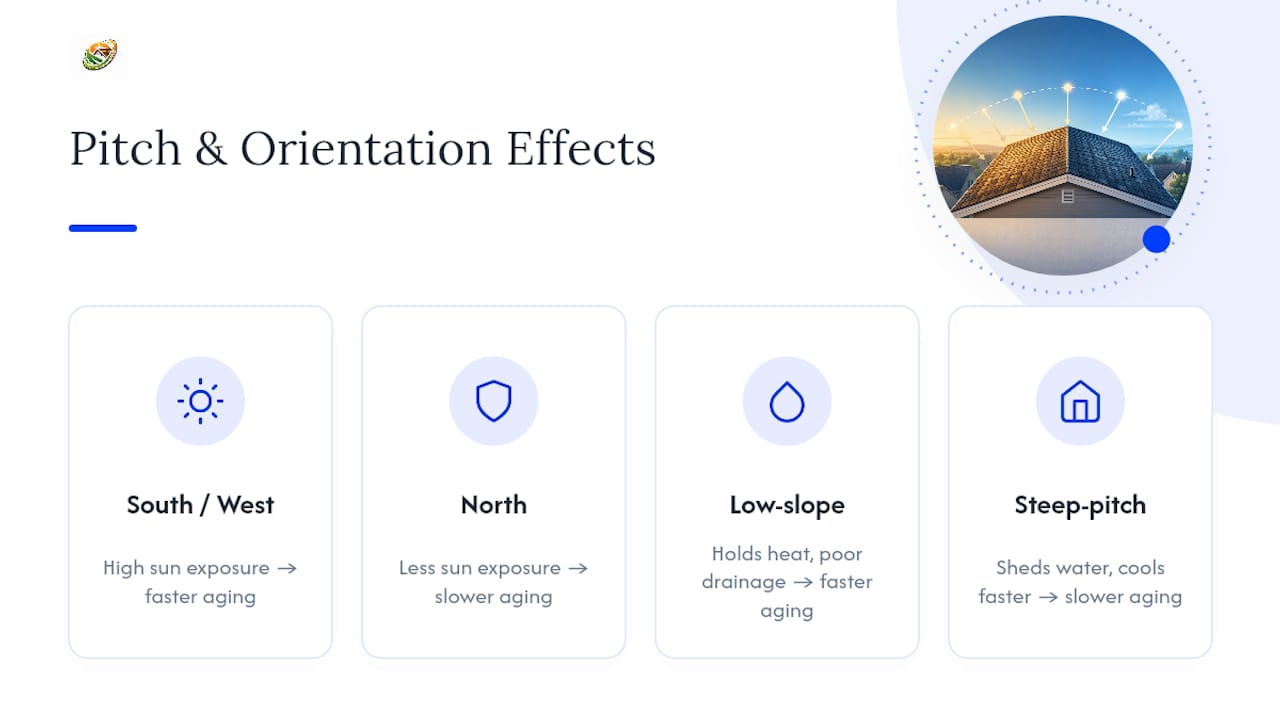
Yes, and the difference is bigger than most homeowners expect. South-facing and west-facing roof sections take the brunt of direct sun exposure through the afternoon, and comparative testing shows southern exposures age measurably faster than north-facing sections on the same house.
Low-slope roofs tend to hold heat longer than steep-pitched ones, since a flatter surface absorbs more direct sun per square foot and sheds water more slowly. That combination of extra heat and slower drainage means low-slope sections often show granule loss and curling earlier than steep sections on the same roof.
Steep-pitched roofs shed water and cool down faster after sunset, which slows the thermal cycling that drives oxidation. That's why an inspector checking your roof will often pay closer attention to the south and west slopes first, and why two sides of the same roof can be in noticeably different stages of aging at the same time. If you're only inspecting from one vantage point in your yard, you might be missing the side that's aging fastest.
Author Perspective: Prevention Beats Replacement
Homeowners aren't powerless here. A cracked shingle isn't a verdict, it's a warning you can still act on. Catching aging early saves money and keeps a functional roof out of a landfill. Inspect first. Decide second.
— Daniellison
Get a Free Roof Assessment Before You Call a Roofer
Shingle Roof Renewal exists for exactly the moment you're in right now: noticing granules in the gutter or a curling shingle and wondering if you're staring down a $15,000 to $30,000 replacement bill. In many cases, you're not.

Our process stays simple on purpose. We inspect the roof, assess its real condition, and tell you honestly whether it qualifies for preservation. If it doesn't, you'll know that too, before spending a dollar on the wrong fix. We serve homeowners across Palm Beach and Broward counties, where sun and heat push shingles into the accelerating stage faster than almost anywhere else in the country. For more on how climate-driven wear plays out locally, see our guide on what roof aging looks like for South Florida homeowners.
If your roof is showing early signs of wear, schedule your free roof inspection in Delray Beach today and find out whether it qualifies for renewal before a roofer talks you into a tear-off.
Sources
- Long-term durability of asphalt shingle roof covers: laboratory degradation characteristics — NIST
- IBHS Roof Aging Program 2014 Report
- Asphalt composition shingles lifecycle and failure modes — InterNACHI
FAQ
Does a 30-Year Shingle Really Last 30 Years?
Not necessarily. The 30-year label reflects a lab-tested durability grade, not a field guarantee, and real-world lifespan depends heavily on climate, ventilation, and installation quality.
Do 40-Year Shingles Really Last 40 Years?
The same logic applies here: 40-year shingles are built with thicker mats and more durable formulations, but hot climates, poor attic ventilation, and installation errors can still shorten their real-world service life well below that number.
How Do I Tell if My Shingles Are Too Old?
Check for granules collecting in the gutters, curling or cupped edges, straight-line cracking, and any bald spots showing exposed black mat. Multiple signs together usually mean it's time for a professional inspection.
Is a 20-Year-Old Roof Considered Old?
A roof around two decades old is within normal range for many standard shingle products, but it's also the point where inspecting for accelerating-stage signs, like curling and granule loss, becomes worth doing every year rather than waiting for a leak.