
TL;DR:
- Regular asphalt roof repairs prevent small damage from escalating into costly replacements in South Florida's harsh climate. Homeowners should prioritize early inspection, proper surface preparation, and professional help for steep roofs or hidden damage. Rejuvenation treatments can extend the lifespan of a sound roof at a fraction of the replacement cost.
Asphalt roof repairs are targeted fixes to damaged shingles, flashing, and roof components that preserve your roof's integrity and extend its lifespan without a full replacement. For homeowners in Broward and Palm Beach County, where relentless sun, heat, and storm cycles dry out shingles and accelerate granule loss, timely repairs are the difference between a $300 fix and a $20,000 replacement. Ignoring small damage can escalate costs dramatically within two years as moisture penetrates decking and causes rot. Shingleroofrenewal works with South Florida homeowners every day to catch these problems early, before they spiral out of control.
What do asphalt roof repairs actually involve?
Asphalt shingle repair, the recognized industry term for targeted shingle restoration work, covers everything from replacing a single missing shingle to resealing lifted edges and reflashing a leaking valley. The goal is always the same: stop water intrusion, restore the shingle's protective layer, and buy your roof more years of service. South Florida's climate makes this especially urgent. UV radiation breaks down the asphalt binder faster here than in cooler states, and afternoon thunderstorms exploit any gap or crack immediately.
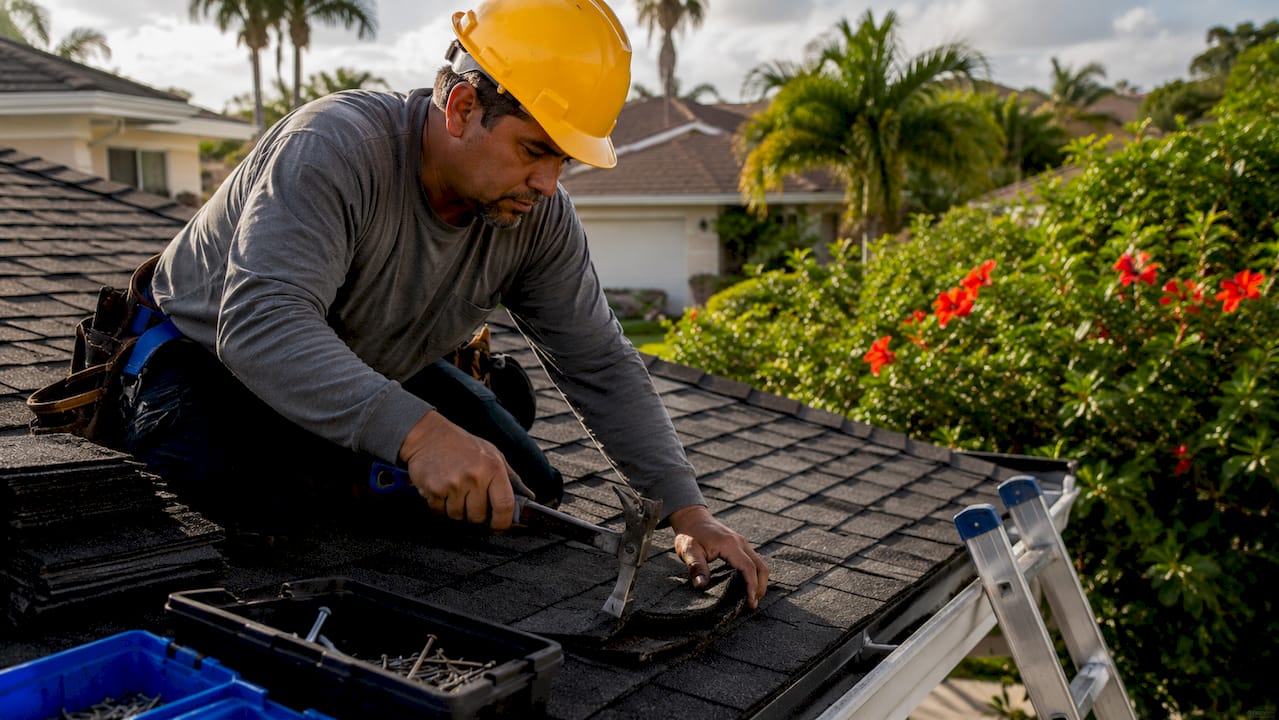
Granules protect asphalt from UV radiation, and once aged shingles start losing them, degradation accelerates rapidly. That is why catching damage early, before granule loss becomes widespread, is the single most cost-effective thing a homeowner can do.
Tools and materials you need before starting repairs
The right materials make the difference between a repair that lasts five years and one that fails in the next rainstorm. Stock these before you climb onto the roof.
| Item | Type | Typical Cost |
|---|---|---|
| Roofing cement | Material | $8–$20 per tube |
| Replacement shingles | Material | $30–$80 per bundle |
| Roofing nails (1.75 in.) | Material | $5–$15 per lb |
| Butyl caulk | Material | $8–$15 per tube |
| Flashing tape | Material | $15–$40 per roll |
| Extension ladder | Tool | $80–$250 (or rent) |
| Putty knife or caulk gun | Tool | $10–$25 |
| Stiff bristle brush | Tool | $8–$15 |
| Safety harness | Tool | $40–$120 |
Minor DIY repairs typically cost $10–$150 in materials. Professional repairs range from $150 to $1,500 depending on scope. That gap is manageable. What is not manageable is waiting: delayed repairs can multiply costs 20 to 60 times within two years once moisture reaches the deck.
Pro Tip: Set up your ladder on firm, level ground and secure the top against the fascia before carrying any tools. Never lean a ladder against a gutter. In South Florida's afternoon heat, plan roof work for early morning when shingles are cooler and less slippery.
How to repair common asphalt shingle damage step by step
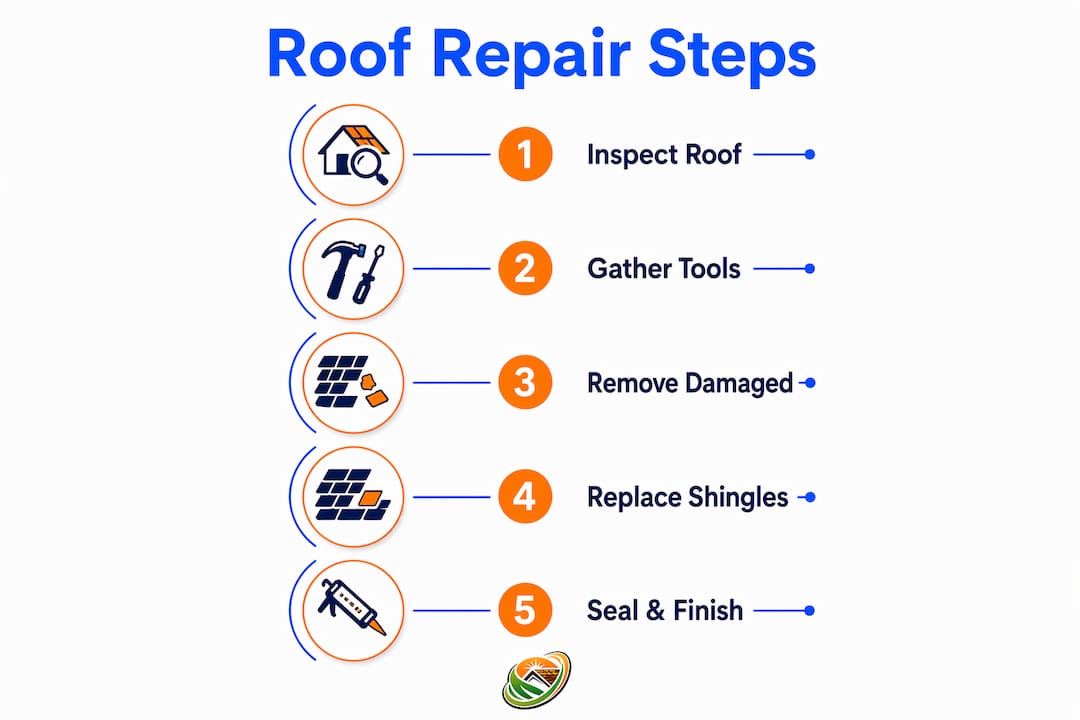
Always start with a ground-level inspection using binoculars before stepping onto the roof. Identify the damage type first, then gather the right materials. Never work on a wet or recently rained-on roof.
Replacing a missing shingle
- Slide the new shingle into the gap, aligning it with the shingles on either side.
- Lift the edges of the overlapping shingles above it carefully.
- Nail the new shingle with four roofing nails, one near each corner.
- Apply a small dab of roofing cement under the corners of the overlapping shingles and press them down firmly.
- Check alignment from the ground before finishing.
Sealing cracked shingles
- Clean the cracked area with a stiff brush to remove debris and loose granules.
- Apply fibered roofing cement into the crack with a putty knife. Fibered cement reduces cracking better than standard formulas.
- Press the shingle edges down firmly and smooth the cement flush.
- Sprinkle matching granules over the wet cement to protect it from UV.
Re-adhering lifted shingle edges
- Apply roofing cement under the lifted edge with a caulk gun.
- Press the shingle flat and hold it for 30 seconds.
- Nail the edge if it has pulled away from the deck significantly.
- Seal the nail heads with a small dot of roofing cement.
Resealing flashing
- Remove old, cracked caulk around the flashing with a putty knife.
- Clean the metal and surrounding shingles with a brush.
- Apply butyl caulk or flashing tape along the seam.
- Press firmly and smooth with a gloved finger.
Common mistakes to avoid:
- Patching over wet or soft areas. Damp surfaces cause blistering and peeling within weeks.
- Skipping granule replacement on sealed cracks, which leaves the repair exposed to UV.
- Nailing too close to shingle edges, which splits the tab.
- Assuming one visible crack is the only damage. Always inspect the full roof plane.
When should you DIY vs. hire a professional?
DIY repairs make sense for specific, limited situations. They do not make sense when safety or hidden damage is involved.
DIY is appropriate when:
- The damage source is known and visible (storm debris, a fallen branch).
- You are replacing one or two shingles on a low-pitch roof (under 6:12 slope).
- The decking beneath feels solid with no soft spots.
- You have proper safety gear and ladder experience.
Call a professional when:
- The leak source is unknown. Tracing water intrusion through South Florida's complex storm patterns requires experience.
- The roof pitch exceeds 6:12. Steep roofs require professional equipment and training to navigate safely.
- You find soft or spongy decking, which signals rot requiring structural repair.
- Damage covers multiple roof planes or includes widespread granule loss.
"Ladder-related accidents cause over 500,000 injuries per year in the US. A $200 professional repair call costs far less than an emergency room visit or a workers' compensation claim. When in doubt about safety, the answer is always to call a professional."
Pro Tip: Schedule a professional roof inspection before hurricane season every year. South Florida's storm window runs june through november, and catching hidden damage in april or may prevents emergency calls in september.
What is asphalt roof rejuvenation and when does it make sense?
Asphalt roof rejuvenation is a chemical treatment that restores flexibility and granule adhesion to aging shingles. It is not the same as a repair. Repairs fix physical damage. Rejuvenation addresses the underlying chemistry that makes shingles brittle and prone to damage in the first place.
Soybean oil-based treatments penetrate shingles and restore the asphalt binder at a molecular level, slowing the oxidation that causes brittleness and granule loss. This is the chemistry behind Fresh Roof's Green Soy Technology, which Shingleroofrenewal applies as a certified South Florida applicator. The treatment does not just darken shingles cosmetically. True restoration targets functional longevity, not appearance.
Rejuvenation works best on structurally sound roofs that are 6–20 years old. Rejuvenation adds 5–15 years to qualifying roofs at roughly 10–20% of full replacement cost. That means a treatment costing $500–$1,500 can delay a $15,000–$30,000 replacement by over a decade. Physical repairs must come first. Roofs with active leaks or soft decking require replacement, not rejuvenation.
| Option | Best for | Typical cost | Lifespan added |
|---|---|---|---|
| Spot repair | Isolated physical damage | $150–$1,500 | Varies by scope |
| Rejuvenation treatment | Aging but structurally sound roofs | $500–$1,500 | 5–15 years |
| Full replacement | Widespread rot, failed decking | $15,000–$30,000 | 20–30 years |
Pro Tip: Ask any rejuvenation provider for their treatment chemistry documentation. Soy-based formulas with proven penetration data outperform surface-only coatings. Shingleroofrenewal uses certified Fresh Roof Green Soy Technology, which comes with a 6-year transferable warranty. Verify credentials before signing anything.
Common repair mistakes and how to avoid them
Most repair failures trace back to surface preparation, not product quality. Repairs require clean, dry surfaces to bond correctly. Applying roofing cement over damp shingles traps moisture beneath the patch, which causes blistering, peeling, and a second leak within months.
Top causes of premature repair failure:
- Wet surfaces. Wait at least 48 hours after rain before applying any sealant or cement.
- Skipping the root cause. Patching a leak without fixing poor drainage or structural movement means the same spot leaks again. Address underlying causes first before patching.
- Dirty substrate. Algae, moss, and debris prevent adhesion. Brush the area clean before applying any product.
- Working in peak heat. South Florida summer afternoons push roof surface temperatures above 150°F. Roofing cement sets too fast and bonds poorly. Work before 10 AM.
- Assuming one leak, one source. Water travels along rafters and decking before dripping through a ceiling. The visible stain is rarely directly below the entry point.
Pro Tip: After any repair, run a garden hose over the area for five minutes and check the attic immediately for drips. This simple test confirms the repair sealed correctly before the next storm hits.
Key takeaways
Condition-based decision making, not roof age alone, determines whether repair, rejuvenation, or replacement is the right call for South Florida homeowners.
| Point | Details |
|---|---|
| Act before costs multiply | Delayed repairs can multiply costs 20–60 times within two years due to moisture and deck rot. |
| Surface prep is non-negotiable | Always repair on clean, dry surfaces to prevent blistering and early failure. |
| Rejuvenation beats replacement cost | Certified treatments cost 10–20% of full replacement and can add 5–15 years to a qualifying roof. |
| Know your DIY limits | Call a professional for unknown leaks, steep roofs, or any sign of soft decking. |
| Repairs come before rejuvenation | Physical damage must be fixed before any chemical treatment is applied. |
What 15 years of South Florida roofs taught me
Most homeowners I talk to make the same mistake: they wait until a ceiling stain appears before thinking about their roof. By that point, the repair bill has already grown. The shingles were sending signals months earlier, curling at the edges, losing granules in the gutters, showing bare patches of asphalt. Those are the moments to act.
The other thing I have learned is that condition matters more than age when deciding what a roof needs. A 14-year-old roof in Boca Raton that has been maintained properly can outperform a neglected 8-year-old roof two streets over. Age is a data point. Condition is the decision.
South Florida homeowners also underestimate how much the local climate accelerates shingle aging. The UV load here is among the highest in the continental US. Shingles that might last 25 years in the Midwest age out in 15–18 years here without intervention. That is not a reason to panic. It is a reason to inspect early, repair promptly, and consider rejuvenation before the window closes.
The smartest call I see homeowners make is scheduling an inspection before they call a roofer. You might not need a replacement at all. You might need a $400 repair and a certified shingle rejuvenation treatment that buys you another decade. Find out before you spend $25,000.
— Daniellison
Your South Florida roof may not need replacement yet
Shingleroofrenewal helps Broward and Palm Beach County homeowners find out exactly what their roof needs before committing to a costly tear-off. As a certified Fresh Roof Green Soy Technology applicator, Shingleroofrenewal restores shingle flexibility at the molecular level, locks in granules, and extends qualifying roofs by 10–15 years, all backed by a 6-year transferable warranty.

The process is simple: inspection, assessment, and an honest recommendation. If your roof qualifies, you could save up to 80% compared to full replacement while keeping old shingles out of the landfill. Visit Shingleroofrenewal's services page to learn what a certified preservation assessment covers, or go to shingleroofrenewal.com to schedule your free inspection today.
FAQ
How much do asphalt roof repairs cost?
Minor DIY repairs cost $10–$150 in materials. Professional repairs range from $150 to $1,500 depending on the damage type and scope.
Can I repair asphalt shingles myself?
Yes, for isolated damage on low-pitch roofs with a known cause. Unknown leaks, steep roofs, or soft decking require a licensed professional.
What is the difference between roof repair and roof rejuvenation?
Repairs fix physical damage like missing or cracked shingles. Rejuvenation is a chemical treatment that restores binder flexibility and granule adhesion to slow aging in structurally sound roofs.
How long does asphalt roof rejuvenation last?
Certified rejuvenation treatments add 5–15 years to qualifying roofs. Shingleroofrenewal backs its Fresh Roof Green Soy Technology application with a 6-year transferable warranty.
When should a South Florida homeowner replace instead of repair?
Replace when decking is soft or rotted, when leaks are widespread across multiple roof planes, or when shingles have lost structural integrity. Condition, not age alone, drives that decision.