
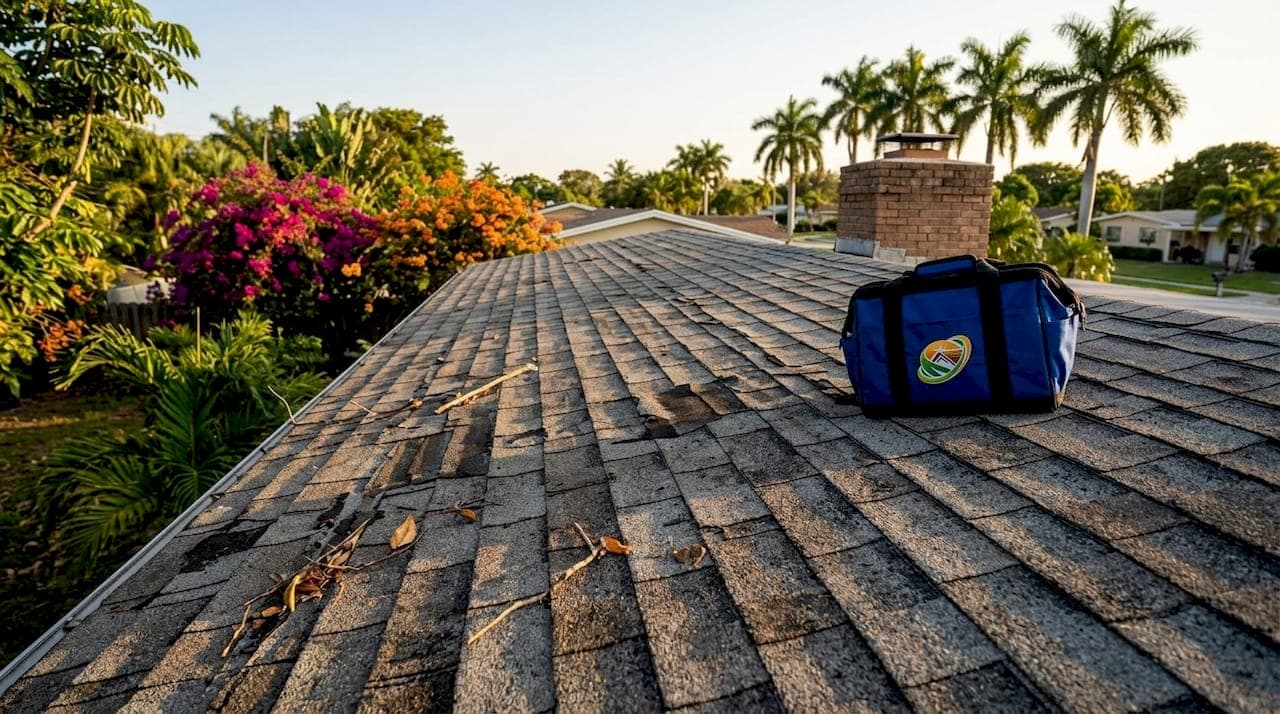
TL;DR:
- Roof aging in South Florida occurs faster due to intense UV radiation, humidity, and storms, risking costly replacements. Recognizing early signs like granule loss, curling, and algae growth allows for renewal treatments that extend roof life significantly. Regular inspections and timely renewal can prevent insurance issues and save homeowners up to 80% compared to full replacement costs.
Roof aging is the progressive deterioration of asphalt shingles caused by long-term exposure to UV radiation, heat, moisture, and wind. In Broward and Palm Beach Counties, this process happens faster than almost anywhere else in the country. The combination of intense South Florida sun, high humidity, and frequent tropical storms puts asphalt shingle roofs under stress year-round. Understanding what roof aging looks like, what drives it, and what you can do about it is the difference between a $3,000 renewal and a $25,000 replacement.
What causes roof aging on asphalt shingles?
Roof aging is a chemical and physical process, not just surface wear. According to the Insurance Institute for Business & Home Safety (IBHS), UV exposure causes asphalt degradation at the molecular level, and no amount of routine maintenance can reverse those weathering changes once they take hold. That is why catching the problem early matters so much.
In South Florida, four specific forces accelerate this process faster than in most other states:
- UV radiation: The Florida sun beats down on your roof 12 months a year. UV rays break down the oils in asphalt shingles, causing them to dry out, become brittle, and lose their protective granule coating. Granule loss is an irreversible sign of aging. Once granules shed, the asphalt underneath is exposed directly to the sun, and the deterioration speeds up significantly.
- Temperature cycling: Broward and Palm Beach rooftops can reach 160°F on a summer afternoon and cool rapidly after a storm. This constant expansion and contraction stresses the shingle material, causing micro-cracks and eventual brittleness.
- Moisture and humidity: Florida's humidity is relentless. Rain, dew, and trapped moisture create conditions where algae and moss thrive. Biological growth traps additional moisture against the shingle surface, accelerating decay from below as well as above.
- Wind damage: Tropical storms and hurricane-season winds lift shingle edges, break sealing strips, and allow water to penetrate. Even moderate wind events compound existing age-related wear.
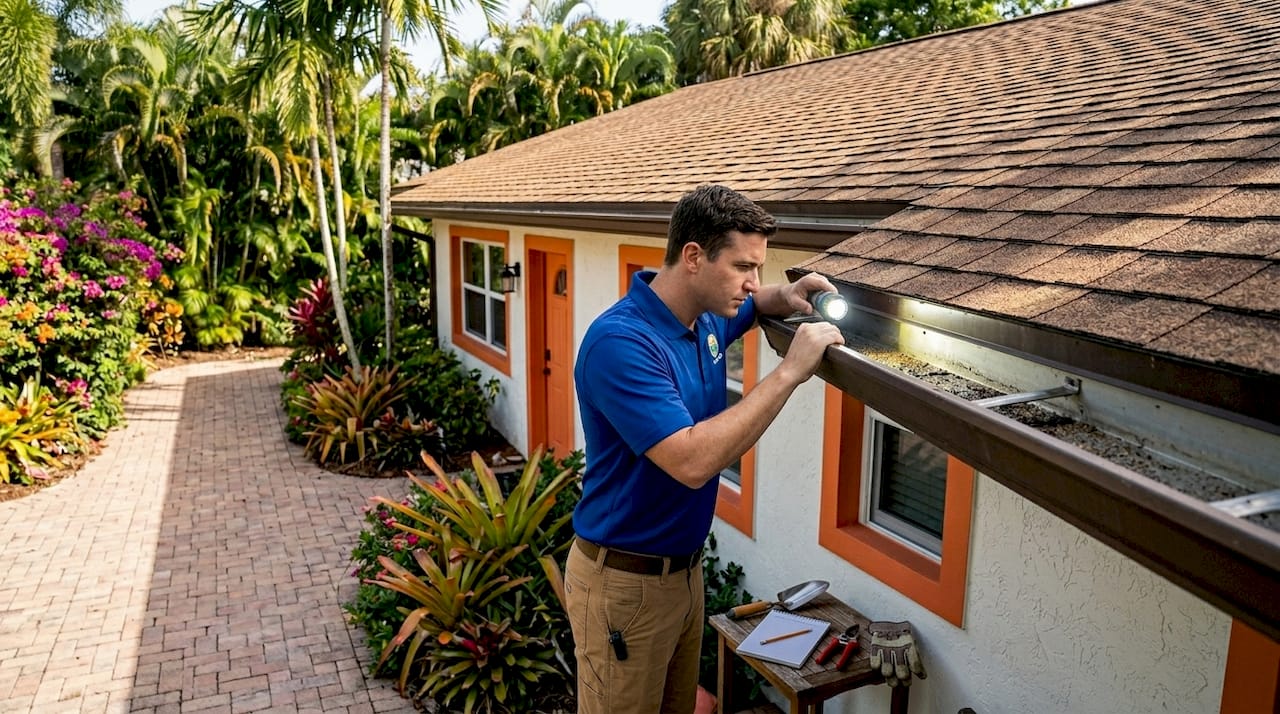
Pro Tip: After any named storm passes through Broward or Palm Beach County, walk your property and check your gutters. Granules collecting in the downspout runoff are one of the earliest and clearest signals that your shingles are aging faster than expected.
The IBHS Roof Aging Farm, where researchers study shingles under real-world weather conditions, confirms that UV and moisture cycling work together to degrade shingle performance well before a roof looks obviously damaged. A roof can be failing structurally while still appearing intact from the street.
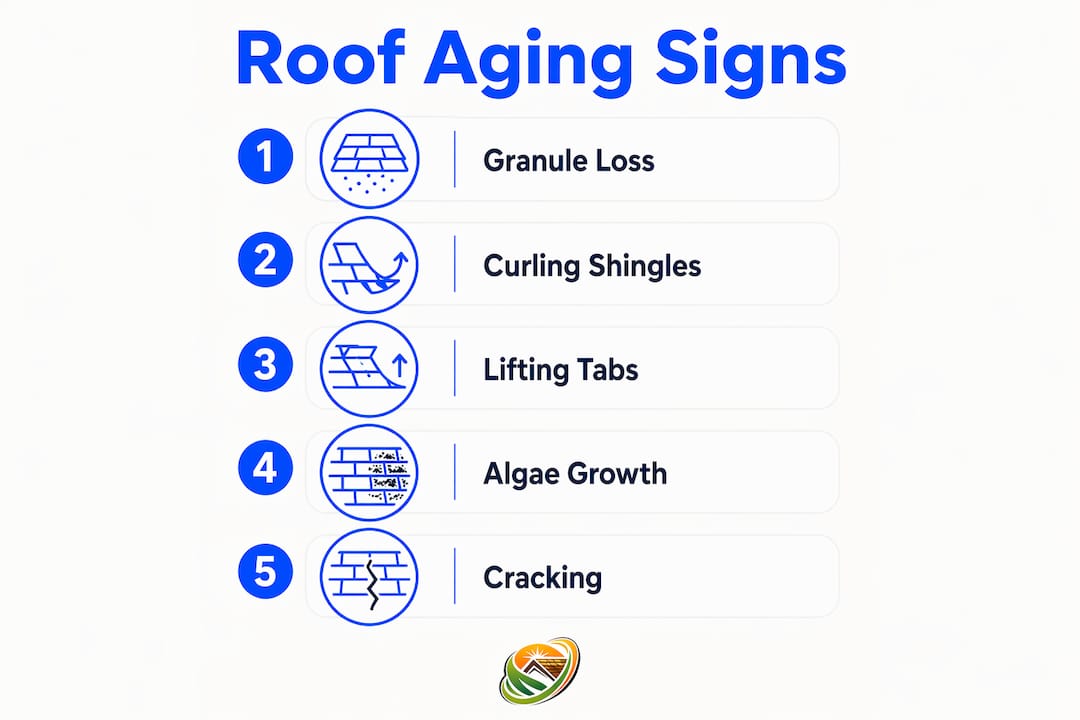
What are the common signs of roof aging?
Identifying roof aging early gives you options. Wait too long, and those options shrink to one: full replacement. Here are the most common signs to look for on an asphalt shingle roof in South Florida.
Granule loss and bare spots
Granules are the small, sand-like particles embedded in the surface of asphalt shingles. They protect the asphalt from UV rays and give shingles their color. When you see granules in gutters or notice dark, bare patches on your roof, the shingles have lost their primary UV shield. This is not cosmetic. It is a functional failure that accelerates every other form of aging.
Curling, cracking, and blistering
Shingles curl at the edges or cup in the center when the asphalt dries out and loses flexibility. Blistering appears as raised bubbles on the shingle surface, caused by trapped moisture or volatile compounds escaping during heat cycles. Cracking follows brittleness. All three are physical signs that the shingle material has degraded beyond surface cleaning or patching.
Unsealed and lifting tabs
Asphalt shingles have self-sealing adhesive strips along their lower edges. As a roof ages, those strips lose their grip. Sealing strip failure allows wind to lift shingle tabs, which lets water intrude long before you see a leak inside your home. This is one of the most underestimated signs of aging because it is invisible from the ground.
Algae, moss, and dark streaking
The dark black or green streaks you see on roofs across South Florida are caused by Gloeocapsa magma, a type of algae that thrives in humid climates. Moss growth follows in shaded areas. Both trap moisture against the shingle surface and accelerate structural deterioration. In Broward and Palm Beach, this is not a seasonal issue. It is a year-round concern.
| Sign | What it means |
|---|---|
| Granules in gutters | UV protection is failing; shingles are thinning |
| Curling or cupping edges | Asphalt has dried out and lost flexibility |
| Blistering surface | Moisture or heat damage to shingle structure |
| Lifting shingle tabs | Sealing strips have failed; wind intrusion risk is high |
| Algae or moss growth | Moisture is being trapped; biological decay is active |
Pro Tip: Stand at the edge of your driveway and look at your roofline at a low angle during morning light. Curling shingle edges and uneven surfaces are much easier to spot from that angle than from directly below.
A professional roof age assessment goes beyond what you can see from the ground. Underlayment and decking can degrade silently while the surface still looks passable. Do not rely on a visual check alone.
How does roof age affect your insurance in Florida?
Roof age has a direct and significant impact on your homeowner's insurance in Broward and Palm Beach Counties. Florida insurers are among the strictest in the country when it comes to roof age policies, and many homeowners do not realize the financial exposure until they file a claim.
Insurance companies restrict coverage for roofs older than 15 to 20 years. Some carriers in Florida will not write a new policy on a home with a roof over 15 years old. Others will require a full inspection before renewal. This is not a technicality. It is a real barrier to coverage that affects thousands of Broward and Palm Beach homeowners each year.
Here is what roof age means for your policy:
- Replacement Cost Value (RCV) vs. Actual Cash Value (ACV): A newer roof qualifies for RCV settlements, meaning the insurer pays to replace your roof at today's cost. An older roof may only qualify for ACV, which factors in depreciation. On a 15-year-old roof, that depreciation can reduce your payout by 50% or more.
- Higher premiums: Older roofs drive up premiums because they represent higher risk to the insurer. You pay more each year for a roof that is also worth less in a claim.
- Wear and tear exclusions: Insurance covers sudden, accidental damage. It does not cover gradual deterioration. If your roof fails due to aging, that is not a covered peril. The cost falls entirely on you.
- Non-renewal notices: Florida homeowners with roofs approaching the 15 to 20 year mark frequently receive non-renewal notices. Addressing aging before that threshold keeps your coverage intact.
South Florida homeowners are in a uniquely difficult position. Weather exposure accelerates replacement cycles, meaning roofs here age faster than the national average. Acting before your roof hits the insurer's age limit is not just smart maintenance. It is financial protection.
Practical steps to slow roof aging and extend your shingle roof's life
The good news is that roof aging is manageable when you act before the damage becomes irreversible. These steps are specific to asphalt shingle roofs in Broward and Palm Beach Counties.
- Schedule professional inspections every two to three years. Routine inspections after storms and at key lifespan milestones catch aging signs before they become structural failures. Do not wait for a leak to call someone.
- Clean your roof to remove algae and debris. Soft-wash treatments remove biological growth without damaging shingles. Debris buildup in valleys and around penetrations traps moisture and accelerates decay. Clear it regularly.
- Address granule loss and sealing issues early. Once you spot granule shedding or lifting tabs, those areas need attention immediately. Spot repairs can buy time, but they are not a long-term solution on their own.
- Consider shingle roof renewal before replacement becomes necessary. Shingle renewal treatments, such as the GreenSoy Technology used by Shingleroofrenewal, restore flexibility and UV protection to aging asphalt shingles at the molecular level. Renewal can extend roof life by 10 to 15 years, at a fraction of the cost of a full replacement.
- Document your roof's condition for insurance purposes. Photos, inspection reports, and maintenance records demonstrate to your insurer that the roof has been properly maintained. This documentation matters when you file a claim or renew your policy.
The cost comparison is straightforward. A full asphalt shingle replacement in South Florida runs $15,000 to $30,000. A renewal treatment through Shingleroofrenewal costs a fraction of that, with savings of up to 80% compared to replacement. For a roof that still has structural integrity but shows signs of surface aging, renewal is the smarter financial decision.
Pro Tip: If your roof is between 7 and 15 years old and showing early signs of aging like granule loss or minor curling, you are likely in the ideal window for renewal. After 20 years, the structural condition may disqualify the roof from renewal, and replacement becomes the only option. Act while you still have a choice.
For homeowners dealing with aging shingle repairs, addressing the visible signs early prevents the kind of compounding damage that forces a full replacement before the roof's structural life is actually over.
Key takeaways
Roof aging in South Florida is faster and more financially consequential than most homeowners expect, making early identification and renewal the most cost-effective path forward.
| Point | Details |
|---|---|
| Aging starts with UV and moisture | South Florida's sun and humidity degrade asphalt shingles faster than in most U.S. climates. |
| Granule loss is the first warning | Granules in gutters signal UV protection failure and accelerating shingle deterioration. |
| Insurance is directly affected | Roofs over 15 to 20 years old face coverage restrictions, higher premiums, and reduced claim payouts. |
| Renewal beats replacement | Shingle renewal extends roof life by 10 to 15 years at up to 80% less cost than full replacement. |
| Act in the 7 to 15 year window | Early intervention keeps renewal as an option before structural damage forces a full replacement. |
What I've learned watching South Florida roofs age
By Daniellison
After spending years watching homeowners in Broward and Palm Beach navigate roof decisions, the pattern I see most often is this: people wait. They see the granules in the gutter, notice the dark streaks on the shingles, and tell themselves it can wait until next year. By the time they call someone, the window for renewal has often closed.
The misconception I hear most is that a roof either needs replacing or it does not. That binary thinking costs homeowners tens of thousands of dollars. The reality is that most roofs in this region go through a long middle stage where the shingles are aging but the structure is still sound. That is exactly when renewal works. That is the window Shingleroofrenewal was built to serve.
Florida's climate does not give roofs the same lifespan that national averages suggest. A 12-year-old roof in Broward has experienced more UV stress, more storm cycles, and more humidity than a 20-year-old roof in a northern state. Age in years is not the right metric. Condition is. And condition requires an actual inspection, not a guess from the driveway.
My honest advice: if your roof is between 8 and 15 years old and you have not had a professional look at it recently, schedule that inspection now. Not because something is necessarily wrong, but because knowing where you stand gives you options. Options are worth protecting.
— Daniellison
Save your roof before it needs replacing
If your asphalt shingle roof is showing signs of aging, including granule loss, curling edges, or algae streaks, Shingleroofrenewal can help you find out if renewal is still an option. As a certified applicator of Fresh Roof's GreenSoy Technology, Shingleroofrenewal restores shingle flexibility and UV protection at the molecular level, extending your roof's life by 10 to 15 years. Homeowners in Broward and Palm Beach County can save up to 80% compared to a full replacement, backed by a 6-year transferable warranty. The process starts with a free inspection. Visit Shingleroofrenewal to schedule yours today and find out if your roof qualifies.
FAQ
What is roof aging in simple terms?
Roof aging is the gradual breakdown of asphalt shingles caused by long-term exposure to sun, heat, moisture, and wind. In South Florida, this process happens faster than the national average due to intense UV radiation and year-round humidity.
How do I know if my roof is aging too fast?
Look for granules collecting in your gutters, curling or cracking shingles, dark algae streaks, and lifting shingle edges. Professional inspections every two to three years are the most reliable way to catch aging before it becomes a structural problem.
Does roof age affect my homeowner's insurance in Florida?
Yes. Florida insurers often restrict or deny coverage for roofs older than 15 to 20 years, and older roofs typically receive depreciated claim settlements rather than full replacement cost payouts.
Can an aging roof be renewed instead of replaced?
Yes, if the roof's structure is still sound. Shingle renewal treatments like GreenSoy Technology restore flexibility and UV protection, extending roof life by 10 to 15 years at a cost that is up to 80% less than full replacement.
How often should I inspect my roof in South Florida?
Schedule a professional inspection every two to three years, and always after a named storm. South Florida's climate accelerates wear, so waiting until you see a leak inside your home means the damage has already progressed significantly.