
Sustainable roof care for qualifying asphalt shingle roofs delivers three things at once: a longer service life, lower out-of-pocket cost compared to full replacement, and less construction waste headed to landfills. For South Florida homeowners dealing with relentless UV exposure, heat, and storm seasons, that combination is hard to ignore.
Top three outcomes for qualifying roofs:
- Extended service life: Professional preservation using plant-based rejuvenation can add 10–15 years to a qualifying roof.
- Cost savings: Preservation typically runs a fraction of a full replacement, with savings commonly reaching 75–80% compared to a tear-off.
- Waste reduction: Asphalt shingle tear-offs contribute to roughly 11 million tons of shingle waste disposed of annually in the U.S. Keeping your roof in service keeps your shingles out of that pile.
Statistic: The U.S. disposes of approximately 11 million tons of asphalt shingles per year. Life-extension strategies are one of the most direct ways homeowners can reduce that number.
Pro Tip: Schedule your roof assessment in the fall, after hurricane season ends and before the dry season begins. That window gives a preservation treatment the best curing conditions and sets your roof up for the following summer.
Shingleroofrenewal is a certified applicator of Fresh Roof (Green Soy Technology), a plant-based treatment that restores shingle flexibility at the molecular level. Their three-step process, inspection, condition assessment, and qualification recommendation, is designed specifically for Broward and Palm Beach County homes.
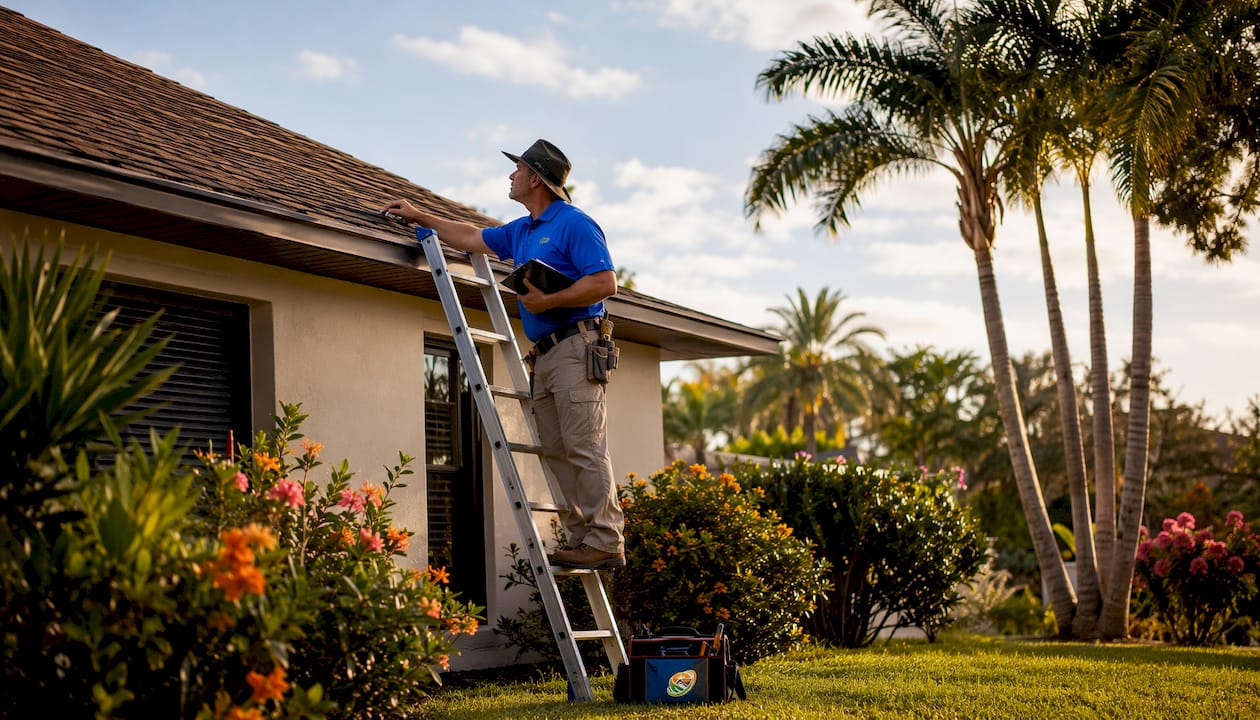
Table of Contents
- Why does South Florida's climate accelerate shingle aging?
- What are the real benefits of sustainable roof care?
- How do professionals decide if your roof qualifies?
- What does a professional preservation treatment actually involve?
- How do the costs compare, and what is the ROI?
- How do you choose a trustworthy preservation provider?
- When should you plan for replacement instead?
- Key Takeaways
- What we see every day in Broward and Palm Beach County
- Your free inspection starts here: Broward and Palm Beach County
- Useful sources and further reading
Why does South Florida's climate accelerate shingle aging?
South Florida's climate is genuinely punishing for asphalt shingles. The combination of intense UV radiation, sustained heat, high humidity, and seasonal storm exposure ages shingles faster than in most other U.S. regions.
Life-cycle assessment research confirms that service life is the single most important variable in a roof's environmental and financial footprint. Shorten the service life, and every cost and every pound of embodied carbon gets spread over fewer years.
How each climate driver damages your shingles, and what preservation protects:
- UV radiation: Breaks down asphalt oils, causing brittleness and cracking. Rejuvenation replenishes those oils and adds UV inhibitors.
- Sustained heat: Accelerates oil evaporation and granule loosening. Treatment restores flexibility and locks granules in place.
- Humidity and moisture: Drives moisture intrusion under brittle shingles. Restored moisture resistance seals the surface.
- Wind-driven rain: Lifts tabs on stiff, dried-out shingles. Renewed flexibility and adhesion improve wind resistance.
Proactive maintenance is the only way to interrupt this cycle before it forces a full replacement. Waiting until shingles fail completely means paying for a tear-off, disposal, and new materials, all at once.
What are the real benefits of sustainable roof care?
The advantages of eco-friendly roof maintenance go well beyond "saving money." Here is the full picture.
Core benefits:
- Life extension: Qualifying roofs gain 10–15 additional years of service.
- Lower cost: Rejuvenation costs far less than replacement, with savings commonly reaching 75–80% versus a full tear-off.
- Energy savings: Cool roof coatings lower surface temperatures, reducing HVAC load in hot, humid climates like South Florida's.
- Reduced landfill waste: Every preserved roof is one less tear-off adding to the national shingle disposal problem.
- Improved curb appeal: Restored shingles look better and can support home resale value.
- Transferable warranty: A 6-year transferable warranty adds a documented asset to your home's value.
| Category | Preserve | Replace |
|---|---|---|
| Upfront cost | Fraction of replacement | $15,000–$30,000+ |
| Service life added | 10–15 years | 20–30 years (new roof) |
| Landfill waste | Near zero | Significant tear-off volume |
| Disruption | 1–2 days | Several days |
| Warranty | 6-year transferable | Varies by contractor |
Environmental note: LCA studies show that extending a roof's service life meaningfully reduces its annualized global warming potential. Preservation spreads the embodied carbon of your existing shingles over more years instead of adding new manufacturing emissions.
Simple ROI example: A preservation job at $3,000–$5,000 that defers a $20,000 replacement by 10 years represents substantial savings, even before factoring in avoided disposal costs and energy efficiency gains.
How do professionals decide if your roof qualifies?
Preservation suits roofs that are chemically aged but structurally sound. Roofs with active leaks, widespread missing tabs, or rotten decking do not qualify. That distinction matters, and any honest provider will tell you upfront.
Professional inspection checklist:
- Shingle adhesion and tab integrity
- Granule loss pattern (localized vs. systemic)
- Curling, cupping, or cracking across the field
- Flashing condition at valleys, pipes, and edges
- Underlayment integrity where visible
- Deck condition (no soft spots, rot, or large gaps)
- Evidence of active moisture intrusion
A proper qualification assessment should include photos of each condition area, measurements of granule loss, a written summary of findings, and a clear recommendation: preserve, repair first then preserve, or replace.
Pro Tip: Before your inspection, pull any previous roof permits, your homeowner's insurance declarations page, and photos of any visible damage. This documentation helps the inspector give you a more accurate assessment and gives you a head start on any insurance conversations. You can also learn more about roof damage documentation to strengthen your position.
What does a professional preservation treatment actually involve?
The standard process runs from inspection through application to warranty documentation, typically completed in one to two days with minimal disruption to your household.
- Pre-treatment inspection: The technician confirms qualification, identifies any minor repairs needed, and documents the roof's baseline condition with photos.
- Cleaning and minor repairs: Loose granules are cleared, minor flashing issues are addressed, and the surface is prepared for treatment.
- Application of Fresh Roof (Green Soy Technology): The plant-based formula penetrates the asphalt shingles, replenishing lost oils, restoring flexibility and moisture resistance, and locking granules in place.
- Drying and final inspection: The treatment cures, and a final walkthrough confirms coverage and condition.
- Warranty documentation: The homeowner receives a 6-year transferable warranty and a full before/after photo record.
The mechanism behind Fresh Roof is straightforward. Asphalt shingles lose their natural oils over time, which is what causes brittleness, cracking, and granule loss. The Green Soy Technology treatment works by reintroducing those oils at the molecular level, along with UV inhibitors that slow future degradation. The result is a shingle that behaves more like it did when it was new.
Timeline note: Most residential jobs in Broward and Palm Beach County are completed in a single day, with a short curing window before the roof is fully active again.
How do the costs compare, and what is the ROI?
Preservation typically costs a fraction of replacement and can buy 10–15 years when the roof qualifies. That math is straightforward for most South Florida homeowners.
Cost comparison at a glance:
- Preservation job: Typically a fraction of full replacement cost, with savings commonly reaching 75–80% versus tear-off
- Full replacement: $15,000–$30,000 for a typical South Florida home
- Payback timing: Preservation pays for itself almost immediately by deferring the replacement cost
For a homeowner facing a $20,000 replacement quote, a preservation treatment that extends the roof's life by 10 years is a straightforward financial decision. Add in avoided disposal fees and lower energy bills from a cooler roof surface, and the long-term savings compound further.
Pro Tip: Combine your preservation treatment with any minor repairs the inspector identifies. Addressing small flashing issues or isolated shingle damage at the same time maximizes the treatment's effectiveness and avoids a separate service call later.
How do you choose a trustworthy preservation provider?
Choose certified applicators who provide documented inspections, before/after photos, and clear qualification criteria before any work begins. That standard separates credible providers from high-pressure salespeople.
Vetting checklist:
- Certified applicator status for the product being used (e.g., authorized Fresh Roof applicator)
- Transferable warranty with written terms
- Documented inspection report provided before you sign anything
- Local references and verifiable reviews
- Lab-tested product data available on request
- Proof of insurance and state licensing
You can also review local roofing best practices to understand what a transparent inspection process should look like before you call anyone.
Questions to ask during a quote:
- What does your inspection include, and will I receive a written report?
- What specific criteria determine whether my roof qualifies?
- What does the warranty cover, and is it transferable if I sell my home?
- Can you provide before/after photos from similar South Florida jobs?
Red flags to watch for:
- Claims of indefinite life-extension with no qualification criteria
- Refusal to provide a written condition report before work begins
- Pressure to replace rather than document and assess first
- No mention of what happens if the roof does not qualify
When should you plan for replacement instead?
Do not pursue preservation on a roof with active leaks, extensive missing shingles, widespread cracking, or rotten decking. Applying a treatment to a structurally failed roof wastes money and delays a necessary replacement.
Decision guide:
- Localized damage (a few missing tabs, isolated cracking): Repair first, then assess for preservation eligibility.
- Systemic granule loss across the whole field: Likely a good preservation candidate if the deck is sound.
- Active leaks or wet decking: Replacement required; preservation cannot fix structural water damage.
- More than two existing layers of shingles: Local building codes may require a full tear-off regardless.
- Rotten or warped decking: Replacement is the only responsible path.
"Rejuvenation is not a cure for structural failure. It is a maintenance tool to buy time for planning and budgeting when the underlying deck, flashing, and system components remain sound." This distinction is what separates an honest provider from one making promises a treatment cannot keep.
If your roof does not qualify, the right move is to get a clear timeline and budget for replacement. Knowing that now, rather than after a failed preservation attempt, saves you money and stress.
Key Takeaways
Sustainable roof care delivers the most value when applied early, to a structurally sound but chemically aged roof, by a certified applicator who documents every step.
| Point | Details |
|---|---|
| Act before failure | Preservation works on aged but sound roofs; waiting until failure forces full replacement. |
| Life extension potential | Qualifying roofs can gain 10–15 additional years of service life. |
| Cost savings | Preservation typically costs substantially less than a full replacement, which can be costly. |
| Environmental impact | Extending service life reduces annualized carbon footprint and keeps shingles out of landfills. |
| Shingleroofrenewal's process | Free inspection, condition assessment, and qualification recommendation backed by a 6-year transferable warranty. |
Before your inspection, have ready:
- Photos of any visible damage or areas of concern
- Your roof's installation date or permit records
- Your homeowner's insurance declarations page
Schedule a free roof assessment to find out whether your roof qualifies before spending anything on replacement quotes.
What we see every day in Broward and Palm Beach County
Most of the roofs we inspect in South Florida are not beyond saving. They look rough from the street, shingles are curling at the edges, granules are collecting in the gutters, and the homeowner has already called a roofer for a replacement quote. Then we show up.
The majority of those roofs still have sound decking and intact tabs. What they have lost is the asphalt oil that kept them flexible. South Florida's sun pulls that oil out faster than almost anywhere else in the country. That is exactly the problem Fresh Roof (Green Soy Technology) was built to solve.
Our three-step process, inspect, assess, qualify, exists because we will not apply a treatment to a roof that does not warrant it. If your roof qualifies, you get a 6-year transferable warranty, full before/after documentation, and years of deferred replacement cost. If it does not qualify, we tell you that clearly and help you plan your next step. That is what "call us before you call the roofer" actually means in practice.
Your free inspection starts here: Broward and Palm Beach County
Shingleroofrenewal offers free roof inspections and qualification assessments for homeowners in Broward and Palm Beach County. As a certified Fresh Roof applicator, every job includes a documented condition report, before/after photos, and a 6-year transferable warranty for qualifying roofs.
If your roof qualifies, you could save between 75% and 80% compared to full replacement, with no disruption beyond one to two days of work. The inspection costs you nothing. The information it gives you is worth a great deal.
Schedule your free inspection today and find out if your roof can be saved before you spend $15,000–$30,000 on a replacement you may not need yet.
Useful sources and further reading
- Lifecycle Inventory Assessment of Selected Low-Slope Roofing Systems: LCA research showing how service life affects annualized environmental impact for roofing systems.
- ARMA Sustainability: The Asphalt Roofing Manufacturers Association's position on recycling, reflectance, and sustainable asphalt roofing practices.
- Benefits of Cool Roof Coatings: Technical overview of how reflective and rejuvenating coatings improve energy efficiency and shingle longevity.
- Asphalt Shingle Restoration Guide: Practitioner explanation of how plant-based treatments replenish lost oils and restore shingle performance.
- Shingleroofrenewal: Service details, certified applicator credentials, and how to schedule a free inspection in Broward and Palm Beach County.
Shingleroofrenewal documents every inspection with photos and a written condition report. Request that documentation from any provider you consider. It protects your investment, supports insurance conversations, and gives you a clear record of your roof's condition over time.