
TL;DR:
- Roof restoration costs between $1,500 and $3,500, representing 10 to 20 percent of replacing a roof. It extends roof life by three to five years but cannot fix structural damage or severe granule loss. Qualified roofs receive a certified application backed by a six-year warranty, saving homeowners money before full replacement becomes necessary.
How much does roof restoration actually cost?
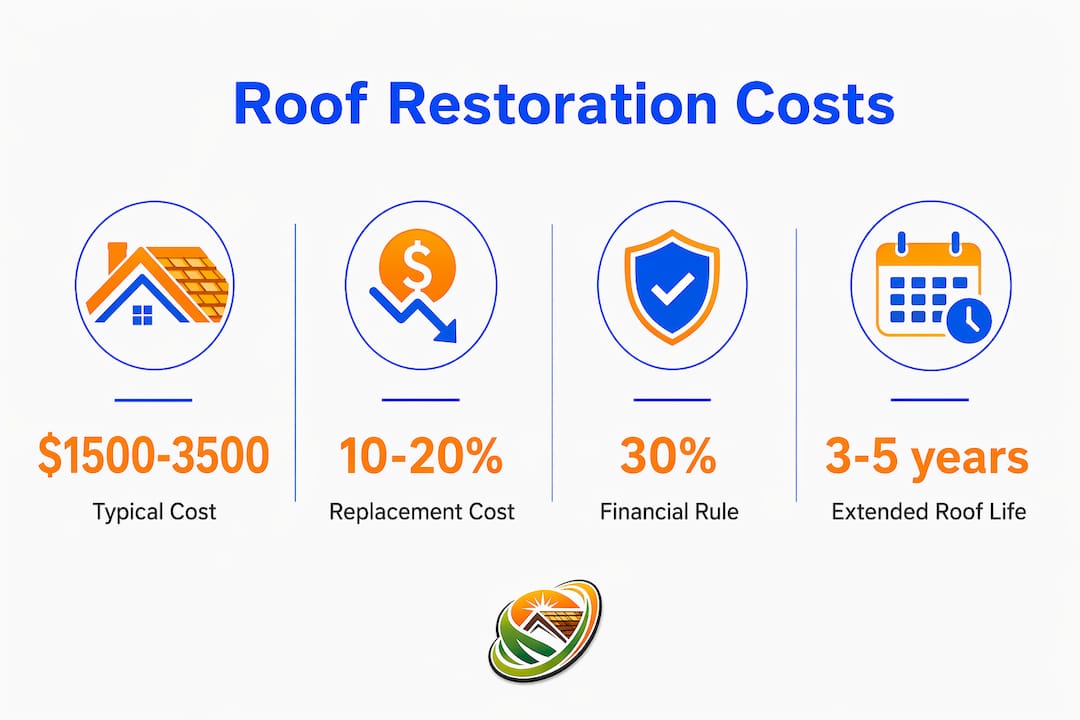
As of 2026, roof restoration for asphalt shingles typically costs between $1,500 and $3,500 per treatment, which is approximately 10–20% of total replacement cost, depending on roof size, pitch, and condition. For most homeowners, that cost advantage is the whole story.
Here is what drives the final number:
- Roof size and pitch: Steeper, larger roofs require more labor and product, pushing costs toward the higher end.
- Condition and damage extent: Roofs needing minor repairs before treatment add to the total; roofs with significant structural issues may not qualify at all.
- Location: Labor rates vary by region. South Florida markets, for example, reflect local demand and climate-specific prep work.
- Materials and application method: Treatments like Fresh Roof Green Soy Technology, which works at the molecular level to restore shingle flexibility and lock in granules, are distinct from basic spray-on products and priced accordingly.
- Inspection fees: A professional inspection before treatment is not optional. It confirms eligibility and identifies any repairs needed first.
- Additional repairs: Sealing exposed nails, addressing minor flashing issues, or removing algae growth are often bundled into restoration quotes.
One financial rule worth knowing: the 30% rule holds that if your repair or restoration costs exceed 30% of your roof's replacement value, replacement is usually the smarter long-term investment. A restoration treatment at $2,500 on a roof worth $15,000 to replace is well below the 30% rule threshold. A treatment on a roof needing $6,000 in structural repairs first does not.
Each treatment typically extends roof life by several years, making it a genuine financial tool for homeowners who need time to budget for replacement.
Table of Contents
- What restoration can and cannot do for your roof
- Why asphalt shingles fail and when restoration still helps
- How the restoration process works, step by step
- Restoration vs. full replacement: the real cost comparison
- Shingleroofrenewal: roof preservation before you need a roofer
- Key Takeaways
What restoration can and cannot do for your roof
Roof restoration is a financial strategy first. Experts are clear that it buys time, not permanence. The goal is to slow deterioration, maintain shingle flexibility, and delay a five-figure replacement bill while you plan and budget.
What restoration does well: it replenishes the oils that UV exposure and heat drain from asphalt shingles over time. Green Soy Technology penetrates the shingle surface at the molecular level, restoring flexibility and helping lock in granules that would otherwise shed. That process slows the brittleness and cracking that leads to premature failure.
What it cannot do: fix leaks, repair rotted decking, or reverse structural damage. If water has already gotten into the roof system, restoration will not stop it. These problems need conventional repair before any treatment makes sense.
Granule loss is the other hard limit. Once a shingle has lost a significant portion of its granules, the exposed asphalt degrades rapidly under UV exposure. At that point, restoration cannot effectively protect the surface. The window for treatment has closed.
Pro Tip: Fix every active leak point and seal exposed fasteners before scheduling a restoration treatment. Applying product over an unresolved leak does not seal it. It hides it.
Why asphalt shingles fail and when restoration still helps
Shingle roofs deteriorate through four main pathways, and understanding them tells you whether your roof is a restoration candidate or past that point.
- UV exposure: Ultraviolet radiation breaks down the asphalt binder in shingles, causing brittleness and cracking. This is the primary driver of shingle failure in sun-heavy climates like South Florida.
- Thermal cycling: Daily expansion and contraction from heat stress weakens the shingle structure over time, accelerating granule loss and surface cracking.
- Moisture intrusion: Water that penetrates through cracked or missing shingles causes deck rot and structural damage. Restoration treats the surface; it cannot address what is already wet underneath.
- Poor attic ventilation: Trapped heat and moisture from below accelerate deterioration from the inside out. This is a systemic problem that no surface treatment can reverse.
Signs your roof may still qualify for restoration: minor granule loss, surface brittleness without cracking through, no active leaks, and a structurally sound deck. Signs it has gone too far: sagging roof lines, spongy sections underfoot, active leaks, or granule loss severe enough to expose bare asphalt across large areas.
Restoration works best as early intervention, not last-ditch repair. Catching shingle deterioration before it becomes structural damage is where the real savings live. A roof rejuvenation guide for South Florida homes covers this timing question in detail for high-UV climates.
How the restoration process works, step by step
Professional inspections are the non-negotiable first step. No reputable restoration company applies treatment without first confirming the roof qualifies. Here is how a proper process runs:
- Inspection: A certified inspector examines the roof for leaks, structural damage, granule loss severity, and overall shingle condition. This determines eligibility.
- Condition assessment: The inspector documents problem areas, identifies any repairs needed before treatment, and confirms the deck is sound.
- Pre-treatment repairs: Exposed nails get sealed, minor flashing issues are addressed, and algae or moss is removed. These steps protect the treatment's effectiveness.
- Application: Fresh Roof Green Soy Technology is applied by a certified authorized applicator, penetrating the shingle surface to restore flexibility and lock in granules.
- Documentation and warranty: A properly certified application comes with a 6-year transferable warranty, which carries value if you sell the home during that period.
When selecting a contractor, ask specifically what product gets applied, what prep work is included in the quote, and what roof conditions would cause them to decline the job. Vague answers about "proprietary formulas" or quotes that skip the inspection step are red flags. For guidance on choosing a roofing contractor, credentials and transparency matter more than price alone.
Restoration vs. full replacement: the real cost comparison
Full asphalt shingle replacement often costs several thousand dollars for most homes, depending on size, complexity, tear-off requirements, and decking repairs. That is the number restoration is measured against.

The cost-per-year math is closer than most homeowners expect. Restoration compares reasonably to replacement over the expected roof lifespan. The difference is timing and cash flow, not necessarily total value.
Restoration makes sense when:
- The roof is structurally sound with surface-level deterioration only.
- You need 3–5 years to budget for full replacement.
- Restoration costs stay well under 30% of replacement cost.
- The home may be sold within the warranty period, making the transferable warranty a selling point.
Replacement makes more sense when:
- Structural damage, deck rot, or active leaks are present.
- Restoration costs approach or exceed the 30% threshold.
- The roof is near the end of its rated lifespan regardless of surface condition.
- Full replacement provides new manufacturer warranties and a documented upgrade that improves resale value.
Insurance is worth factoring in. Some policies cover replacement after storm damage, which changes the math entirely. If an insurance claim is in play, get the inspection done before committing to restoration. You may be leaving covered replacement money on the table.
For a detailed breakdown of restoration cost advantages versus replacement, the numbers shift depending on your specific roof and timeline.
Shingleroofrenewal: roof preservation before you need a roofer
Most homeowners in Broward and Palm Beach County find out their roof needed attention six months too late. By then, what could have been a $1,500–$3,500 preservation treatment has turned into a $8,000–$25,000 replacement conversation.
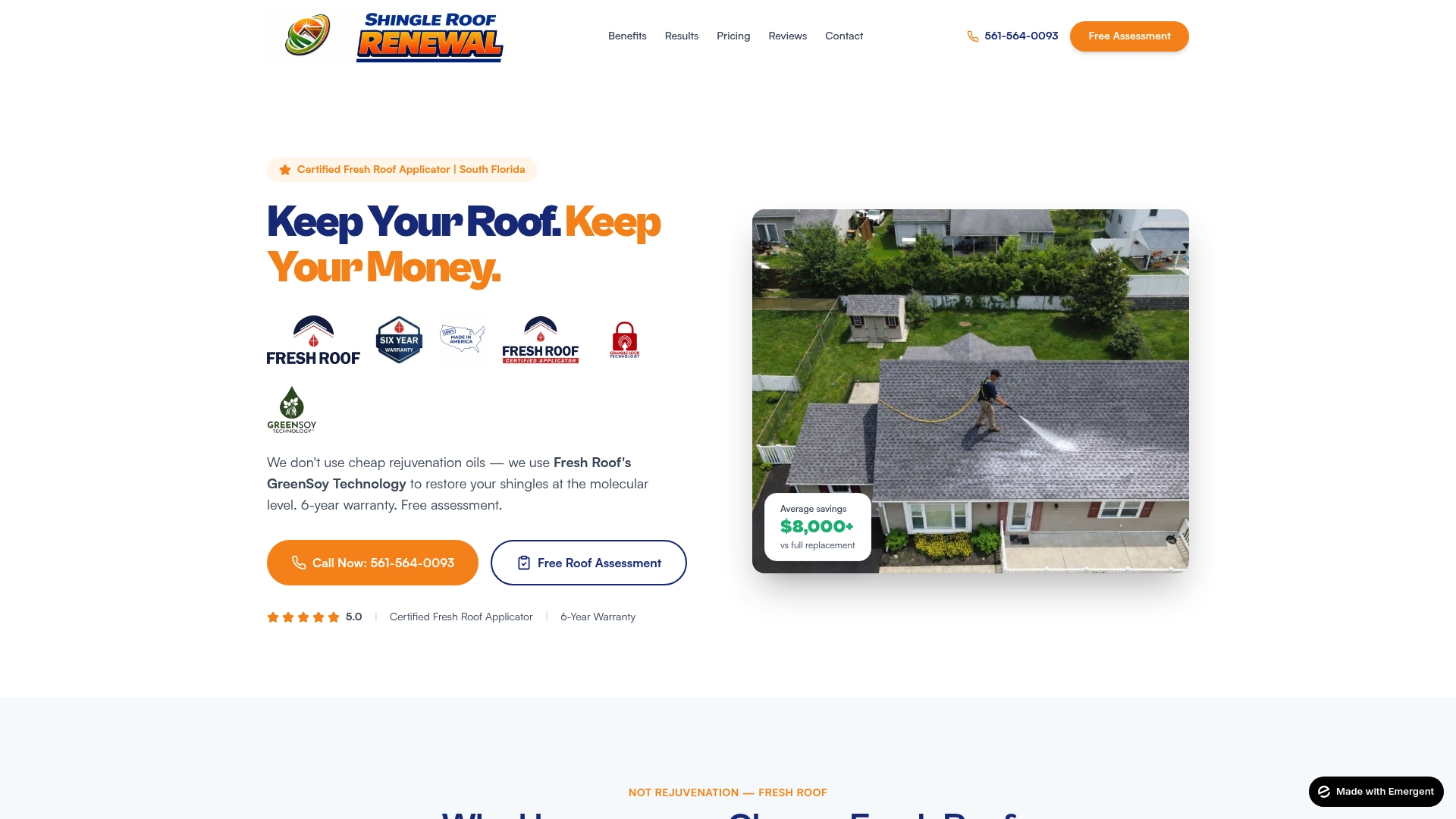
Shingleroofrenewal is the company you call before that happens. As a certified authorized applicator of Fresh Roof Green Soy Technology, Shingleroofrenewal inspects your roof, assesses its condition, and tells you honestly whether it qualifies for preservation. If it does, the treatment restores shingle flexibility, slows granule loss, and extends your roof's life, all backed by a 6-year transferable warranty. If it does not qualify, you get a straight answer instead of a sales pitch.
The process is three steps: inspection, assessment, recommendation. No pressure, no guesswork. Homeowners who qualify can save significantly compared to full replacement, and the warranty transfers to the next owner if you sell.
Schedule your free roof inspection today and find out if your roof can still be saved.
Key Takeaways
Roof restoration costs between $1,500 and $3,500 per treatment, roughly 10–20% of replacement cost, making it a practical financial tool for homeowners with structurally sound but deteriorating asphalt shingle roofs.
| Point | Details |
|---|---|
| Typical restoration cost | Treatments run $1,500–$3,500, approximately 10–20% of full replacement cost. |
| The 30% rule | If restoration plus repairs exceeds 30% of replacement cost, replacement is usually the better investment. |
| Life extension per treatment | Each application typically adds 3–5 years to a qualifying roof's lifespan. |
| Hard stops for restoration | Sagging, active leaks, deck rot, or severe granule loss mean restoration will not work. |
| Shingleroofrenewal's role | Certified Fresh Roof applicator offering free inspections and a 6-year transferable warranty for qualifying South Florida roofs. |