

TL;DR:
- Roof rejuvenation is a spray-on treatment that restores flexibility to asphalt shingles and extends roof life. It is suitable for roofs aged 8 to 15 years with most granules intact and no active leaks, providing a cost-effective alternative to full replacement. The process involves bio-based oils penetrating shingles from the inside out, improving durability and delaying deterioration.
Roof rejuvenation is a spray-on treatment that penetrates asphalt shingles to restore their natural flexibility and extend roof life by up to five years per application. For South Florida homeowners, this matters more than most people realize. Florida's intense UV exposure and heat accelerate shingle degradation faster than in cooler climates, with homeowners seeing early granule loss, cracking, and brittleness starting after just eight years. A full roof replacement in South Florida runs $8,000 to $20,000 or more. Roof rejuvenation, by contrast, costs between $500 and $5,000 depending on home size and roof complexity. That is typically 15–30% of full replacement costs, and it is why so many Broward and Palm Beach County homeowners are looking at this option before calling a roofer.
What is roof rejuvenation and how does it work?
Roof rejuvenation is the industry term for applying bio-based oils directly to aging asphalt shingles to replenish the oils that heat and UV radiation have stripped away. The industry also calls this process shingle restoration or shingle oil treatment. The goal is to restore flexibility to shingles that have become brittle, slow further granule loss, and add functional years to a roof that is still structurally sound.
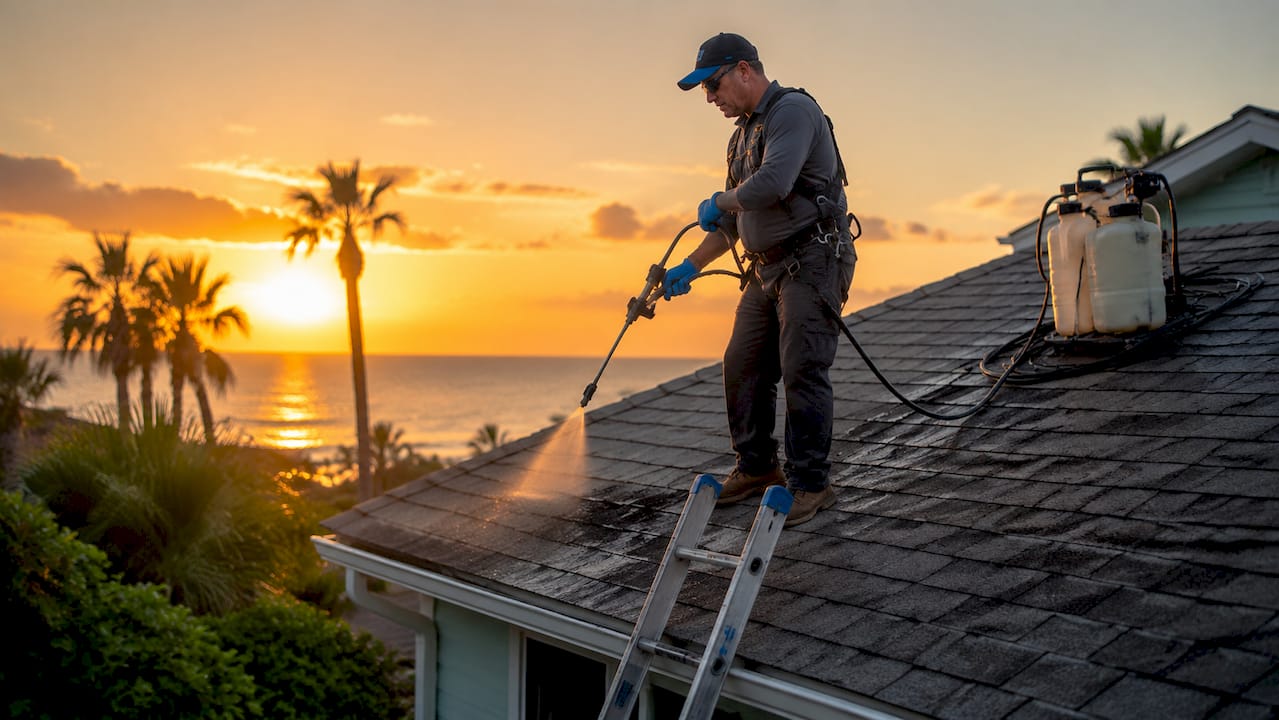
Asphalt shingles contain natural oils that keep them flexible and weather-resistant. Over time, South Florida's sun and heat cook those oils out of the shingle material. Once the oils deplete, shingles crack, curl, and shed granules at an accelerating rate. Rejuvenation treatments use plant-based oils, most commonly soy methyl esters, to penetrate the asphalt matrix and replace what was lost.
Rejuvenation treatments are not coatings. They do not form a surface membrane over your shingles. Instead, they absorb into the shingle itself, working from the inside out. The shingle remains its own waterproof barrier. The treatment simply restores the material properties that made it waterproof in the first place.
Lab tests confirm the results are measurable. Soy-based formulas increase shingle flexibility by 50%–300% and reduce granule loss by up to 46%. Treated shingles also show approximately 24% better impact resistance. Those numbers translate directly to a longer-lasting roof.
Pro Tip: Ask any provider to show you the lab data behind their specific formula. Reputable products have independent test results. If a company cannot produce them, keep looking.
- Oil depletion is the root cause of shingle aging, not just age itself.
- Soy methyl esters are the most studied and widely used active ingredient in rejuvenation products.
- Penetration, not coating is what separates rejuvenation from surface sealers.
- Granule retention improves because flexible shingles grip granules more effectively.
Is your South Florida roof a good candidate?
Not every roof qualifies for rejuvenation, and that is actually a good sign for the industry. Legitimate providers reject about 1 in 7 roofs after inspection because the treatment cannot fix physical damage or structural problems. A company that accepts every roof without a real inspection is one you should walk away from.
The ideal candidate is an asphalt shingle roof that is 8–15 years old, retains most of its granules, and has no active leaks, missing shingles, or structural damage. Roofs in that window are old enough to have lost meaningful oil content but young enough that the shingle material is still intact and worth treating.
Here is how to think about eligibility before you schedule an inspection:
- Check the age. Roofs under eight years old typically still have adequate oil content. Roofs over 15 years may have shingles too degraded to absorb treatment effectively.
- Look at the granules. Run your hand across a shingle or check your gutters. Heavy granule loss is a warning sign, but moderate loss is exactly the condition rejuvenation addresses.
- Check for leaks. Active water intrusion means you need a repair first. Rejuvenation does not seal leaks.
- Assess shingle integrity. Missing, cracked, or curled shingles that have already broken apart need replacement, not restoration.
- Consider your insurer. Some Florida insurers view certified roof maintenance treatments favorably. Ask your provider if they offer documentation that supports your policy.
Pro Tip: Think of rejuvenation the same way you think of an oil change for your car. You do not wait until the engine seizes. You maintain it while it still runs well. The same logic applies to your roof.
Rejuvenation is maintenance, not repair. That distinction matters. If your roof has physical damage, address those repairs first. Then assess whether the remaining shingles are good candidates for treatment.
What happens during the application process?
A professional roof rejuvenation application follows a clear sequence, and knowing what to expect helps you evaluate whether a provider is doing the job right.
The process starts with a thorough inspection. A qualified technician walks the roof, checks shingle flexibility by hand, looks for granule loss patterns, and identifies any areas with damage or active leaks. This inspection determines whether the roof qualifies and flags any repairs needed before treatment.
A typical application takes 30–90 minutes, with full oil penetration occurring over 24–72 hours after treatment. During that absorption window, shingles may darken slightly. That color shift is normal and temporary. It is the oil working into the asphalt matrix.
- Low-pressure spray covers all exposed shingles, including ridges and hips.
- No foot traffic on the roof for at least 24 hours after application.
- Dry weather is required during and immediately after application for proper absorption.
- Visual changes fade as the oil fully absorbs, usually within a few days.
- Retreatment is recommended every 3–5 years for roofs that remain in good condition.
Reapplication up to three times can add cumulative lifespan extension, though returns diminish as shingles age naturally. The goal is to stay ahead of deterioration, not to chase it once the damage is done.
Benefits and limitations compared to full replacement
Roof rejuvenation delivers real, measurable benefits for the right roof. It also has clear limits that every homeowner should understand before signing anything.
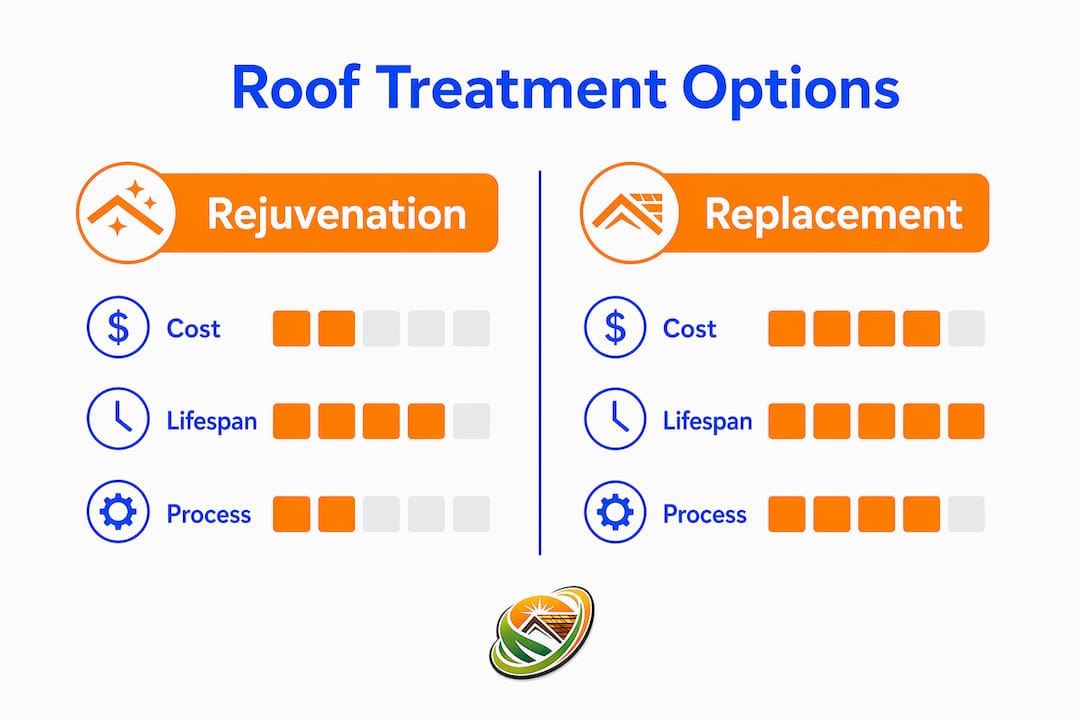
| Category | Roof rejuvenation | Full replacement |
|---|---|---|
| Cost | $500–$5,000 | $8,000–$20,000+ |
| Lifespan added | 3–5 years per treatment | Full new roof lifespan |
| Fixes physical damage | No | Yes |
| Landfill waste | Minimal | Significant tear-off waste |
| Disruption to home | Low | High |
| Warranty | Multi-year (provider-issued) | Manufacturer warranty |
The cost advantage is the most obvious benefit. Rejuvenation runs 15–30% of replacement costs, which means a homeowner with a qualifying roof can save thousands of dollars and delay a major capital expense by several years. That savings is real money that stays in your pocket.
The environmental benefit is less talked about but equally significant. A full tear-off sends tons of old shingles to a landfill. Rejuvenation extends the life of what is already on your roof, reducing that waste entirely.
Roof rejuvenation is best understood as preventive maintenance that delays replacement by a few years. It is not a repair, and it is not a permanent fix. Homeowners who go in with that expectation get real value. Those who expect it to cure a damaged roof will be disappointed.
Rejuvenation does not fix active leaks, missing shingles, or structural damage. Those problems require repairs or full replacement first. The treatment only restores oils and flexibility to intact shingles. It buys time on a roof that still has good bones. It cannot resurrect one that has already failed.
One more point worth making: marketing claims of extending roof life by 10–15 years are not supported by independent, long-term data. The honest, research-backed number is 3–5 years per application. That is still a strong return on a $500–$5,000 investment, but go in with accurate expectations.
Key Takeaways
Roof rejuvenation is a cost-effective, bio-based maintenance treatment that extends asphalt shingle life by 3–5 years per application for qualifying roofs aged 8–15 years, at a fraction of full replacement cost.
| Point | Details |
|---|---|
| Ideal roof age | Roofs aged 8–15 years with intact shingles and no active leaks qualify for treatment. |
| Cost advantage | Rejuvenation costs $500–$5,000 versus $8,000–$20,000+ for full replacement. |
| What it fixes | Restores shingle flexibility and reduces granule loss; does not repair physical damage. |
| Application process | Low-pressure spray takes 30–90 minutes; full absorption occurs over 24–72 hours. |
| Realistic lifespan gain | Each treatment adds 3–5 years; reapplication up to three times extends benefits further. |
What I have learned after watching homeowners make this decision
I have seen homeowners on both sides of this choice, and the ones who get the most value from rejuvenation share one thing in common: they called before the roof got bad.
The homeowners who wait until shingles are curling off the edge, granules are piling up in the gutters, and the ceiling is showing water stains are already past the point where rejuvenation helps. At that stage, the only honest answer is replacement. But the homeowners who catch the early signs, an eight-year-old roof starting to look dull and brittle, a few granules in the gutter after a storm, those are the people who get real results from a treatment like this.
My honest concern with this category is the providers who say yes to every roof. A legitimate company turns away roughly 1 in 7 roofs because the treatment simply will not work on a roof that is too far gone. If a company inspects your roof in five minutes and immediately tells you it qualifies, that is a red flag. Reputable providers offer written warranties and transparent formulations. They earn your trust through the inspection, not around it.
The other thing I tell homeowners: rejuvenation fits best inside a broader maintenance mindset. Pair it with annual inspections, prompt minor repairs, and good gutter maintenance. A treated roof that is also well maintained will outperform a treated roof that gets ignored between applications. The treatment is not a substitute for attention. It is a tool that works best when you are already paying attention to your roof.
— Daniellison
Shingleroofrenewal: certified roof renewal for South Florida homeowners
Shingleroofrenewal serves homeowners in Broward and Palm Beach County who want to protect their roof before replacement becomes the only option.
As a certified Fresh Roof applicator, Shingleroofrenewal uses Green Soy Technology to restore shingle flexibility at the molecular level. The process starts with a free roof inspection to determine whether your roof qualifies. If it does, you get a clear treatment plan backed by a 6-year transferable warranty. Homeowners who qualify can save significantly compared to a full tear-off, and they keep a functional roof without the disruption of a full replacement. Learn more about the full renewal process and services, or visit Shingleroofrenewal to schedule your free inspection today.
FAQ
What is roof rejuvenation?
Roof rejuvenation is a bio-based oil treatment applied to asphalt shingles to restore flexibility and slow granule loss. It penetrates the shingle material rather than coating the surface, extending roof life by 3–5 years per application.
How much does roof rejuvenation cost?
Roof rejuvenation costs between $500 and $5,000 depending on home size and roof complexity. That is typically 15–30% of what a full replacement costs in South Florida.
Does roof rejuvenation work on all roofs?
No. Roofs with active leaks, missing shingles, or structural damage do not qualify. The treatment works best on asphalt shingle roofs aged 8–15 years that are still structurally sound.
How long does the application take?
The spray application takes 30–90 minutes. Full oil absorption into the shingles occurs over 24–72 hours, during which shingles may appear slightly darker before returning to normal color.
How often should a roof be retreated?
Retreatment is recommended every 3–5 years for roofs that remain in good condition. Reapplication up to three times can extend cumulative lifespan, though results diminish as shingles age naturally.