
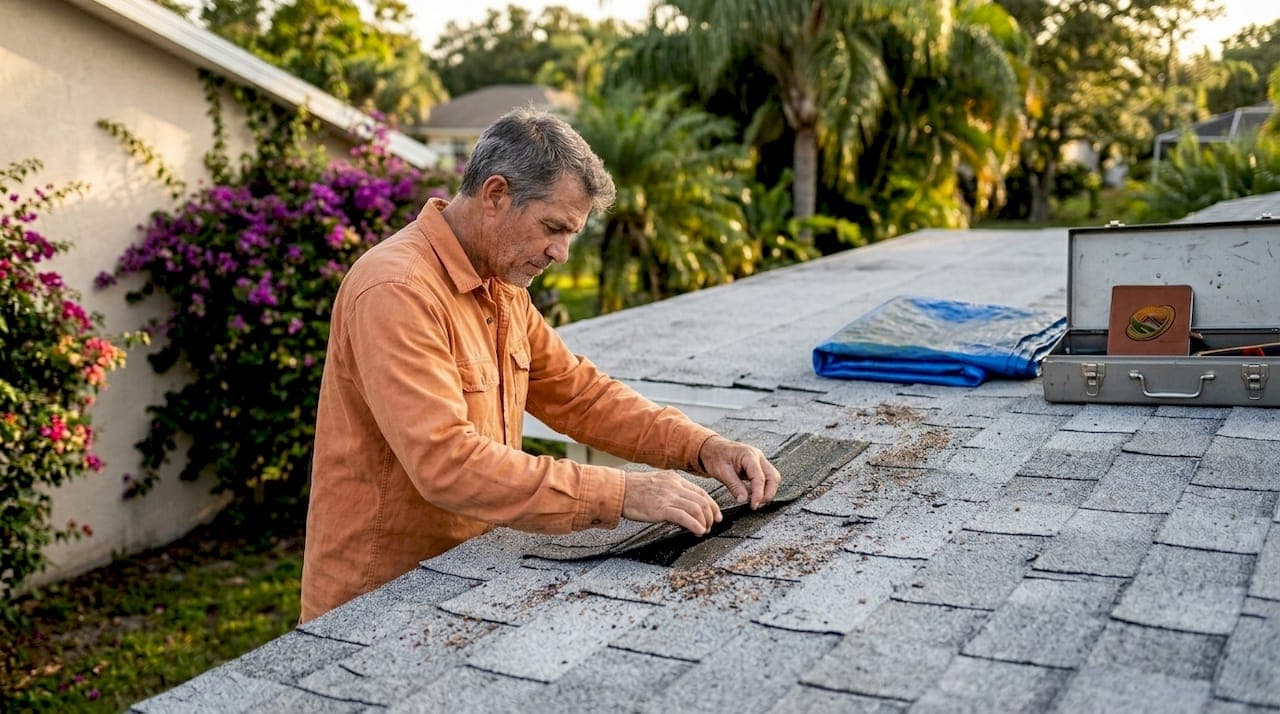
TL;DR:
- South Florida's heat, UV rays, humidity, and wind accelerate shingle deterioration from within, often before storms arrive. Visible signs like granule loss and lifted edges indicate ongoing damage, which can be mitigated through targeted repairs and proper maintenance. Professional treatments that restore shingle flexibility, combined with correct installation practices, effectively extend a roof's lifespan against harsh weather conditions.
Most homeowners in Broward and Palm Beach County assume their roof will fail during a major hurricane. That belief is expensive. Understanding how weather affects shingle roofs reveals a different story: the real damage happens slowly, every single day, long before any named storm arrives. Relentless UV rays, heat that pushes surface temperatures past 150°F, and South Florida's year-round humidity quietly break down your shingles from the inside out. This guide explains exactly what is happening to your roof right now and what you can actually do about it before the next storm season forces your hand.
Table of Contents
- The real threats: How South Florida weather degrades shingle roofs
- Visible and invisible signs of weather-related roof damage
- Why routine cleaning and coatings can backfire
- Key installation details for boosting future weather resistance
- Action steps: How to cost-effectively renew your aging shingle roof against weather
- A professional's take: What most homeowners get wrong about roof weathering and renewal
- Get expert help: Protect and renew your shingle roof today
- Frequently asked questions
Key Takeaways
| Point | Details |
|---|---|
| UV and rain accelerate aging | Heat, sun, and storms target shingle seals, edges, and granules, shortening lifespan fast in South Florida. |
| Early damage is often hidden | Roofs can look fine while losing crucial protection at edges and granules—catch these signals early for less costly solutions. |
| Routine cleaning can harm | Power washing and generic coatings may do more harm than good by stripping granules or masking critical failure points. |
| Targeted repair extends life | Focus on repairing edges, sealing, and spot damage to renew shingle roofs for far less cost than full replacement. |
| Expert help maximizes renewal | Consult professionals who understand South Florida weather and shingle details to protect your investment. |
The real threats: How South Florida weather degrades shingle roofs
With the foundation set, let's break down how each aspect of South Florida's climate directly impacts your shingle roof's lifespan and integrity.
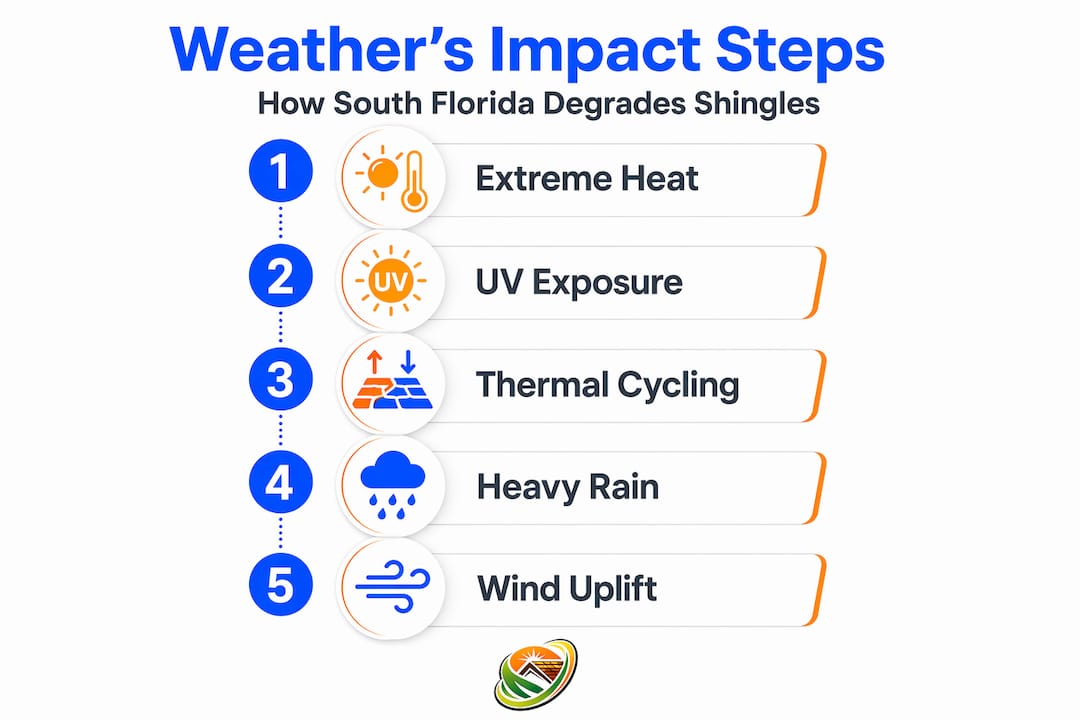
Asphalt shingles are designed to handle weather, but they were not designed for this weather. South Florida's combination of intense UV, extreme heat, and near-daily rain creates a punishing cycle that accelerates aging faster than almost anywhere else in the country.
Heat and UV exposure are the biggest culprits. Your shingle surface can reach 150°F to 170°F on a typical summer afternoon. At those temperatures, the asphalt binder inside each shingle dries out, the sealant that bonds shingles together weakens, and the whole system becomes brittle. This is not storm damage. It is just Tuesday in July.
Thermal cycling compounds the problem. Every morning your roof heats up; every evening it cools down. That daily expansion and contraction works like bending a credit card back and forth. Eventually, the bonds break. Edges lift. Tabs curl. Cracks form along the surface.
Granule loss is the visible sign that UV damage is winning. Those small mineral granules embedded in your shingles act as a sunscreen for the asphalt underneath. Once they start washing off, UV exposure accelerates deterioration rapidly. A shingle without granules is like skin without sunscreen in a Florida summer. It does not last long.
Rain and humidity exploit every weakness heat creates. Water finds the smallest crack, works its way under a lifted tab, and sits against the wood decking beneath. Over time, that means rot, mold, and leaks that show up on your ceiling long after the damage started. The impact of rain on shingles is rarely dramatic. It is slow and cumulative.
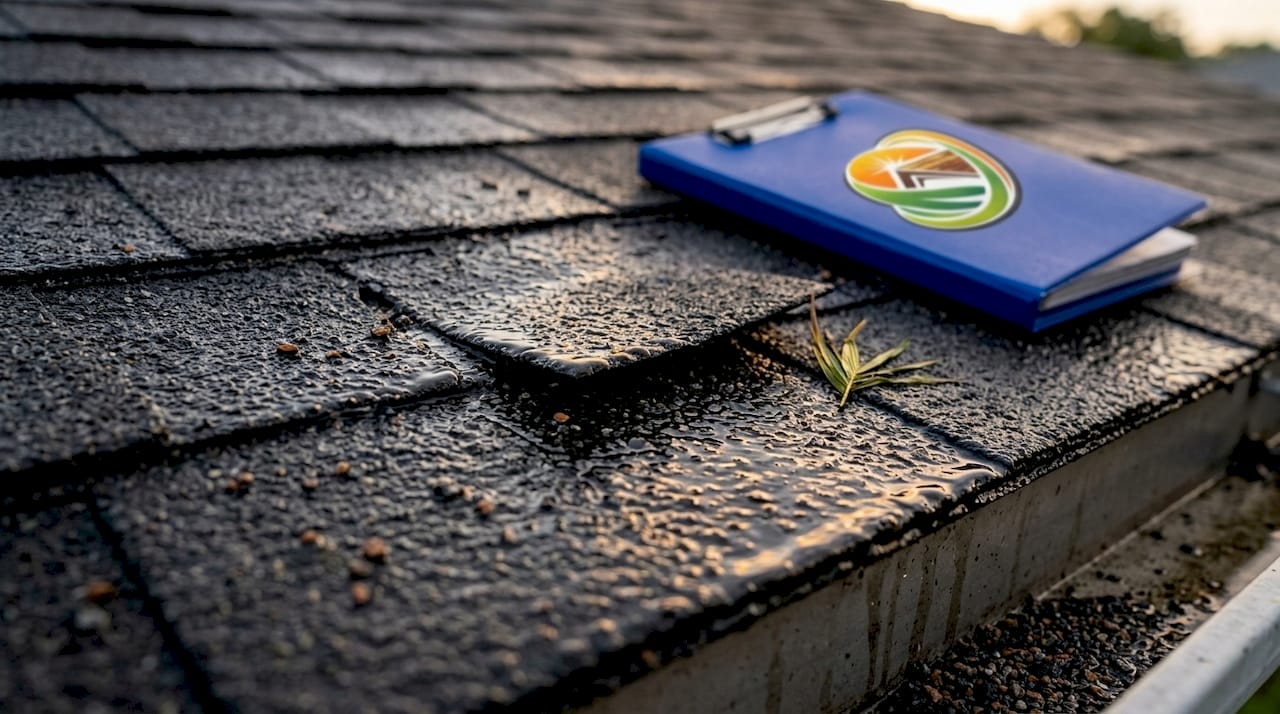
Wind is the final piece. Even routine gusts, not just hurricane-force winds, cause uplift at shingle edges and along the underlayment interface. Once an edge lifts, wind-driven rain gets underneath. You may not see a single missing shingle, but water is already entering.
Here is a quick comparison of how each weather factor affects your roof:
| Weather factor | Primary damage | Visible sign |
|---|---|---|
| UV and heat | Asphalt dries out, sealant fails | Curling, cracking, brittleness |
| Thermal cycling | Bond and tab adhesion weakens | Lifted edges, separated tabs |
| Granule loss | Asphalt exposed to direct UV | Bare patches, granules in gutters |
| Rain and humidity | Water intrusion, rot, algae | Stains, leaks, dark streaking |
| Wind | Uplift at edges and seams | Lifted tabs, missing shingles |
The bottom line: South Florida's climate does not give your shingle roof a break. Heat, UV, rain, and wind work together in a cycle that shortens roof lifespan faster than most homeowners realize. Understanding why Florida asphalt roofs fail is the first step toward preventing it.
Visible and invisible signs of weather-related roof damage
Understanding how weather acts on your roof is powerful. Next, learn how to spot the results before minor issues turn into major expenses.
Here is the problem: a roof can look perfectly fine from the street and still be months away from failing. South Florida roofs often look cosmetically acceptable while the sealant has already weakened, tabs are beginning to lift, and granules are disappearing fast. Appearance alone is not a reliable indicator.
How to inspect for weather damage:
- Check your gutters first. Granules look like coarse sand or gravel. If you see them collecting in your gutters or downspouts after rain, your shingles are losing their UV protection. This is one of the earliest and most reliable warning signs.
- Look at shingle edges from the ground. Curling, clawing (where the edges curl up but the center stays flat), or lifted tabs are all signs that heat and thermal cycling have weakened the adhesive bond.
- Scan for dark streaking or staining. Black or green streaks usually mean algae or moisture is sitting on the surface. In South Florida's humidity, this spreads fast.
- Walk the perimeter and check flashing. Flashing around vents, chimneys, and edges is where water most often enters. Rust, gaps, or visible separation are red flags.
- Note any interior water stains. A ceiling stain does not always appear directly below the leak point. Water travels along rafters before dripping. If you see one, the entry point may be several feet away.
A practical inspection approach maps where granule loss is concentrated and where tabs are curling. Localized damage can often be addressed with targeted repairs. But when granule loss is widespread across multiple sections, or when you find lifted tabs in many areas, you are looking at a systemic problem.
Pro Tip: Do your inspection the morning after a heavy rain. Wet conditions make granule deposits in gutters easier to spot, and you are more likely to catch active dripping or staining inside the attic.
Learn more about how shingle roofs deteriorate and use a roof longevity checklist to track your roof's condition over time.
Why routine cleaning and coatings can backfire
Once you know the warning signs, it is tempting to reach for fast solutions. Yet some common fixes can make things worse. Here is what homeowners need to know.
The two most common DIY responses to a weathered-looking roof are pressure washing and applying a coating. Both can cause real harm if used incorrectly on aging shingles.
Pressure washing feels like a logical fix for algae or dirt buildup. It is not. Pressure washing strips granules from the shingle surface, often voiding your manufacturer warranty and shortening the roof's remaining life. If your shingles are already losing granules from UV exposure, a pressure washer accelerates the damage dramatically.
Generic surface coatings are the other common mistake. Some products promise to seal and protect, but a surface-only coating does not address failing sealant or weakened edge adhesion underneath. You may be sealing in moisture or masking damage that continues to grow beneath the surface.
What actually works:
- Stopping active failure pathways: lifting tabs, weakened sealant, and exposed asphalt
- Targeted spot repairs on localized damage before it spreads
- Treatments that penetrate the shingle material rather than just coat the surface
- Addressing edges and flashing as a priority, since that is where most water enters
Pro Tip: If a contractor recommends pressure washing your aging shingle roof, treat it as a red flag. Ask specifically how they plan to protect granule integrity during any cleaning process.
For a full breakdown of what actually extends shingle life, see our guide on shingle lifespan extension methods.
Key installation details for boosting future weather resistance
Prevention starts with smart choices, whether for new installs or repairs. Here are the installation details that make shingle roofs stand up to Florida's climate.
If you are having any section of your roof repaired or replaced, the installation details matter as much as the shingle brand. In South Florida, these specifics directly affect how well your roof handles heat, wind, and rain going forward.
- Install drip edges and starter strips correctly. Drip edge and starter strip placement at eaves and rakes is one of the most important defenses against wind uplift and water intrusion. Skipping or misaligning these components is a common shortcut that costs homeowners later.
- Use proper underlayment and flashing. These layers sit beneath your shingles and act as the last line of defense against water. In South Florida's rain-heavy climate, a quality underlayment is not optional.
- Follow manufacturer nail patterns. Incorrect nailing, too high or too low on the shingle, reduces wind resistance significantly. This is especially critical in Broward and Palm Beach County, where wind loads are higher than most of the country.
- Time repairs for cooler months. Sealant cures and bonds best when temperatures are moderate. Repairs done in peak summer heat may not seal as effectively, reducing their long-term performance.
Pro Tip: If you are in Broward or Palm Beach County, ask your contractor to confirm they are following Florida Building Code wind resistance requirements for shingle installation. This is not standard everywhere, and it matters here.
Explore more about weatherproofing shingle roofs and practical tips to extend roof lifespan in Florida's climate.
Action steps: How to cost-effectively renew your aging shingle roof against weather
You know what weather does and how to strengthen your roof. Here are clear, practical steps you can take today to extend roof life for less.
The most effective approach for aging South Florida shingle roofs is stopping active failure pathways first: UV-caused brittleness, granule loss, and wind-driven edge lift. Cleaning and surface coatings come last, if at all.
- Map your damage before spending anything. Walk the perimeter, check gutters, and note where granule loss, curling, or staining is concentrated. Prioritize sections near edges, valleys, and flashing.
- Seal lifted tabs and edges immediately. Wind and rain enter at these points first. Roofing cement or manufacturer-approved sealant applied to lifted tabs is one of the highest-value repairs you can make.
- Replace only the sections that need it. Targeted replacement of damaged sections costs far less than a full roof tear-off. If damage is localized, do not let anyone talk you into replacing the whole roof.
- Consider a penetrating renewal treatment for widespread brittleness. Unlike surface coatings, treatments that restore flexibility at the shingle level address the root cause of heat and UV damage.
- Schedule a professional inspection before storm season. A qualified inspector can identify failure points you cannot see from the ground and recommend the most cost-effective path forward.
| Action | Best for | Approximate cost savings vs. replacement |
|---|---|---|
| Targeted tab and edge sealing | Localized lifting | High |
| Spot shingle replacement | Isolated damaged sections | High |
| Penetrating renewal treatment | Widespread brittleness | Very high (up to 80%) |
| Full roof replacement | Structural failure, widespread damage | N/A |
Find detailed guidance on cost-effective roof repair steps and ways to extend your shingle roof's life without a full replacement.
A professional's take: What most homeowners get wrong about roof weathering and renewal
We talk to homeowners every week who waited too long because their roof "looked fine." That is the most common and costly mistake we see in South Florida.
Here is the reality: a clean, dark-colored roof is not a healthy roof. Algae treatments and pressure washing can make a failing roof look presentable while the sealant underneath continues to break down. Homeowners focus on surface appearance when they should be focused on edge integrity, granule retention, and sealant adhesion.
The second mistake is treating roof maintenance as an all-or-nothing decision. Many homeowners assume that if they cannot afford a full replacement, there is nothing worth doing. That is wrong. Stopping one or two active failure points, a lifted edge here, a cracked tab there, can add years to a roof's life and prevent the kind of water intrusion that turns a $2,000 repair into a $25,000 replacement.
What we have learned from working on roofs across Florida's demanding climate is that the homeowners who protect their investment best are the ones who act early and target the right problems. They are not the ones who spend money on pressure washing or generic coatings. They are the ones who seal edges, address granule loss at the source, and get a professional set of eyes on the roof before storm season, not after.
Get expert help: Protect and renew your shingle roof today
Your roof does not have to reach the point of full replacement. If you have noticed granule loss, curling tabs, or staining, there is a good chance your shingles can still be saved.

At Shingle Roof Renewal, we specialize in restoring aging asphalt shingle roofs across Broward and Palm Beach County using Fresh Roof's GreenSoy Technology. This treatment penetrates shingles at the molecular level, restoring flexibility and stopping the brittleness that heat and UV cause. It is not a surface coating. It addresses the root problem. Our roof renewal services can extend your roof's life by 10 to 15 years at up to 80% less than a full replacement, backed by a 6-year transferable warranty. If you are in the area, including Delray Beach and surrounding communities, schedule your free inspection today and find out if your roof qualifies.
Frequently asked questions
What are the first signs my shingles are failing due to weather?
Look for granules collecting in your gutters, curling or clawed shingle edges, and tabs that have lifted away from the surface. These signs often appear before major leaks develop, which is exactly when you want to catch them.
Is it safe to pressure wash my shingle roof to remove algae or dirt?
No. Pressure washing strips granules from the shingle surface, weakens the overall structure, and often voids your manufacturer warranty. Use low-pressure rinsing or chemical treatments designed for shingle roofs instead.
When do I know it's time for a full replacement versus a repair?
Localized damage, a few lifted tabs or a small cracked section, can almost always be repaired. But widespread granule loss across multiple sections, large areas of curling, or multiple active leaks usually means replacement is the more practical path.
How does wind cause hidden problems even on intact roofs?
Wind uplifts shingles at edges and along weakened sealant lines, allowing rain to drive underneath even when no shingles are visibly missing. This is why a roof can pass a visual inspection and still be leaking.