

TL;DR:
- South Florida homeowners should schedule regular professional roof inspections before hurricane season to identify damage early. They must understand the Florida 25% repair rule and consider roof age limits set by insurance carriers to avoid costly replacements. Preservation treatments can extend roof lifespan and prevent premature replacement if assessments are honest and timely.
Roof repair planning is defined as the process of assessing your roof's condition, understanding local regulations, and scheduling maintenance before damage forces your hand. South Florida homeowners face a uniquely demanding environment: intense UV exposure, year-round humidity, and hurricane season create conditions that shorten asphalt shingle lifespans well below the national average. The Florida Building Code's 25% repair threshold adds a legal layer that most homeowners don't know about until it's too late. These roof repair planning tips give you a clear, practical path to protect your home, satisfy your insurer, and avoid a $15,000–$30,000 replacement you may not need yet.
1. Start with a professional roof inspection before hurricane season
Professional inspections timed before hurricane season give you the clearest picture of your roof's condition when you still have time to act. Inspectors recommend scheduling before may or early june, when pre-season assessments can catch problems before storm stress exposes them. A professional inspection produces documented imagery and a written condition report, which matters for both insurance claims and repair decisions. Visual checks from the ground miss flashing failures, hidden granule loss, and soft spots that only show up on the roof surface.
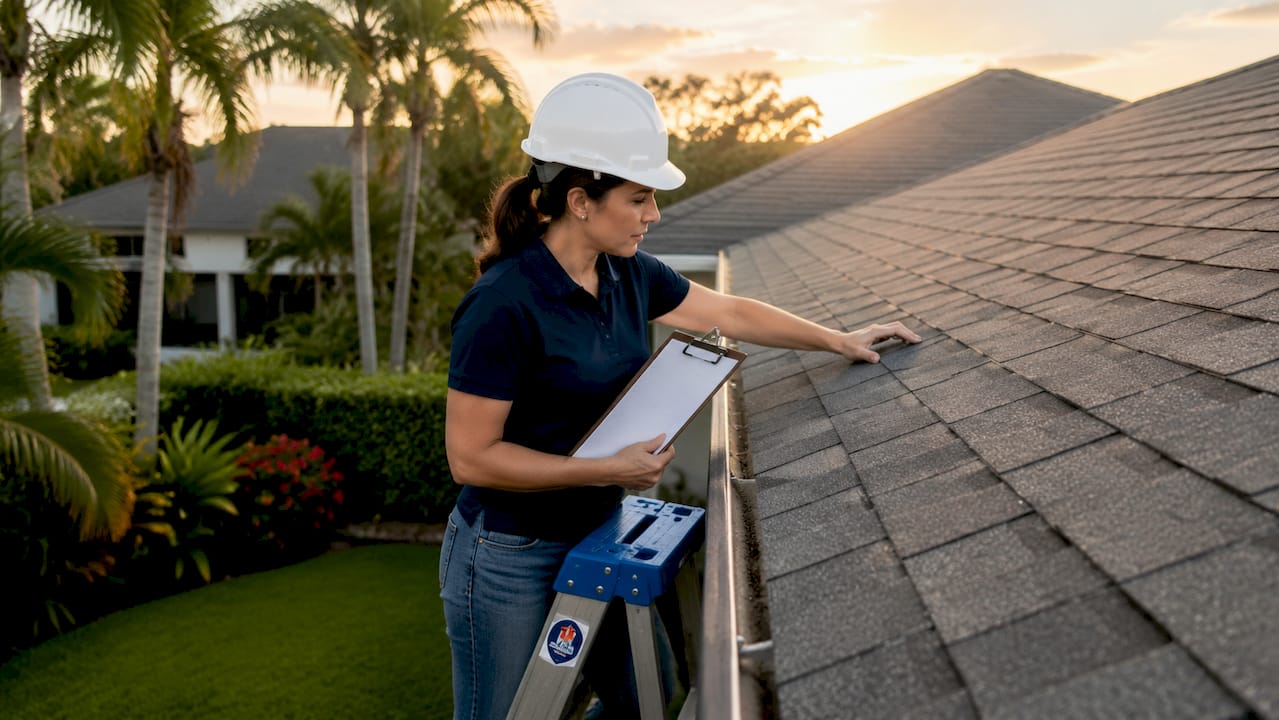
Pro Tip: Ask your inspector for a written condition report with photos. That document protects you if your insurer questions a future claim or if you need to demonstrate repair scope under Florida's 25% rule.
2. Know the warning signs specific to South Florida shingles
South Florida's climate produces damage patterns you won't see in northern states. The key signs to watch for include:
- Granule loss: Bare patches on shingles or granule buildup in gutters signal UV degradation. Granules protect the asphalt layer from heat and water.
- Curling or cupping: Shingles that curl upward at the edges or cup in the center have lost flexibility. This is a direct result of heat and moisture cycling.
- Cracking: Brittle shingles crack under wind stress. South Florida's storms accelerate this process significantly.
- Flashing failures: Gaps or rust around chimneys, vents, and skylights are common entry points for water after heavy rain.
- Dark streaking: Algae and mold growth are cosmetic at first but accelerate shingle breakdown if left untreated.
Learning to spot roof damage early gives you time to repair rather than replace.
3. Understand Florida's 25% repair rule before you plan anything
The Florida Building Code requires a full roof replacement if cumulative repairs exceed 25% of the total roof area. That threshold is cumulative, meaning multiple small repairs over time can add up and trigger a mandatory full replacement. Roofs permitted under the 2007 Florida Building Code or later, and those covered under the SB-4D exemption, may qualify for relief from this rule. Knowing where your roof stands before you authorize any repair work prevents an unexpected and expensive compliance problem.
This rule directly shapes how you budget and sequence repairs. A homeowner who patches 15% of the roof one year and 12% the next has crossed the threshold. Plan repairs with the cumulative total in mind, and document every permitted job.
4. Factor in your insurance carrier's roof age rules
Insurance carriers in Florida often refuse to renew policies on asphalt shingle roofs older than 15 years. That cutoff is not a suggestion. Carriers use it to limit exposure in a high-risk market, and non-renewal notices arrive with little warning. A certified condition report from a licensed inspector can sometimes extend coverage by demonstrating that the roof remains structurally sound despite its age.
Planning for roof repairs means planning for your insurance situation at the same time. If your roof is approaching 12–15 years old, get an inspection now. Know your carrier's policy before you receive a non-renewal letter.
5. Use a roof repair checklist to organize every project
A written roof repair checklist prevents missed steps and cost overruns. A solid checklist for South Florida homeowners covers:
- Schedule a professional inspection before may.
- Document current roof condition with photos and a written report.
- Calculate cumulative repair percentage relative to the 25% threshold.
- Confirm your insurance carrier's roof age and condition requirements.
- Get at least two contractor bids with written scope of work.
- Verify contractor licensing and permits through the Florida DBPR.
- Confirm all work is permitted and inspected before final payment.
Treating roof repair as a managed project rather than a reactive emergency is the core principle behind effective roof repair project management.
6. Clean your roof the right way to protect shingles
Pressure washing strips granules from asphalt shingles and shortens roof lifespan. This is one of the most common and preventable mistakes South Florida homeowners make. Professional soft-wash cleaning removes algae, mold, and mildew without damaging the shingle surface. In South Florida's humid climate, algae growth is nearly inevitable. Soft-wash treatments use low-pressure water and biodegradable solutions to clean without stripping the protective granule layer.
Pro Tip: Schedule soft-wash cleaning every 12–18 months. Algae left untreated holds moisture against shingles and accelerates granule loss, which moves your roof closer to replacement faster than storm damage alone.
7. Balance your attic ventilation to reduce heat damage
Proper attic ventilation is one of the most overlooked factors in extending shingle life. Balanced soffit intake and ridge exhaust vents prevent attic temperatures from exceeding 150°F, a threshold that accelerates granule loss and shingle brittleness. Correct ventilation can extend shingle life by 5–10 years. That range represents thousands of dollars in deferred replacement costs for the average South Florida homeowner.
Check your attic ventilation during your annual inspection. If your attic feels like an oven in july, the ventilation is inadequate. Adding or clearing soffit vents is a low-cost fix with a significant long-term payoff.
8. Clear gutters and trim trees before every storm season
Hurricane season preparation includes gutter cleaning, debris removal, and tree trimming as non-negotiable steps. Clogged gutters force water under shingles and into fascia boards, causing rot and leak pathways that compound over time. Trees with branches within 8–10 feet of the roof create direct impact risk during storms. Trimming branches to that clearance removes one of the most common causes of preventable storm damage.
Schedule gutter cleaning twice a year: once in april before hurricane season and again in november after the heaviest leaf fall. Pair each cleaning with a visual check of the fascia and soffit for early rot or pest damage.
9. Decide between repair and replacement with a cost-per-year analysis
A formal condition assessment by a certified professional is the right starting point for any repair versus replacement decision. Five criteria define a sound decision: roof age, failure mode, cumulative repair history, insurance carrier requirements, and cost per year of remaining life. Contractor estimates alone are not a reliable basis for this decision. Contractors have a financial interest in replacement, which makes independent assessments worth the cost.
| Factor | Repair makes sense | Replacement makes sense |
|---|---|---|
| Roof age | Under 12 years | Over 18 years |
| Damage type | Isolated, localized | Systemic, widespread |
| Cumulative repairs | Under 20% of roof area | Approaching or over 25% |
| Insurance status | Carrier accepts current condition | Non-renewal risk or denial |
| Cost per year | Repair cost is low relative to remaining life | Repair cost approaches replacement value |
Replacing a roof on your own schedule costs far less than replacing it under emergency conditions or after an insurance non-renewal. The homeowners who save the most money are the ones who plan the replacement before they are forced into it.
10. Know your roof's realistic lifespan in South Florida
Asphalt shingle roofs in South Florida typically last 12–20 years. The national average is 20–30 years. That gap exists because of UV intensity, heat cycling, and storm frequency that no other region in the continental United States matches. A roof that performs well in Ohio for 25 years may reach the end of its useful life in Broward County in 15. Understanding this lifespan difference changes how you plan maintenance, budget for replacement, and evaluate repair proposals.
If your roof is 10 years old in South Florida, you are likely in the second half of its service life. That is the right time to start a preservation program, not wait for visible failure.
11. Plan replacements proactively to avoid emergency costs
Delaying replacement until an emergency leak or insurance non-renewal forces your hand results in higher costs and fewer contractor options. Emergency replacements happen on the contractor's schedule, not yours. That means less negotiating power, less time to compare bids, and potential premium spikes if coverage lapses. Homeowners who plan replacements 12–18 months in advance get better pricing, better contractor selection, and a smoother permitting process.
Set a calendar reminder when your roof turns 10 years old. Use that as the trigger to begin annual condition assessments and start budgeting for eventual replacement. Early planning is the single most cost-effective roof decision you can make.
Key Takeaways
Proactive inspection, code awareness, and consistent maintenance are the three factors that determine whether a South Florida homeowner repairs, preserves, or prematurely replaces their asphalt shingle roof.
| Point | Details |
|---|---|
| Inspect before hurricane season | Schedule a professional inspection each year before may to catch damage while you still have time to act. |
| Know the 25% rule | Cumulative repairs over 25% of roof area trigger mandatory full replacement under Florida Building Code. |
| Insurance age cutoff matters | Carriers often drop coverage on roofs older than 15 years; a condition report can sometimes extend eligibility. |
| Soft-wash, not pressure wash | Pressure washing strips granules and shortens shingle life; soft-wash cleaning protects the surface. |
| Ventilation extends lifespan | Balanced attic ventilation can add 5–10 years to shingle life by keeping attic temperatures in check. |
What I've learned from watching homeowners wait too long
The most expensive mistake I see South Florida homeowners make is treating the roof as something to deal with later. By the time a leak shows up inside the house, the damage has usually been building for months. At that point, the repair scope is larger, the insurance conversation is harder, and the contractor has all the leverage.
The homeowners who come out ahead are the ones who get an independent condition assessment before they call a roofer. A contractor walking your roof has a financial interest in a specific outcome. An independent assessor does not. That distinction is worth the cost of the assessment every single time.
I also think the 25% rule catches more people off guard than it should. Most homeowners have no idea that a series of small repairs can legally require a full replacement. Knowing that rule changes how you sequence and document every job. It turns roof repair from a reactive task into a managed process.
The other thing I'd push back on is the idea that a roof showing age is automatically a replacement candidate. South Florida's climate is hard on shingles, but restoring shingle flexibility through preservation treatments can extend a qualifying roof's life significantly. Not every aging roof needs to come off. Some need preservation. The difference between those two outcomes is an honest assessment, not a sales pitch.
— Daniellison
Your roof may have more life left than you think
South Florida homeowners spend thousands on premature replacements every year because no one told them preservation was an option. Shingleroofrenewal specializes in exactly that gap.
Shingleroofrenewal is a certified applicator of Fresh Roof Green Soy Technology, which restores shingle flexibility at the molecular level and extends qualifying roof life by 10–15 years. The process starts with a free inspection and honest assessment. If your roof qualifies, you could save up to 80% compared to full replacement, backed by a 6-year transferable warranty. Shingleroofrenewal serves homeowners across Broward and Palm Beach counties. Schedule your free inspection today and find out if your roof qualifies for preservation before you spend a dollar on replacement.
FAQ
How often should South Florida homeowners inspect their roof?
Professional inspections should happen at least once a year, ideally before hurricane season in may or early june. Twice-yearly inspections, adding a post-storm check in the fall, give the most complete picture of your roof's condition.
What triggers the Florida 25% roof replacement rule?
Florida Building Code requires a full replacement when cumulative repairs exceed 25% of the total roof area. Roofs permitted under the 2007 code or covered by the SB-4D exemption may qualify for relief from this requirement.
At what age do insurance carriers stop covering asphalt shingle roofs in Florida?
Many Florida insurance carriers refuse new or renewed policies on asphalt shingle roofs older than 15 years. A certified condition report from a licensed inspector can sometimes support continued coverage by demonstrating the roof remains structurally sound.
How long do asphalt shingle roofs actually last in South Florida?
Asphalt shingle roofs in South Florida typically last 12–20 years, compared to the national average of 20–30 years. UV intensity, heat cycling, and storm frequency are the primary factors that shorten lifespan in this region.
Is roof preservation a real alternative to full replacement?
Yes, for qualifying roofs. Preservation treatments like Fresh Roof Green Soy Technology restore shingle flexibility and lock in granules, extending roof life by years. The key is an honest condition assessment to determine whether the roof qualifies before committing to either path.