

TL;DR:
- Roof penetrative treatment includes shingle rejuvenation sprays that restore flexibility and oils, as well as sealing around roof penetrations to prevent leaks. Proper application and inspection are essential for extending asphalt shingle lifespan and preventing costly repairs. Combining these treatments with regular maintenance ensures optimal roof protection in demanding climates like South Florida.
Roof penetrative treatment is defined as any product or process that penetrates roofing material to restore, protect, or waterproof it from within, rather than simply coating the surface. The term actually covers two distinct concepts: shingle rejuvenation sprays that penetrate shingles to restore flexibility and replenish oils lost through aging, and penetration sealing, which creates watertight barriers around pipes, vents, and other objects that pass through your roof. For South Florida homeowners in Broward and Palm Beach County, where relentless sun, heat, and storm cycles accelerate shingle deterioration, understanding both meanings is the first step toward protecting your roof before a $15,000–$30,000 replacement becomes unavoidable.
What is roof penetrative treatment for asphalt shingles?
Roof penetrative treatment refers to two separate but equally important roof maintenance approaches. Knowing which one you need, and when, can save you thousands of dollars.
Shingle Rejuvenation Treatments
These are sprays or clear coatings formulated to soak into the asphalt layer of your shingles. Products like Shingle Coat Clear by NuTech Paints and Fresh Roof's Green Soy Technology are engineered to restore shingle flexibility and replenish oils lost through oxidation and UV exposure. They work at a molecular level, not just on the surface. The result is a shingle that bends rather than cracks when stressed by wind or thermal expansion.
Roof Penetration Sealing
This approach addresses the physical openings in your roof where pipes, vents, HVAC lines, and skylights pass through. Each of these openings is a potential leak point. Sealing them requires flashings and pipe boots, not just caulk. The IRC 2018 building code requires a listed flashing collar or pipe boot integrated with the roofing material. Caulk alone does not meet code and fails faster in Florida's heat.
Why the Distinction Matters
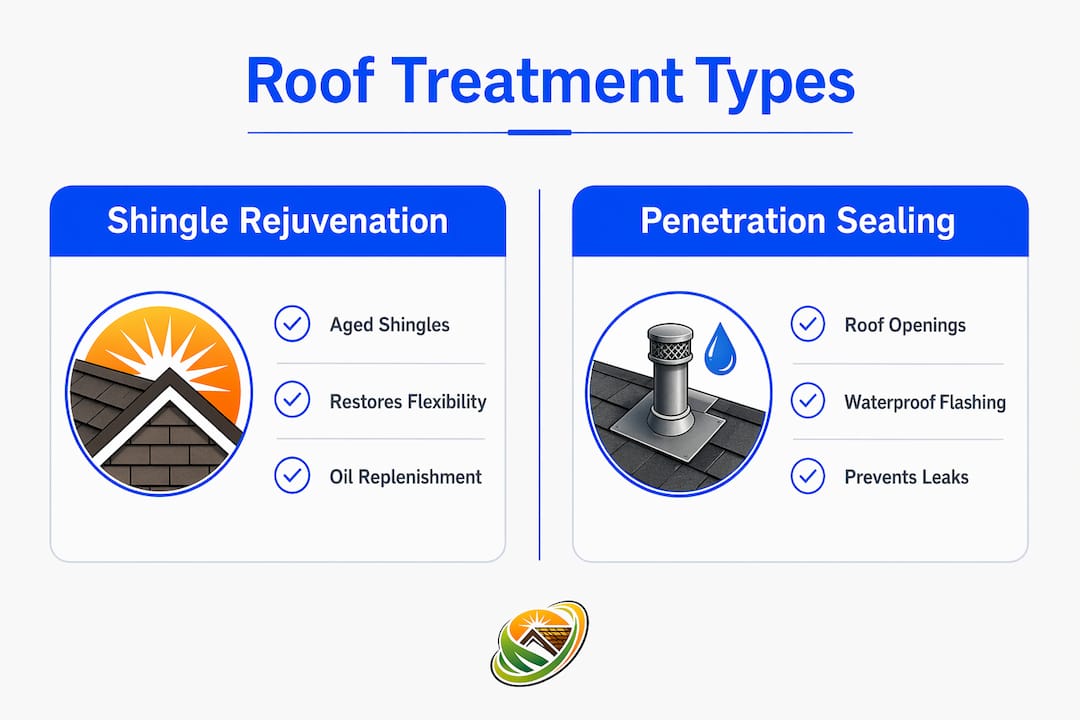
Confusing these two approaches leads to wasted money and failed repairs. A homeowner who applies a rejuvenation spray around a leaking vent pipe has not fixed the leak. A homeowner who re-caulks a boot but ignores brittle shingles has not addressed the root cause of deterioration. Both treatments serve different purposes and are often needed together.
How do penetrative treatments extend shingle life?
Asphalt shingles are manufactured with oils that keep them flexible and water-resistant. Florida's UV intensity and heat cook those oils out of the shingles over time. Once the oils are gone, shingles become brittle, crack, curl at the edges, and shed granules at an accelerated rate. This is roof aging in its most visible form.
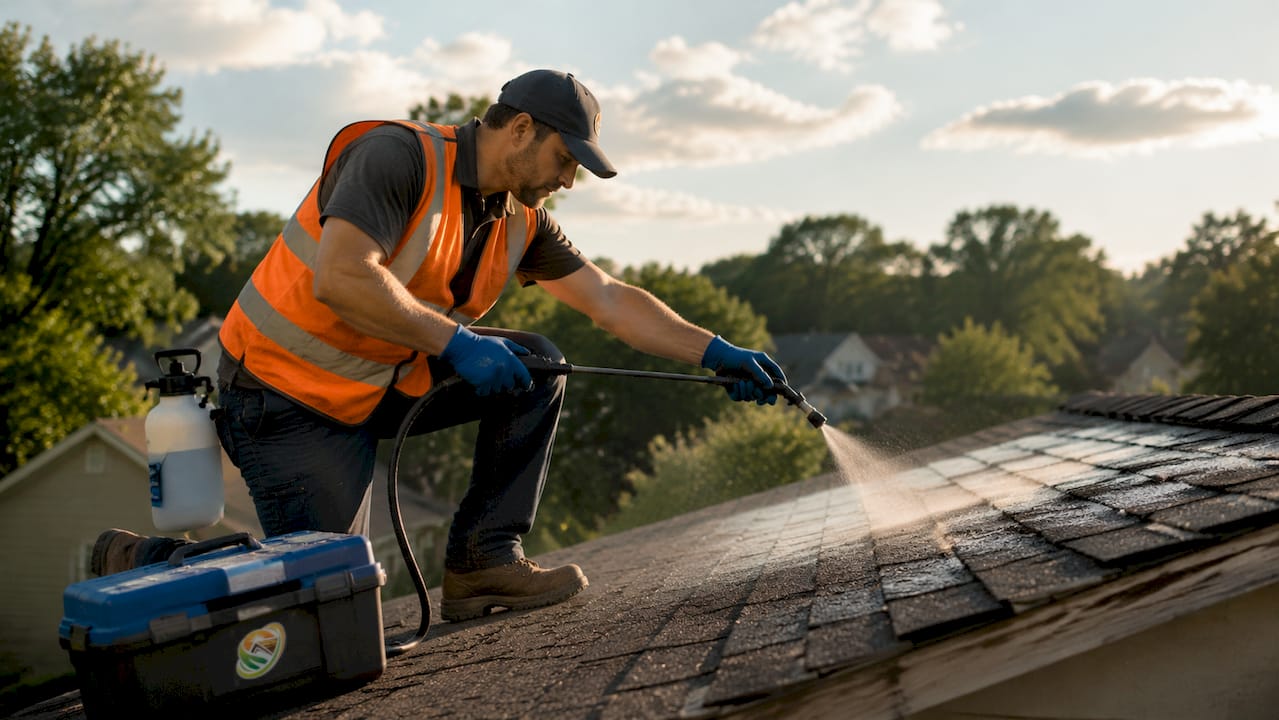
Penetrative shingle treatments work by reintroducing those lost compounds directly into the asphalt matrix. Products like Shingle Coat Clear are designed to soak into weathered shingles, stabilize loose granules, and reinforce the substrate without changing the shingle's appearance. The key word is "soak." A product that only darkens the surface temporarily is not a true penetrative treatment. Long-term effectiveness depends on depth of penetration into shingles, not surface color change.
For penetration sealing, the mechanism is different but equally critical. Proper flashing geometry directs water away from the opening mechanically. The upper edge of a pipe boot must be inserted under the shingles above it, and the lower edge must sit over the shingles below it. This layering is what sheds water. Sealants fill gaps and add flexibility at joints, but flashings provide mechanical water-shedding that sealants alone cannot replicate.
Pro Tip: If a contractor quotes you a penetrative treatment but cannot explain how deep the product penetrates or what compounds it restores, ask for the product data sheet. A legitimate penetrative formulation will specify its active ingredients and penetration depth.
Penetration sealing vs. shingle rejuvenation: key differences
These two roof treatment options solve different problems. The table below breaks down when each applies and what its limitations are.
| Factor | Shingle Rejuvenation Treatment | Roof Penetration Sealing |
|---|---|---|
| What it treats | Aged, brittle, or granule-losing shingles | Openings where pipes, vents, or skylights pass through the roof |
| Primary materials | Soy-based or petroleum-derived rejuvenation sprays, clear coatings | Metal flashings, rubber pipe boots, compatible sealants |
| Code requirement | No specific code mandate; product-dependent | IRC 2018 requires listed flashing collar or pipe boot |
| Main limitation | Only works on sound shingles; moisture or damaged shingles reduce effectiveness | Relying on caulk alone increases failure risk; flashing geometry is critical |
| Inspection frequency | Every 3–5 years depending on product warranty | Annually and after every major storm |
The biggest mistake South Florida homeowners make is treating these as interchangeable. Penetration sealing is non-negotiable maintenance. Every roof has penetrations, and every penetration is a leak waiting to happen if the flashing fails. Shingle rejuvenation is a preservation strategy. It extends the life of shingles that are aging but still structurally sound. Neither replaces the other.
Relying on sealant alone at a penetration point is a short-term fix. Florida's heat causes caulk to expand and contract repeatedly, which breaks the bond within a few years. Sealants provide flexibility at joints, but the flashing does the real waterproofing work. Roofing code treats flashing as the primary waterproofing layer, with sealant as a secondary support. That hierarchy matters when your roof faces a South Florida rainstorm dropping several inches of rain in an hour.
How to apply and maintain roof penetrative treatments
Proper preparation and consistent maintenance determine whether a penetrative treatment lasts or fails prematurely. Follow these steps to get the most out of any roof treatment program.
- Inspect the roof before any treatment. Walk the perimeter and use binoculars to check for cracked, curling, or missing shingles. Look for granule buildup in gutters. Applying a rejuvenation treatment to a roof with underlying moisture or failed shingles greatly reduces effectiveness and may void the product warranty.
- Clean the roof surface. Remove algae, moss, and debris with a low-pressure wash. High-pressure washing strips granules and damages shingles. Let the roof dry completely before applying any penetrative product.
- Seal all penetrations first. Before applying a shingle rejuvenation treatment, inspect every pipe boot, vent flashing, and skylight frame. Replace cracked boots and re-flash any penetration where the upper edge is not properly tucked under the shingles above it. The geometry and integration of boots with shingle layering matters more than the amount of caulk applied.
- Apply the penetrative treatment per manufacturer specs. Coverage rates matter. Under-applying a rejuvenation spray means the product does not reach the depth needed to restore shingle properties. Over-applying can cause runoff and waste.
- Document and schedule follow-up inspections. Check penetration seals annually and after any storm with winds above 50 mph. Inspect seals at roof penetrations yearly to catch cracked sealant, loose flashing, or rust before they become active leaks.
Pro Tip: In South Florida, schedule your annual roof inspection in September or October, after hurricane season peaks. That timing catches storm damage while repair contractors are still available and before the winter dry season sets in.
What other roof treatment options work alongside penetrative treatments?
A penetrative treatment program works best as part of a broader roof maintenance strategy. These complementary options extend the benefits of any rejuvenation or sealing work you do.
- Soft-wash roof cleaning. Algae and moss hold moisture against shingles, accelerating granule loss. A low-pressure soft-wash with a biodegradable cleaning solution removes biological growth without stripping granules. This is the only cleaning method appropriate for asphalt shingles.
- Reflective or cool-roof overcoats. Some homeowners in Broward and Palm Beach County add a light-colored reflective coating over treated shingles to reduce heat absorption. This lowers attic temperatures and reduces the rate at which shingle oils evaporate.
- Timely shingle and flashing repairs. A single cracked shingle or lifted flashing can allow water to reach the decking beneath. Catching and repairing these small failures early prevents the kind of deck rot that turns a maintainable roof into a mandatory replacement.
- Gutter maintenance. Clogged gutters back water up under the bottom course of shingles. Cleaning gutters twice a year, especially after South Florida's summer storm season, protects the roof edge where penetrative treatments cannot reach.
Combining these practices with a certified penetrative shingle treatment gives your roof the best chance of reaching or exceeding its rated lifespan, even under Florida's demanding climate conditions.
Key takeaways
Roof penetrative treatment is the most cost-effective maintenance strategy available to South Florida homeowners with aging asphalt shingle roofs, provided the roof is structurally sound and treated before deterioration becomes irreversible.
| Point | Details |
|---|---|
| Two distinct meanings | Roof penetrative treatment covers shingle rejuvenation sprays and penetration sealing around vents and pipes. |
| Depth determines results | Rejuvenation sprays must penetrate the asphalt matrix, not just darken the surface, to restore flexibility. |
| Flashing beats caulk | IRC 2018 code requires listed flashings at penetrations; caulk alone fails under Florida heat and storm cycles. |
| Preparation is non-negotiable | Applying any penetrative treatment to damaged or moisture-affected shingles reduces effectiveness and may void warranties. |
| Annual inspections protect the investment | Check penetration seals every year and after major storms to catch failures before they become active leaks. |
What i've learned after years of watching south florida roofs age
Most homeowners I talk to have never heard the term "roof penetrative treatment" until their roof is already in trouble. By then, the options narrow fast. The shingles are too far gone for rejuvenation, the boots are cracked and leaking, and the estimate from the roofer is $20,000 or more.
The homeowners who come out ahead are the ones who treat their roof like a car. You change the oil before the engine seizes. You replace the tires before the tread is gone. A penetrative shingle treatment applied to a roof that still has sound structure is exactly that kind of preventative move. It is not a miracle cure for a failing roof. It is a maintenance tool for a roof that still has life left in it.
The part that surprises most people is how much the penetration sealing side of this gets ignored. Everyone focuses on the shingles, but the pipe boots and vent flashings are where most residential roof leaks actually start. A $30 rubber boot that has cracked from UV exposure can cause $5,000 in interior water damage before anyone notices. Checking those boots once a year costs nothing.
My honest recommendation: do not wait for a leak to start thinking about roof maintenance. Get a professional inspection, understand what condition your shingles and penetrations are in, and make a plan before the damage forces your hand. The cost-effective repair steps available to homeowners with maintained roofs are far better than the options available to those who wait.
— Daniellison
How Shingleroofrenewal can help you protect your roof
If you are a homeowner in Broward or Palm Beach County wondering whether your roof qualifies for a penetrative treatment, Shingleroofrenewal is the right call before you contact a roofer.
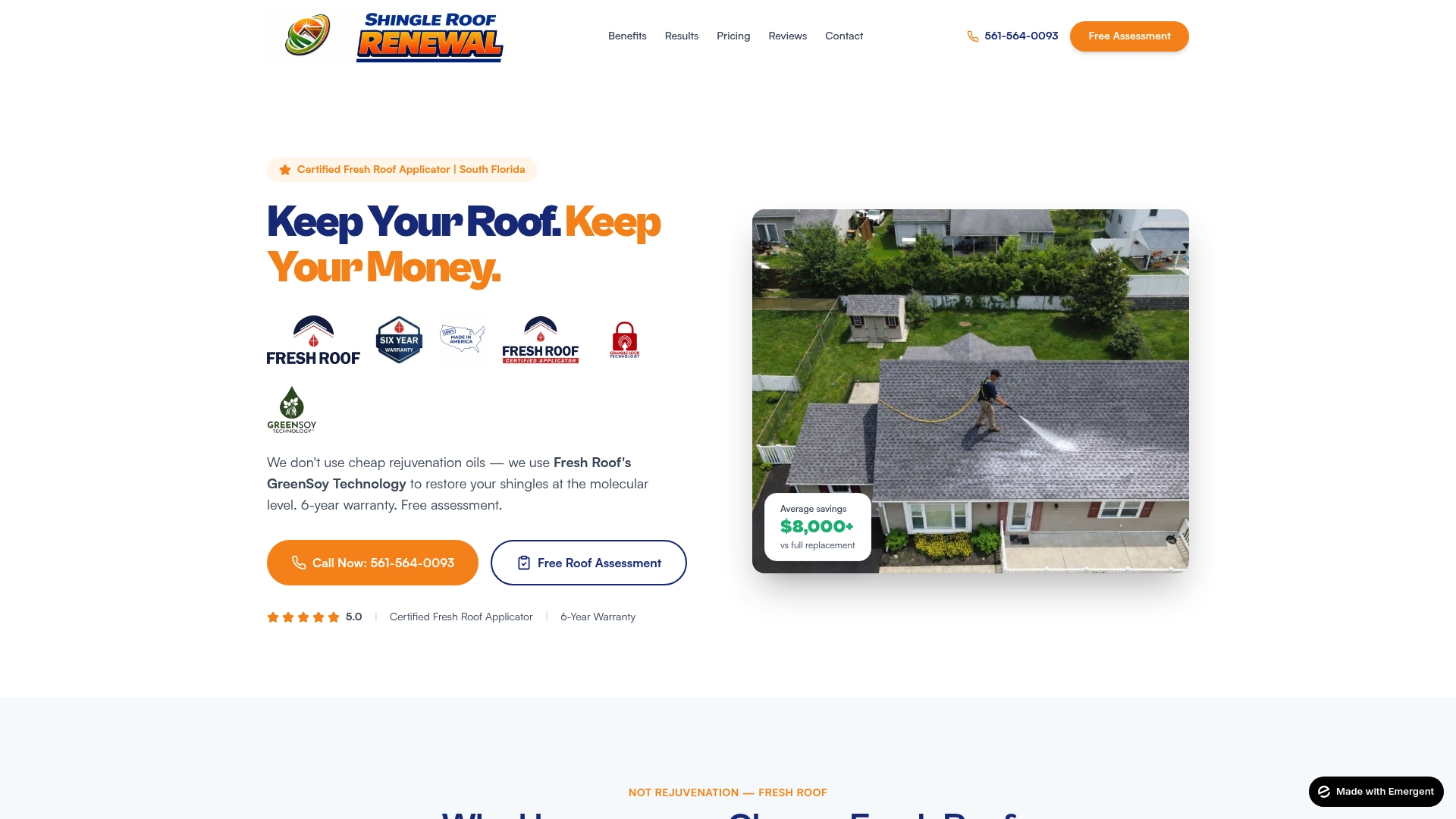
Shingleroofrenewal is a certified applicator of Fresh Roof's Green Soy Technology, a penetrative shingle treatment that restores flexibility at the molecular level and can extend qualifying roof lifespans by 10–15 years. The process starts with a free inspection to assess whether your roof is a good candidate. If it qualifies, you could save up to 80% compared to full replacement, backed by a 6-year transferable warranty. Shingleroofrenewal serves homeowners across South Florida with one clear goal: help you preserve your shingle roof before replacement becomes the only option. Schedule your free inspection today.
FAQ
What does roof penetrative treatment mean?
Roof penetrative treatment refers to two things: shingle rejuvenation sprays that restore flexibility and oils within the asphalt layer, and penetration sealing that creates watertight barriers around vents, pipes, and other roof openings. Knowing which type you need depends on your roof's specific condition.
How long does a penetrative shingle treatment last?
Longevity depends on the product and the condition of the shingles at the time of application. Certified treatments like Fresh Roof's Green Soy Technology are designed to extend roof life by 10–15 years on qualifying roofs, backed by a manufacturer warranty.
Can i apply a penetrative treatment myself?
Manufacturers recommend professional application to achieve correct coverage rates and penetration depth. Applying too little means the product stays near the surface and does not restore shingle properties. Applying to damaged or wet shingles can void the product's effectiveness entirely.
How often should roof penetration seals be inspected?
Inspect penetration seals annually and after any severe weather event. In South Florida, post-hurricane season inspections in September or October catch storm damage while repair options are still available.
Is caulk enough to seal a roof penetration?
Caulk alone is not sufficient. The IRC 2018 building code requires a listed flashing collar or pipe boot integrated with the surrounding shingles. Caulk serves as a secondary sealant, not the primary waterproofing layer, and fails faster under Florida's heat and UV exposure.