
TL;DR:
- A transferable warranty allows the remaining roof coverage to pass from the original homeowner to a new owner when the home is sold. Homeowners and buyers should act promptly within the transfer window, usually 30 to 60 days, to maintain coverage. Proper documentation, certification, and timely application ensure the warranty's value and protect the investment during property transactions.
A transferable warranty is a contractual provision that allows the remaining coverage on a roof to legally pass from the original homeowner to a new property owner when the house is sold. This type of protection is formally called a "warranty assignment" in the roofing industry, though "transferable warranty" is the term most homeowners encounter during a home sale. Understanding what is a transferable warranty matters whether you are selling a home and want to preserve its value, or buying one and want to know what protection you are inheriting. Shingleroofrenewal backs its roof renewal service with a 6-year transferable warranty, making this topic directly relevant to South Florida homeowners.
What is a transferable warranty and how does it work?
A transferable roof warranty allows the remaining coverage period to shift from the seller to the buyer at closing, but only when specific conditions are met. The warranty does not transfer automatically. The new owner must take deliberate steps to claim it.

Transfer requirements typically include notifying the warranty issuer within a set window after closing, submitting proof of sale, and paying a transfer fee. Transfer deadlines commonly fall within 30–60 days after closing. Missing that window is the single most common reason new homeowners lose coverage they thought they had.
Transfer fees vary. Some manufacturers charge a nominal administrative fee. Others charge several hundred dollars. The fee is usually far less than the cost of losing coverage on a roof that still has years of protection remaining.
The burden of action falls entirely on the buyer. Sellers are not responsible for completing the transfer after closing. Buyers who assume the warranty "comes with the house" often discover too late that coverage was forfeited because no one filed the paperwork.
Pro Tip: Set a calendar reminder for the day after closing. You have a narrow window, often 30–60 days, to notify the warranty issuer. Treat it like a mortgage payment. Miss it, and the coverage is gone permanently.
How do manufacturer and workmanship warranties differ?
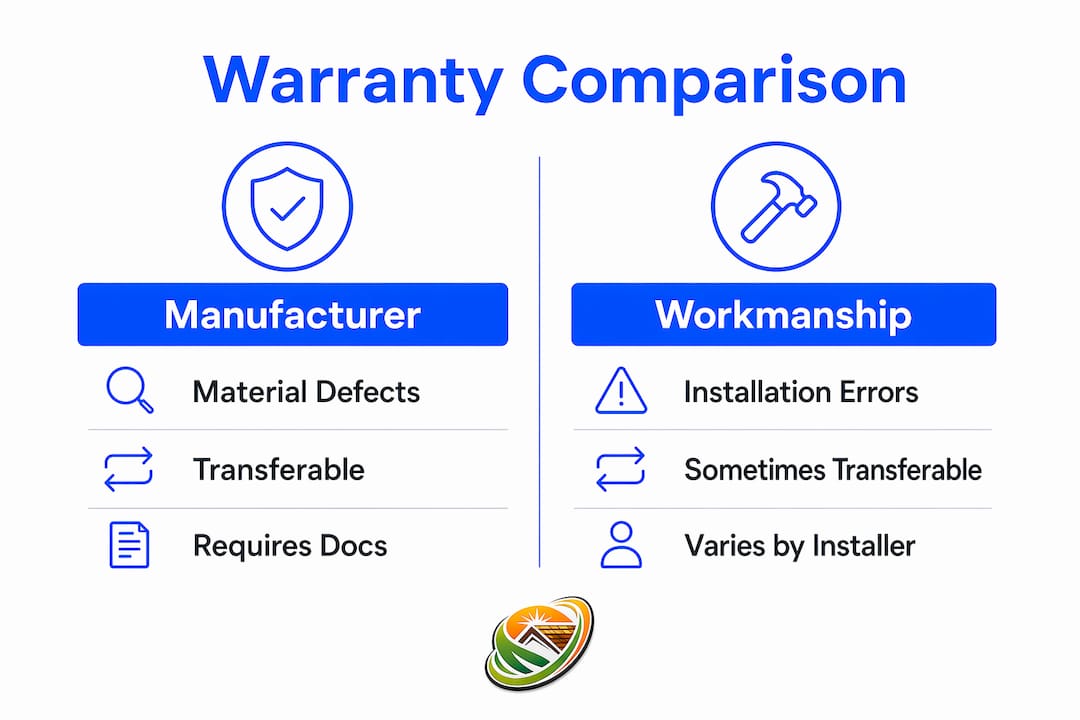
Not all roof warranties transfer under the same rules. The two main types, manufacturer warranties and workmanship warranties, have very different transfer policies.
| Warranty Type | What It Covers | Transferable? | Conditions |
|---|---|---|---|
| Manufacturer warranty | Material defects in shingles or roofing products | Usually yes | Notification deadline, transfer fee, proof of sale |
| Workmanship warranty | Installation errors by the contractor | Rarely | Requires original contractor consent or reinspection |
Manufacturer warranties cover defects in the roofing materials themselves, such as shingles that crack, blister, or fail prematurely. These warranties are frequently transferable when the homeowner meets the issuer's conditions. The transfer keeps the material protection intact for the new owner.
Workmanship warranties cover errors made during installation, such as improper flashing or poor nail placement. These warranties are significantly more restrictive and often require the original contractor's consent or an onsite reinspection before any transfer is approved. Many workmanship warranties are simply non-transferable.
The practical impact is real. A buyer who inherits a home with a 20-year manufacturer warranty but a non-transferable workmanship warranty has only partial protection. If an installation defect surfaces after closing, the new owner may have no coverage at all.
What limitations should homeowners know about?
Transferable warranties carry important caveats that most homeowners do not read until it is too late. Knowing these limits before you buy or sell protects you from expensive surprises.
- One-time transfer only. Most programs limit the warranty to a single transfer from the original purchaser to the second owner. If that second owner sells the home again, the warranty typically expires. A third buyer receives no coverage.
- Prorated coverage after transfer. Some manufacturer warranties reduce coverage after transfer, converting the remaining term to a prorated basis. That means the payout on a valid claim decreases the older the roof gets, even if the warranty is technically still active.
- Certification requirements. Manufacturers support transfers primarily when the roof was installed or maintained by a certified installer. If the original work was done by an uncertified contractor, the manufacturer may deny the transfer entirely.
- Voiding conditions. Unauthorized repairs, unapproved modifications, or failure to maintain the roof can void a warranty before any transfer is even attempted. Buyers should request maintenance records along with warranty documents.
Pro Tip: Before closing on any home, ask the seller for the original warranty certificate, the installer's certification status, and any maintenance records. A certified roof applicator on record dramatically improves your chances of a clean transfer.
The prorated reduction is the detail that catches most buyers off guard. A warranty that sounds like full coverage may only pay a fraction of repair costs by the time a defect appears. Reading the actual warranty document, not just the summary, is the only way to know what you are actually getting.
How do transferable warranties benefit homeowners and buyers?
A transferable warranty converts a roof from a depreciating component into a value-adding asset during a property sale. That shift has real financial consequences for both sides of the transaction.
For sellers, a transferable warranty gives buyers confidence that the roof is protected. Homes with documented warranty coverage tend to attract stronger offers because buyers perceive less financial risk. A roof with five or ten years of manufacturer coverage remaining is a selling point, not just a feature.
For buyers, the warranty provides maintenance assurance. If covered materials fail within the warranty period, the manufacturer is responsible for repair or replacement costs. That protection can be worth thousands of dollars, particularly in South Florida where heat, UV exposure, and storm activity accelerate shingle deterioration.
The benefits extend beyond the sale itself:
- Sustained protection against material defects without paying out of pocket
- Documentation that the roof was installed by a qualified contractor, which supports future home value
- Reduced risk of unexpected repair costs during the first years of ownership
- Alignment with lender and insurance requirements that often ask about roof condition and age
Roof longevity is the underlying goal. A warranty that transfers cleanly keeps both the seller and buyer focused on maintaining the roof properly, which extends its useful life and reduces the chance of a premature replacement.
What steps ensure a successful warranty transfer?
A clean warranty transfer requires organized action from both the seller and the buyer. The process is straightforward when you know the steps.
- Gather your documents before closing. The seller should locate the original warranty certificate, the contractor's certification documentation, and any maintenance or inspection records. These documents are the foundation of the transfer application.
- Identify the warranty issuer's transfer process. Contact the manufacturer or contractor directly to request their transfer application. Some issuers have online portals. Others require a mailed form. Confirm the exact deadline and fee before closing.
- Submit the transfer application promptly. After closing, the buyer submits the completed application along with the deed or settlement statement and proof of sale. The transfer window is typically 30–60 days. Do not wait.
- Pay the transfer fee and get written confirmation. Keep a copy of the payment receipt and the issuer's written confirmation that the transfer is approved. This documentation protects you if a claim is disputed later.
- Coordinate with a certified contractor if needed. If the workmanship warranty requires contractor consent or a reinspection, schedule that appointment before the deadline. A certified installer's involvement can make the difference between an approved and a denied transfer.
Sellers benefit from completing as much of this preparation as possible before listing the home. Having the warranty documents organized and the transfer process mapped out signals to buyers that the roof has been properly maintained.
Key Takeaways
A transferable warranty is only as valuable as the action taken to complete the transfer. Missing the deadline or skipping the paperwork permanently voids coverage that could be worth thousands of dollars.
| Point | Details |
|---|---|
| Transfer is not automatic | Buyers must initiate the transfer within 30–60 days of closing or lose coverage permanently. |
| Warranty types have different rules | Manufacturer warranties usually transfer; workmanship warranties rarely do without contractor consent. |
| Coverage may shrink after transfer | Some warranties convert to a prorated basis post-transfer, reducing the payout on future claims. |
| One-time transfer limit | Most programs allow only one transfer; subsequent owners receive no coverage. |
| Certification improves approval odds | Roofs installed or maintained by certified contractors are more likely to qualify for a clean transfer. |
Why I think most homeowners treat warranty transfer as an afterthought
Most homeowners I talk to treat the warranty transfer as a detail to handle "eventually." That mindset costs people real money. The 30–60 day window after closing is one of the tightest deadlines in any real estate transaction, and it gets buried under moving logistics, utility setups, and renovation plans.
What I have seen repeatedly is this: buyers assume the seller handled it, and sellers assume the buyer knows to handle it. Neither one does anything. The warranty expires quietly, and nobody notices until a shingle failure shows up two years later and the manufacturer denies the claim.
The other thing most articles do not tell you is that the type of warranty matters as much as whether it transfers. A 30-year manufacturer warranty sounds impressive. But if the roof was installed by an uncertified contractor, the manufacturer may reject the transfer outright. Certification is not a formality. It is the mechanism that keeps the warranty valid.
My honest advice: treat the warranty document the same way you treat the title. Read it before closing. Confirm the installer's certification status. Set the transfer deadline in your calendar the day you get the keys. A roof in South Florida faces serious stress from heat and storms. Keeping that warranty intact is one of the most practical things you can do to protect your investment.
— Daniellison
How Shingleroofrenewal helps protect your roof and your warranty

Shingleroofrenewal works with South Florida homeowners in Broward and Palm Beach County who want to protect their roofs before replacement becomes the only option. As a certified applicator of Fresh Roof Green Soy Technology, Shingleroofrenewal restores shingle flexibility, locks in granules, and extends roof life on qualifying asphalt shingle roofs. The service is backed by a 6-year transferable warranty, which means the protection you gain today can pass to the next owner when you sell. If your roof qualifies, you could save up to 80% compared to full replacement. Schedule your free inspection and find out if your roof is a candidate for renewal before you call a roofer.
FAQ
What is a transferable warranty in simple terms?
A transferable warranty is a written guarantee that allows the remaining coverage on a roof to legally pass from the original homeowner to a new owner when the property is sold. The new owner must complete a transfer application within the issuer's deadline to activate the coverage.
Can you transfer a warranty to a new homeowner automatically?
No. Warranty transfers are never automatic. The new owner must notify the warranty issuer, submit required documents, and pay any applicable transfer fee, typically within 30–60 days of closing.
What is the difference between a manufacturer and a workmanship warranty transfer?
Manufacturer warranties cover material defects and are usually transferable with proper documentation. Workmanship warranties cover installation errors and are often non-transferable or require the original contractor's consent before any transfer is approved.
Does a transferable warranty add value to a home?
Yes. Industry experts recognize that a transferable warranty converts a roof into a value-adding asset during a sale, giving buyers confidence in the roof's condition and reducing their financial risk after closing.
How many times can a roof warranty be transferred?
Most programs allow only one transfer, from the original purchaser to the second owner. If that second owner later sells the home, the warranty typically expires and the next buyer receives no coverage.