

TL;DR:
- Transferring a roof warranty after home purchase depends on understanding the warranty type, documentation, and deadlines. Homeowners must promptly gather necessary paperwork, contact the manufacturer within specified timeframes, and ensure contractor certification to maintain coverage. Regular inspections, proper maintenance, and record-keeping are essential for warranty validity and roof longevity in Broward and Palm Beach counties.
You just closed on a home in Broward or Palm Beach County. The inspector mentions the roof is aging but still has some life left. Better yet, there's an existing manufacturer warranty attached to it. Then someone says, "You'll need to transfer that warranty." And just like that, you're staring at a process most homeowners have never dealt with before. Understanding what that transfer actually involves, what it costs, and how to protect your coverage from day one can mean the difference between saving thousands and losing eligibility entirely before you even move in.
Table of Contents
- Understanding roof warranty types and transferability
- Essential documents and prerequisites for a warranty transfer
- Step-by-step roof warranty transfer process
- Maintaining compliance for warranty validity after transfer
- The real-world challenges and overlooked details in roof warranty transfers
- Explore shingle roof renewal solutions in Broward and Palm Beach
- Frequently asked questions
Key Takeaways
| Point | Details |
|---|---|
| Know warranty types | Understand the difference between manufacturer material warranties and contractor workmanship warranties. |
| Gather documents early | You need warranty paperwork, proof of purchase or installation, and closing documents to transfer coverage. |
| Use certified contractors | Manufacturer warranties usually require installation and maintenance by approved contractors for transfer. |
| Follow transfer deadlines | Most warranties require you to submit transfer forms and fees within a short window after closing. |
| Maintain ongoing compliance | Keep up with required inspections, maintenance, and records to keep your transferred warranty valid. |
Understanding roof warranty types and transferability
Before you can transfer anything, you need to know what you actually have. Roof warranties come in two main forms, and they work very differently.
Manufacturer material warranties cover defects in the roofing products themselves, like the shingles cracking, curling, or losing granules prematurely. These are issued by the brand that made the shingles and are generally the more transferable of the two types. You can learn more about how these work by reading this overview of roof warranties explained.
Contractor workmanship warranties cover the quality of the installation. These come from the roofer who did the job, not the shingle brand. As noted in this roof warranty transfer guide, contractor warranties vary depending on the roofer's own policy, while manufacturer material warranties are more consistently transferable.
Here's a quick comparison to clarify:
| Warranty type | Issued by | Covers | Typically transferable? |
|---|---|---|---|
| Manufacturer material | Shingle brand (e.g., IKO, GAF, Owens Corning) | Product defects, premature failure | Yes, with conditions |
| Contractor workmanship | Installing roofer | Labor and installation quality | Varies by contractor |
| Extended/enhanced | Manufacturer via certified contractor | Both materials and workmanship | Yes, often with fees |
A few important things to keep in mind:
- Not all warranties automatically transfer. Many require you to take specific steps within a short window after closing.
- Certification matters. Some manufacturer warranties are only valid if the original installation was done by an approved contractor. If that certification is missing, coverage may not carry over.
- Enhanced warranties offer broader protection but often come with stricter transfer requirements, including registration deadlines and fees.
- Limited vs. lifetime warranties differ in duration and what they cover, so reading the fine print on your specific warranty document is essential.
Understanding which type of warranty you have sets the entire foundation for what comes next.
Essential documents and prerequisites for a warranty transfer
A lot of homeowners lose warranty eligibility simply because they don't gather the right paperwork in time. Getting organized before or immediately after closing is critical. This checklist from the Roof Warranty Transfer Guide confirms that the standard transfer process starts with gathering warranty documents and proof of purchase or installation, then contacting the warranty provider.
Documents you'll typically need:
- Original warranty certificate or documentation from the manufacturer
- Proof of purchase or invoice from the original roofing contractor
- Proof of installation date and contractor information
- Closing papers showing transfer of ownership
- Photo ID or contact information for the new homeowner (you)
- Any prior inspection reports or maintenance records
Here's a practical reference for what different brands may require:
| Requirement | Common for standard warranty | Common for enhanced/extended warranty |
|---|---|---|
| Transfer fee | Sometimes | Usually yes |
| Submission deadline | 30 to 90 days after sale | Often 30 days or less |
| Certified contractor proof | Sometimes | Almost always |
| Written confirmation | Upon request | Typically required |
| Registration | May already be done | May need new registration |
You can review IKO warranty information as one real-world example of how a major manufacturer structures these requirements. Their process involves specific forms, timelines, and conditions that must be met for a transfer to be valid.
Also consider your roof's current condition. If the shingles are already showing signs of wear, cracking, or granule loss, addressing that before or alongside the warranty transfer is smart. A roof longevity checklist can help you spot problems early, and understanding your renewal solutions in South Florida gives you options beyond just crossing your fingers on an aging roof.
Pro Tip: Request all roofing documents from the seller during your inspection period, not after closing. Many sellers won't have everything organized, and chasing paperwork post-closing costs you valuable time inside your transfer deadline.
Step-by-step roof warranty transfer process
Once you have your documents ready, the actual transfer process follows a clear path. Missing any of these steps can invalidate your coverage, so work through them in order.
Step 1: Identify the warranty provider and locate contact information. Find the shingle brand name (usually printed on leftover packaging or in the original contract) and visit the manufacturer's website directly. Look for a warranty or customer service section. Avoid relying solely on the previous owner's verbal description of coverage.
Step 2: Contact the warranty provider immediately after closing. Most brands have strict time limits. Some require contact within 30 days of the property sale. According to IKO warranty transfer conditions, submissions and time limits are clearly outlined in the extended warranty documentation, and missing these windows can disqualify you from coverage.
Step 3: Submit all required documents. This typically includes the original warranty certificate, proof of contractor installation, your closing documents, and any forms the manufacturer provides. Be thorough. Incomplete submissions are the most common reason transfers are denied.
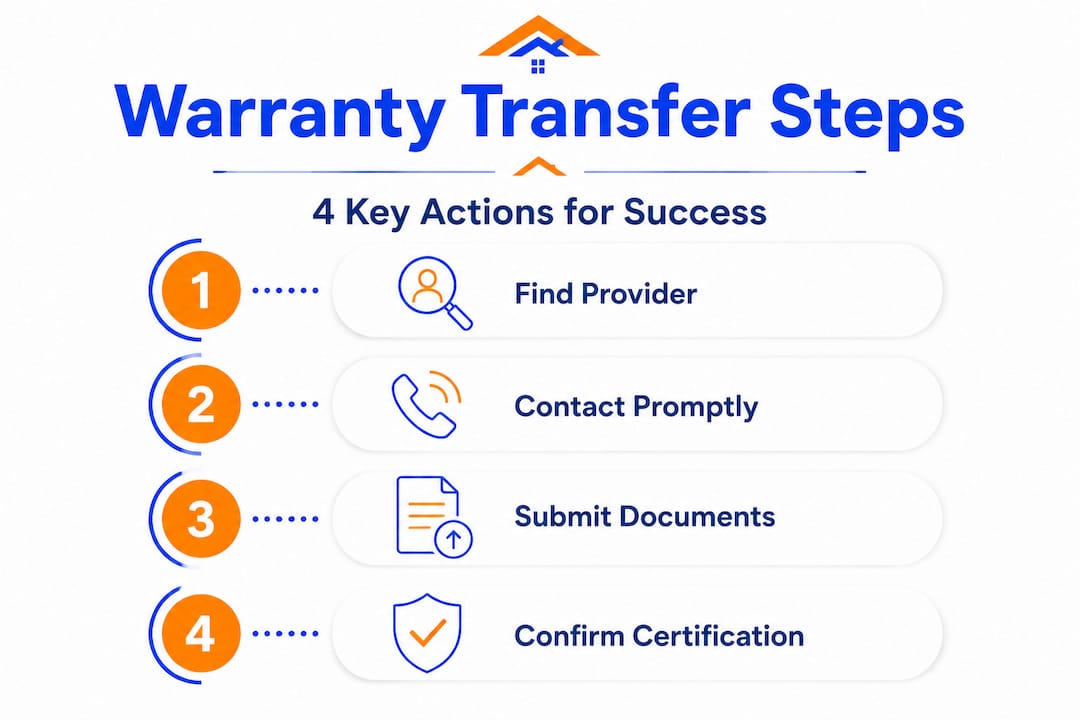
Step 4: Confirm contractor certification status. Some warranties are only valid when installed and maintained by a manufacturer-approved contractor. Understanding why roof certification matters can help you evaluate whether your existing coverage is still intact. If the original contractor was not certified, your transfer options may be limited.
Step 5: Pay any applicable transfer fees. Not all warranties charge a fee, but enhanced programs often do. Fees can range from nominal to several hundred dollars. Budget for this during your closing cost planning.
Step 6: Request written confirmation of the completed transfer. Don't assume it's done until you have something in writing. A confirmation letter or email from the manufacturer serves as your proof of coverage and should be stored with your other homeownership documents.
Many homeowners complete steps one through four and then forget step six entirely. Without written confirmation, proving your transfer was accepted becomes much harder if you ever need to file a claim.
You can also review roof warranty transfer instructions for additional guidance on what the submission process looks like across different providers.
Pro Tip: Create a dedicated folder (physical or digital) just for your roof documentation. Include the warranty certificate, transfer confirmation, contractor info, inspection reports, and any repair receipts. This folder will be valuable when you eventually sell the home or need to file a claim.
Maintaining compliance for warranty validity after transfer
Getting the transfer done is step one. Keeping that warranty valid over time requires ongoing effort. Many homeowners complete the transfer and then assume everything is handled. That's where problems start.
According to requirements for ongoing warranty validity, some brands require certified contractors for maintenance after the transfer is complete, meaning any repair done by a non-approved roofer could potentially void your coverage. Similarly, brand-specific warranty terms govern what's required at the county level, though Broward and Palm Beach permitting rules affect code compliance independently of your warranty status.
Here's what keeping your warranty active usually involves:
- Schedule regular inspections. Most manufacturers recommend professional inspections every one to three years. In South Florida's climate, annual inspections are a smart standard given the heat, UV exposure, and storm season.
- Use approved contractors for repairs. If a repair is done incorrectly or by a non-certified roofer, the warranty may no longer apply to that portion of the roof.
- Document everything. Keep records of every inspection, repair, and maintenance service performed. Dates, contractor names, and scope of work should all be recorded.
- Watch for storm damage. Broward and Palm Beach County homeowners know how quickly a tropical storm can damage shingles. Report damage to your insurance and warranty provider promptly. Delayed reporting can affect claims.
- Understand exclusions. Warranties typically exclude damage from improper maintenance, modifications not approved by the manufacturer, or events like hurricanes if those aren't covered under your specific policy terms.
Getting a roof assessment from a qualified professional is one of the best ways to understand your current standing. And if your shingles are aging but not yet at end of life, exploring extended roof warranties alongside renewal options could give you years of additional protection. A targeted approach to extend shingle roof life is often far more cost-effective than waiting until replacement becomes unavoidable.
Pro Tip: In Broward and Palm Beach counties, pull permits for any roofing work done on your home. Unpermitted repairs can create issues with your warranty, your insurance, and eventually your resale value.
The real-world challenges and overlooked details in roof warranty transfers
We've worked with enough South Florida homeowners to know that the information gaps in warranty transfers are significant. Most guides cover the basics. The problems usually happen in the details.
The single most common issue we see is contractor certification. A previous owner may genuinely believe their roof has a valid enhanced warranty, but if the original installer was not approved for that specific warranty, transfer eligibility is lost before you even begin the process. This isn't a technicality you can work around. It's a core requirement.
We've also seen homeowners miss transfer deadlines by a matter of days because they assumed the closing attorney or real estate agent would handle it. That's not typically their responsibility. The burden falls on the new homeowner.
Another overlooked area is the assumption that Florida state or county rules govern the warranty. They don't. Broward and Palm Beach County codes affect your permitting obligations and building compliance, but your warranty is governed entirely by the brand's terms and conditions. Conflating the two leads to false confidence or unnecessary confusion. Clearing up these kinds of common roofing myths is something we prioritize, because misinformation costs homeowners real money.
Our honest take: treat the warranty transfer like a financial transaction with a hard deadline. Start immediately after closing, verify everything in writing, and keep records. If the roof has already aged significantly and the warranty coverage is limited, consider renewal services that can restore your shingles and extend their life rather than defaulting to a full replacement that could run $15,000 to $30,000.
Explore shingle roof renewal solutions in Broward and Palm Beach
Transferring your warranty is an important first step, but it's not the only way to protect your investment. If your shingles are showing wear, a proper renewal service can restore flexibility and stop further deterioration before the damage becomes irreversible.
At Shingle Roof Renewal, we use certified GreenSoy Technology to bring aging asphalt shingles back to life at the molecular level, extending roof life by 10 to 15 years. Our roof renewal services are designed specifically for homes in Broward and Palm Beach County, where the sun, humidity, and storm seasons put shingles under constant stress. If your roof qualifies, you could save up to 80% compared to a full replacement, backed by a 6-year transferable warranty. Schedule your free inspection today and find out exactly where you stand.
Frequently asked questions
What happens to a roof warranty when I buy a home in Broward or Palm Beach?
If the warranty is transferable and you submit the required paperwork on time, coverage can carry over to you. Both manufacturer and contractor requirements apply, so check the specific terms of each warranty attached to the home.
Do I need to use a certified contractor for warranty transfer or maintenance?
Yes. Many brands require that certified contractors perform maintenance and repairs for the warranty to remain valid after transfer. Using a non-approved roofer could void your coverage.
Are roof warranty transfers specific to Broward and Palm Beach counties?
No. Warranty transfers are governed by the manufacturer's terms, not your county. Broward and Palm Beach county rules apply to permitting and building code compliance, which is a separate matter.
Is there a deadline for submitting roof warranty transfer documents?
Yes. Most manufacturers require submission within 30 to 90 days after the property sale. IKO's warranty conditions outline specific time limits, and missing them typically disqualifies the transfer.
What fees or costs are involved in transferring a roof warranty?
Transfer fees vary by provider and program type. Some standard warranties transfer at no cost, while enhanced or extended warranty programs often require a fee along with proper paperwork and written confirmation of the completed transfer.