
Those black streaks on your roof are almost always an algae called Gloeocapsa magma, and in most cases they're cosmetic. Kill it with a soft-wash treatment, using a sodium hypochlorite solution applied at low pressure, or hire a pro who knows the method. Avoid pressure washing an asphalt shingle roof to remove them due to potential damage.
TL;DR:
- Most black streaks on roofs are caused by algae that feed on limestone in shingles, and only cosmetic treatment is generally necessary.
- Low-pressure soft-wash using sodium hypochlorite or oxygen bleach effectively removes algae without damaging shingles, unlike pressure washing.
- Prevention methods like zinc strips, algae-resistant shingles, trimming branches, and maintaining gutters can stop streaks from forming long-term.
- Signs of deeper roof issues include granule loss, curling shingles, leaks, or soft spots; streaking alone rarely warrants replacement.
- Inspection and preservation options are often sufficient for aging roofs, avoiding unnecessary tear-offs or full replacements.
Table of Contents
- What Causes Black Streaks on Shingles
- Is Algae on Shingles Actually Harmful?
- How to Remove Algae From Shingles Safely
- Roof Algae Prevention: Stopping Streaks Before They Start
- Clean It, Repair It, or Replace It?
- Inspect First, Preserve When Possible
- Shingle Roof Renewal: A Preservation Option Worth Checking First
- Sources
What Causes Black Streaks on Shingles
The organism behind nearly every case of black roof discoloration is a cyanobacterium called Gloeocapsa magma. It feeds on the limestone filler in asphalt shingles, and as colonies grow, they produce a dark, UV-protective sheath. That pigment is what you're actually seeing when you look at a stained roof, not dirt or mold.
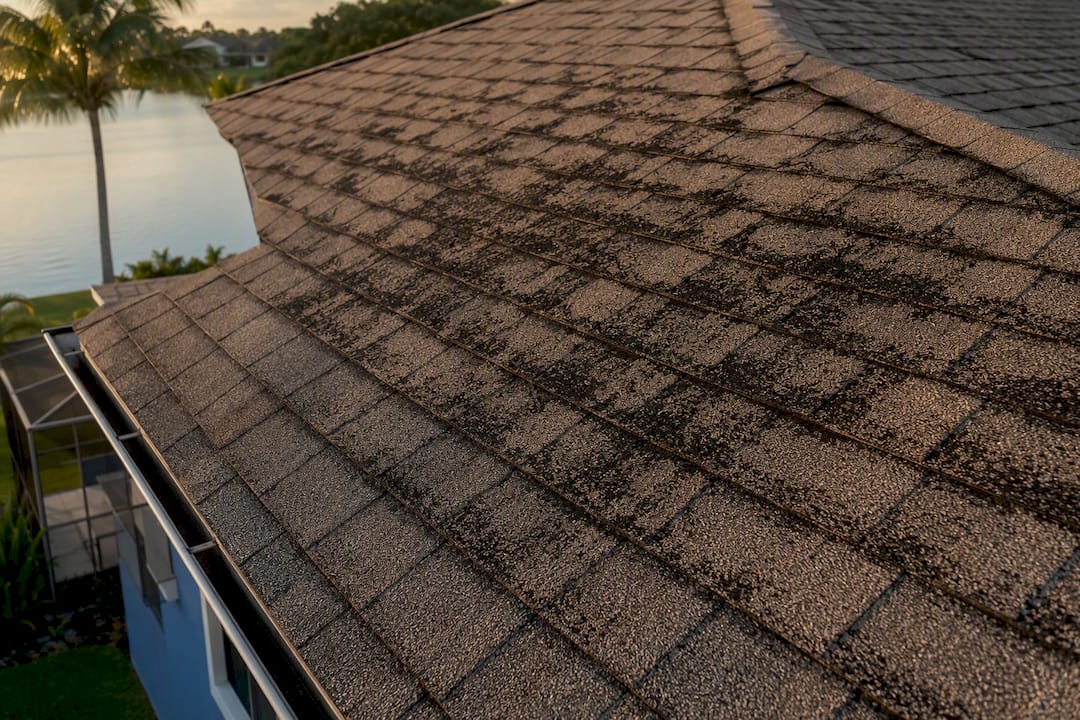
Streaks run vertically because rain washes the algae spores downhill across the shingle surface, and colonies expand in that same direction over months and years. North-facing and shaded slopes almost always show streaking worse than sun-exposed sections, since algae needs sustained moisture to thrive and shade keeps shingles damp longer after rain.
Not every dark patch is algae, though. Before you treat anything, rule out these look-alikes:
- Soot or airborne pollution stains, which appear as uniform gray-black haze rather than distinct streaks.
- Moss, which grows in raised, fuzzy patches, usually near valleys or shaded edges, not smooth streaks.
- Lichen, a crusty, often greenish-gray growth that bonds tightly to the granule surface.
- Tree debris staining, which tends to cluster under branches instead of running top to bottom.
Getting this diagnosis right matters. Treating moss or lichen like algae wastes money on the wrong chemical, and treating soot with bleach does nothing at all.
Is Algae on Shingles Actually Harmful?
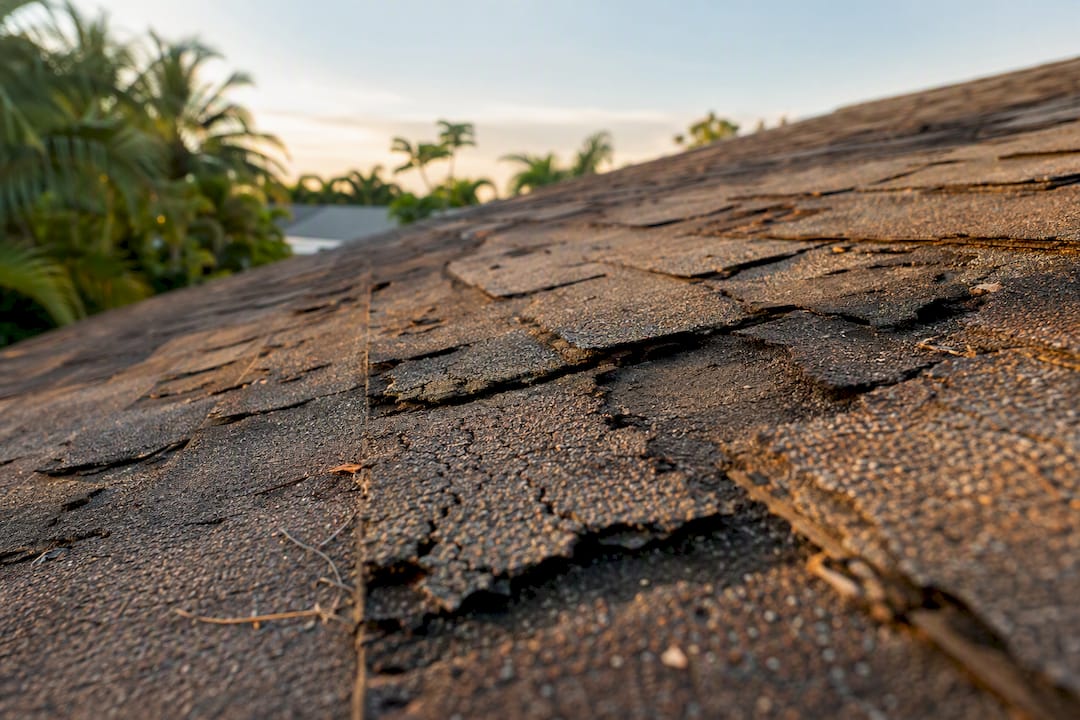
Algae discoloration is mostly cosmetic. Gloeocapsa magma has spread across most of the United States, and in the vast majority of cases, it simply sits on the shingle surface without threatening the roof's structure. That said, leaving it unchecked for years can trap extra moisture against the shingle mat and contribute to gradual wear, and on light-colored or reflective roofs, heavy algae coverage can reduce the roof's ability to reflect heat.
Watch for these signs that go beyond simple staining:
- Granules collecting in gutters or at the base of downspouts.
- Shingles that look curled, cupped, or brittle at the edges.
- Soft spots or visible sagging near heavily streaked areas.
- Interior water stains on ceilings below affected roof sections.
If you see any of those, you're dealing with something bigger than algae, and cleaning alone won't fix it. Curb appeal is the more immediate concern for most homeowners, since black streaking is one of the fastest ways a well-maintained house starts to look neglected from the street.
How to Remove Algae From Shingles Safely
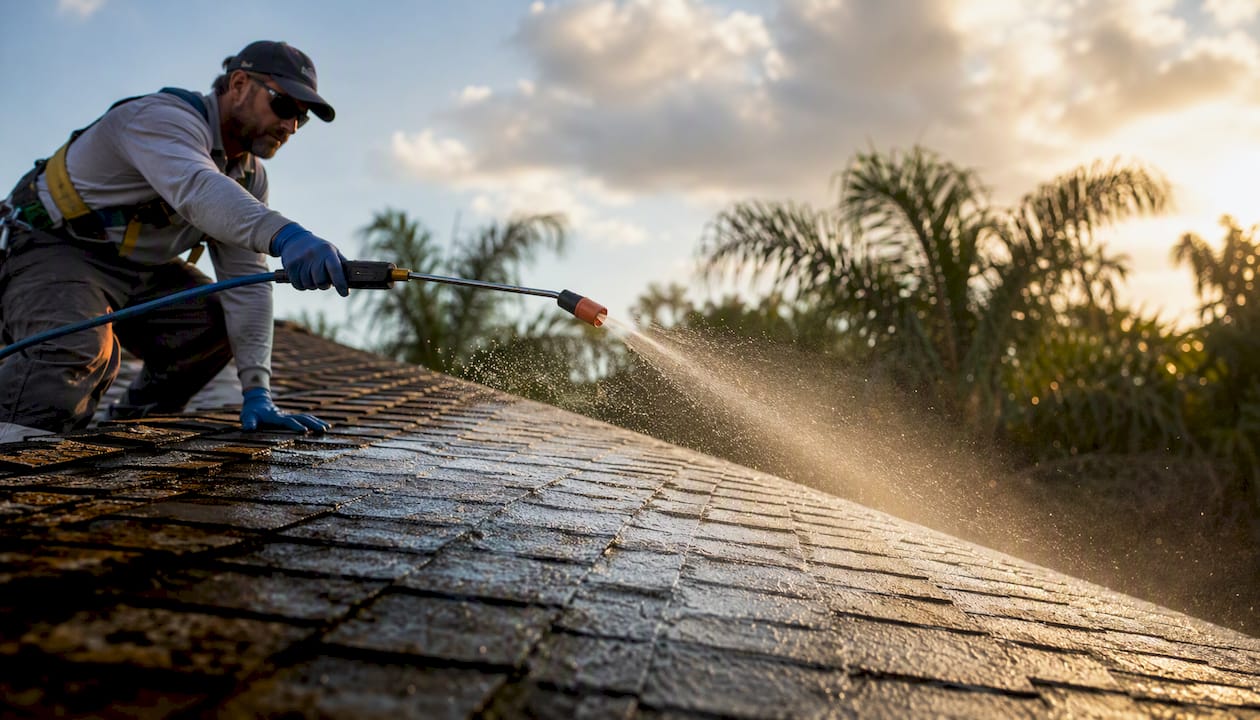
The Asphalt Roofing Manufacturers Association recommends a low-pressure soft-wash method using a sodium hypochlorite solution, and it explicitly warns against pressure washing because high-pressure spray strips away the protective granules that shield shingles from UV damage. That warning is not a formality. Industry inspection reports suggest pressure washing can remove 20 to 50 percent of remaining granules in affected areas, shortening the shingle's usable life by years.
Here's the safer sequence, whether you're doing it yourself or checking a contractor's process:
- Test a small, hidden area first with a diluted sodium hypochlorite mix or a sodium percarbonate (oxygen bleach) alternative if you have plants or pets nearby.
- Saturate landscaping and gutters with plain water before applying any chemical, and cover sensitive plants with plastic sheeting.
- Apply the solution at low pressure, letting it dwell on the shingles for the time specified on the product label, typically 15 to 20 minutes, without ever using a stiff brush.
- Rinse thoroughly from the top down with a garden hose or a soft-wash rig set well below pressure-washer PSI levels.
- Never walk on a wet roof. Wet algae-covered shingles are dangerously slippery, and this is the step where most DIY injuries happen.
Pro Tip: Oxygen bleach (sodium percarbonate) is gentler on grass, shrubs, and pets than sodium hypochlorite, and it still breaks down algae effectively. It just needs a longer dwell time to get the same result.
Soft-wash treatments typically run $300 to $900 for an average home, and most jobs wrap up in a single afternoon. If your roof has any of the wear signs mentioned above, or if it's steep enough that you'd need to walk on it, that's the point to call a professional instead of grabbing a garden sprayer. Learn more about why pressure washing damages asphalt shingles before you decide which route to take.
Roof Algae Prevention: Stopping Streaks Before They Start
Cleaning solves the problem you can see. Prevention keeps it from coming back, and that's where a little upfront spending saves years of repeat cleanings.
- Zinc or copper ridge strips release metal ions that wash down the roof slope every time it rains, creating an environment algae can't colonize. Metal-ion prevention often needs more than one strip on longer or steeper slopes to cover the whole surface effectively.
- Algae-resistant (AR) shingles use copper-infused granules built into the shingle itself, and manufacturers back this approach as a long-term discoloration solution worth considering at your next replacement, rather than a fix for an existing roof.
- Trim overhanging branches to cut down shade and let shingles dry faster after rain.
- Keep gutters clear so water doesn't pool and feed algae growth near the roof edge.
- Improve attic ventilation, which reduces the trapped moisture that gives algae a foothold from underneath.
- Schedule regular inspections, ideally once a year, to catch new streaking before it spreads across the whole slope.
Routine steps like trimming and gutter maintenance cost almost nothing and do more long-term work than any one-time chemical treatment.
Clean It, Repair It, or Replace It?
Black streaks by themselves are never a reason to replace a roof. The decision comes down to what's happening underneath the discoloration, not the color itself.
- Cosmetic staining only: shingles are flat, granules are intact, no interior leaks. Clean and prevent.
- Structural wear signs: granule loss in gutters, curling or cupping edges, active leaks. Time for repair, possibly replacement.
- Roof age 10 to 15 years with no major wear: a candidate for preservation rather than a full tear-off.
- Roof age past 20 years with multiple wear signs: replacement is usually the more cost-effective path.
Combine your roof's age with what you actually observe on the surface, and get a professional assessment before assuming heavy streaking means the roof is failing. A preservation assessment can tell you whether the shingles underneath are still flexible enough to save, which changes the entire cost equation.
Inspect First, Preserve When Possible
Homeowners jump to replacement estimates the moment they see black streaks, and that's usually the wrong first call. Inspecting the roof before assuming the worst saves money and keeps usable asphalt shingles out of the landfill. A roof qualifies for preservation when the shingle mat is still flexible and granule loss hasn't progressed past a certain point, which is exactly what an inspection is designed to catch. Preservation works best on roofs that aren't already showing curling, cracking, or active leaks. Once wear reaches that stage, cleaning and rejuvenation can't reverse it.
— Daniellison
Shingle Roof Renewal: A Preservation Option Worth Checking First
Before you spend $15,000 to $30,000 on a full tear-off, find out if your roof still qualifies for preservation. Shingleroofrenewal follows a simple three-step process: we inspect the roof, assess its actual condition, and determine whether it qualifies for renewal using our certified Fresh Roof Green Soy Technology, which restores shingle flexibility, locks in granules, and improves wind and fire resistance.
This approach works best on aging asphalt shingle roofs roofs that are otherwise structurally sound, the kind with plenty of dried-out, brittle shingles but no widespread leaks or collapse risk. Shingleroofrenewal serves homeowners in Palm Beach and Broward counties, where Florida sun and storms accelerate shingle aging faster than almost anywhere else in the country.
Call us before you call the roofer. Schedule your free roof inspection in Plantation and find out whether your roof qualifies for renewal instead of replacement.
Sources
For deeper technical detail beyond this guide, ARMA's algae cleaning and prevention bulletin is the manufacturer-backed standard, MicrobeWiki's Gloeocapsa magma profile covers the organism itself, and The Roofing Brief offers practical homeowner cost comparisons.
- Algae & moss prevention and cleaning for asphalt roofing systems — ARMA
- Algae streaks on a roof: Cause, clean, prevent | TRB
- Gloeocapsa magma — MicrobeWiki
- Gloeocapsa magma — Wikipedia