
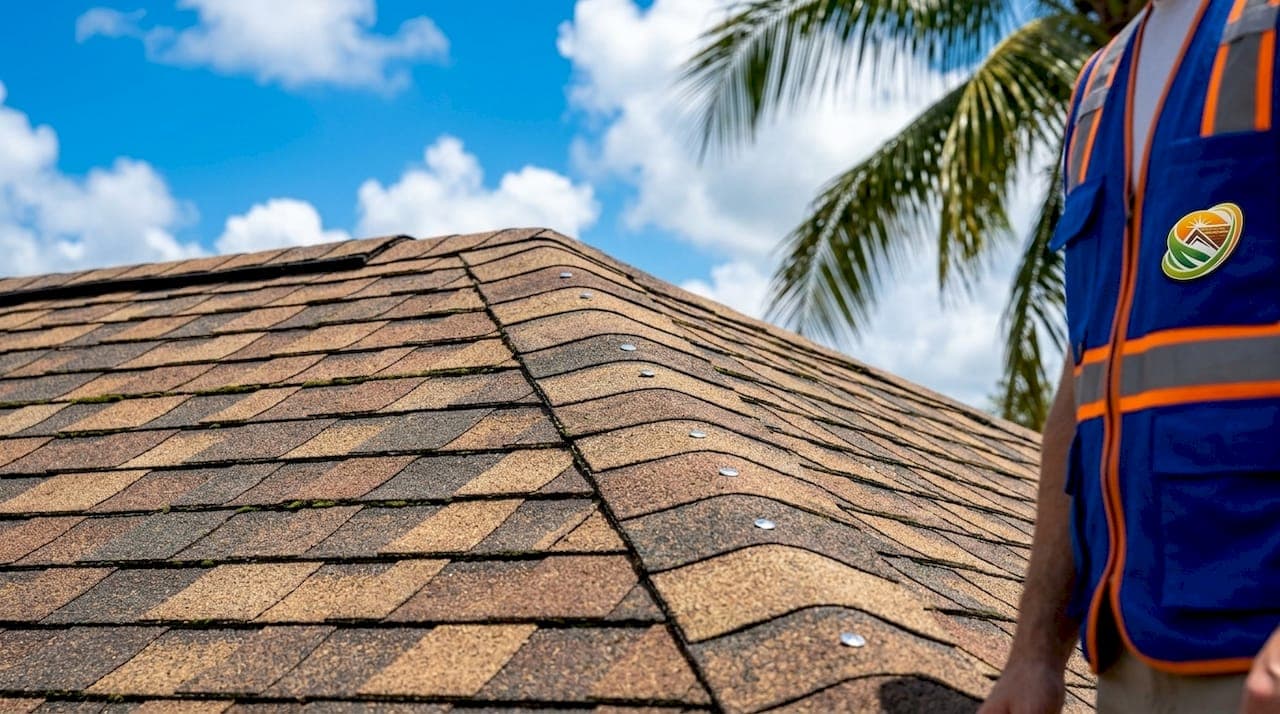
TL;DR:
- Proper nail fastening, gutter maintenance, attic ventilation, and safe cleaning are crucial for extending Florida shingle roofs' lifespan. Neglecting these practices can cause early deterioration, especially in Broward and Palm Beach Counties exposed to harsh weather. Early professional assessments and targeted maintenance help prevent costly replacements and comply with local building codes.
The most effective insider tips for Florida shingle roofs center on three non-negotiable practices: correct nail fastening to meet High-Velocity Hurricane Zone (HVHZ) standards, consistent gutter and drainage maintenance, and safe cleaning methods that preserve granules. Homeowners in Broward County and Palm Beach County face a combination of intense UV exposure, hurricane-force winds, and year-round humidity that no other U.S. market matches. Asphalt shingle roofs in this region can fail 10 to 15 years ahead of schedule when these basics are ignored. The good news is that targeted maintenance, paired with early intervention from services like Shingleroofrenewal, can extend your roof's life significantly and save you from a $15,000 to $30,000 replacement bill.
1. Nail fastening: the most overlooked shingle roof maintenance tip
Correct nail fastening is the single biggest factor separating a roof that survives a South Florida hurricane from one that doesn't. Most homeowners never think to ask about it, which is exactly why it belongs at the top of any list of Florida roofing advice.
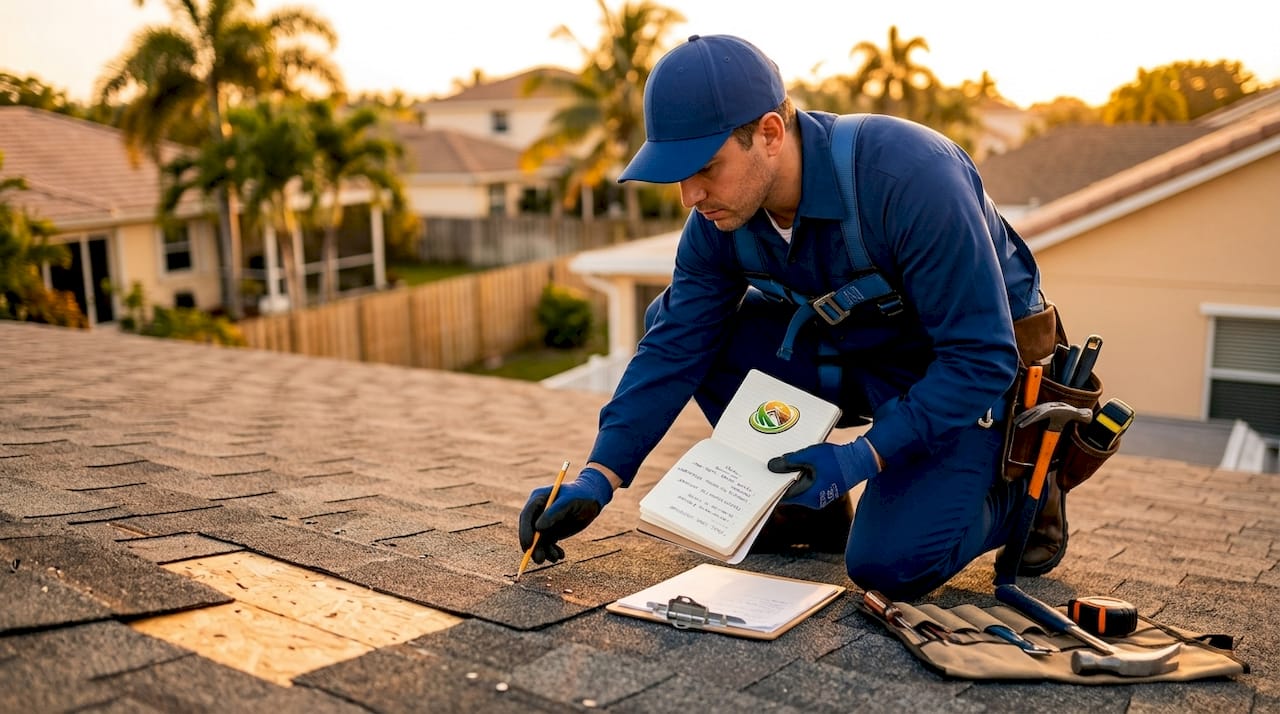
Florida's HVHZ mandates a 6-nail fastening pattern with 12-gauge corrosion-resistant nails for every asphalt shingle. That replaces the standard 4-nail pattern used in most of the country. The difference matters because South Florida roofs must withstand wind uplift stresses in the range of 170 to 175 mph.
The nail specifications go beyond just the count:
- Nail type: 12-gauge, hot-dipped galvanized or stainless steel only. Standard electro-galvanized nails corrode in Florida's salt air within a few years.
- Penetration depth: Nails must penetrate at least 3/4 inch into the roof deck. Shallow nails pull out under wind load.
- Placement zone: Each nail must land within the manufacturer's specified nailing strip. Off-target nailing reduces holding power even when the count is correct.
- Miami-Dade NOA compliance: Every shingle product used in HVHZ must carry a Miami-Dade Notice of Acceptance (NOA). This approval confirms the product was tested with the correct fastening system.
Pro Tip: Ask any roofing contractor in Broward or Palm Beach County to show you the specific NOA number for the shingles they plan to install. A contractor who cannot produce it on the spot is a contractor worth replacing.
Wind-loss prevention hinges on installation details like nail pattern and deck penetration, with HVHZ standards driving contractors to exceed normal practices. If your roof was installed before these standards were enforced, a professional inspection can reveal whether your fastening is adequate.
2. Gutter cleaning and drainage: your roof's first line of defense
Cleaning gutters twice a year, plus after every significant storm, is one of the most cost-effective shingle roof maintenance tips available to South Florida homeowners. It costs almost nothing and prevents some of the most expensive damage a roof can suffer.
Here is the sequence of events when gutters clog in a South Florida rainstorm:
- Debris blocks the gutter channel and water backs up against the roof edge.
- Water wicks under the bottom course of shingles and saturates the roof deck.
- The fascia board absorbs moisture and begins to soften and rot.
- Deck rot spreads inward, often invisibly, until a leak appears inside the home.
Hidden damage from water backup behind clogged gutters frequently leads to fascia and wooden deck rot that appears only after significant wear. By the time you see a water stain on your ceiling, the structural damage is already weeks or months old.
Watch for these warning signs during or after rain:
- Gutters overflowing at the midpoint rather than at the downspout end (indicates a sag or blockage)
- Brown or gray staining on fascia boards directly below the gutter line
- Soft or spongy wood when you press on the fascia near the roofline
- Granules collecting in the gutter channel, which signals shingle deterioration is already underway
Pro Tip: You do not need to climb on your roof to spot most gutter problems. Walk the perimeter of your home with a garden hose after a dry spell, run water into the gutter, and watch where it overflows. That tells you exactly where the blockage or slope problem is.
After a storm, also check your yard for debris that may have landed on the roof. A post-storm debris removal routine keeps branches and organic material from sitting on shingles and trapping moisture.
3. Attic ventilation: the hidden factor in shingle lifespan
Proper attic ventilation is one of the most underestimated factors in shingle roof lifespan in Florida. Most homeowners focus on what they can see from the ground and never consider what is happening in the attic space directly below the shingles.
A correctly ventilated attic uses two types of vents working together:
- Soffit vents (intake): Located along the underside of the roof overhang, these draw cool outside air into the attic.
- Ridge vents (exhaust): Positioned at the roof peak, these allow hot air to escape as it rises.
When this system is balanced, attic temperatures stay manageable even in a South Florida summer. When it fails, attic temperatures can exceed 160°F on a clear July afternoon in Broward County. That heat bakes the underside of the shingles, accelerating the loss of the oils that keep them flexible. The result is curling shingles and deck rot that appear years before they should.
Common ventilation mistakes that South Florida homeowners make include:
- Blocking soffit vents with insulation: Blown-in insulation frequently covers soffit vent openings, cutting off intake airflow entirely.
- Painting over ridge vents: During exterior repaints, contractors sometimes seal ridge vents with paint, eliminating exhaust capacity.
- Undersized vent area: Florida Building Code requires a minimum net free area of ventilation. Many older homes in Palm Beach County fall short of this standard.
- Mixing powered attic fans with ridge vents: This combination can actually pull conditioned air from the living space into the attic, increasing energy costs and moisture problems.
Schedule an attic inspection every two years. A qualified roofing contractor can measure your net free ventilation area and confirm your intake-to-exhaust ratio is correct.
4. Safe roof cleaning and algae prevention without damaging shingles
Algae growth is nearly universal on asphalt shingle roofs in South Florida. The dark streaks you see are caused by Gloeocapsa magma, a cyanobacterium that thrives in Florida's humidity. Removing it safely requires the right method. The wrong method can cost you your warranty and years of shingle life.
High-pressure washing strips protective granules from asphalt shingles and can void manufacturer warranties. Granules are not decorative. They protect the asphalt core from UV degradation. Once they are gone, the shingle ages rapidly and cannot be restored by cleaning alone.
Safe alternatives include:
- Soft washing: Low-pressure application of a diluted sodium hypochlorite solution kills algae at the root without mechanical damage to granules. This is the method recommended by the Asphalt Roofing Manufacturers Association (ARMA).
- Manufacturer-approved treatments: Some shingle brands, including GAF and Owens Corning, specify approved cleaning solutions in their warranty documentation. Using an unapproved product voids coverage.
- Algae-resistant shingles: If you are replacing a section of your roof, specify shingles with copper-infused granules. Copper is toxic to Gloeocapsa magma and prevents regrowth for years.
One more thing to avoid: painting your shingles with standard exterior paint. Standard paint traps heat and moisture, degrades the asphalt, and jeopardizes warranties. If you want to reduce heat absorption, proper attic insulation and ventilation have a greater impact than any surface coating.
Pro Tip: Hire a cleaning contractor who specifically advertises soft wash services for Florida asphalt shingles. Ask them to confirm in writing that their process complies with your shingle manufacturer's warranty terms before they start.
5. Understanding Florida's 25% rule before you schedule repairs
The Florida Existing Building Code's 25% rule is one of the most misunderstood regulations in South Florida roofing. Getting it wrong can turn a modest repair into a full code-compliant re-roof at significant cost.
The 25% rule requires full-section compliance if more than 25% of the roof area is repaired or replaced within a rolling 12-month period. When that threshold is crossed, the entire roof section must be brought up to current Florida Building Code standards, including HVHZ fastening requirements.
| Scenario | Rule that applies | Practical impact |
|---|---|---|
| Roof built or replaced before March 1, 2009 | Original 25% rule in full effect | Exceeding 25% triggers full re-roof to current code |
| Roof built or replaced after March 1, 2009 | SB-4D modification applies | Partial replacements may be exempt from full-code upgrade |
| Storm damage repair under 25% | No full-code trigger | Repairs proceed under existing code |
| Cumulative repairs exceeding 25% in 12 months | Full-code trigger applies | Entire section must meet current standards |
The practical takeaway for homeowners in Broward and Palm Beach counties is this: track every repair your contractor performs and the date it was completed. If you are approaching the 25% threshold, it may be smarter to schedule a full replacement or renewal now rather than trigger the rule accidentally with a future repair. A certified contractor familiar with local Florida roofing advice will help you plan around this rule strategically.
6. Post-storm inspection: catching damage before it compounds
Inspecting your roof after every named storm or severe weather event is one of the most direct shingle roof maintenance tips you can act on without spending a dollar. Granules in gutters indicate shingle deterioration; prompt repair preserves roof integrity before water finds a path through.
Walk the perimeter of your home within 24 hours of a storm and look for:
- Missing shingles or shingles that have shifted out of alignment
- Exposed dark substrate where granules have been knocked off
- Lifted shingle edges, which signal the seal strip has broken
- Debris sitting on the roof surface, especially branches that can puncture or abrade shingles
If you see granule accumulation in your gutters after a storm, that is a signal worth taking seriously. A single storm can accelerate aging by the equivalent of one to two years of normal wear. Catching it early and addressing it with a professional inspection keeps a manageable problem from becoming a replacement-level failure.
Key takeaways
Extending your asphalt shingle roof's life in South Florida requires HVHZ-compliant fastening, consistent drainage maintenance, correct attic ventilation, and safe cleaning methods applied before damage compounds.
| Point | Details |
|---|---|
| HVHZ nail fastening | Use 6 nails per shingle with 12-gauge corrosion-resistant nails penetrating at least 3/4 inch into the deck. |
| Gutter cleaning frequency | Clean gutters twice yearly and after every storm to prevent water backup and deck rot. |
| Attic ventilation balance | Confirm soffit and ridge vents are unobstructed and sized correctly to prevent heat-driven shingle aging. |
| Safe algae removal | Use soft washing only. High-pressure washing strips granules and voids manufacturer warranties. |
| Florida 25% rule | Track all repairs within a 12-month window to avoid accidentally triggering a full code-compliant re-roof. |
What working with South Florida roofs has taught me
Most homeowners I speak with in Broward and Palm Beach counties share one thing in common: they waited too long. Not because they were careless, but because asphalt shingle roofs fail quietly. The damage builds in the attic, behind the fascia, and under the granule layer long before it becomes visible from the ground.
The conventional wisdom says "inspect your roof once a year." My honest take is that this is not enough in South Florida. The UV intensity here, combined with storm season running from June through November, means your roof ages faster than the national average. A twice-yearly inspection, once before storm season and once after, is the minimum that makes sense in this climate.
I have also seen homeowners spend money on the wrong things. Reflective paint, decorative coatings, and DIY sealants applied without professional assessment rarely solve the underlying problem. What actually works is addressing the structural basics: fastening compliance, drainage, ventilation, and granule preservation. Get those right and your roof will outlast its expected lifespan. Ignore them and no amount of surface treatment will save it.
The other thing I would push back on is the assumption that a worn roof automatically needs replacement. Many roofs in Palm Beach and Broward counties that look tired are structurally sound and qualify for renewal rather than replacement. The reasons Florida asphalt roofs fail are well understood, and most of them are addressable before the point of no return. The homeowners who come out ahead financially are the ones who get a professional assessment early, understand their options, and act before a repair becomes a replacement.
— Daniellison
Save your South Florida shingle roof before it needs replacing
If the tips in this article describe problems you recognize on your own roof, the next step is a professional assessment, not a replacement quote.

Shingleroofrenewal is a certified Fresh Roof applicator serving Broward County and Palm Beach County. Using GreenSoy Technology, the process restores flexibility to aging shingles at the molecular level, stops further deterioration, and extends roof life by 10 to 15 years. Homeowners who qualify can save up to 80% compared to a full replacement, backed by a 6-year transferable warranty. The process starts with a free inspection to confirm your roof is a good candidate. Schedule your free roof inspection today and find out if your roof qualifies before a manageable problem becomes a $20,000 decision.
FAQ
What is the HVHZ 6-nail rule for Florida shingle roofs?
Florida's High-Velocity Hurricane Zone requires 6 corrosion-resistant nails per shingle instead of the standard 4, with each nail penetrating at least 3/4 inch into the roof deck. This standard applies across Miami-Dade and Broward counties and is enforced through Miami-Dade NOA product approvals.
How often should I clean my gutters in South Florida?
Clean your gutters at least twice a year and after every significant storm. Clogged gutters cause water to back up under shingles, leading to deck rot and fascia damage that often goes undetected until it requires expensive structural repairs.
Can I pressure wash my asphalt shingle roof in Florida?
No. High-pressure washing strips granules from asphalt shingles and can void your manufacturer warranty. Soft washing with a diluted, manufacturer-approved solution is the correct method for algae removal on Florida roofs.
What triggers Florida's 25% roof replacement rule?
If more than 25% of your roof area is repaired or replaced within a rolling 12-month period, Florida Building Code requires the entire roof section to be brought up to current standards. Tracking repair dates and areas with your contractor helps you avoid triggering this rule unintentionally.
How can I extend my shingle roof's life without a full replacement?
Consistent maintenance covering gutter cleaning, attic ventilation checks, post-storm inspections, and safe algae removal can add years to your roof's life. For roofs showing signs of aging in Broward or Palm Beach County, a roof longevity checklist and a professional renewal assessment are the most cost-effective starting points.