
A structured long-term roof care plan, built around biannual professional inspections, seasonal gutter maintenance, prompt minor repairs, and documented preservation when your roof qualifies, is the most cost-effective way to extend asphalt shingle roof life and reduce your replacement risk. NRCA roofing guidelines recommend professional inspections at least twice a year, and following that cadence consistently can add roughly 5–10 years to a shingle roof's functional lifespan compared to reactive maintenance. That gap represents real money: a roof that lasts 30 years instead of 20 is a roof you don't replace in your prime earning years.
Start now by scheduling a spring or fall inspection and opening a dedicated roof file on your phone or computer. Drop in photos, invoices, and inspection reports as they come in.
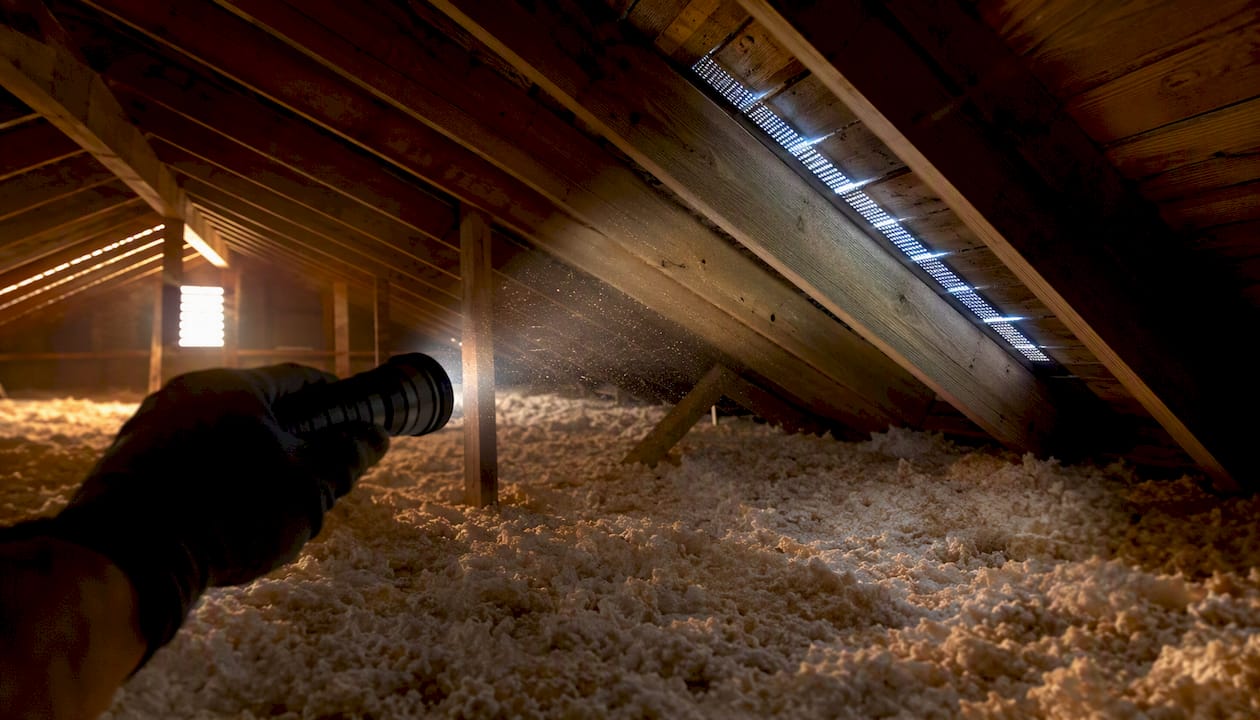
Pro Tip: Check your attic ventilation at every inspection and photograph it. Poor ventilation causes shingles to curl and cup from the inside out, and no preservation treatment or new shingle can fix a ventilation problem that's left unaddressed. Documenting ventilation status also protects your manufacturer warranty.
Key Takeaways
A structured long-term roof care plan, built on biannual inspections, documented maintenance, and preservation when qualified, is the most cost-effective way to extend asphalt shingle roof life and avoid premature replacement.
| Point | Details |
|---|---|
| Inspect twice a year, plus post-storm | Spring and fall inspections, per NRCA guidance, can add 5–10 years to a shingle roof's functional lifespan. |
| Maintenance costs 1–3% of replacement value annually | Johns Manville guidance shows this annual spend can reduce total lifecycle costs by up to 50% over a roof's life. |
| Keep a roof file with every visit | Dated photos, inspection reports, and invoices protect your warranty and support insurance claims. |
| Qualify before you replace | Preservation treatments like Fresh Roof Green Soy Technology can defer replacement on qualifying roofs at a fraction of the cost. |
| Shingleroofrenewal offers a free assessment | Homeowners in Broward and Palm Beach County can get a no-obligation inspection and qualification recommendation backed by a 6-year transferable warranty. |
Table of Contents
- What a long-term roof care plan actually includes
- When should you schedule inspections, and why does timing matter?
- What do inspectors actually check? A professional roof inspection checklist
- What does a roof care plan cost, and what do you save?
- How to choose a roof care provider and what red flags to avoid
- When does preservation make more sense than replacement?
- How to build and maintain a roof file that protects your warranty
- Why we put preservation before replacement every time
- Your next step: get a free roof assessment from Shingleroofrenewal
- Sources
What a long-term roof care plan actually includes
A solid roof maintenance program is more than a once-a-year cleaning. Here's what a complete plan covers, and what it typically excludes.
Core recurring services:
- Professional roof inspection covering both the attic and the full roof surface
- Debris removal from valleys, drains, and low-slope areas where organic material collects
- Gutter and downspout cleaning to keep drainage moving away from the foundation
- Sealant and flashing touch-ups at chimneys, skylights, and pipe boots
- Minor shingle repairs: re-nailing lifted tabs, replacing isolated missing shingles
- Moss and algae management using zinc strips or approved soft-wash treatments
- Written condition report with dated photos and recommended next actions
Optional add-ons worth asking about:
- Preservation or restoration treatments such as Fresh Roof Green Soy Technology for qualifying asphalt shingle roofs
- Zinc or copper ridge metal installation for long-term algae suppression
- Attic ventilation assessment or baffle installation
- Emergency response coverage with a defined response time SLA
Common exclusions to watch for:
- Full reroofing or structural deck replacement
- Code-required permit work
- Cosmetic-only pressure washing (which strips protective granules and can void your warranty)
- Major flashing replacement beyond minor sealant touch-ups
Knowing what's excluded before you sign matters as much as knowing what's included. Ask for a written scope of work.
When should you schedule inspections, and why does timing matter?
Twice a year is the professional standard, and the seasons aren't arbitrary. Spring inspections catch damage from winter freeze-thaw cycles, ice dams, and debris that settled under snow. Fall inspections secure the roof before winter stress begins and clear leaf debris that holds moisture against shingles for months.
A practical calendar: book your spring inspection after the last hard freeze in your area and your fall inspection before the first freeze. For South Florida homeowners, the equivalent timing is pre-hurricane season (May) and post-hurricane season (November), since freeze-thaw isn't the local concern but tropical storm damage absolutely is. The South Florida roof care workflow covers that seasonal logic in detail.
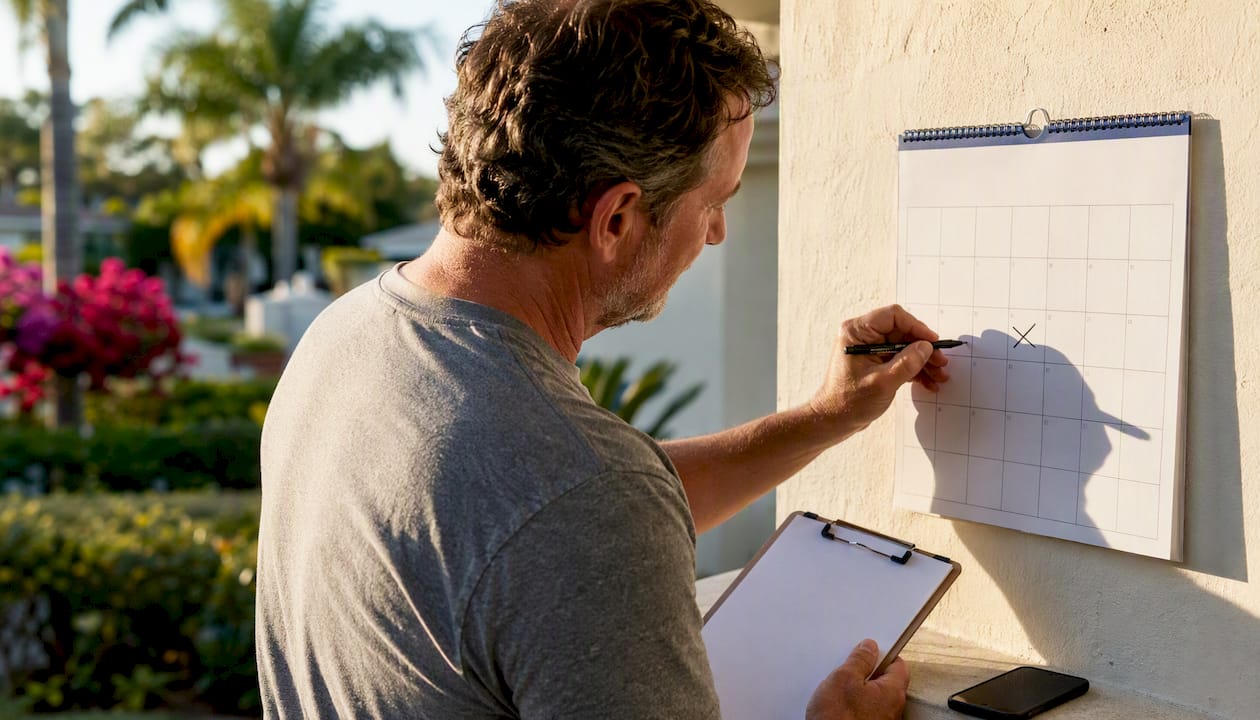
Add a third trigger: any storm with hail, sustained winds above 50 mph, or a named tropical system. Post-storm inspections catch lifted tabs and cracked shingles before a minor entry point becomes a major interior leak. Put that checkbox in your emergency plan now, not after the next storm.
What do inspectors actually check? A professional roof inspection checklist
A professional inspection is a structured evaluation, not a visual scan from the driveway. According to NRCA guidelines, it covers flashing, fasteners, drainage, membrane integrity, and attic conditions, not just the shingle surface.
Exterior and roof surface:
- Shingle condition: granule loss (bare spots or heavy granule accumulation in gutters), curling, cupping, and cracking
- Lifted or missing tabs, ridge and hip shingle condition
- Valley debris and standing-water evidence
- Flashing at chimneys, skylights, and walls; pipe boots and vent collars
Drainage:
- Gutters, downspouts, scuppers, and roof drains for blockages
- Evidence of ponding or improper discharge near the foundation
Penetrations and roof features:
- Skylights, chimneys, HVAC curb flashings, plumbing vents, and roof-mounted equipment seals
Attic and ventilation:
- Soffit intake and ridge or box exhaust vent condition
- Insulation baffles, signs of condensation, deck staining, or soft spots
- Attic temperature relative to outside (overheating accelerates shingle aging)
Fasteners and substrate:
- Popped nails, exposed fasteners, soft spots suggesting deck moisture or rot
The asphalt roof maintenance checklist organizes these items around six failure systems: granule loss, self-seal, moss and algae, flashing, ventilation, and fasteners. Twice-yearly attention to all six is what produces the 5–10 year life extension figure. A good inspector delivers a written report with photos, urgency categories (immediate, within 90 days, monitor), and cost estimates for recommended actions. If you don't receive that, ask for it in writing before you pay.
Pro Tip: Use the roof evaluation checklist to follow along during your inspection so you can ask informed questions in real time.
What does a roof care plan cost, and what do you save?
The honest answer is that maintenance costs far less than the alternative. Johns Manville's guidance puts a typical maintenance program at 1–3% of estimated replacement value annually, with the potential to reduce total lifecycle costs by up to 50% over a roof's life compared to deferred maintenance leading to early replacement.
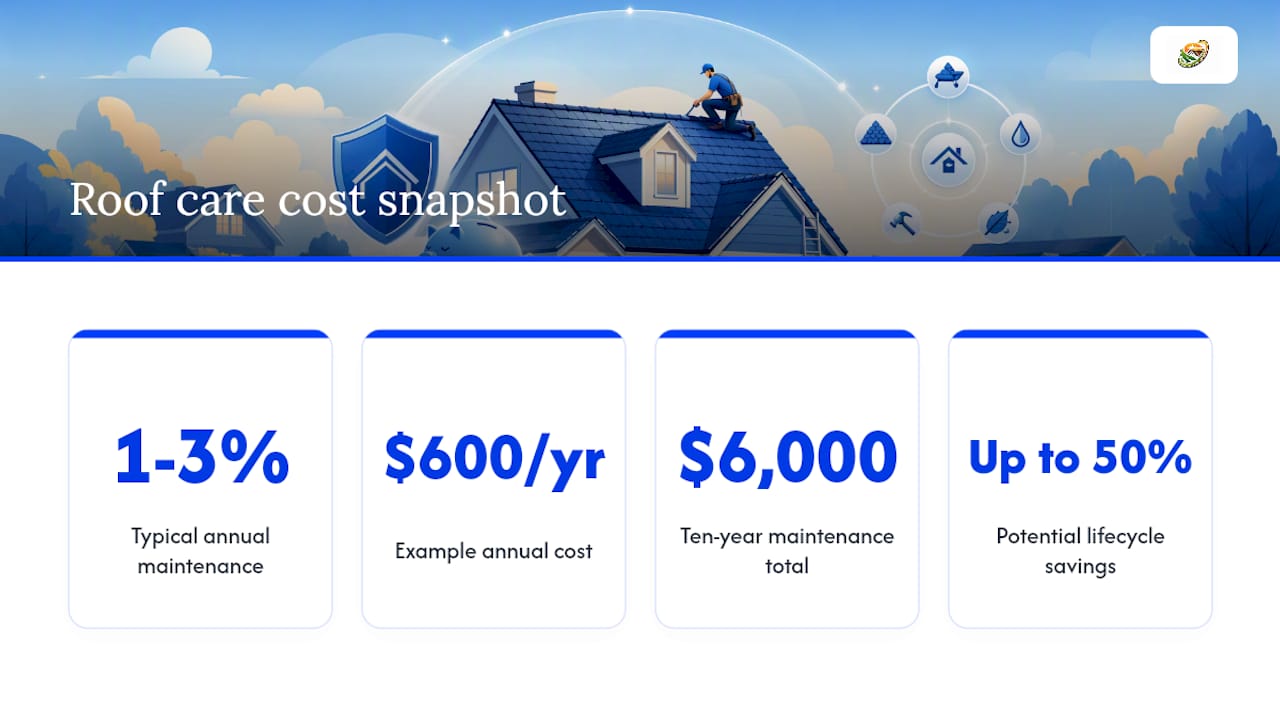
Here's what that looks like in practice for a 2,000 sq ft home:
A homeowner spending $600 per year on a maintenance plan over 10 years spends $6,000. If that plan defers replacement by even five years, the avoided cost at today's prices is substantial. The roofing maintenance guide notes that material-specific inspection schedules and sample cost ranges help homeowners set realistic budgets before committing to a plan.
Pay-per-visit models work for homeowners who prefer flexibility. Subscription or multi-year contracts typically cost less per service and often include priority scheduling after storms, which matters when every roofer in your area is booked for weeks.
How to choose a roof care provider and what red flags to avoid
Not every maintenance program delivers what it promises. These questions cut through the noise.
Questions to ask every provider:
- How often do you inspect, and is the attic included?
- What's your emergency response time after a storm?
- Do I receive a written report with dated photos after every visit?
- Does your maintenance documentation support my manufacturer warranty?
- Are you a certified applicator for any preservation treatments you recommend?
- What are the cancellation terms, and is the warranty transferable if I sell the home?
Contract checkpoints:
- Written scope of work listing included and excluded services
- Response SLA for urgent repairs (24–48 hours is reasonable)
- Clarity on who performs the work (in-house vs. subcontracted)
- Transferable warranty language, if applicable
Red flags:
- Pressure washing offered as a cleaning method (it removes granules and can void your Owens Corning warranty)
- Vague exclusion language ("structural issues not included" with no definition)
- No written inspection report or photo documentation
- No attic inspection in the scope
- Refusal to commit to response times in writing
The Shingleroofrenewal process maps directly to these criteria: inspect, assess, qualify, then preserve. Every step is documented, and qualifying roofs receive a 6-year transferable warranty on preservation work. For a deeper look at how the roof assessment process works, that resource walks through each qualification step.
When does preservation make more sense than replacement?
Replacement is sometimes the right call. But many homeowners replace roofs that still qualify for preservation, spending $15,000–$30,000 when a fraction of that cost would extend the roof's life by years. The decision comes down to five factors.
Preservation is worth evaluating when:
- The roof is within its rated life and granule loss is moderate but not widespread
- Flashing damage is limited to isolated areas, not systemic failure
- The attic ventilation is functional or correctable
- There are no recurring leaks tied to deck rot or structural failure
- A certified applicator confirms the shingles respond to treatment
Replacement planning is appropriate when:
- Sealant failure is widespread across the field, not isolated
- Decking rot appears in multiple locations
- Roughly 25–30% or more of the surface shows irreversible granule loss (a pro needs to confirm this, not a driveway estimate)
- Recurring leaks trace back to structural or deck failure, not flashing or sealant
Shingleroofrenewal's Fresh Roof Green Soy Technology works at the molecular level to restore shingle flexibility, lock in granules, and improve wind and fire resistance on qualifying roofs. The qualification process includes a photo assessment, attic check, and small sample repairs before any preservation work is recommended. Roofs that qualify receive a 6-year transferable warranty. For homeowners weighing roofing upgrade options before deciding, that resource covers ventilation improvements and other upgrades that affect whether a roof qualifies.
Attic ventilation failures often look like aged shingles from the outside. Curling and cupping caused by heat buildup from a blocked soffit or undersized ridge vent will repeat after any reroof if the ventilation isn't corrected first. A preservation specialist who checks the attic catches this; a roofer focused on tear-off often doesn't.
How to build and maintain a roof file that protects your warranty
Documentation is what separates a homeowner who gets a warranty claim approved from one who doesn't. Manufacturers and insurers increasingly require proof of maintenance to honor coverage, and Johns Manville's guidance confirms that documented maintenance supports warranty extensions and insurance claims.
What to store in your roof file:
- Inspection reports with inspector name, date, and scope
- Dated photos of the roof surface and attic after each visit
- Invoices for all repairs and maintenance services
- Product names, batch numbers, and applicator certifications for any treatments applied
- Warranty paperwork including transferability terms and expiration dates
Sample roof maintenance log:
| Field | What to Record |
|---|---|
| Date | Month, day, year of service |
| Inspector / Contractor | Name and company |
| Scope | What was inspected or repaired |
| Findings | Condition notes and urgency ratings |
| Actions Taken | Work completed, materials used |
| Photos | File names or folder reference |
| Cost | Amount paid |
| Next Recommended Date | Inspector's suggested follow-up |
Keep digital copies in a single cloud folder (Google Drive or iCloud work fine) and a labeled physical folder with the original paperwork. Include your service provider's emergency contact number in both places. If you sell the home, hand the file to the buyer: a documented maintenance history and a transferable warranty are real selling points.
Why we put preservation before replacement every time
Most homeowners call a roofer when they see a problem. We think that's often too late, and too expensive.
Shingleroofrenewal is a preservation and preventative maintenance company, not a roofing contractor. Our role is to get there first, before the roofer, before the replacement quote, and before the decision is made under pressure. That's the honest version of "call us before you call the roofer."
Our certification as an authorized Fresh Roof applicator means we use Green Soy Technology that penetrates shingles at the molecular level, restoring flexibility and slowing the brittleness that South Florida's sun, heat, and storms accelerate. The three-step process, inspect, assess, and qualify, is designed to give you a clear answer: does your roof qualify for preservation, or does it genuinely need replacement? We won't recommend preservation on a roof that doesn't qualify. That's the only way this works long-term.
When a roof does qualify, the result is a 6-year transferable warranty, documented inspection reports, and years of avoided replacement cost. Every roof we preserve is also one less tear-off in a landfill. That matters to us, and increasingly it matters to homeowners too.
Your next step: get a free roof assessment from Shingleroofrenewal
Most South Florida homeowners don't know whether their roof qualifies for preservation until someone actually looks. Shingleroofrenewal offers a free roof assessment for homes in Broward and Palm Beach County, with no obligation and no pressure to commit.
Here's what you get with a free assessment:
- A professional inspection of your roof surface and attic
- A clear qualification recommendation: preserve or plan for replacement
- A written report with photos and findings
- Honest guidance on next steps, backed by Fresh Roof certified applicator expertise
- A 6-year transferable warranty on qualifying preservation work
If your roof qualifies, you could save significantly compared to full replacement. If it doesn't, you'll know exactly why and what to plan for. Either way, you leave with information, not a sales pitch.
Schedule your free roof inspection today and find out where your roof actually stands.
Sources
- Consumer Reports — 5 Ways to Help Your Roof Last Longer
- Johns Manville — The Cost of Waiting: Why Proactive Roof Maintenance May Help to Prevent Future Unplanned Expenses
- Asphalt roof maintenance: Checklist to extend life (The Roofing Brief)
- Owens Corning — Cleaning Asphalt Roof Shingles & maintenance tips
- Roofing Maintenance Guide: Extend Your Roof's Life 2026
Consult your shingle manufacturer's warranty documentation and local building codes for binding terms specific to your roof system and jurisdiction.