
Rejuvenation after hurricane exposure can be a smart, money-saving move, but only for roofs that pass a professional inspection first. If your shingles show broken tabs, exposed fiberglass, or heavy granule loss, repair or replacement comes before any preservation treatment. Never climb onto your roof yourself. Call a qualified inspector, get a written condition report, then let that determine your next step.
TL;DR:
- Preservation treatment is only suitable for roofs with intact decking, fasteners, and sealed tabs, not for roofs with exposed fiberglass or heavy granule loss.
- Homeowners must complete repairs such as fixing broken shingles or damaged flashing before applying preservation treatments, which do not fix structural issues.
- Applying rejuvenation treatments over damp or damaged roofs can undermine performance, making timely and dry inspections essential.
- Costs for preservation are significantly lower than full replacement, saving up to 80 percent if the roof qualifies, with a 6-year transferable warranty.
- Regular inspections every year and after storms are crucial to ensure the treatment’s effectiveness and catch any deterioration early.
Table of Contents
- What Disqualifies a Roof From Rejuvenation After a Hurricane?
- What Steps Should You Take After Storm Damage?
- What Can Rejuvenation Actually Fix (and What Can't It)?
- How Insurance, Permits, and Timing Fit Together
- How Often Should You Maintain a Rejuvenated Roof?
- How Do Rejuvenation Products Compare?
- Is Rejuvenation Cheaper Than Replacement Long Term?
- What Mistakes Do Homeowners Make With Rejuvenation?
- Author Perspective: Preserve When You Can, Replace When You Must
- How Shingle Roof Renewal Helps South Florida Homeowners Decide
- Sources
- FAQ
What Disqualifies a Roof From Rejuvenation After a Hurricane?
Not every storm-battered roof is a candidate for preservation. The Florida Hurricane Retrofit Guide lays out specific warning signs that mean a roof needs replacement, not restoration. A qualified inspector checks for these before recommending any treatment.
Watch for these red flags:
- Exposed fiberglass matting where granules and asphalt have worn away completely
- Broken or cracked tabs, especially along ridges and edges
- Heavy granule loss, visible as bald patches or granules pooling in gutters
- Lifted or unsealed tabs that no longer bond to the shingle below them
- Missing shingles, even just a few, since that usually signals wind uplift affecting nearby courses too
- Active leaks inside the attic or on ceilings
- Deck or flashing damage around chimneys, vents, and valleys
Roofs that look rough from the driveway aren't automatically finished. An inspector's close-up review often finds that edges, tabs, and seal strips are still intact even when granule loss looks bad from ground level. That's the difference between a roof that needs a full tear-off and one that just needs help.
Statistic to know: FEMA's investigation into Hurricane Michael found that unsealed or partially unsealed shingles and incorrect fastener placement were direct contributors to shingle failure across Florida homes. That's a fastening and sealing problem, not something a surface treatment fixes.
Documentation matters as much as the inspection itself. Photograph the roof edges, valleys, penetrations, and ridge lines, the exact zones where hidden failures hide. Insurers and applicators both want to see these areas clearly, so take wide shots and close-ups. And never inspect a roof yourself after a storm. OSHA's post-hurricane guidance is direct about the fall hazards involved, even on roofs that look stable from below.
What Steps Should You Take After Storm Damage?
A hurricane doesn't just damage your roof. It creates a paperwork problem too. Handle both in the right order, and you protect your insurance claim while giving your roof the best shot at preservation instead of full replacement.
- Document everything first. Take time-stamped photos of every visible issue before you touch anything. Keep this evidence in a separate folder from any maintenance records you generate later. Our post-storm inspection checklist walks through exactly what to capture.
- Schedule a professional inspection. Ask the inspector for close-up photos of high-risk zones and a clear, written recommendation: preserve, repair, or replace.
- Complete necessary repairs first. Broken shingles, damaged flashing, and compromised decking all need fixing before any preservation treatment goes down. A treatment applied over a damaged substrate won't hold, and it won't perform as intended.
- Confirm permit and insurer requirements. A preservation assessment is not the same as a four-point or wind-mitigation inspection your insurer might require. Ask your agent which forms apply to your policy before assuming one report covers everything.
- Schedule treatment once the roof is dry and stable. Moisture trapped under a treatment undermines the whole point of applying it.
Pro Tip: Keep two separate files: one for insurance claims, one for maintenance and preservation records. Future buyers, and future insurers, will want to see exactly what was repaired versus what was preserved.
Beware of anyone offering to waive your deductible or pressure you into signing before an inspection is complete. Florida consumer protection guidance specifically warns that deductible waivers are illegal inducements, and post-disaster contracts often carry special cancellation rights you should know about before you sign anything.
What Can Rejuvenation Actually Fix (and What Can't It)?
Rejuvenation treatments work on shingles that have dried out and stiffened from years of Florida sun and heat, not on shingles that are structurally compromised. Certified Fresh Roof Green Soy Technology, for example, penetrates the shingle at a molecular level to restore flexibility that UV exposure has stripped away. According to the manufacturer's positioning, that process can extend a qualifying roof's service life significantly, backed by a transferable warranty when applied by a certified applicator like Shingleroofrenewal.
Here's what the treatment realistically delivers on a qualifying roof:
- Restored flexibility in shingles that have gone brittle from sun exposure
- Reduced granule loss by re-bonding granules to the shingle surface
- Improved wind and fire resistance on the existing shingle material
- Extended service life on roofs that still have sound structure underneath
What it cannot do is fix a roof that's already failed structurally. It won't replace missing shingles, repair rotten decking, correct improper fastening, or fix damaged flashing. And it does not create a new code-compliant roof assembly. Florida's building code treats reroofing and surface treatments as fundamentally different categories, so a preservation product doesn't trigger, or satisfy, the same code requirements that a full tear-off and reinstall would.
Before you agree to treatment, ask the applicator for the certification credentials, the product's technical specifications, expected curing time, and the exact warranty language in writing. A vague estimate that doesn't separate repair work from preservation work is a sign to ask more questions, not sign faster.
How Insurance, Permits, and Timing Fit Together
A preservation assessment and an insurer-required inspection are not interchangeable. Many Florida insurers require a four-point inspection or documentation of a roof's remaining useful life, especially on older homes, and those forms often need a specific inspector credential. Confirm with your agent exactly which report your policy requires before assuming your preservation inspection satisfies it.
Hurricane deductibles work differently than standard deductibles, and that catches a lot of homeowners off guard. Document damage and file your claim regardless of deductible size. Skipping the claim because you assume the deductible is too high can cost you the paper trail you'll need later.
A few practical rules to keep in mind:
- Confirm whether repairs need a permit before work begins
- Let repairs cure fully before scheduling any preservation treatment
- Make sure the roof surface is completely dry, moisture trapped under a treatment defeats the purpose
- Keep insurance and maintenance documentation in separate, dated files
How Often Should You Maintain a Rejuvenated Roof?
A treated roof isn't a "set it and forget it" fix. Think of it the way you'd think of a car that just got new brake pads: it performs better, but it still needs regular checkups.
Plan on a visual inspection every 12 months, ideally before hurricane season ramps up each June. Look for new granule loss in gutters, any tabs that have lifted, and staining on interior ceilings that might signal a slow leak. After any named storm that produces sustained winds near your property, do a follow-up visual check from the ground, and call a professional if anything looks different.
Most manufacturers, including certified Fresh Roof applicators, recommend a professional reassessment every 2 to 3 years to confirm the treatment is still performing and to catch any new deterioration early. This is separate from your annual homeowner walk-around and gives you a documented record if you ever need to make a warranty claim.
Keep gutters and valleys clear of debris year round. Clogged valleys hold moisture against shingles longer than they should, which works against everything the rejuvenation treatment is trying to do. If you notice standing water pooling anywhere on a low-slope section, get that looked at right away rather than waiting for the next scheduled check.
How Do Rejuvenation Products Compare?
Not all restoration products work the same way, and the differences matter more than most homeowners realize. Standard rejuvenation oils sit on the surface and offer temporary softening, but they tend to wash off or degrade faster under Florida's intense UV and rain cycles.
Certified Fresh Roof Green Soy Technology is positioned differently: it's formulated to penetrate the shingle rather than just coat it, restoring flexibility from within the material itself. Shingleroofrenewal's own performance claims put standard rejuvenation oils at restoring roughly 20% of lost shingle flexibility, compared to a stated 50% flexibility restoration with Green Soy Technology under certified application. That's the company's own lab comparison, and it's worth asking any applicator you're considering for their own documented performance data before choosing a product.
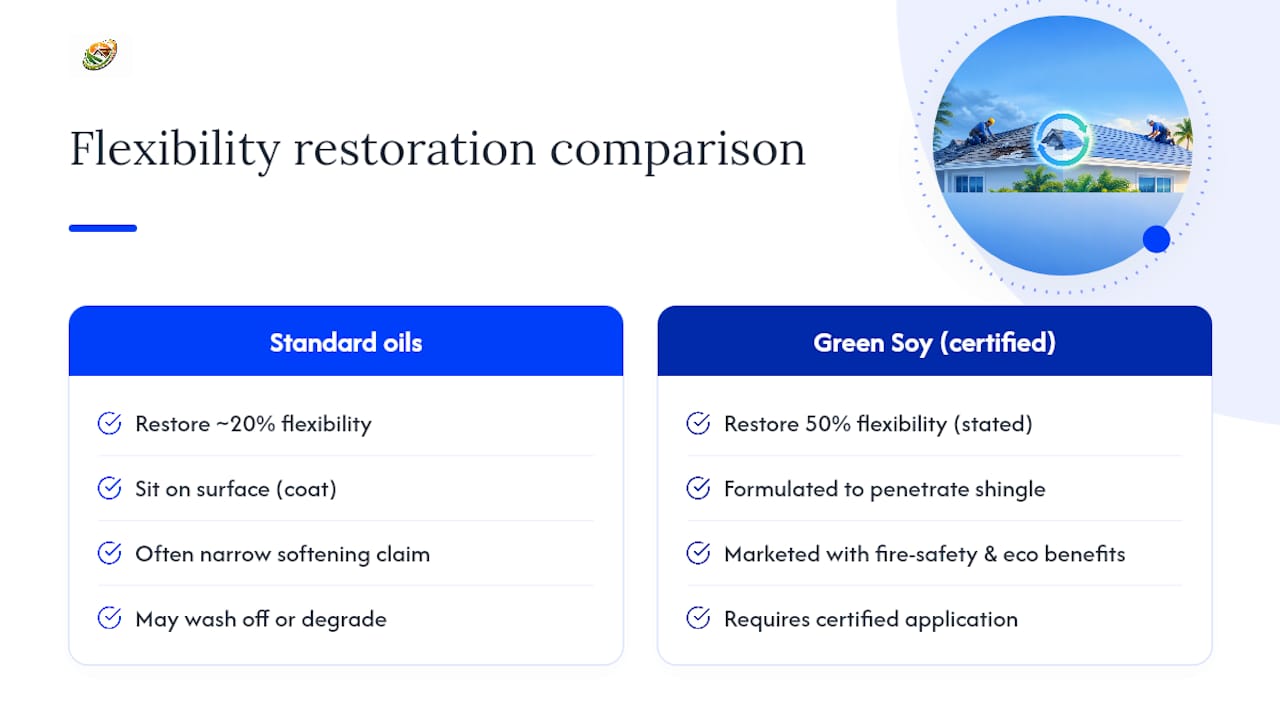
Beyond flexibility, look at what else the product claims to affect. Some formulas focus narrowly on softening. Others, like certified Green Soy applications, are marketed with additional fire safety benefits and eco-friendly formulation as part of the package. Ask specifically whether the product has third-party lab testing behind its flexibility claims, and whether the applicator is certified to apply it, not just familiar with it. An uncertified application of any product voids most manufacturer warranties immediately.
Is Rejuvenation Cheaper Than Replacement Long Term?
The math here isn't close for a roof that qualifies. A full asphalt shingle roof replacement in South Florida commonly runs somewhere between $15,000 and $30,000 depending on square footage and material choice. Preservation treatment on a qualifying roof costs a fraction of that, and homeowners who qualify can save up to 80% compared to a full tear-off and replacement.
The catch, and it's an important one, is that this math only works if your roof actually qualifies. A roof with exposed fiberglass or a compromised deck doesn't get cheaper by delaying replacement with a surface treatment. You'd spend money on preservation and still need a new roof within a year or two, which is worse than doing nothing.
For roofs that do qualify, the long-term value goes beyond the sticker price. A 6-year transferable warranty adds resale value if you sell before the roof's extended lifespan runs out. And there's a landfill angle too: every roof preserved instead of torn off is asphalt shingle material that doesn't end up in a South Florida landfill. If you're weighing the decision, our cost comparison breakdown walks through the specific savings math for different roof ages and conditions.
What Mistakes Do Homeowners Make With Rejuvenation?
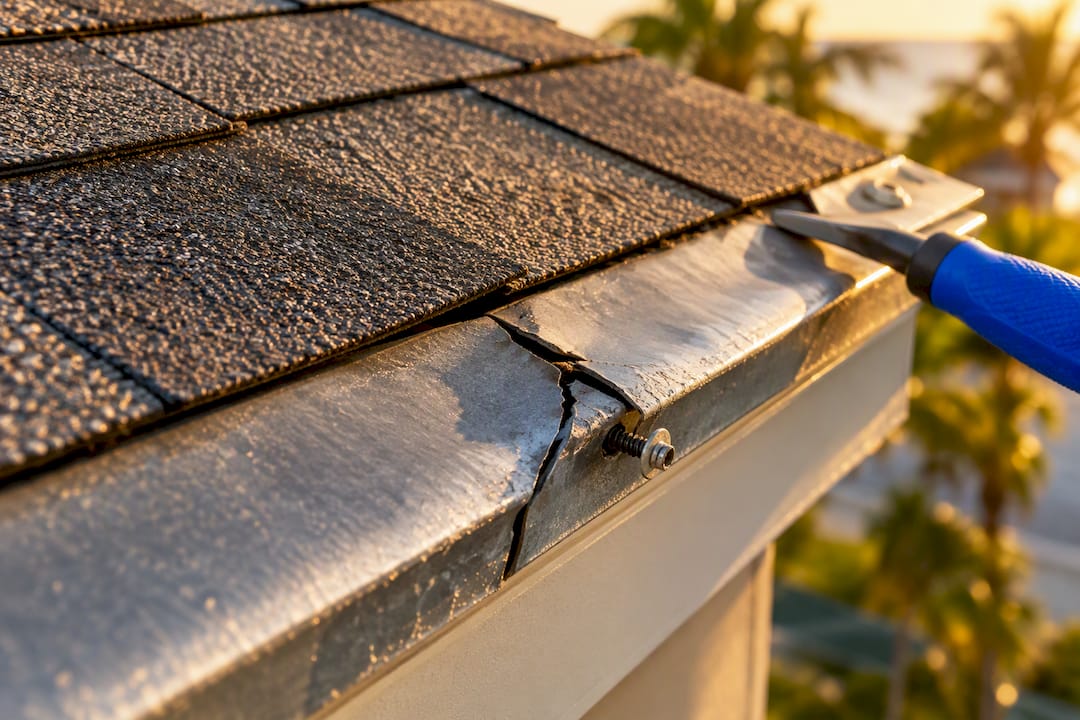
The single biggest mistake is skipping the professional inspection and assuming a roof qualifies based on how it looks from the ground. Granule loss and dullness are visible from the driveway; broken fasteners and rotted decking usually aren't.
A close second: applying treatment before repairs are finished. Any product applied over a compromised substrate, cracked flashing, loose fasteners, damaged decking, will underperform no matter how good the formula is. Repairs come first, always.
Homeowners also frequently confuse a preservation assessment with an insurer-required inspection form, then get surprised when their claim gets kicked back for missing documentation. Verify with your agent which specific report your policy requires before assuming your contractor's paperwork covers it.
Rushing the timeline is another common error. Treatments need dry conditions and proper curing time. Applying a product to a roof that's still damp from recent rain or repair work, common in the days right after a storm passes, undermines the entire treatment. And finally, watch for post-storm contractors offering deductible waivers or pressuring same-day signatures. If you'd like help removing storm debris safely before repairs begin, local debris removal services can clear the way without you having to handle it yourself.
Author Perspective: Preserve When You Can, Replace When You Must
Most roof decisions after a hurricane get framed as a binary: fix it or replace it. That's the wrong frame. There's a third option, preserve it, and it gets ignored constantly because it's less familiar to homeowners and less profitable to push than a full tear-off.
Here's the practical test I'd apply: if the deck is sound, fasteners are intact, and tabs still seal, preservation deserves serious consideration. If fiberglass is showing or tabs are snapping off in your hand, stop pretending and move to replacement. The environmental math favors preservation too. Every roof saved is asphalt that doesn't hit a landfill.
What worries me most is the post-storm sales pressure. Verify licensing, read the cancellation clause, and never sign the day someone knocks on your door.
— Daniellison
How Shingle Roof Renewal Helps South Florida Homeowners Decide
Shingleroofrenewal exists for exactly this decision point, before you commit to a $15,000 to $30,000 replacement that your roof might not actually need. We're not roofers and we don't sell tear-offs. We're the call you make first, to find out honestly whether your roof still has life left in it.
Our process runs three steps: we inspect your roof, assess its actual condition against the same red flags covered above, and tell you honestly whether it qualifies for preservation. If it does, our certified applicators apply Fresh Roof Green Soy Technology, backed by a 6-year transferable warranty, and you walk away having saved up to 80% compared to full replacement. If it doesn't qualify, we'll tell you that too, because an honest assessment protects your investment either way.
Before your free inspection, gather any repair invoices, note the roof's approximate age, and photograph any interior ceiling stains you've noticed. We serve homeowners across Palm Beach and Broward counties, including Boca Raton, Delray Beach, and Plantation. Schedule your free roof assessment today and find out if your roof qualifies before you call anyone else.
Sources
- Hurricane Retrofit Guide - Shingle Roofs
- FEMA Hurricane Michael MAT report (Florida)
- OSHA: Roof inspection activity sheet
- Florida Building Code - Roofing fact sheet
FAQ
Can a Roof Be Rejuvenated After Hurricane Damage?
Yes, but only if a professional inspection confirms the deck, fasteners, and flashing are sound. Roofs with exposed fiberglass, broken tabs, or heavy granule loss typically need repair or replacement instead, according to the Florida Hurricane Retrofit Guide.
How Much Does Roof Rejuvenation Cost Compared to Replacement?
Full replacement in South Florida commonly runs $15,000 to $30,000. Homeowners whose roofs qualify for preservation can save a substantial portion compared to that figure through Shingleroofrenewal's assessment process.
How Long Does Rejuvenation Extend a Roof's Life?
Certified Fresh Roof Green Soy Technology is positioned to extend a qualifying roof's service life significantly, backed by a 6-year transferable warranty when applied by a certified applicator.
Should I Inspect My Own Roof After a Hurricane?
No. OSHA's post-hurricane guidance warns against climbing onto potentially damaged roofs due to fall hazards. Always schedule a qualified professional inspection instead.
Does a Preservation Treatment Satisfy My Insurer's Inspection Requirements?
Not automatically. Many insurers require a separate four-point or wind-mitigation inspection with specific forms, so confirm requirements with your agent using the four-point inspection guide before assuming your preservation report covers it.