
TL;DR:
- Roof preservation can extend asphalt shingle roofs by restoring flexibility if the roof is within the age window of 8 to 15 years and shows no major structural damage. The process involves applying a penetrating oil treatment that replenishes lost oils in the asphalt binder, improving durability and delaying deterioration. Qualifying roofs can benefit from a single treatment, which costs less than full replacement and adds several years of life.
Yes, you can restore an asphalt shingle roof — but only if it qualifies. Most homeowners facing a quote for a costly replacement don't realize their roof may still have years of life left with the right preservation treatment. The key is catching the problem early, before brittleness and granule loss cross the point of no return.
Your roof is likely a good candidate if it meets these three conditions:
- Age window: Roughly 8–15 years old, with shingles that are aging but not structurally failed
- No structural damage: No sagging deck, no active leaks tied to rot, no widespread missing shingles
- Granule coverage intact: Shingles still hold most of their granules; bare patches are limited and isolated
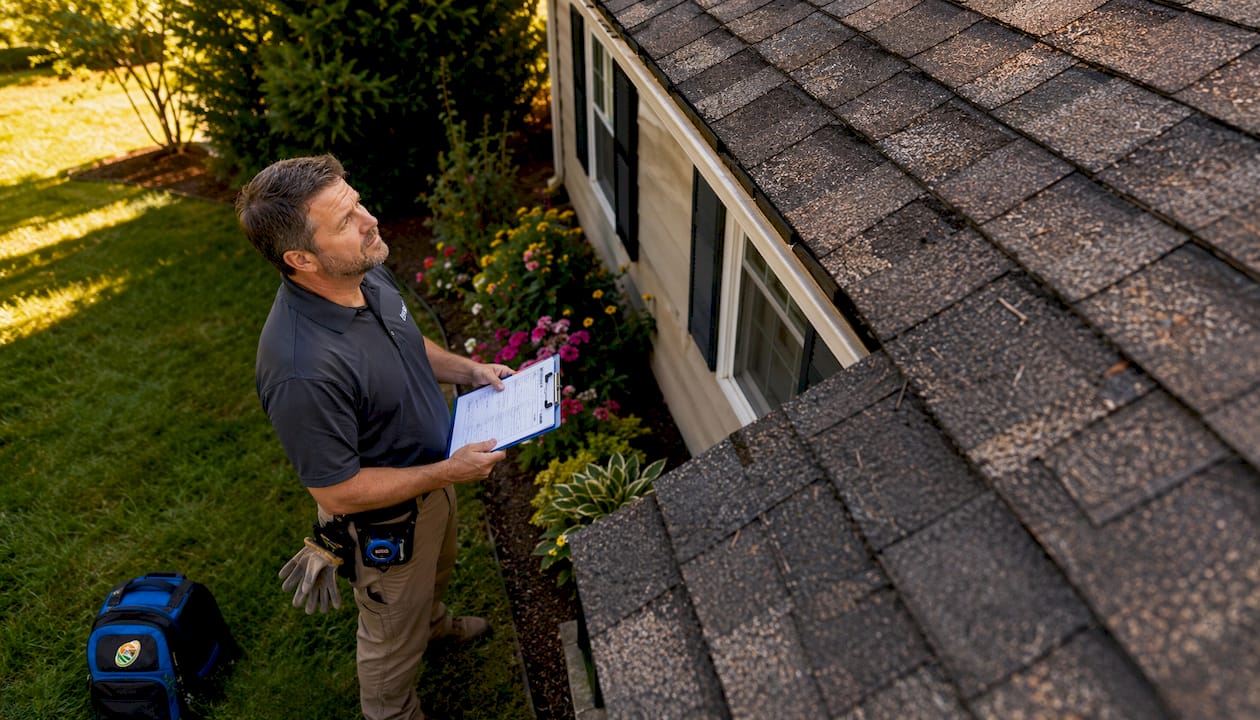
If those boxes are checked, do a safe visual inspection from the ground or gutters, then book a professional assessment. A qualified provider will confirm whether your roof qualifies and give you a written recommendation either way.
Table of Contents
- How does roof rejuvenation actually work?
- Which roofs qualify? A homeowner inspection checklist
- Is preservation worth it compared to full replacement?
- What happens during inspection, treatment, and aftercare?
- How much does roof preservation cost, and how long does it take?
- When rejuvenation won't help — and the risks to watch for
- How to choose a qualified roof restoration service provider
- What the science says about timing, climate, and environmental impact
- Key takeaways
- Why we recommend inspection before replacement
- Shingleroofrenewal: certified preservation for South Florida homeowners
- Primary sources and further reading
How does roof rejuvenation actually work?
Roof preservation is a penetrating oil treatment, not a coating. It works by replacing the lightweight oils (called maltenes) that asphalt shingles lose over time through heat, UV exposure, and thermal cycling. As those oils deplete, shingles become brittle, crack, and shed granules. A rejuvenating treatment restores asphalt shingle flexibility by soaking back into the asphalt matrix and reversing that brittleness at the molecular level.
Here is how the mechanism works step by step:
- Penetration: The product enters the shingle surface through capillary action, the same way a dry sponge absorbs water
- Absorption: The oil spreads through the asphalt binder, replenishing depleted maltenes and restoring the binder's flexibility
- Measurable outcome: Lab tests confirm reduced brittleness and improved granule adhesion after treatment
- Disappears into the shingle: The product is fully absorbed within 24–72 hours; no visible film or surface residue remains
Three terms you will see — here is what they actually mean:
- Rejuvenation: A penetrating oil treatment that restores lost oils in the asphalt binder
- Restoration: A broader term often used interchangeably with rejuvenation; in this guide, it refers to the same oil-replacement process
- Roof coating: A surface-applied membrane (silicone, acrylic) that sits on top of the shingle and does NOT penetrate the binder
Why timing matters: Asphalt shingles behave like a thermoplastic material. They soften in heat and harden when cooled. According to IBHS research on natural weathering, repeated thermal cycles accelerate oil loss and performance decline. Treating shingles before they reach severe brittleness is the difference between a successful preservation and a wasted application.
Which roofs qualify? A homeowner inspection checklist
The best candidates are typically middle-aged roofs, lying flat, and showing no signs of structural failure. A professional flexibility test is the single most reliable field check, but you can do a preliminary visual assessment from the ground before calling anyone.
Good signs — your roof may qualify:
- Shingles lie flat with no widespread lifting or curling
- Granules are still largely present; gutters show only minor accumulation
- No missing shingle tabs across large sections
- No visible sagging or soft spots on the roof deck
- No active leaks inside the home tied to deck failure
Red flags — repair or replacement likely needed first:
- Active leaks with evidence of deck rot or underlayment failure
- Large bare patches where granules are completely gone
- Severe curling or cupped tabs across multiple roof sections
- Missing shingles in multiple areas
- Sagging or uneven roof deck visible from the ground
What these problems look like in practice: Granule loss appears as dark, bare asphalt patches on the shingle surface, often most visible on south-facing slopes. Curling shows as shingle edges lifting or tabs cupping upward. Bare patches look like rough, exposed black asphalt where the protective granule layer has worn away.
Pro Tip: Never walk a steep or fragile roof to check its condition yourself. A safe visual check from the ground, gutters, or a ladder at the eave is enough to spot the major red flags. Leave the close-up flexibility test to a licensed professional.
Is preservation worth it compared to full replacement?
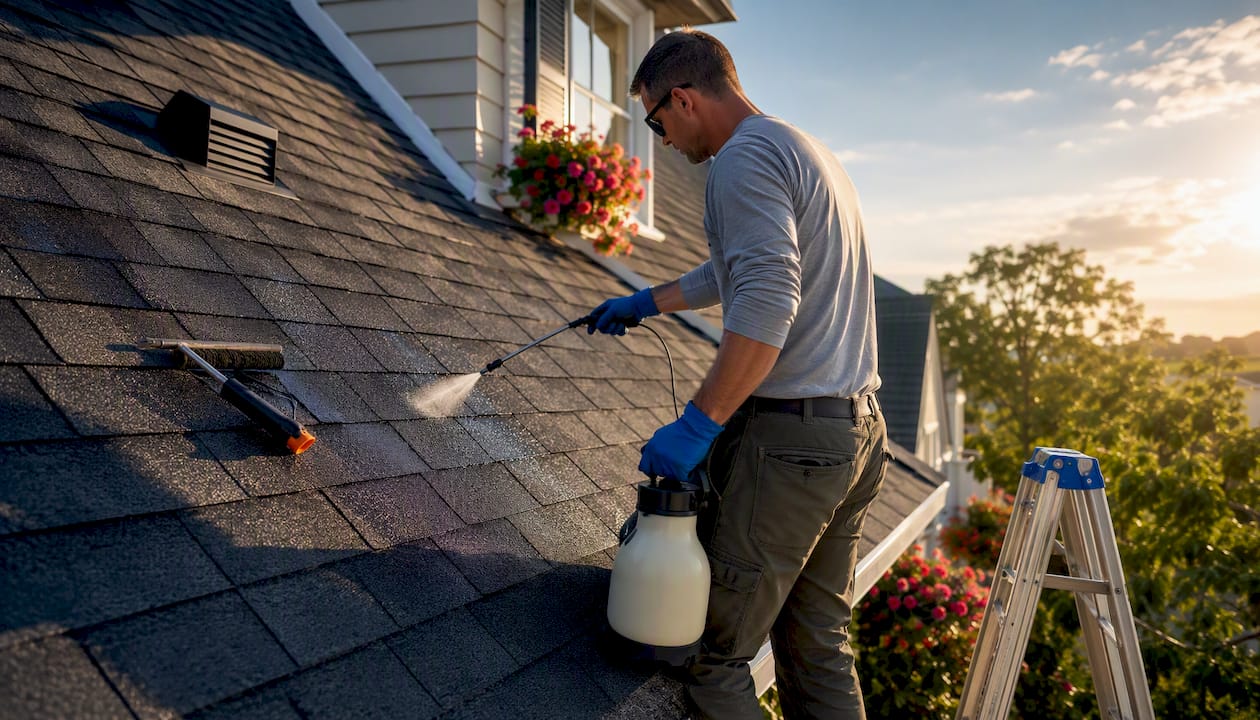
Preservation is worth it when the roof qualifies. A single treatment typically adds several years of service life per application, at a fraction of what a full tear-off and replacement costs. That math is hard to argue with when your shingles still have structural integrity.
Core benefits of preservation over replacement:
- Lower upfront cost, often estimated at roughly 10–15% of replacement cost per application
- Reduced granule shedding going forward, slowing the aging process
- No tear-off, no construction disruption, no landfill waste from discarded shingles
- Transferable warranty that adds value if you sell the home
- Supports shingle lifespan extension without a full capital outlay
| Factor | Preservation / Rejuvenation | Full Replacement |
|---|---|---|
| Expected life extension | 3–5 years per application | — |
| Warranty | Several years, transferable (varies by provider) | Manufacturer warranty, typically several decades |
| Relative cost | A fraction of replacement cost (estimate) | Full replacement cost ($15,000–$30,000 typical) |
| Eligibility | 8–15 years old, no structural failure, granules largely intact | Any roof at end of life |
| Application frequency | Single application; reapplication possible with diminishing returns | One-time installation |
| Environmental impact | Reduces landfill waste; no tear-off required | Generates significant shingle waste |
One honest caveat: preservation is not a cosmetic fix, and it does not replace missing shingles. If granules are already gone from large sections, treatment cannot regrow them. The goal is to slow further deterioration on a roof that still has enough life left to be worth saving. For a deeper look at how Fresh Roof compares to standard rejuvenation, that comparison is worth reviewing before you decide.
What happens during inspection, treatment, and aftercare?
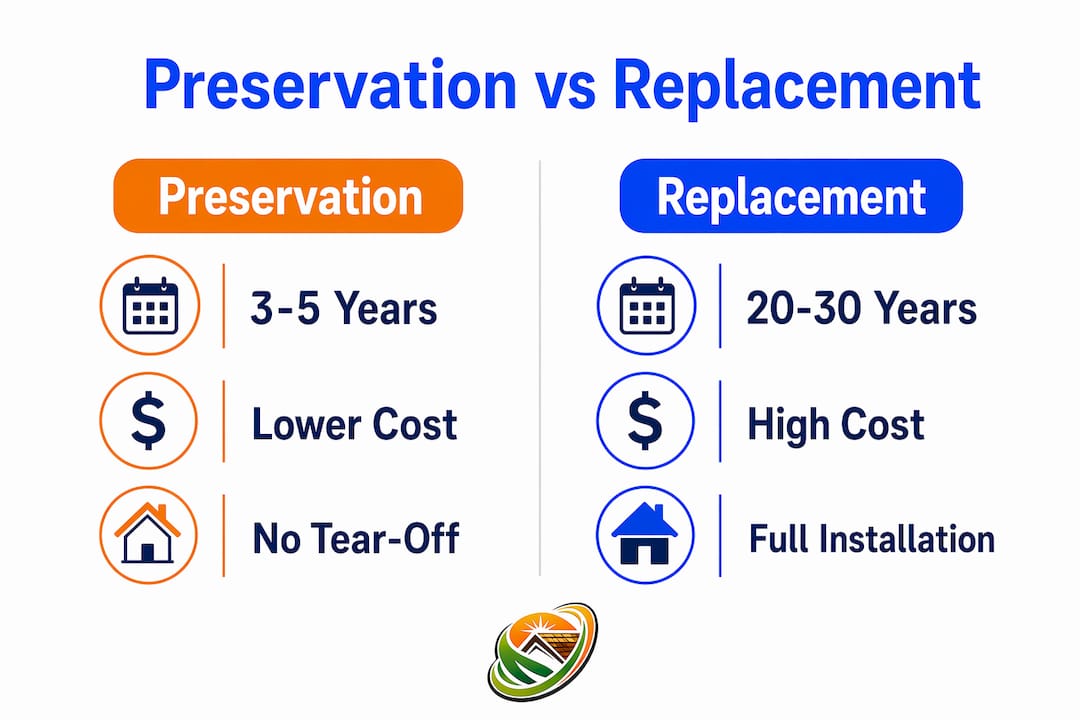
A standard preservation job follows a clear sequence: inspection, prep, application, and cure. Knowing what each step involves helps you spot a thorough provider versus one cutting corners.
- Pre-inspection: The technician performs a visual and physical assessment of the shingles, checking flexibility, granule coverage, and overall condition. Pre-treatment photos are taken and a written condition report is prepared.
- Qualification decision: Based on the inspection, the provider confirms whether the roof qualifies. A responsible provider will decline treatment if the roof is beyond the treatable window.
- Surface prep: The roof surface is cleared of debris, loose material, and any moss or algae that would block penetration. This is cleaning for treatment prep, not a cosmetic wash.
- Application: The rejuvenating product is applied using a calibrated low-pressure sprayer at a typical rate of 0.4–0.6 gallons per 100 square feet. Application on an average residential roof typically takes 30–90 minutes.
- Absorption window: The product absorbs fully into the asphalt matrix within 24–72 hours. Avoid walking on the roof or allowing heavy rain during this window.
- Post-treatment documentation: A reputable provider delivers before-and-after photos and a written summary of what was treated and what was observed.
What a legitimate scope of work does NOT include: structural repairs, replacement of missing shingles, flashing repairs, or underlayment work. If a provider bundles those into a "restoration" quote without separate line items, ask for clarification. Preservation treats the asphalt binder. Structural repairs are a separate trade.
How much does roof preservation cost, and how long does it take?
Preservation typically runs a fraction of what a full replacement costs. Trade estimates commonly put a single application at roughly 10–15% of replacement cost, though actual pricing depends on roof size, pitch, and local market rates. For detailed cost breakdowns specific to your area, the cost of roof restoration guide covers pricing models in more depth.
| Metric | Typical Range |
|---|---|
| Application rate | Moderate amount per square footage |
| Life extension per application | 3–5 years |
| Cost vs. replacement (estimate) | A fraction of full replacement cost |
| Application time (average roof) | Typically under two hours on-roof |
| Absorption / cure window | 24–72 hours |
How providers typically price jobs:
- Flat rate per square foot, with minimums for small roofs
- Tiered pricing for steep pitch or complex geometry
- Separate line items for prep, cleanup, and warranty
What to confirm in your quote: Ask whether prep and cleanup are included, what the warranty covers and for how long, and whether the price is fixed or subject to adjustment after the inspection. A written quote with itemized line items is a basic standard.
Timeline from first call to measurable results:
- Inspection appointment: typically within a few days of inquiry
- Application day: 30–90 minutes on the roof
- Cure window: 24–72 hours post-application
- Measurable benefit: shingle flexibility improvement is immediate at the molecular level; visible slowing of granule loss becomes apparent over weeks to months
When rejuvenation won't help — and the risks to watch for
Rejuvenation treats the aging mechanism in the asphalt binder. It cannot fix physical damage, replace missing shingles, or stop underlayment and flashing failures. Understanding that boundary protects you from wasted spend.
Common limitations:
- Cannot replace granules that are already missing; exposed asphalt under bare patches will continue to degrade regardless of treatment
- Cannot reverse severely curled or torn shingle tabs
- Cannot address flashing failures, underlayment breaches, or deck rot
- Ineffective on roofs outside the treatable age and condition window
The honest truth about rejuvenation: Think of it as conditioning leather, not manufacturing a new roof. It works on material that still has structural integrity. Once the damage is physical — torn tabs, rotted decking, widespread missing granules — no oil treatment changes that outcome. The value is in treating early, before the roof crosses that line.
Vendor red flags to watch for:
- Promises dramatic visual transformation (rejuvenation is absorbed; it does not look like a new roof)
- Treats every roof without a documented inspection
- Skips pre-treatment photos or a written condition report
- Cannot explain the product chemistry or provide lab test data on request
When to choose replacement instead: If your roof has active leaks tied to deck rot, large-scale structural damage, or granule loss across the majority of its surface, replacement is the right call. A good preservation provider will tell you that directly rather than take your money on a roof that won't respond to treatment.
How to choose a qualified roof restoration service provider
Choose a provider who documents inspection results, discloses lab testing or technical data, and offers a clear, written warranty. Those three criteria alone filter out most of the bad actors in this space.
Questions to ask every provider before signing:
- What is your candidate assessment process, and will you put the inspection results in writing?
- What product do you use, and is it a penetrating bio-oil or a surface tint?
- What is the application rate, and how do you verify it on-site?
- What is the reapplication schedule, and what triggers a second treatment?
- What does the warranty cover — functionality, cosmetic appearance, or both?
- Is the warranty transferable if I sell the home?
- Are you licensed and insured in this state?
- Can you provide before-and-after documentation from previous jobs?
Warranty verification checklist:
- Read the full terms, not just the headline number of years
- Confirm whether the warranty transfers to a new owner and under what conditions
- Ask how claims are handled: who do you call, and what is the response time?
- Clarify whether coverage is for functional performance (water shedding) or cosmetic condition
Trust signals worth requesting:
- Lab test summaries showing flexibility and granule retention results
- Third-party validation or authorized applicator certification
- Documented case studies or before-and-after photos from local jobs
Pro Tip: A provider who declines to treat your roof after inspection is a green flag, not a red one. It means they are doing an honest assessment rather than taking every job regardless of outcome. Ask upfront: "What would disqualify my roof?" A good answer tells you they have a real standard.
What the science says about timing, climate, and environmental impact
Independent testing and field studies confirm that rejuvenation restores measurable flexibility and granule retention in qualifying shingles, but it is not a cure for structural failures. The science also makes clear that timing and climate are not minor variables.
IBHS research on thermal cycling shows that asphalt shingles soften in heat and harden when cooled, and that repeated cycles accelerate oil loss and performance decline. In South Florida's climate, where roof surface temperatures routinely spike well above ambient air temperature and UV exposure is relentless year-round, that depletion happens faster than in cooler markets. The South Florida rejuvenation guide covers how local conditions affect candidate assessment and reapplication timing specifically.
On the chemistry side, peer-reviewed research on soybean oil-based polymeric coatings confirms that soy-based formulations restore flexibility and improve granule retention on aged shingles. This is the chemistry behind Fresh Roof Green Soy Technology, which Shingleroofrenewal applies as a certified authorized applicator. The treatment penetrates the asphalt matrix rather than sitting on the surface, which is what separates a scientifically formulated rejuvenator from a superficial color product.
The environmental case is real: The U.S. generates an estimated 11 million tons of asphalt shingle waste annually. Every roof that qualifies for preservation and gets treated instead of torn off is one less contribution to that number. For homeowners who care about both their wallet and their footprint, preservation is one of the most direct actions available.
Shingleroofrenewal's service model includes a three-step documented assessment, and qualifying jobs are backed by a 6-year transferable warranty. For South Florida homeowners in Broward and Palm Beach counties, the combination of accelerated climate exposure and a certified local applicator makes early assessment especially worth prioritizing. Annual inspections, as outlined in preventive roof maintenance guidance, are the simplest way to catch the preservation window before it closes.
Key takeaways
Roof preservation works when the roof qualifies: treat shingles in the 8–15 year window, before structural failure, and a single application typically adds 3–5 years of life at roughly 10–15% of replacement cost.
| Point | Details |
|---|---|
| Qualification window | Roofs aged 8–15 years, lying flat, with granules largely intact are the best candidates for preservation. |
| Life extension per treatment | A single application typically adds 3–5 years of service life; reapplication is possible but shows diminishing returns. |
| Cost advantage | Preservation is estimated at roughly 10–15% of full replacement cost, saving thousands on a qualifying roof. |
| Limits of treatment | Rejuvenation cannot replace missing granules, fix structural damage, or reverse severe curling; those roofs need repair or replacement first. |
| Shingleroofrenewal | Certified Fresh Roof Green Soy Technology applicator serving Broward and Palm Beach counties, with a 6-year transferable warranty and free documented inspections. |
Why we recommend inspection before replacement
We are not roofers. We are the company you call before the roofer. At Shingleroofrenewal, our entire focus is preventative preservation — catching roofs in the window where treatment still makes sense and giving homeowners an honest assessment of their options. "Call us before you call the roofer" is not a tagline; it is the actual sequence that saves people money.
We serve Broward and Palm Beach counties, and we know what South Florida's heat, UV exposure, and storm cycles do to asphalt shingles faster than most markets. A free inspection with us means documented photos, a written condition report, and a candid pass/fail recommendation. If your roof qualifies, we tell you exactly what treatment involves and what to expect. If it does not qualify, we tell you that too, and you walk away with better information than you had before.
Shingleroofrenewal: certified preservation for South Florida homeowners
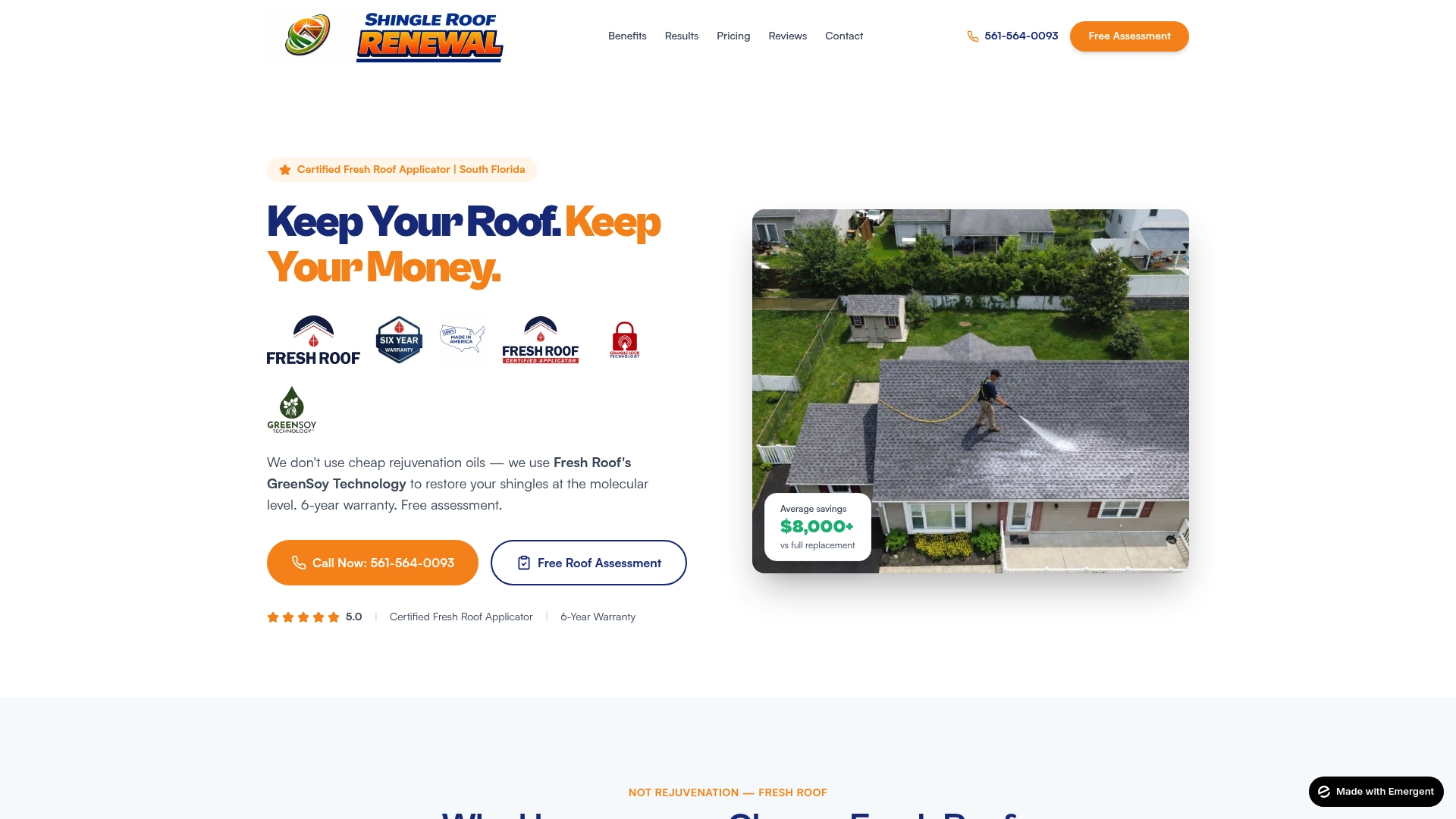
Shingleroofrenewal is the certified Fresh Roof Green Soy Technology applicator serving Palm Beach and Broward counties, focused entirely on preservation and early assessment. If you are weighing whether to restore your roof or replace it, a free inspection is the right first step.
What your free inspection includes:
- Documented pre-treatment photos and a written condition report
- A clear pass/fail recommendation with no pressure to proceed
- A three-step process: inspection, assessment, written recommendation
What qualifying homeowners receive:
- Certified Fresh Roof Green Soy Technology application
- A 6-year transferable warranty on qualifying jobs
- Service backed by lab-tested chemistry and authorized applicator status
Homeowners who qualify can save significantly compared to full replacement, with no tear-off, no construction disruption, and a warranty that transfers if they sell. Schedule your free roof assessment today and find out whether your roof can be saved before replacement becomes the only option.
Primary sources and further reading
- Natural Weathering and Hazard Exposure — IBHS: Explains how thermal cycling and UV exposure accelerate shingle aging; useful for understanding why climate urgency matters.
- Soybean Oil-Based Polymeric Coatings for Asphalt Shingle Rejuvenation: Peer-reviewed study confirming soy-based formulations restore flexibility and granule retention; also covers the 11 million ton annual shingle waste figure.
- Roof Rejuvenation Explained — Can This Roof Be Saved: Detailed technical breakdown of how rejuvenation works, what it cannot do, and how to evaluate candidates.
- The Chemistry Behind Shingle Rejuvenation — Can This Roof Be Saved: Covers application rates, the capillary absorption mechanism, and what separates a true rejuvenator from a surface product.
- Roof Rejuvenation — Missouri Soybeans: Trade-level overview of cost comparisons and soy-based chemistry in the context of residential roofing.
- Long-Term Durability of Asphalt Shingle Roof Covers — NIST: Laboratory research on how UV, heat, and thermal cycling degrade shingle mechanical properties over time.
- Shingle Roof Renewal — Certified Fresh Roof Applicator: Service details, warranty terms, and local coverage for Broward and Palm Beach county homeowners.