
TL;DR:
- Proactive roof maintenance in South Florida involves regular inspections, gutter cleaning, and targeted repairs to prevent costly deterioration. This approach extends asphalt shingle roof lifespan, minimizes interior damage, and reduces replacement costs significantly. Consistent care is essential due to the region's harsh climate, and professional assessments help identify issues early before they become structural failures.
Roof damage prevention is the practice of proactive maintenance, regular inspection, and targeted repairs that protect asphalt shingle roofs from deterioration before costly failures occur. In South Florida's Broward and Palm Beach counties, this practice carries extra urgency. Intense UV exposure, hurricane-season storms, and year-round humidity accelerate shingle wear far faster than in cooler climates. The industry term for this discipline is preventive roof maintenance, and it covers everything from cleaning gutters to catching granule loss early. Homeowners who treat their roof as a system requiring scheduled care consistently avoid the $15,000 to $30,000 replacement bills that catch unprepared neighbors off guard.
What is roof damage prevention and why does it matter in South Florida?
Roof damage prevention is defined as the set of scheduled, proactive measures that stop minor roof deterioration from becoming structural failure. For asphalt shingle roofs in South Florida, this is not optional maintenance. It is the difference between a roof that lasts 25 years and one that fails at 15.
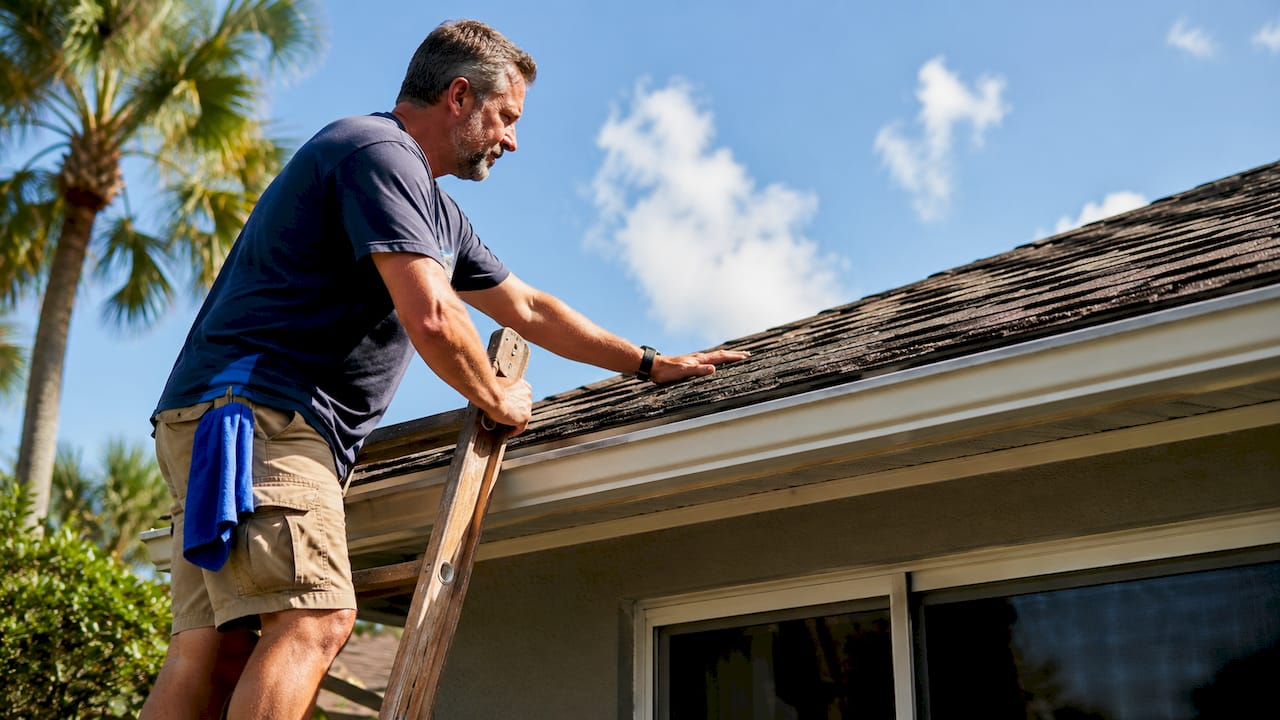
South Florida's climate attacks asphalt shingles on multiple fronts simultaneously. UV radiation bakes out the oils that keep shingles flexible, causing them to crack and curl. Tropical storms drive water under compromised shingles. High humidity feeds algae and moss growth that lifts granules and traps moisture against the deck. Each of these forces compounds the others, and a roof that looks fine from the street may already be losing the battle.
The consequences of neglect are not limited to the roof itself. Water intrusion leads to mold growth, rotted decking, and damaged insulation. Repairs at that stage cost multiples of what early intervention would have required. Preventative maintenance shifts these costs from emergency capital expenses to manageable, budgeted line items, improving both cash flow and roof longevity.
What causes roof damage and how does prevention address these factors?
The primary causes of asphalt shingle roof damage in South Florida fall into four categories: weather exposure, drainage failure, biological growth, and material aging. Prevention works by addressing each category before it reaches a critical threshold.
Weather exposure is the most relentless threat. South Florida receives an average of 60 inches of rain annually, and hurricane season runs from June through November. Wind lifts shingle edges, rain finds any gap, and UV radiation degrades the asphalt binder year-round. Roof protection methods like proper attic ventilation reduce heat buildup that accelerates this process from the inside out.
Drainage failure is the most preventable cause of damage. Clogged gutters force water to back up under shingles and against fascia boards, causing rot that spreads silently for months. Homes surrounded by palm trees or live oaks face this risk year-round, not just in fall.
Biological growth including algae, lichen, and moss is common in South Florida's humidity. These organisms do not just stain shingles. They physically lift granules, creating pathways for moisture to reach the asphalt layer beneath.
Material aging is inevitable, but its pace is controllable. Granule loss is the most visible sign. Granules in gutters during cleaning indicate shingle wear, and excessive loss signals that a professional life assessment is overdue. Shingles losing granules are losing their UV protection, which accelerates every other form of deterioration.
- Inspect attic ventilation annually to prevent heat-driven shingle degradation
- Remove overhanging branches that deposit debris and abrade shingles during wind events
- Apply zinc or copper strips at the ridge to inhibit algae and moss growth
- Check pipe boots and flashing after every significant storm
Pro Tip: Pipe boot rubber gaskets degrade in 8 to 15 years under South Florida UV exposure and are the most frequent cause of residential leaks. Add them to every inspection checklist.
How often should you inspect and maintain your asphalt shingle roof?
Professional roof inspections are recommended at minimum twice a year, ideally in spring and fall, plus after any major storm. This schedule gives you a clear picture of your roof's condition before and after the most damaging season of the year.
Here is a practical maintenance schedule for South Florida homeowners:
- Spring inspection (April or May): Assess any damage from winter storms. Check shingles, flashing, pipe boots, and gutters. Clear debris that accumulated over the cooler months.
- Pre-hurricane season check (late May or early June): Confirm all loose shingles are secured. Verify that gutters are clear and downspouts direct water away from the foundation.
- Post-storm inspection (within 48 hours of any named storm): Walk the perimeter and look for displaced shingles, exposed decking, or debris impact damage. Check the attic for any signs of water entry.
- Fall inspection (October or November): Assess cumulative storm season damage. Clean gutters of seed pods, leaves, and organic debris. This is the best time to schedule professional evaluation before year-end.
- Gutter cleaning: Clean at least twice a year. If your property has significant tree coverage, increase to quarterly to prevent the water backup that causes rot.
During each inspection, look for these specific signs of roof damage: missing or displaced shingles, curling or cupping at shingle edges, granule accumulation in gutters or at downspout exits, cracked or lifted flashing around chimneys and vents, and soft spots in the decking visible from the attic.
For most homeowners, a ground-level visual check combined with attic inspection covers the basics safely. Climbing onto a wet or steep roof without proper equipment creates more risk than it resolves. When in doubt, a professional inspection from a certified roof preservation specialist costs far less than the damage an undetected leak causes over six months.
Pro Tip: Bring a flashlight into your attic after every major storm. Water stains on rafters or insulation confirm active leaks that are invisible from outside. Catching them at this stage costs a fraction of what drywall and mold remediation will.
What are effective roof repair techniques for minor damage?
Effective roof repair techniques fall into two categories: temporary fixes that stop immediate water intrusion, and permanent repairs that restore structural integrity. Knowing which to use, and when, prevents minor problems from becoming major ones.
Temporary repair options
Roofing tarps secured with 2x4 boards protect exposed decking after storm damage until professional repair is possible. DIY patch kits for minor leaks cost between $20 and $60 and provide short-term protection for one to two rain events. Roofing cement applied under lifted shingles stops immediate water entry. These are holding measures, not solutions.
Permanent repair considerations
| Repair Type | Best For | Key Requirement |
|---|---|---|
| Shingle replacement | Missing or cracked shingles | Remove nails from two overlapping courses; use stainless steel fasteners |
| Flashing repair | Leaks at chimneys, vents, or valleys | Polyurethane or urethane sealant only |
| Pipe boot replacement | UV-degraded rubber gaskets | Match boot size to pipe diameter; inspect collar seal |
| Decking patch | Small areas of rot | Replace with same thickness plywood; treat edges with wood preservative |
Permanent shingle replacement requires removing nails from the damaged shingle and the course above it. In South Florida's coastal environment, stainless steel nails are the correct fastener. Standard galvanized nails corrode within a few years in salt air, loosening shingles and creating new entry points for water.
Sealant selection is where many DIY repairs fail. Silicone caulk loses adhesion at roof joints and masonry surfaces as temperatures cycle. Professional-grade polyurethane or urethane sealants maintain their bond through South Florida's thermal expansion and contraction. Using the wrong product means redoing the repair within a season.
The decision between patching and full repair comes down to the extent of damage and the age of the roof. A single damaged shingle on a 10-year-old roof is a straightforward patch. Multiple failing shingles across several areas on a 20-year-old roof signals systemic deterioration. At that point, a roof longevity assessment determines whether preservation or replacement is the more cost-effective path.
How does preventive roof care save money over time?
Preventive roof care converts unpredictable emergency expenses into manageable scheduled costs. The financial case is straightforward: a professional inspection costs a few hundred dollars. A roof replacement in South Florida costs $15,000 to $30,000. The math favors prevention at every stage.
The savings extend beyond the roof itself. Water intrusion from a neglected leak damages insulation, drywall, flooring, and in humid South Florida conditions, triggers mold growth within 24 to 48 hours of exposure. Remediation for a single mold event can exceed the cost of the roof repair that would have prevented it.
"Treating roof maintenance as a proactive, budgeted operational expense rather than a reactive emergency repair reduces total ownership costs and prevents interior water damage." — Douglass Colony Group
Scheduled inspections and early minor fixes also delay the need for full replacement by years. A roof that receives consistent care, including granule preservation and shingle flexibility maintenance, performs closer to its rated lifespan. One that is ignored deteriorates at an accelerated rate, often failing 5 to 10 years before its expected end of life.
There is also an environmental dimension worth considering. Premature roof tear-offs generate thousands of pounds of asphalt shingle waste per home. Landfills in Florida receive millions of tons of roofing material annually. Extending a roof's functional life through preventive care directly reduces that waste. For homeowners in Broward and Palm Beach counties, this is a meaningful local impact, not just an abstract benefit. You can find a practical starting point in this South Florida roof care workflow built specifically for local conditions.
Key takeaways
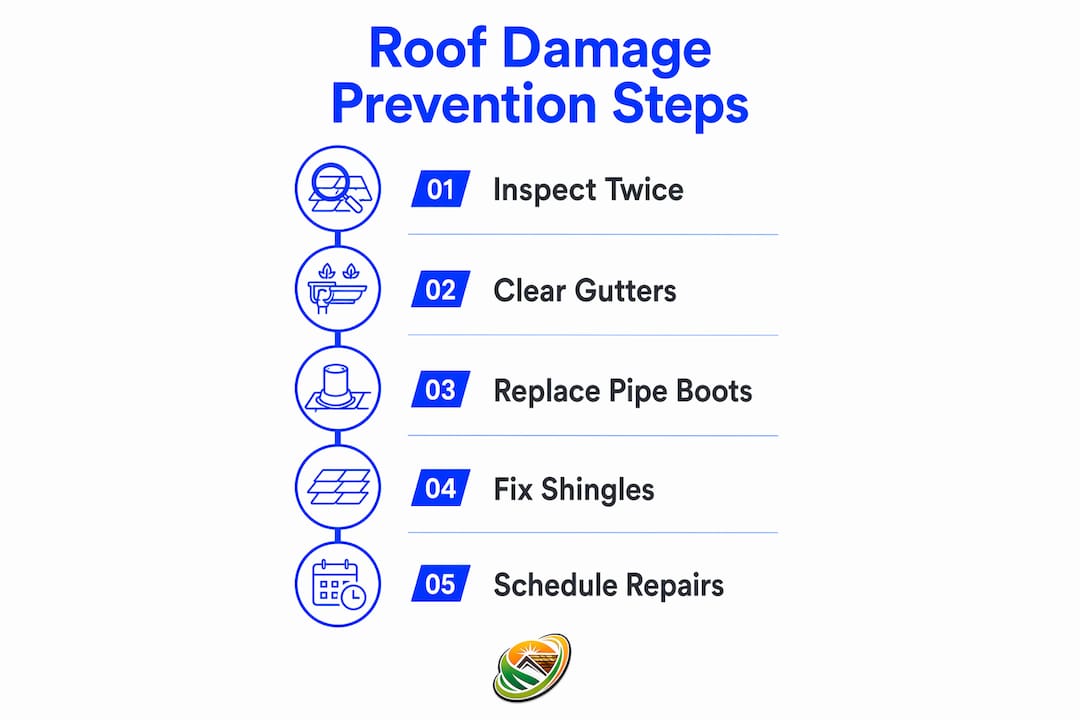
Roof damage prevention is the most cost-effective strategy available to South Florida homeowners, requiring biannual inspections, proper gutter maintenance, correct repair materials, and early intervention before deterioration becomes irreversible.
| Point | Details |
|---|---|
| Inspect twice a year minimum | Schedule spring and fall inspections plus post-storm checks to catch damage early. |
| Clean gutters on schedule | Clear gutters at least twice yearly, or quarterly near heavy tree coverage, to prevent rot. |
| Use correct repair materials | Choose polyurethane sealants and stainless steel nails for lasting repairs in coastal conditions. |
| Watch for granule loss | Granules in gutters signal accelerating shingle wear and a need for professional assessment. |
| Prevention beats replacement | Proactive maintenance costs a fraction of the $15,000 to $30,000 average roof replacement. |
What I've learned from watching homeowners wait too long
I have seen the same pattern repeat itself across South Florida neighborhoods. A homeowner notices a water stain on the ceiling, assumes it is a minor issue, and waits. Six months later, they are looking at a full replacement quote because the decking rotted through. The leak was not the problem. The delay was.
The two most neglected items I see on every roof are pipe boots and gutters. Pipe boots fail quietly. There is no dramatic event, just a slow drip that finds its way to the insulation and stays there. Gutters clog gradually, and the damage they cause happens behind the fascia where no one looks until it is too late. Both are five-minute inspection items that prevent thousands of dollars in damage.
My honest advice: stop treating roof maintenance as something you do when you notice a problem. Build it into your calendar the same way you schedule HVAC service or pest control. A preventive repair approach costs you time twice a year. Ignoring it costs you a roof.
The environmental argument also deserves more weight than most homeowners give it. Every roof that gets preserved rather than replaced is thousands of pounds of shingle waste that does not go to a landfill. That matters in a state already managing significant construction debris volumes. Choosing prevention is not just financially smart. It is the responsible choice for the community.
— Daniellison
How Shingleroofrenewal helps you protect your roof before it's too late
If you are a homeowner in Broward or Palm Beach County, Shingleroofrenewal is the company to call before you call a roofer. We are not roofers or roof cleaners. We are roof preservation specialists who help you determine whether your asphalt shingle roof can be saved before replacement becomes the only option.

Our certified Fresh Roof Green Soy Technology restores shingle flexibility, locks in granules, and extends qualifying roof life by 10 to 15 years, all backed by a 6-year transferable warranty. Homeowners who qualify save up to 80% compared to full replacement. The process starts with a free inspection, a condition assessment, and an honest recommendation. No pressure. No guesswork. Schedule your free roof inspection today and find out if your roof qualifies.
FAQ
What is the definition of roof damage prevention?
Roof damage prevention, also called preventive roof maintenance, is the practice of scheduled inspections, routine upkeep, and early repairs that protect a roof from deterioration before failures occur. It is the proactive alternative to waiting for leaks or visible damage to prompt action.
How often should South Florida homeowners inspect their roofs?
Biannual inspections in spring and fall are the minimum standard, with additional checks after any major storm. South Florida's hurricane season makes post-storm inspections especially critical between June and November.
What are the most common signs of roof damage to watch for?
The most visible signs include missing or curling shingles, granules accumulating in gutters, cracked or lifted flashing, and water stains on attic rafters or ceiling drywall. Granule loss in gutters is one of the earliest and most overlooked indicators of advancing shingle wear.
Can I repair roof damage myself or should I hire a professional?
Minor fixes like applying roofing cement under a lifted shingle or using a patch kit for a small puncture are manageable DIY tasks. Permanent repairs, including shingle replacement and flashing work, require correct materials and technique. Incorrect sealants or fasteners in South Florida's coastal environment fail quickly and can worsen the original damage.
How much can preventive maintenance save compared to roof replacement?
Preventive maintenance costs a small fraction of the $15,000 to $30,000 average replacement cost in South Florida. Early intervention through inspections, gutter cleaning, and targeted repairs extends roof life by years and avoids the interior damage costs that follow undetected leaks.