
TL;DR:
- UV protection is crucial for extending asphalt shingle roofs' lifespan in South Florida by slowing photodegradation. Proper maintenance, attic ventilation, and reflective coatings can significantly reduce damage and save homeowners thousands of dollars. Early inspections and timely treatment prevent structural damage and ensure maximum roof longevity in high-sun environments.
Roof UV protection is defined as any method that reduces the harmful effects of ultraviolet radiation on roofing materials, and for South Florida homeowners, it is the single most important factor in determining how long an asphalt shingle roof survives. Florida's sun is not average. Broward and Palm Beach County roofs absorb intense UV radiation year-round, and without protection, asphalt shingles degrade critically within 8 to 12 years. With proper maintenance and UV shielding, that same roof can last 25 to 30 years. The roof UV protection benefits are not cosmetic. They are structural, financial, and measurable.
How UV radiation damages asphalt shingle roofs
UV damage is a slow, cumulative molecular process. By the time you see a leak, the preservation window is often already closed.
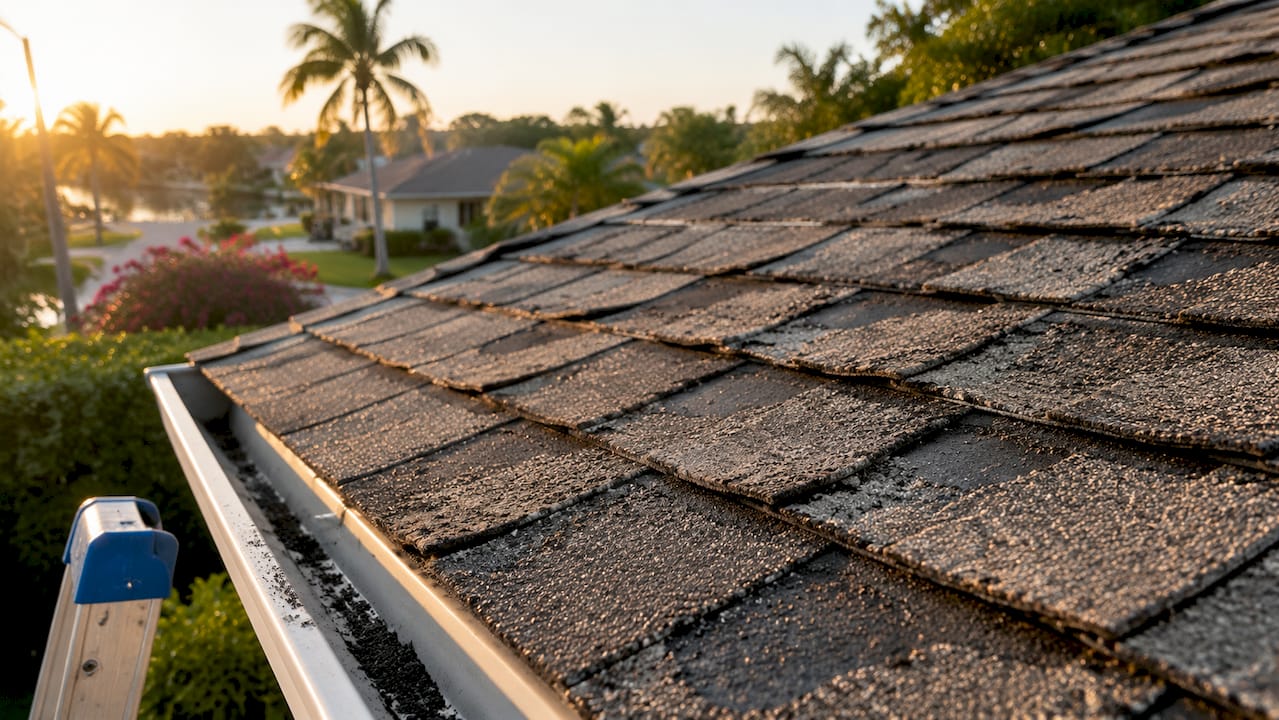
The technical term for what UV rays do to asphalt is photodegradation. Ultraviolet radiation triggers free radical chain reactions that break down the polymer chains holding asphalt together at a molecular level. The result is a shingle that loses flexibility before it ever shows a visible crack. Once flexibility is gone, brittleness sets in fast.
What photodegradation looks like on your roof
The physical signs follow a predictable pattern. Granules start washing off into your gutters. Shingles begin to cup or curl at the edges. Surface cracks appear, especially along ridge lines where UV exposure is highest. Each of these signs points to the same root cause: the asphalt binder has dried out.
South Florida makes this worse through thermal cycling. Daytime roof surface temperatures regularly exceed 150°F, then drop significantly at night. That daily expansion and contraction stresses shingle material that UV has already made brittle. The combination accelerates cracking far faster than UV alone.
Attic ventilation plays a direct role here. Heat that builds up beneath the roof deck adds thermal stress from below while UV attacks from above. Proper ventilation reduces shingle degradation by cutting that internal heat load. Ventilation is not a substitute for UV protection, but it is a necessary partner to it.
Pro Tip: Check your attic vents every spring. Blocked or insufficient ventilation silently accelerates UV damage from the inside out, even on roofs with protective coatings applied.
What UV protection methods actually work
UV resistance for roofs comes in two main categories: reflective coatings applied to existing shingles, and high-UV-resistance materials used in new construction. For homeowners with existing asphalt roofs in South Florida, coatings are the practical and cost-effective path.
Reflective coatings and how they protect shingles
Reflective coatings, including silicone and acrylic elastomeric formulas, form a sacrificial barrier over the shingle surface. They absorb UV radiation and dissipate heat before either can penetrate the asphalt binder. White and light-colored coatings increase solar reflectivity the most, lowering surface temperatures and reducing the HVAC load inside your home. This is where the energy efficiency roof benefits become real and measurable.
The key distinction homeowners miss is this: coatings are preservation tools, not repair tools. A coating applied to a sound roof substrate extends its life. A coating applied to a failing roof masks the problem without solving it. Coatings do not fix underlying structural or moisture damage. Professional evaluation before any application is not optional.
Here is how the main UV protection approaches compare:
| Protection method | Best use case | Key limitation |
|---|---|---|
| Acrylic elastomeric coating | Sound shingles with early UV wear | Requires dry substrate; not for wet climates without prep |
| Silicone coating | High-moisture or ponding-prone roofs | Can be slippery; needs professional application |
| Green Soy Technology (Fresh Roof) | Restoring shingle flexibility at molecular level | Roof must qualify; not for structurally failed shingles |
| Light-colored granule replacement | New construction or full re-roofing | Not applicable to existing shingle surfaces |
The core benefits of UV-protective coatings for existing asphalt shingles include:
- Reduced surface temperature, which lowers cooling costs inside the home
- Slowed granule loss by sealing the shingle surface
- Restored flexibility in shingles that have begun to dry out
- Extended time before full replacement becomes necessary
- Reduced landfill waste from premature tear-offs
Poor ventilation undermines all of these benefits. A coated roof sitting above a superheated attic still degrades faster than it should. UV protection works best as part of a complete roof care system, not as a standalone fix.
How UV protection extends roof lifespan and saves money
The financial case for UV protection is straightforward. Preventative maintenance and restorative technologies can extend the functional lifespan of an asphalt shingle roof by 10 to 20 years while saving 60% to 80% compared to full replacement. That is not a minor difference. A $30,000 roof replacement becomes a $6,000 to $12,000 maintenance investment when you act early enough.
Treating your roof as a financial asset
The most useful mindset shift for homeowners is this: viewing roof health as a financial variable rather than a maintenance chore. Roofs depreciate. UV damage accelerates that depreciation. Proactive UV protection slows it down, the same way oil changes slow engine wear. Replacement is an unplanned capital expenditure. Maintenance is a scheduled one. Scheduled is always cheaper.
Energy efficiency roof benefits add another layer of savings. Reflective coatings lower roof surface temperatures, which reduces the heat transferred into your living space. In South Florida, where air conditioning runs most of the year, that reduction in cooling load translates directly to lower monthly utility bills.
One more financial factor most homeowners overlook: manufacturer warranties. Warranties are not guarantees in Florida's climate. Real-world UV exposure in high-sun environments can shorten shingle lifespan dramatically regardless of what the warranty says. Environmental conditions and installation quality affect lifespan more than the warranty period printed on the package. UV protection is what actually backs up that warranty in practice.
How South Florida homeowners can protect their roofs from UV damage
Protecting your roof from UV damage requires a specific sequence of steps. Skipping the inspection phase and going straight to coatings is the most common and costly mistake homeowners make.
- Schedule a professional inspection before any treatment. A qualified inspector identifies granule loss, surface cracking, cupping, and signs of moisture intrusion. This determines whether your roof qualifies for preservation or needs replacement first.
- Assess attic ventilation. Confirm that ridge vents, soffit vents, or attic fans are functioning. Blocked ventilation adds internal heat stress that defeats external UV protection.
- Clean the roof surface properly. Algae, moss, and debris trap moisture and accelerate UV-related breakdown. Cleaning must happen before any coating or treatment is applied.
- Apply an approved UV-protective coating or treatment. For qualifying roofs, certified applications like Fresh Roof's Green Soy Technology restore shingle flexibility at the molecular level and extend roof life by 10 to 15 years.
- Schedule follow-up inspections annually. South Florida's climate demands consistent monitoring. Early intervention is the only way to catch UV degradation before it crosses the point of no return.
Timing matters as much as the steps themselves. The best window for UV protection treatment is when shingles show early signs of wear, not when leaks appear. Visible leaks signal that the preservation window has already closed. Acting at the first sign of granule loss or minor surface cracking gives you the most options and the lowest cost.
Pro Tip: Walk your property after a heavy rain and check your gutters and downspout splash zones. Granule accumulation there is the earliest visible sign of UV-driven shingle breakdown. Catching it early keeps your roof lifespan extension options open.
For a structured approach to catching problems before they escalate, a roof inspection checklist built for South Florida conditions gives you a clear starting point.
Key Takeaways
UV protection is the most cost-effective tool South Florida homeowners have to extend asphalt shingle roof life, reduce energy costs, and avoid premature replacement expenses.
| Point | Details |
|---|---|
| UV damage starts invisibly | Photodegradation breaks down asphalt flexibility before cracks or leaks appear. |
| Coatings require sound substrates | UV-protective coatings only work when the underlying roof structure is intact. |
| Lifespan extension is significant | Proper maintenance and UV protection can extend roof life by 10 to 20 years. |
| Act before leaks appear | Visible leaks signal the preservation window is closed; inspect early to keep options open. |
| Ventilation multiplies protection | Attic ventilation reduces internal heat stress and makes UV coatings far more effective. |
Why most homeowners wait too long, and what it costs them
I have talked with hundreds of South Florida homeowners who assumed their roof was fine because it was not leaking. That assumption is the most expensive mistake in residential maintenance. UV damage does not announce itself with a drip. It works quietly for years, drying out the asphalt binder, loosening granules, and making shingles brittle. By the time water gets inside, the structural integrity is already compromised.
The other misconception I see constantly is over-reliance on manufacturer warranties. Homeowners read "25-year shingle" on the package and assume the roof will last 25 years in South Florida's sun. It will not. The warranty covers manufacturing defects, not UV degradation from one of the most intense sun environments in the country. Florida's climate is not the climate those warranties were designed around.
What I find most encouraging is how many roofs are still savable when homeowners call before they call the roofer. A roof showing early granule loss and surface drying is a candidate for preservation. That same roof, left another two or three years, becomes a tear-off. The difference in cost is enormous, and the difference in timing is often just one inspection cycle. Treat your roof the way you treat your HVAC system: scheduled maintenance, not emergency replacement. The financial math is not close.
— Daniellison
South Florida roof care from Shingleroofrenewal
South Florida homeowners have a narrow window to act before UV damage makes replacement unavoidable. Shingleroofrenewal is a certified Fresh Roof applicator serving Broward and Palm Beach County, focused entirely on roof preservation before replacement becomes the only option.
Shingleroofrenewal's process starts with a free inspection to assess your roof's condition and determine whether it qualifies for renewal. If it does, the certified Green Soy Technology treatment restores shingle flexibility at the molecular level, locks in granules, and extends roof life, all backed by a 6-year transferable warranty. Homeowners who qualify can save up to 80% compared to full replacement. Visit Shingleroofrenewal's services page to learn what your roof qualifies for, or go to shingleroofrenewal.com to schedule your free inspection today.
FAQ
What are the main roof UV protection benefits for asphalt shingles?
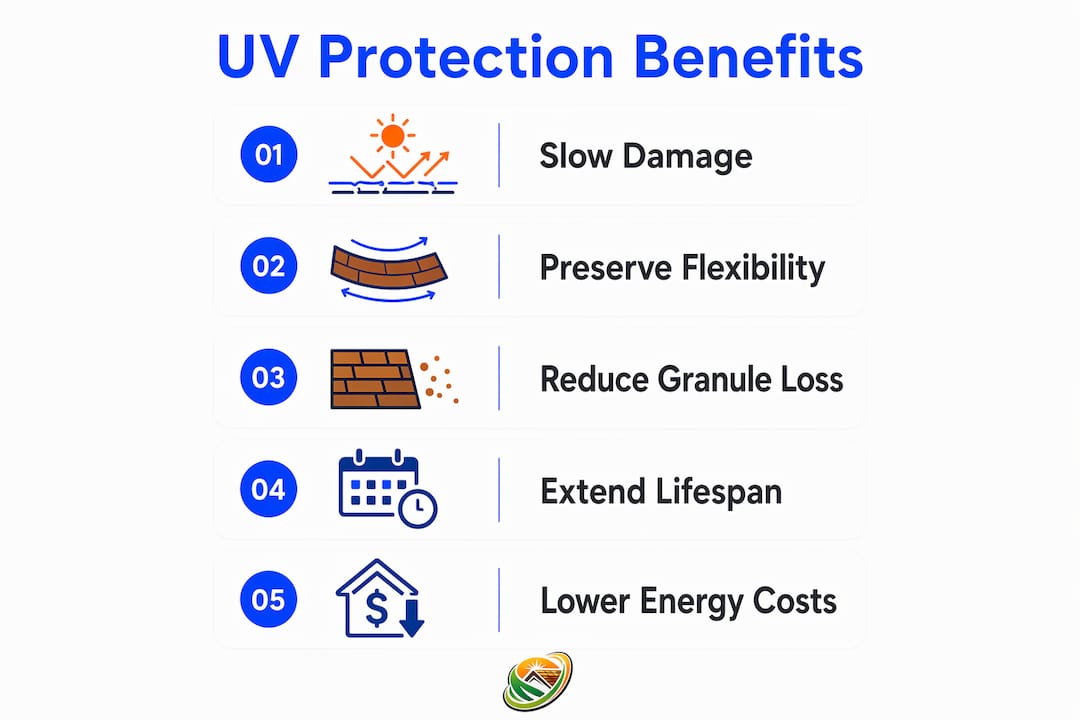
UV protection slows photodegradation, preserves shingle flexibility, reduces granule loss, and extends roof lifespan by 10 to 20 years compared to unprotected roofs in high-sun climates like South Florida.
How does UV damage affect my roof before I see any leaks?
UV radiation breaks down the asphalt binder at a molecular level, causing brittleness and granule loss long before visible cracks or leaks appear. By the time water enters, significant structural damage has already occurred.
Do reflective roof coatings actually lower energy bills?
Yes. Reflective coatings reduce roof surface temperatures by absorbing and dissipating UV heat, which lowers the cooling load transferred into your home and reduces air conditioning costs throughout South Florida's long cooling season.
How often should South Florida homeowners inspect their roofs for UV damage?
Annual professional inspections are the standard recommendation, with a personal check after major storms. Early detection of granule loss or surface cracking keeps preservation options available and avoids costly emergency repairs.
Does a 25-year shingle warranty protect against UV damage in Florida?
No. Manufacturer warranties cover manufacturing defects, not UV-driven degradation from environmental exposure. Florida's intense sun can shorten shingle lifespan well below the warranty period regardless of the rating on the package.