

TL;DR:
- Proper attic ventilation can extend an asphalt shingle roof's lifespan by up to ten years in South Florida. Routine gutter cleaning, debris removal, and minor repairs prevent moisture damage, saving homeowners significant costs. Certified preservation treatments can delay expensive replacements and are most effective when combined with proper ventilation and maintenance.
Attic ventilation correction, routine gutter and debris management, targeted shingle and flashing repairs, and certified preservation treatment are the small roof fixes that deliver the biggest lifespan gains for asphalt shingle roofs in South Florida. Studies link poor attic ventilation to 70–80% of premature shingle curling cases, and correcting it can add 5–10 years of shingle life. Shingleroofrenewal, a certified applicator of Fresh Roof Green Soy Technology, helps Broward and Palm Beach County homeowners qualify for preservation treatment before spending $15,000–$30,000 on a full replacement.
The five highest-impact actions, in priority order:
- Correct attic ventilation (intake and exhaust balance)
- Clear gutters and remove debris quarterly
- Trim overhanging branches to maintain recommended clearance from the roof
- Repair loose shingles, nail pops, and flashing
- Schedule a certified preservation treatment if your roof qualifies
Pro Tip: Before you call a roofer, call Shingleroofrenewal for a free inspection. Many roofs that look ready for replacement still qualify for preservation.
Table of Contents
- What small roof fixes actually make a difference?
- Why attic ventilation is your highest-impact small fix
- What does Fresh Roof Green Soy Technology actually do?
- How do you know whether to repair, preserve, or replace?
- What does Shingleroofrenewal's inspection process cover?
- A seasonal maintenance plan built for South Florida
- Key Takeaways
- The case for calling us before the roofer
- Find out if your South Florida roof qualifies for preservation
- Useful sources
What small roof fixes actually make a difference?
Moisture is the primary accelerator of shingle decay in humid climates. Every task below targets moisture control, granule preservation, or structural integrity.
Prioritized fix list (DIY vs. pro, with frequency):
- Clean gutters and extend downspouts — Clogged gutters force water under the drip edge and into fascia. Downspouts should discharge 5–10 feet from the foundation. Frequency: quarterly. DIY-safe.
- Remove debris and organic matter — Leaves and branches trap moisture and feed algae growth. Clear the roof surface after every storm. Frequency: after storms and quarterly. DIY-safe with a leaf blower from the ground.
- Soft-wash algae and biological growth — High-pressure washing strips granules and can void warranties. Use a low-pressure soft-wash solution instead. Frequency: annually or when black streaks appear. Hire a pro.
- Trim branches to 6–10 feet clearance — Overhanging limbs drop debris, scratch granules, and create shaded zones where algae thrive. Frequency: twice yearly. DIY or hire an arborist.
- Repair loose shingles and nail pops — Lifted shingles admit water immediately. Apply roofing cement under the lifted edge on a warm day and press firmly. Frequency: after storms. DIY for minor lifts; pro for multiple shingles.
- Reseal and inspect flashing — Failed flashing around vents, pipes, and edges is a leading entry point for water. Frequency: annually. Pro recommended.
Pro Tip: Never use a pressure washer on asphalt shingles. Even a single pass can remove years of granule protection and void your manufacturer warranty.
Cost perspective: A full shingle roof replacement in South Florida typically costs a substantial amount. Routine maintenance tasks above cost a fraction of that annually, and a certified preservation treatment can save thousands more by deferring replacement entirely.
For a complete roof damage prevention checklist tailored to South Florida conditions, Shingleroofrenewal's blog covers each fix in detail.
Why attic ventilation is your highest-impact small fix
Improving attic ventilation is frequently the single most impactful minor repair a South Florida homeowner can make. Poor ventilation drives 70–80% of premature shingle curling cases, and correcting it can extend shingle life by 5–10 years. The mechanism is straightforward: trapped attic heat and humidity accelerate the drying of shingle oils from beneath, causing brittleness and curling long before the shingles' rated lifespan ends.
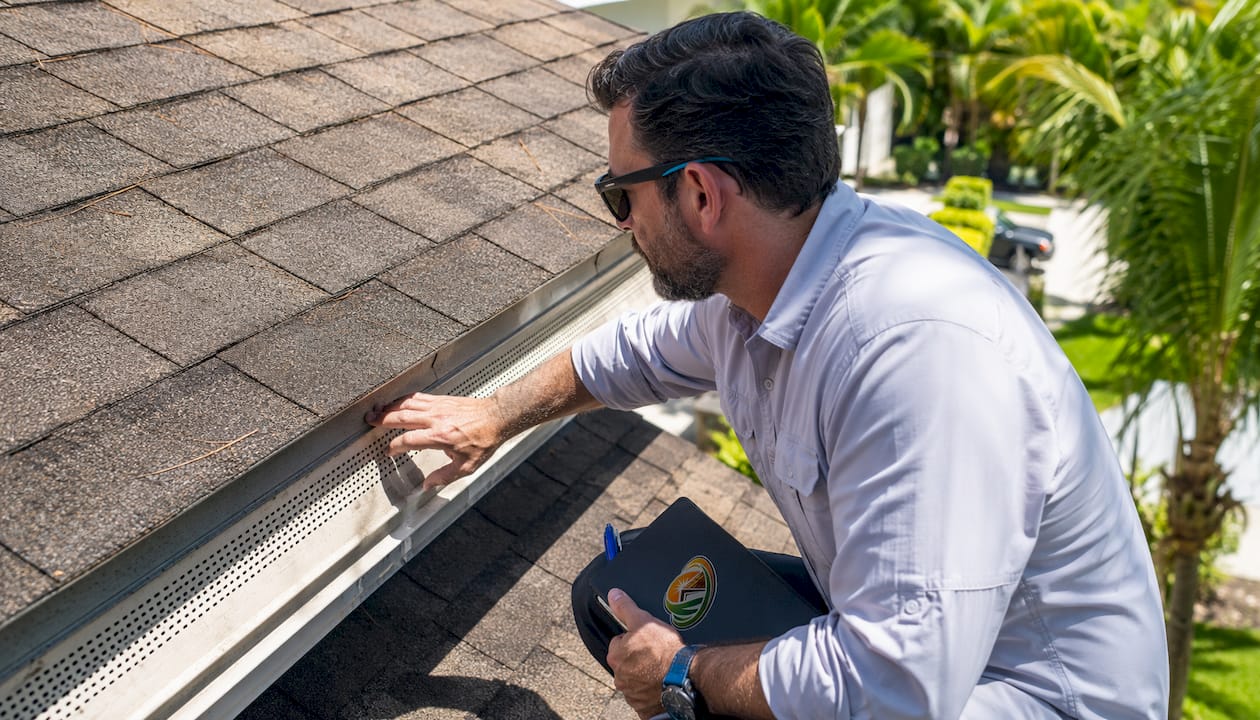
A balanced system requires soffit intake vents at the eaves and exhaust vents at or near the ridge. When intake is blocked or exhaust is insufficient, heat builds and moisture stagnates.
| Symptom | Likely cause | Professional fix |
|---|---|---|
| Edge curling on multiple slopes | Poor intake/exhaust balance | Add soffit baffles + ridge vent |
| Granules accumulating in attic | Heat-driven shingle baking | Install powered attic fan or increase ridge venting |
| Visible condensation or mold in attic | Inadequate exhaust | Add static or powered exhaust vents |
| Uneven curling (one slope only) | Blocked soffit on that side | Clear or add soffit vents on affected side |
South Florida's heat and humidity accelerate this process faster than most other U.S. climates. A quick DIY check: on a hot afternoon, open the attic hatch briefly. If the temperature feels significantly hotter than outdoors and you see any condensation staining, ventilation is likely inadequate.
Pro Tip: Be cautious of contractors who seal or caulk soffit vents to "stop leaks." That fix trades a small problem for a much larger one. Airflow is what keeps shingles alive from below.
What does Fresh Roof Green Soy Technology actually do?
Certified preservation using Fresh Roof Green Soy Technology restores shingle flexibility at a molecular level by replenishing the oils that South Florida's heat and UV exposure gradually bake out. Preservation treatments restore flexibility and adhesion and represent a cost-saving alternative to premature replacement when applied before structural damage sets in.
In plain terms, the treatment penetrates the shingle mat, re-bonds loose granules, and reduces the brittleness that leads to cracking and wind lift. It also improves fire resistance, a meaningful benefit in South Florida's storm season.
Who benefits most from preservation treatment:
- Roofs showing early-to-moderate granule loss but no widespread missing shingles
- Shingles that are slightly flexible, not fully brittle or crumbling
- Roofs with a sound deck (no soft spots or rot)
- Homes where attic ventilation has been corrected or is adequate
- Homeowners who want to defer replacement costs for several years
Who should plan for replacement instead:
- Roofs with deck rot, underlayment failure, or structural sagging
- Shingles that are fully brittle and crumble when touched
- More than 30% of shingles missing or severely damaged
Shingleroofrenewal backs qualifying treatments with a 6-year transferable warranty, which adds measurable value if you sell the home. That warranty transfers to the new owner, a detail most full replacements don't offer on the labor side.
How do you know whether to repair, preserve, or replace?
Choose repair or preservation when damage is localized, the deck is sound, and targeted fixes will stop further deterioration. Choose replacement when damage is widespread, shingles are structurally compromised, or the deck and underlayment have failed, generally when the roof is aging beyond early-life stages. Inspection findings like deck softness or underlayment failure typically push the decision firmly toward replacement.
Decision checklist for your next inspection:
- Walk the attic: any soft spots on the deck boards, water stains, or mold?
- Check gutters: heavy granule accumulation signals accelerated shingle wear.
- Look at shingle flexibility: can you gently flex a corner without it cracking?
- Count affected areas: is curling or damage limited to one slope, or widespread?
- Check the roof age: most asphalt shingles in South Florida are rated 20–25 years.
- Inspect flashing: is it sealed, or lifting and rusted?
| Option | Typical cost range | Timeline | Best for |
|---|---|---|---|
| Minor repairs (flashing, shingles) | Moderate cost | 1–2 hours | Localized damage, sound deck |
| Certified preservation treatment | Lower cost than replacement | 3–5 hours | Early-to-moderate aging, qualifying roof |
| Full replacement | Higher cost | 2–3 days | Widespread damage, deck failure |
Note: local bids vary. Get at least two estimates for any major work.
Pro Tip: If you're unsure, get a preservation qualification first. Shingleroofrenewal's free inspection tells you exactly where your roof stands before you commit to anything.
For more on the risks of neglected roofs in South Florida, including what deferred maintenance actually costs over time, Shingleroofrenewal's blog lays it out clearly.
What does Shingleroofrenewal's inspection process cover?
Shingleroofrenewal follows a three-step process: inspection, condition assessment, and qualification recommendation. You get a clear answer, not a sales pitch.
What a thorough inspection covers:
- Attic temperature and humidity check
- Soffit and ridge vent integrity
- Flashing condition at all penetrations and edges
- Granule loss pattern and severity
- Deck firmness (soft spots indicate rot or underlayment failure)
- Algae, mold, and biological growth
- Gutter evidence of granule accumulation
After the inspection, you should receive a written condition report with photos, a prioritized list of fixes, a cost estimate, and a clear recommendation: preservation or replacement.
Warranty callout: Qualifying roofs treated by Shingleroofrenewal receive a 6-year transferable preservation warranty backed by certified applicator status. That warranty travels with the home if you sell.
A seasonal maintenance plan built for South Florida
Schedule a professional inspection annually, before hurricane season opens in June. DIY and contractor tasks follow a seasonal rhythm tied to South Florida's storm cycles and peak UV months.
Seasonal maintenance calendar:
- January–March (dry season): Clean gutters, remove debris, inspect flashing, trim branches. DIY-safe tasks.
- April–May (pre-hurricane prep): Schedule professional inspection, soft-wash algae, check attic ventilation, reseal any open flashing. Best window for preservation treatment application.
- June–November (hurricane season): After each significant storm, clear debris, check for lifted shingles, and inspect gutters. Hire a pro for post-storm shingle repairs.
- December: Final gutter clean, check attic for condensation, confirm soffit vents are clear.
Annual inspections and pre-storm maintenance reduce risk and improve resilience during hurricane season. Timing preservation treatments in late spring, after gutters are cleared and before peak UV intensity, gives the treatment the best conditions to penetrate and bond.
Pro Tip: Never walk on hot shingles in South Florida's summer heat. Shingles soften and granules dislodge under foot traffic. Use binoculars from the ground or hire a pro with fall protection.
For a full South Florida roof care workflow with month-by-month timing, Shingleroofrenewal's guide covers every task in sequence.
The benefits of timely gutter cleaning extend well beyond the roof itself, protecting fascia, foundation, and landscaping from water damage year-round.
Key Takeaways
Small roof fixes with big impact come down to five priorities: ventilation, moisture management, no pressure washing, certified preservation for qualifying roofs, and annual professional inspection before hurricane season.
| Point | Details |
|---|---|
| Fix attic ventilation first | Poor ventilation drives 70–80% of premature curling; correcting it can add 5–10 years of shingle life. |
| Keep gutters and debris clear | Quarterly gutter cleaning and debris removal are the lowest-cost, highest-return maintenance tasks. |
| Never pressure wash shingles | High-pressure washing strips granules and can void your manufacturer warranty; always use soft-wash. |
| Inspect before you replace | A professional inspection often reveals a roof that qualifies for preservation rather than replacement. |
| Shingleroofrenewal's free inspection | Shingleroofrenewal qualifies Broward and Palm Beach County roofs for certified Fresh Roof preservation, backed by a 6-year transferable warranty. |
The case for calling us before the roofer
Most homeowners call a roofer the moment they see curling shingles or granules in the gutter. We think that's too late in the process, and often too expensive. At Shingleroofrenewal, we help South Florida homeowners catch the problem at the point where preservation is still possible, saving thousands compared to a full tear-off.
We are certified applicators of Fresh Roof Green Soy Technology, which means we apply a treatment that works at the molecular level, not just on the surface. Our three-step process, inspection, assessment, and qualification recommendation, gives you a clear picture of your roof's condition before you spend a dollar on anything. If your roof qualifies, it's backed by a 6-year transferable warranty. If it doesn't, we tell you that too and point you toward the right next step.
There's also an environmental argument worth making. Every unnecessary tear-off sends thousands of pounds of asphalt shingles to a landfill. Roof preservation reduces that waste and extends the useful life of materials already in place. That matters to us, and increasingly, it matters to homeowners too.
Find out if your South Florida roof qualifies for preservation
Shingleroofrenewal offers free roof assessments for homeowners in Broward and Palm Beach County. If your asphalt shingle roof qualifies for certified Fresh Roof Green Soy Technology treatment, you could save thousands compared to a full replacement, all backed by a 6-year transferable warranty.
The inspection takes a few hours. The recommendation is written, clear, and honest. If preservation is the right call, we schedule treatment at a time that works for you, typically in late spring before peak UV season. If replacement is the right call, we tell you that too.
Schedule your free roof inspection today and find out exactly where your roof stands before you make any decisions.
Useful sources
- What Causes Shingles to Curl? A South Florida Guide — Source for the 70–80% ventilation statistic and the 5–10 year life extension claim.
- Asphalt Shingle Roof Maintenance — Source for moisture management, gutter/debris guidance, soft-wash vs. pressure wash, and downspout extension recommendations.
- Roof Rejuvenation vs. Replacement — Source for preservation treatment benefits and the economic argument for early intervention.
- How Humidity Affects Your Roof in South Florida — Source for South Florida climate context and heat/humidity acceleration of shingle degradation.
- How Florida Heat Damages Shingle Roofs — Source for inspection findings that indicate replacement over preservation.
- Maintenance Habits That Help Your Asphalt Shingle Roof Last Longer — Source for annual inspection timing and pre-storm maintenance recommendations.
- Asphalt Shingle Restoration — Source for environmental and capital-planning arguments supporting preservation over replacement.
- Shingle Roof Renewal — Source for certified applicator status, 6-year transferable warranty, and service area details.