
If you spot heavy granule loss, tabs that are lifting or curling, or fresh moisture in the attic, you're looking at the three earliest and most reliable signs of shingle roof failure. Granule loss exposes the asphalt layer beneath, which raises urgency for intervention fast. Here's the quick read on what matters and what doesn't.
- Granule loss / exposed asphalt — urgent
- Lifted, curling, or cracked tabs — monitor to urgent, depending on spread
- Fresh attic moisture or active leaks — urgent, always
Before you do anything else: photograph the gutters, valleys, and roof penetrations, date the photos in your phone, check the attic after the next rain, clear the gutters, and schedule a preservation inspection.
Key Takeaways
Granule loss, lifted or curling tabs, and fresh attic moisture are the three signs that separate a roof needing routine care from one facing real failure.
| Point | Details |
|---|---|
| Granule loss signals urgency | Bald patches or heavy gutter granules expose asphalt to UV and should trigger an inspection soon. |
| Attic checks catch hidden damage | Check for stains, wet insulation, or daylight through the deck right after storms. |
| Flashing failure causes most leaks | Penetrations like chimneys and vent pipes are common leak points even on otherwise sound roofs. |
| Triage before you commit to replacement | Isolated defects often mean repair, while intact fields with early wear may qualify for preservation. |
| Shingleroofrenewal offers a preservation path | Free inspections assess eligibility for Green Soy Technology renewal, backed by a 6-year transferable warranty, before replacement becomes the only option. |
Table of Contents
- What Are the Warning Signs of Shingle Roof Failure on the Exterior?
- What Do Attic and Ceiling Stains Reveal About Hidden Damage?
- What Causes Each Shingle Warning Sign?
- Should You Repair, Preserve, or Replace Your Roof?
- How Do You Safely Inspect Your Own Roof?
- What Maintenance Habits Extend Shingle Roof Life?
- A Local Preservation Specialist's Take on Early Detection
- Get a Free Roof Assessment Before You Call a Roofer
- Where to Learn More About Shingle Roof Health
- Frequently Asked Questions
- Sources
What Are the Warning Signs of Shingle Roof Failure on the Exterior?
Most shingle roof failure starts with something you can see from the ground with a pair of binoculars. The trick is knowing which signs are just South Florida weathering and which ones mean the clock is running.
- Granule loss: Look for piles of dark granules in your gutters or bald patches on the shingle surface. Granules shield the asphalt binder from UV rays, so once they're gone, the asphalt underneath starts breaking down fast.
- Curling or cupping: Edges that turn upward (cupping) or tabs that bow in the middle usually point to heat stress or poor attic airflow underneath.
- Surface cracking: Fine cracks across the shingle face are common in aging roofs, but wide, spreading cracks let water in.
- Blisters, open vs. closed: Closed blisters are cosmetic bubbles trapped under the surface. Open blisters have popped and expose bare asphalt, which manufacturer guidance flags as a real defect, not normal wear.
- Missing shingles or tabs flapping after wind: Any gap in coverage is an open invitation for water.
- Buckling or sagging rows: This often signals a decking or ventilation problem, not just a surface issue.
- Algae vs. moss vs. lichen: Dark streaking is usually cosmetic algae. Moss and lichen are different. They physically lift shingle edges and trap moisture underneath.
Photograph a close-up of any bald spot, the granule pile in your gutter, any lifted tab, and the wear pattern in your roof valleys. These four shots give a preservation specialist enough to start a real assessment.
Pro Tip: South Florida's mix of intense UV, humidity, and wind doesn't just age shingles, it speeds up the whole process. The same granule loss that might take 15 years up north can show up in half that time here, and it accelerates corrosion on exposed nail heads and flashing edges too.
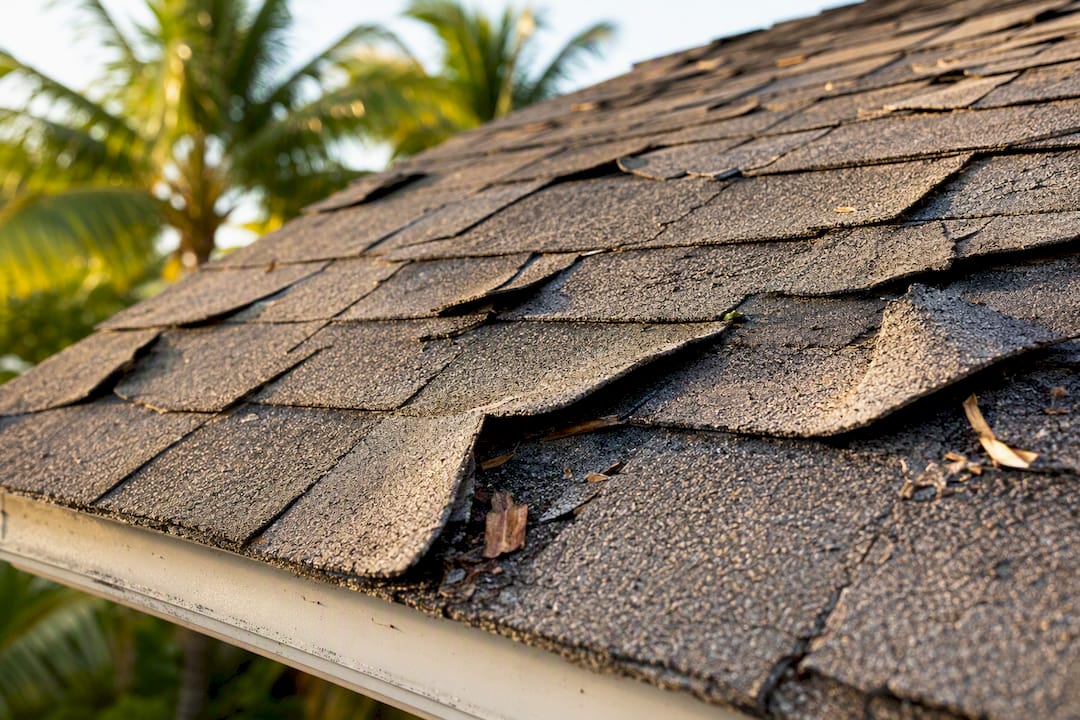
A single bald patch is worth watching. Bald patches that keep spreading after every storm, or blisters that have already popped open, push a roof from "monitor" into "call someone now."
What Do Attic and Ceiling Stains Reveal About Hidden Damage?
The roof surface can look fine while real trouble is brewing underneath. An attic check after a hard rain often tells you more than a ground survey ever will.
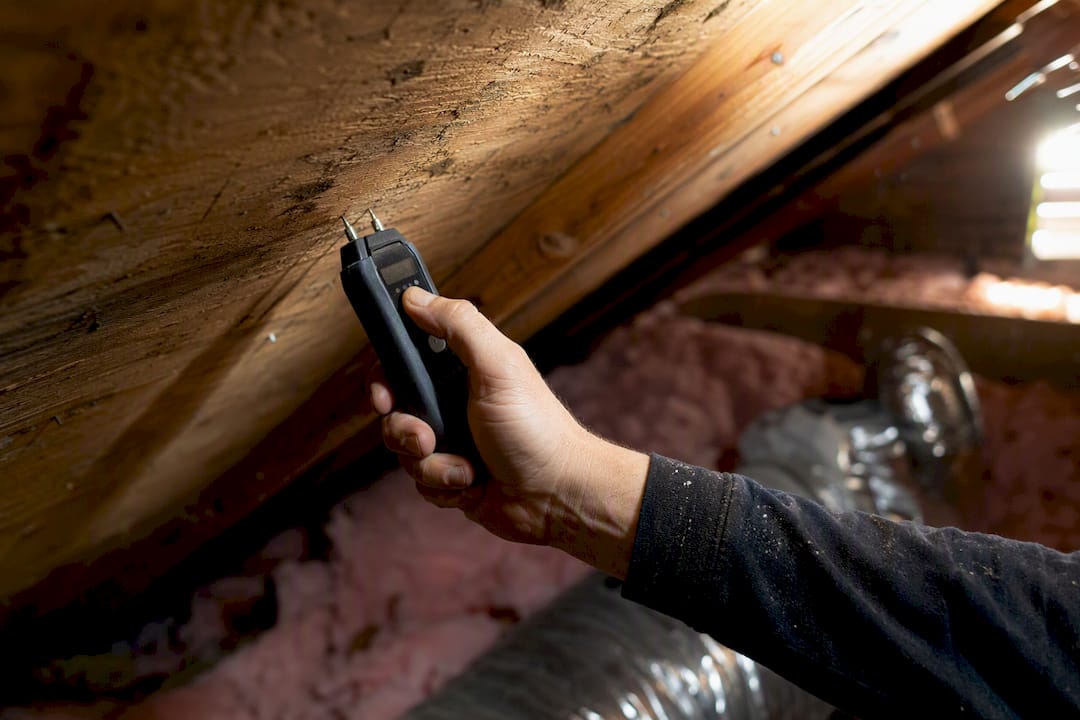
- Fresh water stains or dark, discolored wood on the rafters
- Wet, compressed, or matted insulation
- Mold or mildew smell, even without visible spots
- Rusted or popped nail heads poking through the deck
- Any point where daylight comes through the decking
- Ceiling stains, peeling paint, or drywall sag in the rooms below, especially recurring stains after storms
GAF's homeowner guidance recommends checking the attic specifically after severe weather, since underlayment and flashing failures don't always show up on the surface. Soaked insulation, daylight through the deck, or soft decking mean you call a professional now. A single old, dry stain in one corner can usually wait for a scheduled inspection.
What Causes Each Shingle Warning Sign?
Every sign on your roof has a cause behind it, and knowing which one applies changes how urgently you should act.
- UV and heat exposure drives granule loss and surface cracking, especially on south and west-facing slopes.
- Poor attic ventilation traps heat under the deck, which shows up as cupping, curling, and blistering across the field.
- Installation and workmanship issues, like inconsistent nailing or improper flashing, tend to show up as lifted tabs and clustered blow-offs rather than random wear.
- Flashing failure around chimneys, skylights, and vent pipes is one of the most common sources of repeat leaks on an otherwise sound roof.
- Storm impact from wind or hail leaves concentrated damage: missing tabs in one section, bruising patterns, or torn edges rather than roof-wide wear.
Open blisters and exposed asphalt sit at the top of the urgency list because there's no granule layer left protecting the material underneath.
Pro Tip: Before any inspection, jot down your roof's age, the shingle tier if you know it, and anything you can see about the installation, like nail pattern or visible step flashing. That detail helps an inspector judge preservation eligibility faster and more accurately.
Should You Repair, Preserve, or Replace Your Roof?
The right move depends on how far the damage has spread, not just how old the roof is. HAAG-certified inspector guidance bases remaining roof life on forensic condition markers, sealant bond strength, flashing integrity, and deck moisture, rather than the calendar.
- Isolated, minor defects (one cracked pipe boot, a handful of lifted tabs) usually call for a targeted repair.
- An intact shingle field with early granule loss or brittleness is often a strong candidate for preservation and renewal instead of a full tear-off.
- Widespread exposed asphalt, recurring leaks, or soft decking points toward replacement.
Preservation eligibility generally requires:
- Shingles that still lie flat, without widespread curling
- Limited, not widespread, bald patching
- No significant decking moisture found during inspection
- Flashing that's repairable rather than corroded through
Cost ranges vary by severity. Small, isolated repairs often run a few hundred to several hundred dollars. Staged repairs addressing active water intrusion typically land between $1,500 and $5,000. Systemic failure that requires full replacement often starts at around fifteen thousand dollars and above. A preservation inspection documents which category your roof falls into, and that documentation is exactly what warranty and insurance conversations require.
How Do You Safely Inspect Your Own Roof?
You can gather a lot of useful evidence from the ground before you ever call a specialist, as long as you skip the risky parts.
- Do a ground survey with binoculars, scanning for bald spots, lifted tabs, and sagging rows.
- Check your gutters for granule buildup after any hard rain.
- From a ladder at the eave, only inspect the edge, don't walk the field.
- Scan the attic within a day of a storm for stains, moisture, or daylight.
- Photograph the gutter granule pile, any bald spots up close, and flashing around each penetration.
Never walk a shingle roof at midday when the surface is hot and soft. Never pressure wash it, since that strips granules faster than the weather ever could. If you're not sure a section is safe to stand on, don't test it. Stop and call a professional immediately if you see daylight through the deck, soaked insulation, or soft decking underfoot.
Pro Tip: Keep a simple storm log on your phone, date, wind speed if you know it, and a couple of photos. That log turns into real evidence if you ever need to make an insurance case or explain a sudden change in roof condition.
What Maintenance Habits Extend Shingle Roof Life?
A handful of routine habits go a long way toward keeping small problems small.
- Inspect in spring, again in fall, and after any major storm
- Clean gutters and clear debris out of valleys where water pools
- Replace cracked pipe boots and reseal minor flashing gaps before they become leaks
- Confirm soffit intake vents are clear and ridge exhaust vents are open
- Treat algae streaks as cosmetic, but address moss and lichen since they physically lift shingles
- Skip the pressure washer entirely; it does more damage than the algae ever would
Twice-yearly inspection and routine preservation work commonly add five to ten years to a shingle roof's service life, and catching problems early keeps repair costs at a fraction of what a full replacement decision would run.
A Local Preservation Specialist's Take on Early Detection
Most of the roofs I've seen written off as "done" were still salvageable. The shingles were brittle, not broken. That's the gap between what homeowners assume and what a real inspection shows.
Our process stays simple on purpose: inspect, assess against forensic markers like sealant bond and deck moisture, then recommend renewal or repair. Fresh Roof Green Soy Technology and a 6-year transferable warranty exist because Broward and Palm Beach homeowners deserve a real alternative to tearing off a roof that still has years left in it.
Get a Free Roof Assessment Before You Call a Roofer
Shingleroofrenewal is the alternative to a full tear-off for homeowners across Broward and Palm Beach counties who aren't sure yet whether their roof needs replacing or just needs saving. Our free inspection includes photo documentation of every trouble spot, a preservation eligibility assessment based on forensic condition markers, and a prioritized recommendation, not a sales pitch.

We're not roofers, and we're not a construction crew showing up to sell you a reroof. We use certified Fresh Roof Green Soy Technology to restore shingle flexibility and lock in remaining granules, backed by a 6-year transferable warranty, on roofs that qualify. Before your inspection, gather a few photos of trouble spots, note your roof's approximate age, and jot down any prior repairs. Schedule your free roof assessment and find out if your roof qualifies for renewal instead of replacement.
Where to Learn More About Shingle Roof Health
For deeper technical detail beyond this checklist, a few sources stand out. Manufacturer literature like TAMKO's homeowner brochure covers shingle-specific aging signs, while GAF's homeowner education explains flashing and attic inspection after storms. For forensic assessment standards behind repair-versus-replace decisions, consult HAAG's inspector guidance.
Frequently Asked Questions
What are the warning signs of shingle roof failure I shouldn't ignore? Heavy granule loss with exposed asphalt, tabs that are lifting or curling across multiple areas, and any fresh moisture in the attic after a storm. These three combined usually mean it's time for a professional look, not a wait-and-see approach.
How do I spot roof issues without climbing on the roof? Use binoculars from the ground to check for bald spots, missing tabs, and sagging rows. Check your gutters for granule buildup, and scan the attic with a flashlight after the next rain.
What causes roof damage in hot, humid climates like South Florida? UV exposure and heat drive granule loss and cracking, poor attic ventilation causes curling and blistering, and wind or hail leaves concentrated impact damage rather than roof-wide wear.
Can a shingle roof be saved instead of replaced? Often, yes, if the shingle field is still mostly flat, bald patching is limited, and there's no significant decking moisture. A forensic inspection determines whether preservation is a realistic option for your specific roof.
How often should I inspect my asphalt shingle roof? Twice a year, in spring and fall, plus a check after any major storm. That rhythm catches problems while they're still cheap to fix instead of letting them turn into structural repairs.
Sources
- HAAG-certified inspector guidance (HCI FAQs)
- How to read your roof (TAMKO homeowner brochure)
- Roof damage homeowner education (GAF)
- Asphalt roof maintenance checklist (The Roofing Brief)