
TL;DR:
- Acting early on roof damage helps South Florida homeowners avoid costly replacements and reduces repair costs. Regular inspections, maintenance, and quick repairs prevent minor issues from becoming structural failures caused by weather and climate conditions. Proper upkeep can extend a roof's lifespan and lower long-term expenses significantly.
Acting early on roof damage is the single most effective way South Florida homeowners can avoid a $15,000 to $30,000 roof replacement. Minor issues like cracked shingles, small flashing gaps, and granule loss are manageable when caught quickly. Left alone in Broward or Palm Beach County's relentless heat, humidity, and storm season, those same issues become structural failures. This guide explains how damage spreads, what it costs to wait, and what you can do right now to protect your roof and your wallet.
Why act early on roof damage before it gets worse
Roof damage rarely stays small. Damage progresses exponentially, saturating insulation and rotting wood decking long before you see a single water stain on your ceiling. By the time interior leaks appear, the structural repair bill often runs between $12,000 and $20,000. That number is not a worst-case scenario. It is the predictable result of waiting.
The industry term for this process is deferred maintenance, and it is the leading driver of premature roof failure. 80% of premature roof replacements result from deferred maintenance, not material failure. That means most replacements are avoidable with consistent, early attention.
How does roof damage progress if left untreated?
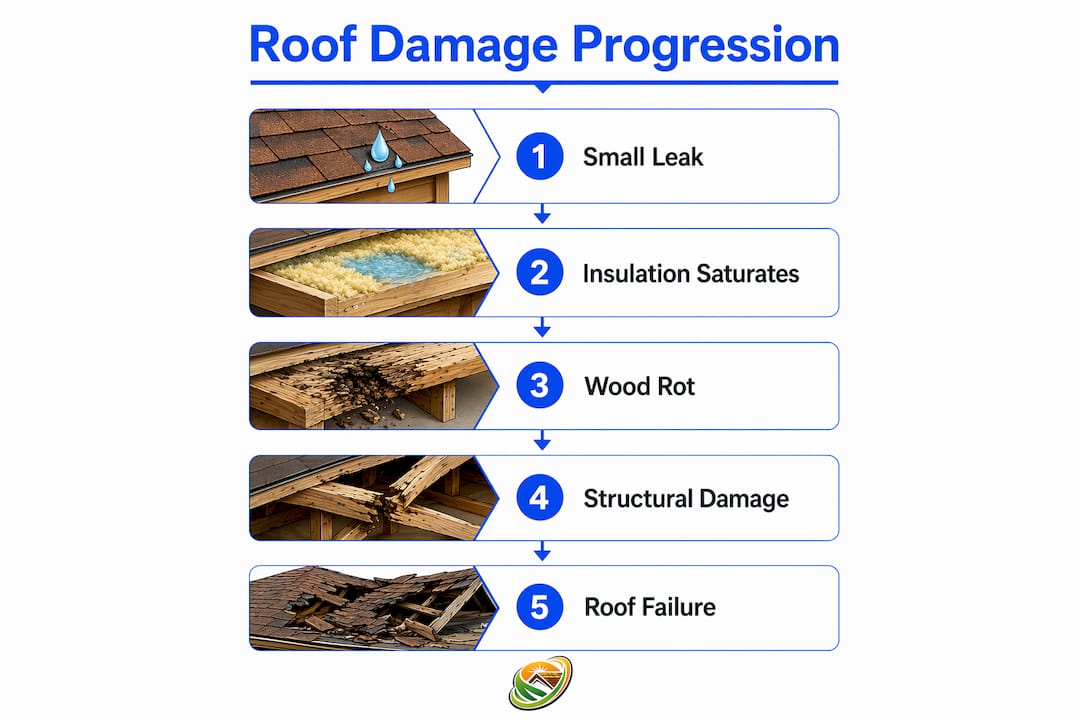
Small problems follow a predictable path when ignored. Here is how a minor issue becomes a major disaster:
- A shingle cracks or a flashing gap opens. Water finds the path of least resistance and begins seeping under the surface layer.
- Moisture reaches the roof decking. Wood decking absorbs water over days and weeks, softening and beginning to rot.
- Insulation becomes saturated. Wet insulation loses its thermal value and holds moisture against structural framing.
- Mold takes hold. Mold spores germinate within 24–72 hours of moisture intrusion. Mold remediation alone can cost between $2,000 and $30,000.
- Structural framing weakens. Rafters and trusses begin to rot. At this stage, a full replacement is unavoidable.
What makes this progression dangerous is that most damaging roof problems start invisible from the ground. Small fastener corrosion and flashing gaps cause hidden damage that spreads for months before any homeowner notices. A repair that costs around $500 in the early stage can escalate past $12,000 once structural rot sets in.
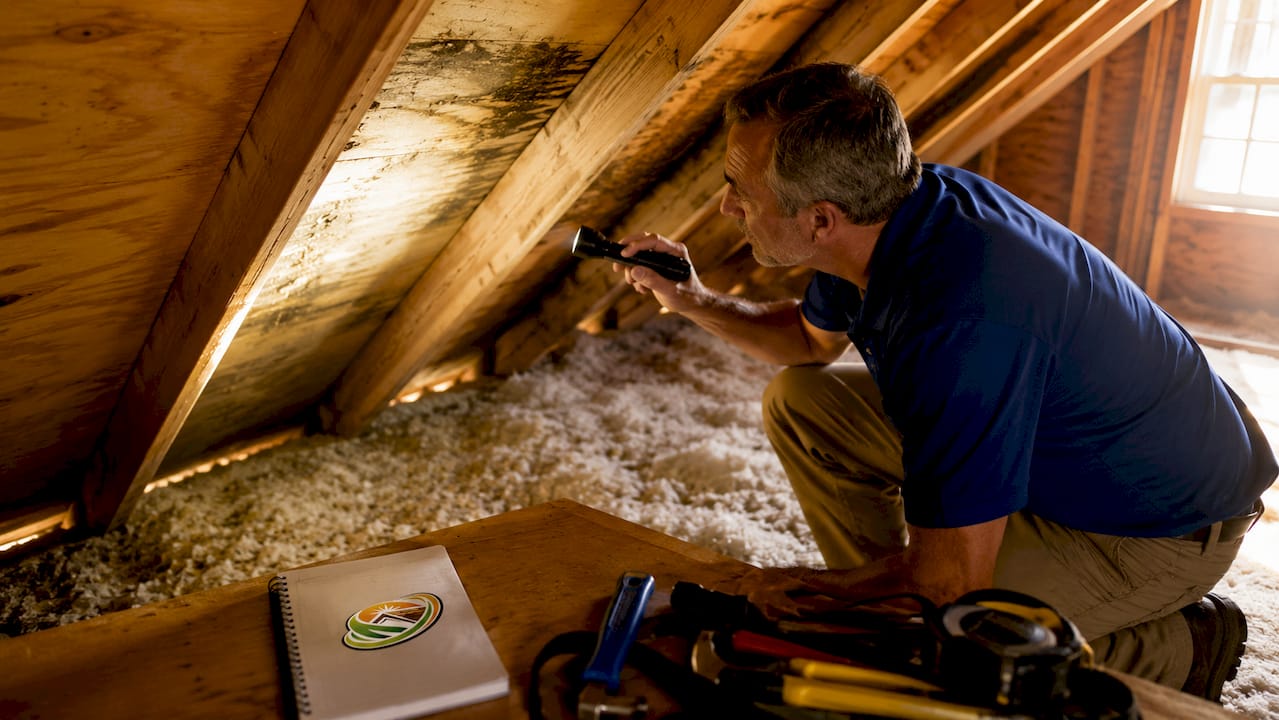
Pro Tip: After any significant storm in Broward or Palm Beach County, check your attic with a flashlight before calling anyone. Wet insulation, dark staining on rafters, or a musty smell are signs that water has already entered. Act within 24 to 48 hours to stop mold from taking hold.
What are the financial benefits of acting early on roof damage?
The math on early roof care is straightforward. Preventative maintenance costs between $200 and $600 annually. A full roof replacement costs between $8,000 and $15,000. That means annual maintenance runs at just 2%–5% of replacement cost. Every dollar spent on maintenance saves $5–$10 in future repairs. That return is hard to match anywhere else in home ownership.
The cost of waiting compounds in three specific ways:
- Emergency repair premiums. Emergency repairs during storms cost 25%–100% more than scheduled maintenance due to premium labor rates and material shortages. Scheduling off-season maintenance eliminates that surcharge entirely.
- Insurance claim risk. Insurance claims can be denied when damage is classified as neglect rather than a sudden event. Documented maintenance history strengthens your position with adjusters and keeps claims valid.
- Energy loss. Compromised roofing ventilation and insulation can increase heating and cooling costs by 10%–25%. In South Florida, where air conditioning runs nearly year-round, that adds up fast.
"Regular inspections transform roof care from an emergency expense into a manageable budget line. Homeowners who maintain professional relationships with roof care providers also gain priority access to repair teams during peak storm season demand." — Premier Roofing LLC
Regular maintenance also extends roof lifespan by 25%–50%, according to industry data. That extension can add years of service life to a roof that might otherwise be replaced prematurely.
What specific risks does South Florida's climate pose to roofs?
South Florida does not give roofs a break. The combination of UV exposure, high humidity, salt air from coastal areas, and frequent tropical storms creates conditions that accelerate shingle degradation faster than almost any other region in the country. South Florida's constant UV exposure and humidity accelerate granule loss and shingle brittleness, directly reducing roof lifespan.
| Risk factor | What it does to your roof | Early action that helps |
|---|---|---|
| UV exposure | Dries out shingles, causes cracking and curling | Restoration treatments restore shingle flexibility |
| High humidity | Promotes mold, algae, and wood rot | Sealing and prompt leak repair block moisture entry |
| Salt air | Corrodes metal flashing and fasteners | Annual flashing inspection and resealing |
| Storm debris | Creates impact damage and clogged gutters | Post-storm inspection within 48 hours |
Clogged gutters are one of the most overlooked risks in South Florida. When gutters back up after a heavy rain, water pools against the fascia and works under the shingle edge. That single failure point can cause rot across an entire roof section.
Pro Tip: Schedule a South Florida roof inspection in late spring before hurricane season and again in november after storm season ends. Those two windows catch the most damage before it spreads.
How can homeowners detect early signs of roof damage?
Catching damage early requires knowing what to look for. These are the signs that demand prompt attention:
- Missing or cracked shingles. Even one missing shingle creates an open entry point for water.
- Granule loss. Check your gutters after rain. Excessive granules in the gutter mean shingles are deteriorating and losing their protective coating.
- Flashing gaps or rust. Metal flashing around chimneys, vents, and skylights corrodes and separates over time, creating direct water entry points.
- Attic moisture or staining. Dark spots on rafters or wet insulation confirm active water intrusion, even without visible interior leaks.
- Sagging or soft spots. Press gently on the roof surface near the edge. Soft spots indicate decking rot beneath the shingles.
Homeowners in Broward and Palm Beach County should inspect their roofs at least twice a year and after every significant storm. A professional inspection costs between $150 and $600 and provides a documented record of your roof's condition. That documentation matters when filing an insurance claim. You can use a roof inspection checklist to track what to look for between professional visits.
When you find damage, act within 24 to 48 hours. Apply emergency tarping to exposed areas, photograph everything for your insurance file, and contact a qualified roof maintenance professional. Speed at this stage is the difference between a $500 repair and a $15,000 replacement.
What are the best practices for preventative roof maintenance?
A consistent maintenance routine is the most reliable way to extend your roof's life in South Florida's climate. Follow this framework:
- Schedule biannual professional inspections. Spring and fall inspections catch damage from the previous season before it spreads. Annual inspections alone can extend roof lifespan by 25%–50%.
- Clean gutters and drainage after every major storm. Clear gutters prevent water from backing up against the fascia and shingle edges.
- Seal flashing annually. Metal flashing around penetrations is the most common failure point on South Florida roofs. Resealing it each year costs very little and prevents major water intrusion.
- Replace missing shingles immediately. A single missing shingle exposes the decking beneath. Replace it within days, not weeks.
- Use restoration technology to maintain shingle health. Products like Fresh Roof's Green Soy Technology restore flexibility to aging asphalt shingles at the molecular level, slowing granule loss and extending service life. Shingleroofrenewal is a certified applicator of this technology for qualifying roofs in Broward and Palm Beach County.
- Build a relationship with a roof maintenance professional. Regular inspections provide priority access to repair teams during peak storm season, when demand surges and wait times stretch for weeks.
Homeowners who follow this routine shift roof care from a crisis expense to a predictable budget item. That shift alone reduces stress and protects the home's value over the long term. For a full maintenance plan tailored to South Florida conditions, the 2026 South Florida roof care guide covers each step in detail.
Key Takeaways
Acting early on roof damage is the most cost-effective decision a South Florida homeowner can make, turning a potential $15,000 replacement into a manageable annual maintenance expense.
| Point | Details |
|---|---|
| Damage grows exponentially | A $500 repair becomes a $12,000 structural fix once rot and mold set in. |
| Maintenance costs far less | Annual preventative care runs $200–$600, compared to $8,000–$15,000 for replacement. |
| South Florida accelerates damage | UV, humidity, salt air, and storms degrade shingles faster than most U.S. climates. |
| Insurance depends on documentation | Timely repairs and maintenance records keep insurance claims valid and prevent denial. |
| Early detection is straightforward | Granule loss, flashing gaps, and attic moisture are visible signs that demand action within 48 hours. |
What I've learned from watching homeowners wait too long
The most common mistake I see is homeowners treating roof care the same way they treat a car with a slow leak. They know something is wrong. They plan to deal with it. Then a storm hits and the decision is made for them, at three times the cost.
The uncomfortable truth about roof damage is that the roof almost never fails dramatically on a clear day. It fails during the worst possible moment, when repair crews are booked solid and material prices spike. That is not bad luck. That is the predictable result of deferred maintenance meeting South Florida weather.
What I find most frustrating is the misconception that a roof is only urgent when you can see water inside the house. By that point, the damage has been spreading for months. The insulation is wet, the decking is soft, and what could have been a targeted repair is now a full replacement conversation. Homeowners who schedule inspections before they see a problem consistently spend less and sleep better.
There is also an environmental argument that does not get enough attention. Every unnecessary roof replacement sends thousands of pounds of asphalt shingles to a landfill. Preservation and restoration, when a roof qualifies, keeps that material out of the waste stream. That matters, and it is a real benefit of acting early that most homeowners never consider.
— Daniellison
Shingleroofrenewal: roof preservation for South Florida homeowners
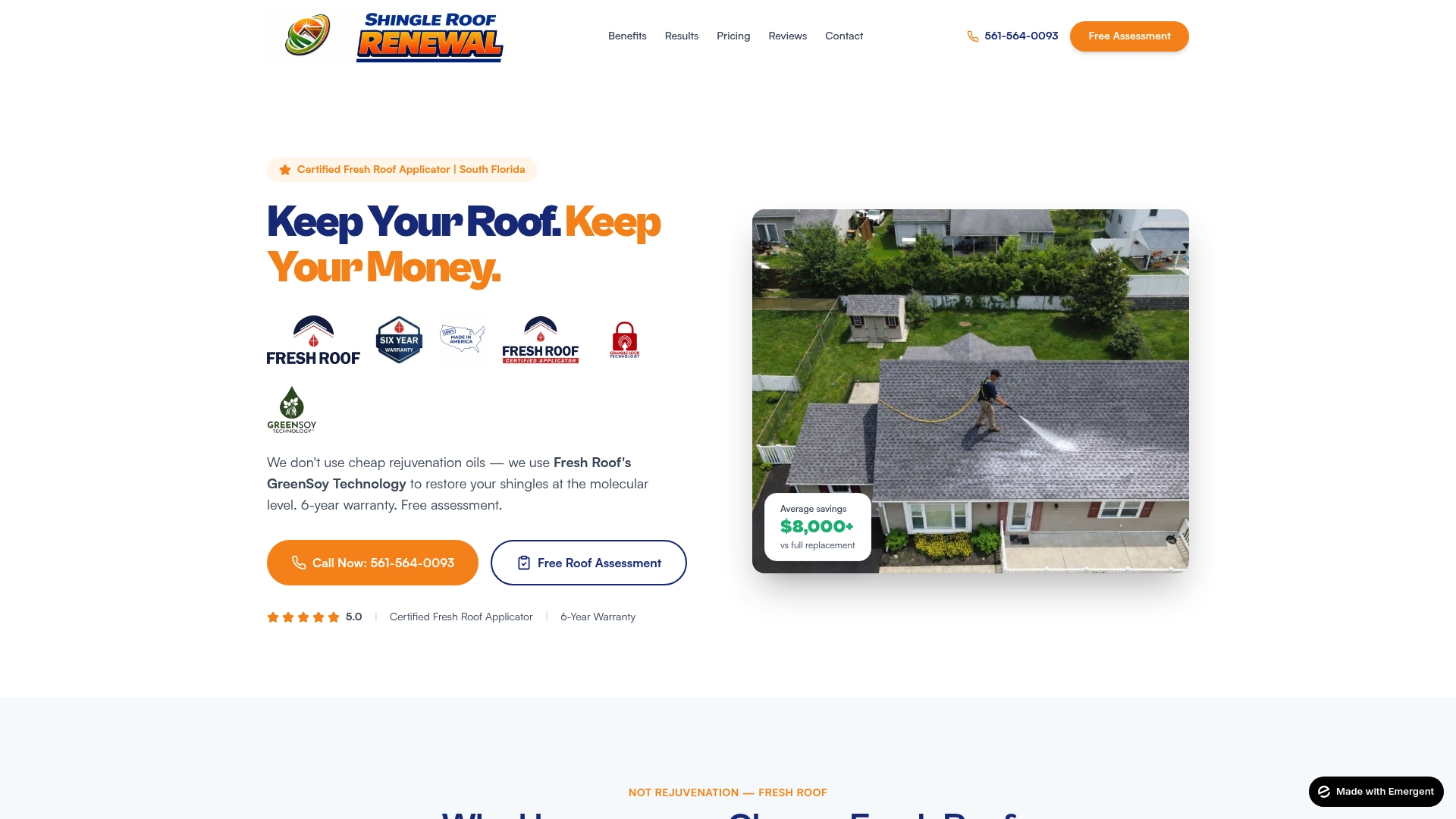
Shingleroofrenewal helps Broward and Palm Beach County homeowners protect their roofs before replacement becomes the only option. As a certified applicator of Fresh Roof's Green Soy Technology, Shingleroofrenewal inspects your roof, assesses its condition, and determines whether it qualifies for preservation and renewal. Qualifying homeowners can save significantly compared to full replacement, backed by a 6-year transferable warranty. The process is straightforward: inspection, assessment, and a clear recommendation with no pressure. If your roof can be saved, Shingleroofrenewal will tell you. If it cannot, they will tell you that too. Visit Shingleroofrenewal's services page to schedule your free inspection and find out where your roof stands.
FAQ
How fast does roof damage spread after a leak starts?
Roof damage spreads quickly once moisture enters. Mold spores can germinate within 24–72 hours, and wood decking can begin rotting within weeks, turning a minor repair into a major structural problem.
What does preventative roof maintenance cost in South Florida?
Annual preventative maintenance typically costs between $200 and $600. That compares to $8,000–$15,000 for a full roof replacement, making maintenance the clear financial choice.
Can delayed roof repairs affect my homeowner's insurance claim?
Yes. Insurance adjusters distinguish between sudden damage and neglect. Delayed repairs can result in a denied claim if the damage is classified as the result of deferred maintenance rather than a covered event.
What are the earliest signs of roof damage to watch for?
The earliest signs include granule buildup in gutters, cracked or missing shingles, rust or gaps in flashing, and moisture or staining in the attic. These signs appear before any interior leak becomes visible.
Does South Florida's climate really shorten roof lifespan?
South Florida's combination of UV exposure, high humidity, salt air, and frequent storms accelerates shingle degradation faster than most U.S. regions. Routine preventative maintenance and restoration treatments can extend shingle life by years despite these conditions.