
For most aging asphalt shingle roofs, the smartest first move is preservation, not replacement. If your shingles are largely intact and your roof is roughly 10–18 years old, a certified preservation treatment can extend its life and save you thousands before a full tear-off ever becomes necessary.
Your immediate next steps:
- Safe visual check first. Stand at ground level with binoculars and look for curling, cracking, or missing shingles. Check your gutters for granule buildup.
- If the roof looks mostly intact, request a free preservation assessment from a certified applicator like Shingleroofrenewal before calling a roofer.
- If you see sagging, active leaks, or widespread damage, skip preservation and call a licensed roofing contractor for a structural inspection.
Fresh Roof Green Soy Technology, applied by certified professionals, is one of the few preservation treatments that works at the molecular level to restore shingle flexibility. The National Roofing Contractors Association and industry inspectors both stress that early intervention, before shingles become brittle or structurally compromised, is when preservation delivers the most value.
Table of Contents
- What are the best old roof improvement methods, ranked by cost?
- How do you inspect an old roof yourself without getting on it?
- When should you repair, restore, or replace your roof?
- What does roof preservation actually do, and what are its limits?
- DIY repairs vs hiring a professional: what's safe and what's not?
- How Shingleroofrenewal's certified preservation process works
- Key Takeaways
- Why "call us before you call the roofer" is the right advice
- Find out if your roof qualifies for a free inspection
- Useful sources and further reading
What are the best old roof improvement methods, ranked by cost?
Not every aging roof needs the same fix. These methods are ranked from least invasive and least expensive to most disruptive, so you can match the solution to your roof's actual condition.
1. Spot leak patching and sealing Fixes isolated punctures, nail pops, or small gaps around penetrations. Cost: typically under $300 for a professional patch. Quick, but only addresses the symptom, not underlying shingle aging.
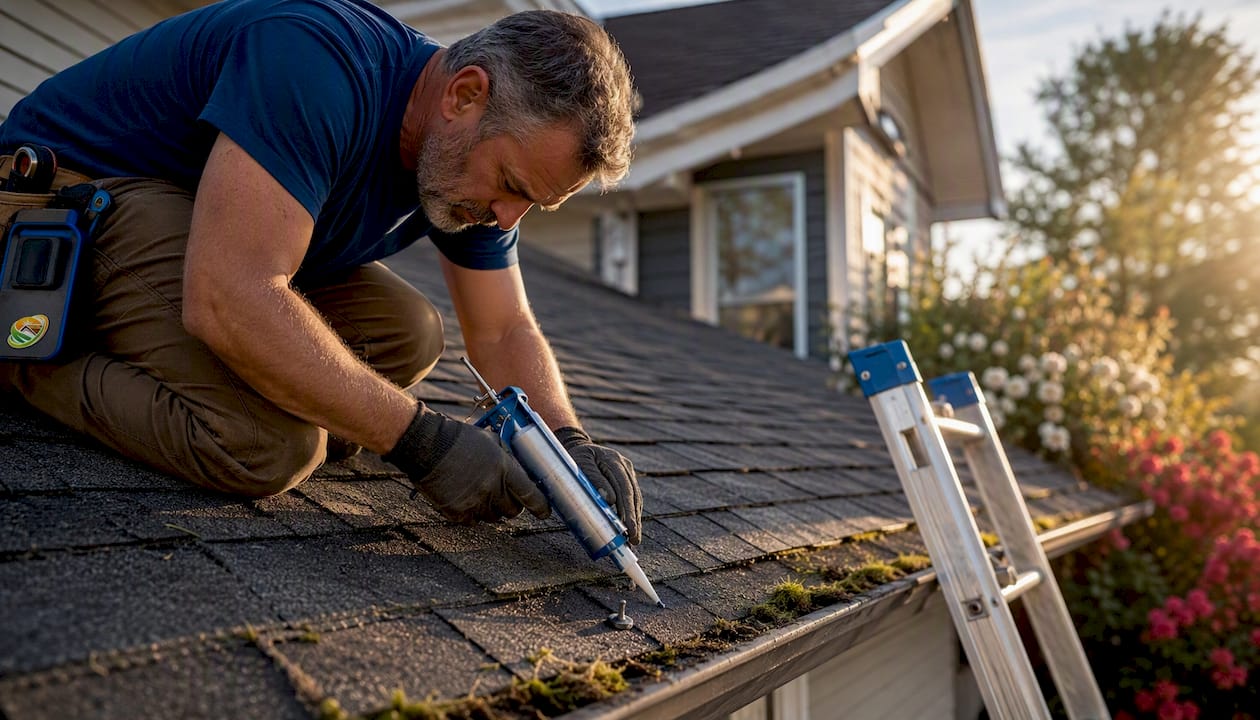
2. Flashing and detail repairs Failing step flashing, valley flashing, or chimney flashing causes a large share of residential leaks. Replacing flashing runs $200–$500 on average and often solves leaks that look like shingle failures. This is one of the highest-ROI, cost-effective roof repair steps you can take.
3. Shingle replacement for small sections Swapping out a handful of cracked or missing shingles costs $150–$400 for a small patch. Works well when damage is isolated to one area and the surrounding shingles are still sound.
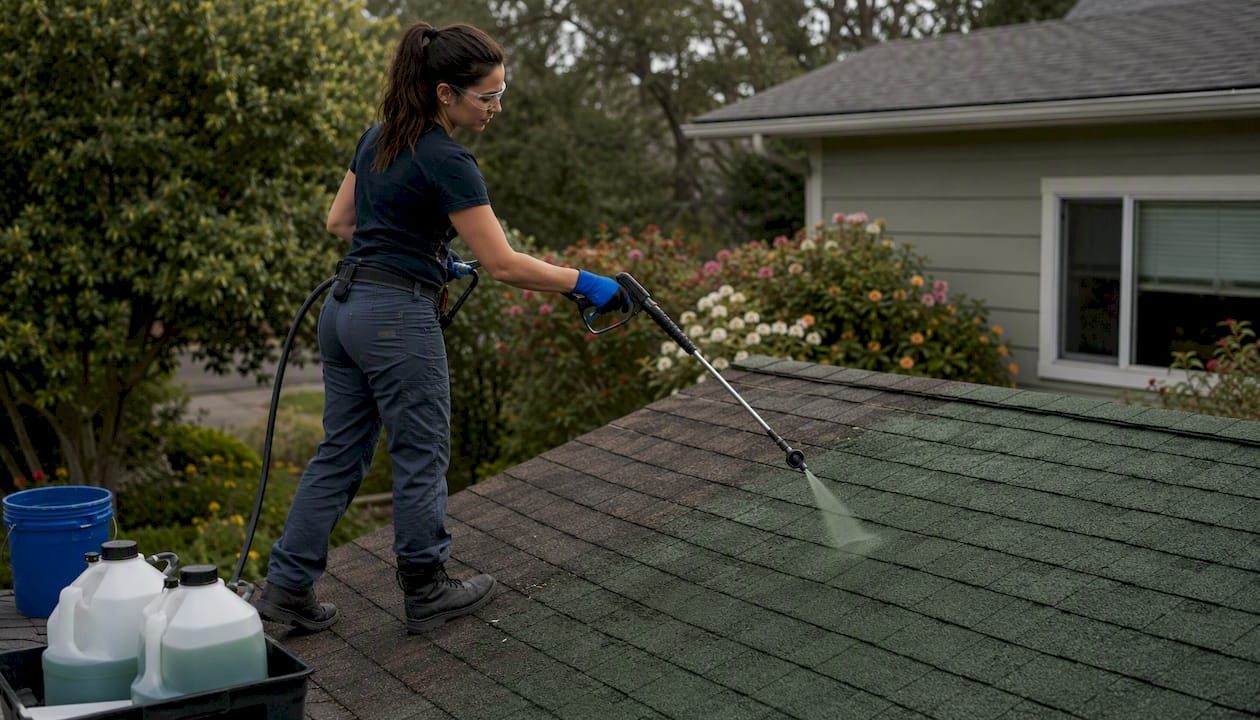
4. Gutter cleaning and moss or algae removal Clogged gutters back up water against the fascia and accelerate shingle deterioration. Moss removal with a zinc sulfate treatment or low-pressure wash costs $150–$400. Worth doing before any preservation treatment.
5. Professional preservation and rejuvenation treatment This is where the math gets interesting. Professional rejuvenation treatments typically cost $500–$1,500 for an average residential roof and can add up to about five years of life per application when the shingles are eligible. The treatment replenishes maltenes, the natural oils that keep asphalt flexible, improving granule adhesion and reducing brittleness. It does not fix active leaks or replace missing shingles, but for a roof that is aging but structurally sound, it is the most cost-effective lifespan extension available.
6. Ventilation upgrades Poor attic ventilation accelerates shingle aging from the inside out by trapping heat. Adding ridge vents or soffit vents costs $300–$600 and can meaningfully slow deterioration. Often overlooked as part of common roofing upgrade trends that extend shingle life.
7. Partial overlay or sectional replacement When one slope or section is badly damaged but the rest of the roof is sound, replacing that section costs $1,500–$4,000 depending on size. Local codes may restrict overlays to one layer over existing shingles; check before proceeding.
8. Full roof replacement The most invasive and expensive option, typically $15,000–$30,000 for a South Florida home. Necessary when damage is structural, widespread, or the roof has exceeded its design life. Repairs are best for isolated damage; repeated repairs that accumulate toward replacement cost are a clear signal to stop patching and plan for a full tear-off.
Quick note on cosmetic sprays: Some products marketed as "roof coatings" or "sealants" are sold at hardware stores for under $50. These do not replenish maltenes, do not restore flexibility, and do not stop active leaks. They are not a substitute for professional preservation treatment.
How do you inspect an old roof yourself without getting on it?
A safe, ground-level inspection takes about 20 minutes and gives you enough information to decide your next move. You do not need to climb on the roof.
Inspection day checklist:
- Gather your tools. Binoculars, a smartphone for photos, and a flashlight for the attic.
- Walk the perimeter at ground level. Look at each slope from multiple angles. Note any shingles that appear curled at the edges, buckled in the middle, or visibly cracked.
- Check the gutters. Granules in the gutter are normal in small amounts after a storm, but a thick layer of dark grit is a sign of accelerated granule loss. This is one of the earliest signs of shingle degradation worth documenting.
- Look for missing or displaced shingles. Even one or two missing shingles expose the underlayment and decking to water.
- Check around penetrations. Chimneys, vents, skylights, and pipe boots are the most common leak entry points. Look for lifted or cracked flashing from the ground.
- Go into the attic. With a flashlight, look for water stains on the sheathing, daylight coming through the roof boards, or any soft spots in the decking visible from below.
- Photograph everything. Wide shots of each slope, close-ups of problem areas, and gutter contents. These photos are what a preservation assessor or roofer will want to see first.
Simple condition scoring:
| Score | What you see | Likely action |
|---|---|---|
| Green (7–10) | Minor granule loss, flat shingles, no leaks | Monitor annually; consider preservation |
| Yellow (4–6) | Curling edges, moderate granule loss, isolated cracks | Targeted repairs + preservation assessment |
| Red (1–3) | Sagging, widespread cracking, active leaks, missing shingles | Call a licensed roofer for structural inspection |
Pro Tip: When photographing for a preservation assessment, shoot each slope from a 45-degree angle in good morning light. This angle catches curling and surface texture far better than a straight-on shot, and it gives the assessor a clearer read on shingle condition without a ladder.
Safety note: never walk on an aging asphalt shingle roof without professional training and proper equipment. A roof assessment from a certified professional is always the safer and more accurate option.
When should you repair, restore, or replace your roof?
The decision comes down to three factors: how much of the roof is damaged, how old it is, and whether the underlying structure is sound.
Age bands as a starting point:
- 10–18 years old, shingles mostly intact: Strong candidate for preservation or targeted repairs. Roofs in this age range with intact shingles can often be restored rather than replaced.
- 18–25 years old, widespread curling or brittleness: Preservation is unlikely to be effective. Plan for replacement within 2–3 years and prioritize repairs that prevent interior water damage in the meantime.
- 25+ years old: Most asphalt shingles have reached or exceeded their design life. Replacement is usually the right call unless a recent inspection confirms the structure is sound.
The 25–30% damage rule:
Industry inspectors use a common threshold: when more than 25–30% of the roof surface shows damage, replacement is typically the safer and more cost-effective long-term choice. Patching a roof that is more than a quarter damaged tends to be a short-term fix that delays an inevitable larger expense.
Decision rules at a glance:
- Repair if damage is isolated to one or two areas, the roof is under 18 years old, and the decking is dry and solid.
- Preserve if the roof is 10–18 years old, shingles are intact but aging, and there are no active leaks or structural issues.
- Replace if damage covers more than 25–30% of the surface, the decking is soft or rotted, or recurring repairs are approaching the cost of a new roof.
For guidance on when replacement indicators become clear, a second opinion from a certified inspector is worth the time before committing to either path.
What does roof preservation actually do, and what are its limits?
Preservation and rejuvenation are not the same as a repair. They are a maintenance strategy for shingles that are aging but structurally sound.
Here is how it works: asphalt shingles contain maltenes, natural oils that keep the asphalt flexible and help granules stay bonded to the surface. Over time, UV exposure, heat, and rain drive those oils out of the shingle. The shingle becomes brittle, granules loosen, and edges begin to curl. A bio-based preservation treatment, such as Fresh Roof Green Soy Technology, replenishes those maltenes, restoring flexibility at the molecular level and improving granule adhesion.
What preservation can do:
- Restore shingle flexibility and reduce brittleness
- Slow granule loss and extend surface life
- Improve wind and fire resistance on qualifying roofs
- Add up to five years of life per professional application
What it cannot do:
- Fix active leaks or water intrusion already occurring
- Replace missing or severely damaged shingles
- Repair rotted or compromised roof decking
- Work on non-asphalt surfaces (metal, tile, TPO, or flat membrane roofs)
Eligibility criteria for preservation:
- Roof is roughly 10–18 years old
- Shingles are intact, with limited granule loss and no widespread curling
- No active leaks or structural damage to the decking
- No more than isolated shingle failures
Pro Tip: Ask any preservation applicator whether their treatment is a single-application product or part of a recurring maintenance cycle. Marketing claims of 15 extra years from a single treatment are upper-bound scenarios; effective preservation is a recurring strategy applied every 5 years or so, not a one-time cure.
DIY repairs vs hiring a professional: what's safe and what's not?
Some tasks are genuinely safe for a careful homeowner. Others carry real risk, both physical and financial, if done without the right training or tools.
Safe DIY tasks:
- Cleaning gutters and downspouts
- Photographing the roof from ground level or a ladder at the eave
- Replacing one or two accessible shingles on a low-slope section (if you are comfortable on a ladder and the roof pitch is gentle)
- Applying zinc strips near the ridge to slow moss growth
Tasks that need a licensed or certified professional:
- Flashing replacement around chimneys, skylights, or valleys
- Any repair involving the roof decking or structural sheathing
- Professional preservation or rejuvenation application
- Full or partial roof replacement
Red flags that mean call a professional today:
- Any section of the roof deck that feels soft or spongy
- Visible sagging from the ground or inside the attic
- Active water stains spreading on attic sheathing
- Mold or mildew smell in the attic
- Widespread granule loss across multiple slopes
Certified applicators and manufacturer-aligned contractors can unlock enhanced warranty coverage and provide documentation that insurers or future buyers may find valuable. GAF's guidance on residential roof repairs reinforces that certification and documentation matter, especially when a claim or sale is on the horizon.
Questions to ask any preservation applicator or contractor:
- Are you a certified applicator for the treatment you are recommending?
- What warranty does the treatment carry, and is it transferable to a new owner?
- Will you provide before-and-after photographic documentation?
- What happens if the roof does not qualify after inspection?
- Do local codes require a permit for the scope of work you are proposing?
A note on permits: most spot repairs and preservation treatments do not require permits, but partial overlays and full replacements typically do. Check with your local building department before any large-scale work begins.
How Shingleroofrenewal's certified preservation process works
Shingleroofrenewal uses a documented three-step process designed to give homeowners a clear answer before any money changes hands.
Step 1: Free roof inspection A certified technician visits your home, photographs every slope, checks the gutters, and inspects the attic for moisture or structural issues. You get a written condition report, not a sales pitch.
Step 2: Condition assessment and qualification The technician scores the roof against a documented eligibility checklist. Qualifying roofs are those with intact asphalt shingles, no active leaks, limited granule loss, and no structural damage to the decking. If your roof does not qualify, Shingleroofrenewal will tell you honestly and explain why.
Step 3: Certified application of Fresh Roof Green Soy Technology For qualifying roofs, the treatment is applied by a certified applicator. Fresh Roof Green Soy Technology penetrates the shingle at the molecular level, restoring maltene content, improving flexibility, locking in granules, and enhancing wind and fire resistance.
What qualifying homeowners get:
- A roof that lays flatter and resists wind uplift more effectively
- Improved granule retention and reduced brittleness
- A 6-year transferable warranty that stays with the house if you sell
- Significant cost savings compared to a typical full replacement costing tens of thousands of dollars.
Choosing preservation over an unnecessary tear-off also keeps tons of asphalt shingle waste out of landfills, a real environmental benefit that restoration-focused approaches consistently deliver over immediate replacement.
Key Takeaways
Preservation-first is the most cost-effective approach for aging asphalt shingle roofs that are intact, with targeted repairs for isolated damage and replacement reserved for roofs where more than 25–30% of the surface is compromised or the decking is structurally unsound.
| Point | Details |
|---|---|
| Preservation beats replacement for intact roofs | Roofs aged 10–18 years with intact shingles are strong candidates for preservation treatment before replacement. |
| The 25–30% damage rule | When more than 25–30% of the roof surface is damaged, replacement is typically the more cost-effective long-term choice. |
| Professional rejuvenation costs | Professional treatments run $500–$1,500 and can add up to five years of life per application on eligible shingles. |
| Preservation does not fix active leaks | Rejuvenation restores aging shingles; active leaks and structural damage require repairs first. |
| Shingleroofrenewal's certified process | Free inspection, documented condition assessment, and certified Fresh Roof Green Soy Technology application backed by a 6-year transferable warranty. |
Why "call us before you call the roofer" is the right advice
Most homeowners I talk to assume their only options are "live with it" or "replace it." That framing costs them money. The preservation window, that 10–18 year range where shingles are aging but still structurally sound, is real, and it closes faster than people expect.
What gets overlooked is that a $500–$1,500 preservation treatment is not just cheaper than a $20,000 replacement. A preservation treatment costs $500–$1,500 and can add up to five years of life per application on eligible shingles. You get to plan the replacement on your schedule, not because a storm forced your hand or a leak finally got bad enough to ignore. That kind of financial control matters, especially in South Florida where storm season does not wait.
The other thing worth saying plainly: not every roof qualifies, and any company that tells you otherwise before inspecting it is not being straight with you. The honest answer is always "let us look first." A documented inspection protects you whether the roof qualifies for preservation or not, because you walk away knowing exactly what you are dealing with.
Find out if your roof qualifies for a free inspection
Shingleroofrenewal offers homeowners in Broward and Palm Beach counties a free on-site roof inspection with no obligation. The inspection includes a photographic condition report, a qualification recommendation for Fresh Roof Green Soy Technology, and a ballpark cost comparison against full replacement.
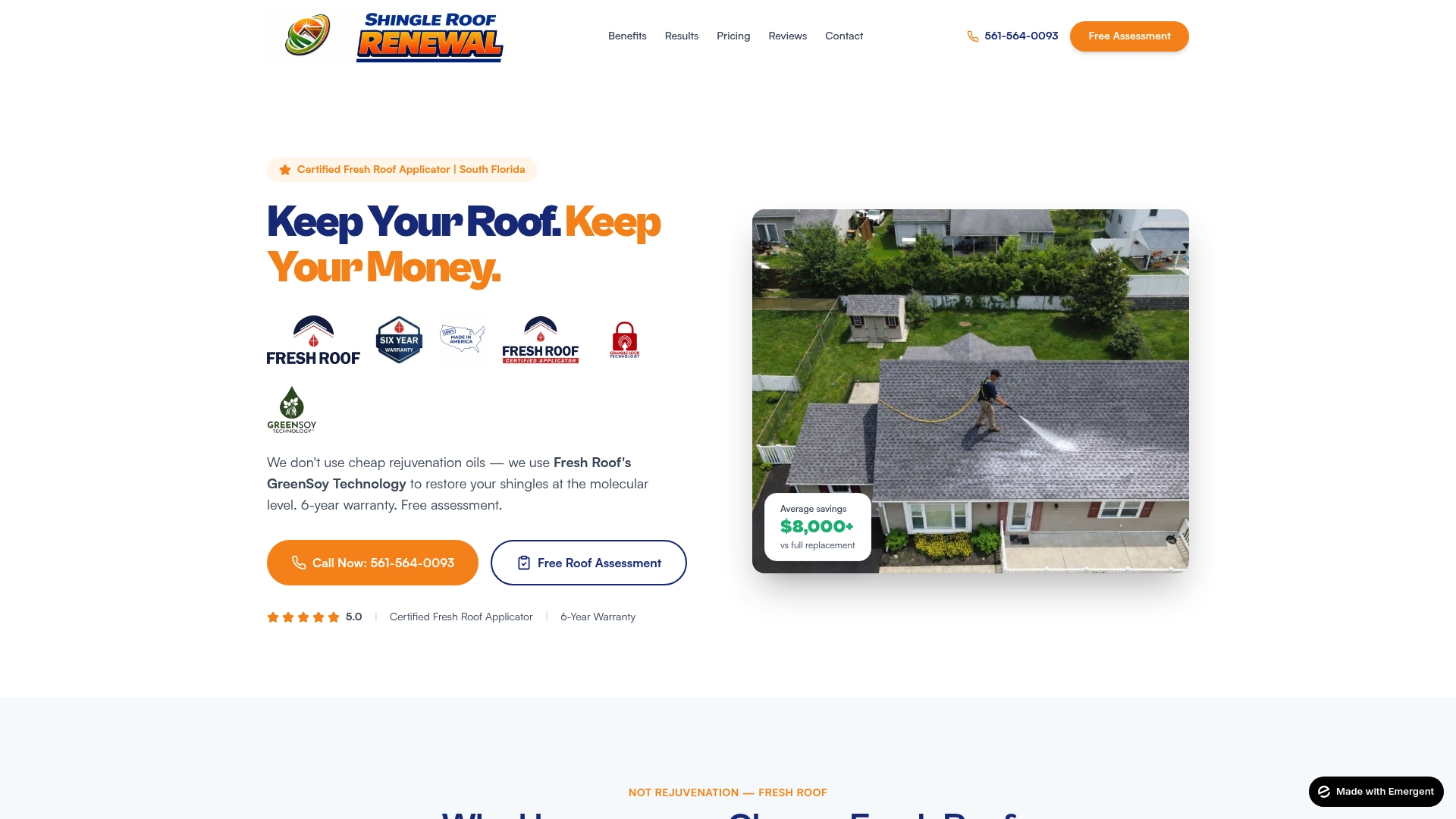
Qualifying roofs are backed by a 6-year transferable warranty that stays with the home if you sell. For most homeowners, the savings versus a full replacement are substantial. With South Florida's storm season putting roofs under stress every year, catching a deteriorating roof early is the difference between a preservation job and an emergency replacement.
Schedule your free roof inspection today and find out if your roof qualifies. The assessment is free, the report is yours to keep, and there is no pressure to proceed.
Useful sources and further reading
- Are roof rejuvenation products a good investment for asphalt roofs? — NRCIA — Industry guidance on when rejuvenation adds value and its documented limits.
- Asphalt Shingle Reroofing: Replacement vs. Recover — ARMA — The Asphalt Roofing Manufacturers Association's technical overview of overlay vs. full replacement options.
- Understanding residential roof repairs — GAF — Manufacturer-level guidance on repair vs. replacement decisions and the value of certified contractors.
- What is roof aging? A guide for South Florida homeowners — Shingleroofrenewal Blog — How Florida's climate accelerates shingle degradation and what early warning signs to watch for.