

Yes, attic ventilation affects how long your shingles last. Balanced ventilation, paired with correct air sealing and insulation, helps preserve asphalt shingle life by keeping the roof deck cooler and drier, according to guidance from ARMA, Building Science Corporation, and the Department of Energy. Start by checking your attic's intake and exhaust balance, and seal the major attic penetrations before you touch anything else.
TL;DR:
- Proper attic ventilation, combined with accurate air sealing and insulation, can extend asphalt shingle lifespan by reducing heat buildup and controlling moisture.
- A balanced ventilation system should have a 1:150 ratio of net-free vent area to attic floor space, with intake and exhaust vents properly proportioned and unobstructed.
- Fixing leaks, sealing penetrations, and maintaining clear soffit intake are essential steps before adding or upgrading vents to ensure effective airflow.
- Ventilation alone cannot reverse significant shingle damage or decay; a professional assessment helps determine if preservation treatments are suitable.
- Homeowners should prioritize addressing ventilation issues as part of overall attic sustainability, not as a substitute for proper insulation, sealing, or shingle replacement where needed.
Table of Contents
- How Ventilation Affects Shingle Life
- Ventilation Basics Every Homeowner Should Know
- Insulation and Air Sealing Have to Work With Ventilation, Not Against It
- Signs Your Attic Ventilation or Moisture Balance Is Off
- Practical Ventilation Upgrades and What to Fix First
- What Ventilation Can't Fix
- How a Roof Assessment and Preservation Path Works
- Setting Realistic Expectations for Ventilation
- Get a Free Roof Assessment Before You Call a Roofer
- Sources
- FAQ
How Ventilation Affects Shingle Life
Heat is the enemy your shingles fight every single day, and a poorly ventilated attic hands the enemy a bigger weapon. When hot air gets trapped under the roof deck, shingle temperatures climb along with it. Asphalt ages chemically through a heat-driven process, so even modest temperature increases speed up the clock on your roof.
Building Science Corporation reports that shingles on unvented assemblies typically run a few degrees Fahrenheit hotter than vented ones, and that this heat difference translates to roughly a 10% reduction in useful shingle service life under otherwise equal conditions. That is a meaningful chunk of a 20 or 25 year roof, and it comes purely from trapped heat, not storm damage or bad installation.
Pro Tip: A roof that faces south or has dark shingles already runs hotter than one that faces north with lighter granules. Building Science notes that color and orientation can affect aging more than ventilation alone, so if your roof checks both boxes, ventilation matters even more.
Heat isn't the only threat. Moisture builds up in attics that can't breathe properly, and that moisture condenses on cold surfaces, soaks insulation, and feeds mold growth. The Department of Energy identifies moisture as the attic's primary enemy, pointing to wet insulation, mold, and warped soffits as the telltale warning signs. Wet insulation stops insulating. Damp wood decays. None of that helps your shingles or the deck underneath them.
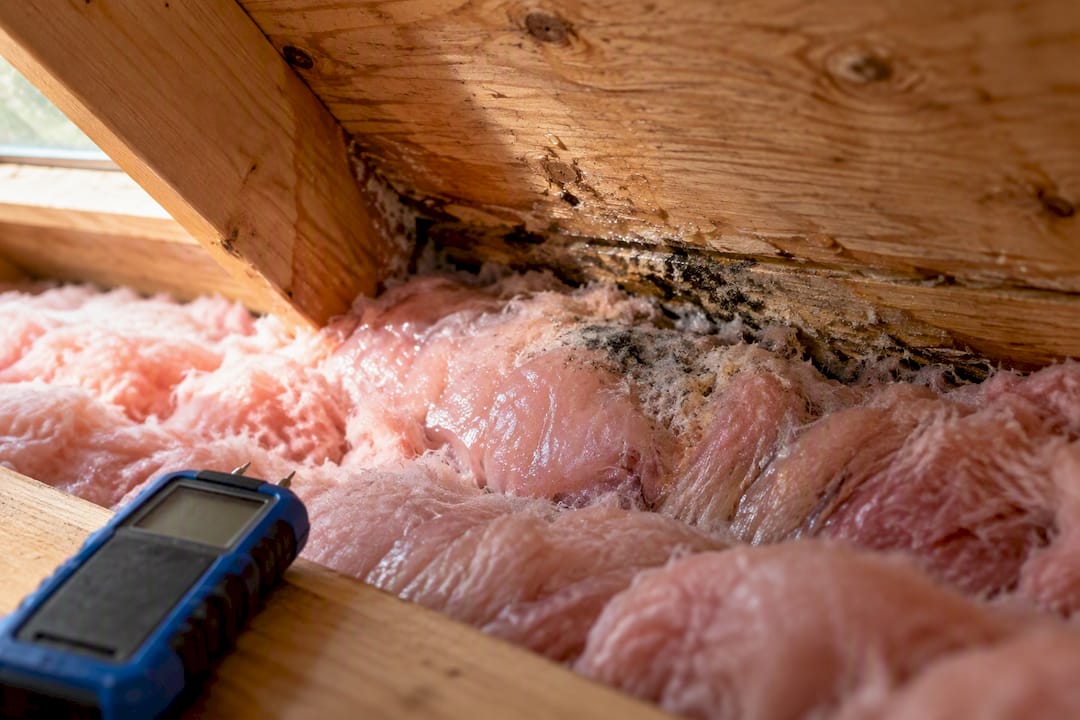
Roofing contractors who inspect attics for a living often see life reductions that go beyond the 10% lab figure, especially on homes with severely blocked soffits or missing baffles. Your attic and your neighbor's may be built the same, but if one has clear intake channels and the other has insulation stuffed into the eaves, they will not age the same way. This underscores how energy efficiency and attic performance go hand in hand with shingle durability, particularly in hot climates.
Ventilation Basics Every Homeowner Should Know
Building codes and manufacturers size attic ventilation using a measurement called net-free vent area, or NFVA. It sounds technical, but the concept is simple: it's the actual open area through which air can pass, not the size of the vent cover you see from the ground.
ARMA sets the common design target at 1 square foot of NFVA for every 150 square feet of attic floor area, known as the 1:150 ratio. Some homes qualify for a more relaxed 1:300 ratio, but only when specific conditions are met, including a proper vapor retarder on the attic floor and a balanced split between high and low vents. Skip either condition and 1:300 leaves your attic under ventilated.
A few more things worth knowing before you talk to an inspector or contractor:
- The "net" in net-free area already accounts for screens, louvers, and paint buildup, all of which shrink the usable opening.
- A vent that looks generous from the driveway can still be undersized once you subtract those obstructions.
- Continuous soffit intake paired with a ridge vent is generally the most reliable combination for even airflow.
- Balanced systems aim for roughly 50 to 60% of NFVA at intake (soffit) and 40 to 50% at exhaust (ridge, box vents, or turbines).
- Box vents and turbines can work, but they rarely move air as evenly as a continuous ridge system.
Get that intake and exhaust ratio wrong, and the rest of your ventilation plan struggles no matter how good the exhaust vents look.
Insulation and Air Sealing Have to Work With Ventilation, Not Against It
Ventilation, insulation, and air sealing are one system, not three separate projects. Tackle them in the wrong order, and you can undo the benefits of each.
The sequence that actually works starts with repairing any active leaks or weatherproofing issues, then air sealing the attic floor, and only then adding or upgrading insulation while protecting the intake channels with baffles. The Department of Energy's durable-attic guidance walks through this exact order for good reason: seal first, insulate second, and never let insulation block the path air needs to travel from soffit to ridge.
Common penetrations that need sealing before insulation goes in include:
- Top plates where interior walls meet the attic floor
- Recessed light fixtures that aren't rated for insulation contact
- Duct penetrations and plumbing stacks running through the ceiling
- Attic hatch and whole-house fan openings
Pro Tip: If you're adding insulation yourself or hiring someone to blow it in, ask specifically about baffles at the eaves. Without them, loose insulation drifts into the soffit opening and chokes off intake air within a season or two, even if the ventilation was designed correctly.
Unvented attic assemblies exist and can work, but they trade passive airflow for closed-cell spray foam applied directly to the roof deck, which requires careful design and is governed by IRC code provisions. Field testing of unvented roofs has shown higher moisture content and mold risk in some cold-climate assemblies compared to properly vented ones. That's not a reason to panic, but it is a reason to leave unvented conversions to a qualified building professional rather than a weekend project.
Signs Your Attic Ventilation or Moisture Balance Is Off
Check these before you spend money on a partial fix:
- Exterior clues. Look for bubbled or peeling paint on the soffit and fascia, warped or sagging soffit panels, and shingles near the roof edge that look more worn, curled, or granule-bare than the rest of the roof.
- Attic clues. Climb up (safely) and look for wet or compacted insulation near the eaves, any mold or mildew smell, soffit vents blocked by insulation or debris, and attic air that feels noticeably hotter than the outdoor temperature.
- The decision rule. If you spot two or more of these signs, schedule a professional assessment before spending money on isolated fixes like a single new vent or a quick insulation top-up.
A roof longevity checklist can help you track these signs over time instead of relying on memory during your next attic trip.
Practical Ventilation Upgrades and What to Fix First
Homeowners often want to jump straight to adding a ridge vent or a powered fan. Resist that urge. The order in which you fix attic problems determines whether the fix actually works.
Here's the priority list that lines up with how ARMA and DOE both frame the problem:
- Stop active leaks and repair flashing first. Ventilation can't compensate for water getting in from a damaged roof.
- Air seal attic floor penetrations before anything else touches the insulation.
- Confirm soffit intake is clear and install baffles if insulation has crept into the eaves.
- Add or upgrade balanced exhaust, ideally a continuous ridge vent, matched to the intake you just confirmed.
- Recalculate your NFVA once all the pieces are in place to confirm you're hitting the 1:150 target.
Pro Tip: Adding exhaust vents without fixing intake is one of the most common ventilation mistakes. ARMA's guidance treats ventilation as a system, noting that exhaust-only upgrades commonly fail to improve airflow when soffit intake stays blocked.
Be cautious with powered attic fans too. Without adequate intake, a powered fan can pull replacement air through ceiling gaps and light fixtures instead of drawing it across the roof deck the way it's supposed to, according to ARMA's field guidance. Fix the passive system before you add power to it.
Done correctly, these upgrades lower attic temperatures, cut moisture buildup, and slow the aging clock on your shingles. What they won't do is reverse damage that's already happened. For homeowners weighing the numbers, cost-effective roofing solutions that combine ventilation fixes with preservation treatment tend to stretch a roof's remaining life further than ventilation fixes alone.
What Ventilation Can't Fix
Ventilation protects the roof assembly. It doesn't rebuild shingles that have already lost their flexibility, shed heavy granules, or sit over a compromised deck. Once asphalt has gone brittle and started to crack or curl, airflow alone won't restore it.
That's the line between a ventilation fix and a preservation candidate:
- Good preservation candidate: no active leaks, shingles still retain meaningful flexibility, deck is structurally sound.
- Likely needs replacement: widespread cracking, heavy granule loss down to the mat, soft or sagging deck areas, or leaks that have gone untreated for years.
The qualities that make shingles last longer include more than airflow. Material quality, installation, and timely maintenance all factor in. Ventilation fixes combined with a preservation treatment maximize what's left in a roof that still qualifies, which is exactly why a professional assessment matters more than guessing from the ground.
How a Roof Assessment and Preservation Path Works
Before assuming your roof needs a full tear off, get it looked at. Shingleroofrenewal's process runs in three steps: we inspect the roof, assess its condition, and recommend whether it qualifies for renewal instead of replacement. As a certified Fresh Roof applicator, we back qualifying jobs with a 6-year transferable warranty. A qualified roof assessment tells you where you actually stand before you spend a dollar on replacement.
Setting Realistic Expectations for Ventilation
Ventilation is high-value, preventive, and cheap compared to a tear off. It is not a miracle cure. Pair it with air sealing, correct insulation, and an honest inspection, and you'll get the most out of whatever life your shingles have left.
— Daniellison
Get a Free Roof Assessment Before You Call a Roofer
Most homeowners assume ventilation problems mean an automatic replacement. That's rarely true. Shingleroofrenewal exists for exactly this gap: we're the call you make before the roofer, checking whether your roof still has flexible, sound shingles worth preserving instead of tearing off.

Our Free Roof Assessment covers both the ventilation issues this article walks through and the shingle condition itself, so you get one clear answer instead of guessing between two problems. If your roof qualifies, our certified Fresh Roof Green Soy Technology restores shingle flexibility and locks in granules, backed by a 6 year transferable warranty, at a fraction of full replacement cost. Homeowners in Boca Raton, Delray Beach, Plantation, and across Palm Beach and Broward counties can schedule an inspection to find out where their roof actually stands. If you're comparing preservation against a traditional rejuvenation product, our Fresh Roof vs. rejuvenation breakdown explains the difference. Schedule your free assessment today and find out if your roof qualifies for renewal.
Sources
- Attic Space Ventilation in Steep Slope Asphalt Roof Systems (ARMA white paper)
- BSD-102: Understanding attic ventilation (Building Science Corporation)
- Durable attics: guide for homeowners (U.S. Department of Energy)
FAQ
How Long Should Roof Vents Last?
Most roof vents made of metal or durable plastic last as long as the roofing system itself, typically 20 years, provided they aren't cracked, crushed, or blocked by debris. Check them during any roof inspection since a failed vent undermines the whole ventilation system regardless of age.
Does a 30 Year Shingle Really Last 30 Years?
Rarely, in real-world conditions. The lab-tested lifespan reflects ideal conditions, but factors like heat, poor attic ventilation, and climate typically shorten actual field life, sometimes significantly, as this breakdown of rated versus actual shingle lifespan explains in more detail.
What Is the 25% Rule for Roofing?
The 25% rule is a common code interpretation stating that if more than 25% of a roof is being re-covered or repaired, some jurisdictions require the entire roof to meet current code, which can include ventilation upgrades. Rules vary by local jurisdiction, so check with your local building department for the exact threshold that applies to your home.
How Many Vents Should a 2,000 Square Foot House Have?
The number depends on net-free vent area, not a fixed vent count. Using ARMA's 1:150 ratio, attic size and vent requirements vary. The NFVA should be split close to 50/50 between soffit intake and ridge or exhaust vents, with the exact number of vent units depending on each vent's rated net-free area.
Can Ventilation Alone Fix an Aging Shingle Roof?
No. Ventilation slows the aging process and protects the roof deck, but it can't restore shingles that have already lost flexibility or shed significant granules. A free roof assessment determines whether your roof qualifies for preservation treatment instead of full replacement.