
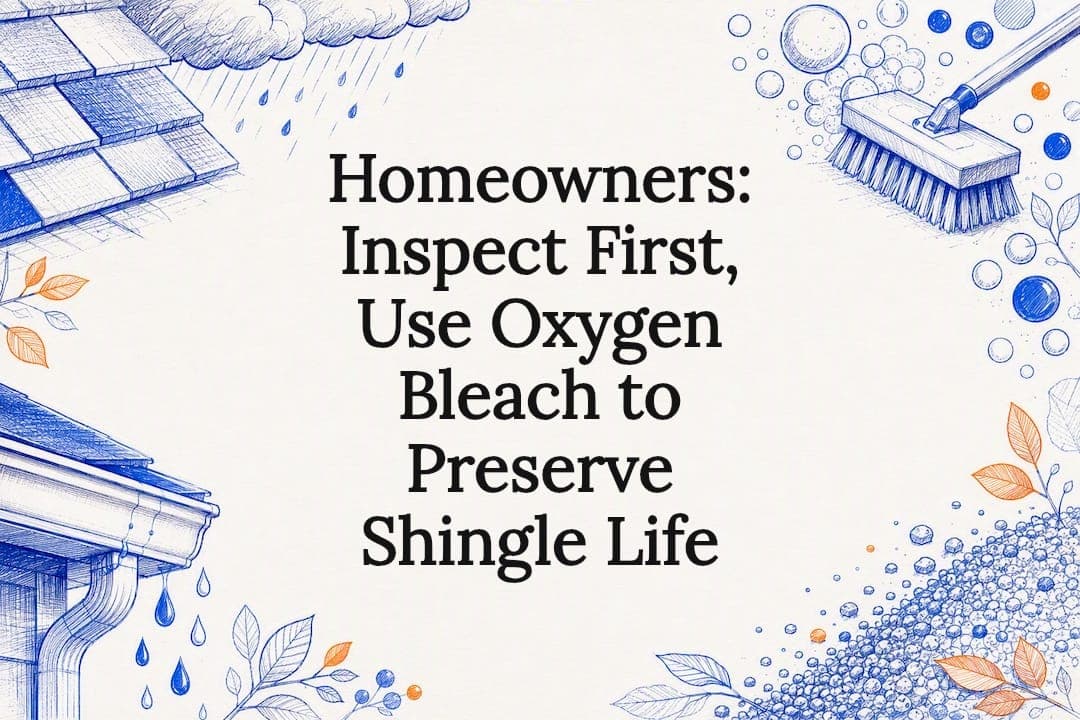
For most asphalt shingle roofs, oxygen bleach (sodium percarbonate) is the safer default because it protects granules and landscaping while still clearing algae and mildew. Chlorine bleach (sodium hypochlorite) still has a place for severe, established growth, but only when a trained applicator dials in the concentration and uses a soft-wash method. Either way, the roof's condition should drive the decision, so a quick inspection before you clean matters more than the brand of cleaner in the sprayer.
TL;DR:
- Oxygen bleach is safer for landscaping and relies on multiple applications to remove dense moss and lichen, while chlorine bleach handles heavy infestations quickly but risks shingle damage.
- Proper application involves testing a small area, diluting to 3-6%, applying with low pressure, and thoroughly rinsing to prevent granule loss and warranty violations.
- Chlorine runoff harms plants and waterways, making oxygen bleach the preferred choice for yards with mature landscaping or shared drainage systems.
- Pressure washing significantly shortens shingle lifespan and should be avoided, as it strips granules and accelerates roof deterioration.
- Homeowners should get a professional roof assessment to determine if cleaning is suitable or if preservation efforts to restore shingle flexibility are necessary before attempting DIY cleaning.
Table of Contents
- Chlorine vs Oxygen Bleach: Pros, Cons, and When Each Makes Sense
- How Do You Safely Apply Roof-Cleaning Bleach?
- Does Bleach Damage Shingles Long-Term?
- What Happens to Runoff From Roof Cleaning?
- When Should You DIY vs Call a Preservation Pro?
- Get a Free Roof Assessment Before You Reach for Bleach
- Sources
- FAQ
Chlorine vs Oxygen Bleach: Pros, Cons, and When Each Makes Sense
The two chemistries do the same basic job. Sodium hypochlorite and sodium percarbonate both kill the algae and mildew responsible for those dark streaks and green haze on Sun Belt roofs. How they get there, and what they leave behind, is where the real decision lives.
Chlorine bleach works fast. It bleaches heavy algae, moss, and lichen on contact and is often the only realistic option for infestations that have been building for years. That speed comes with tradeoffs: sodium hypochlorite is harsher on landscaping, can corrode metal flashing and gutters, and strips protective granules when it's overconcentrated or left to sit too long. Sodium hypochlorite stock at 12.5% is typically diluted down to roughly 3 to 6% at the shingle surface for a reason. Full-strength solutions belong nowhere near a roof.
Oxygen bleach is the gentler cousin. It releases hydrogen peroxide and soda ash as it works, which makes it biodegradable and far friendlier to plants below the roofline, but the tradeoff is time. Oxygen-based cleaners often need repeat applications or manual agitation to clear dense moss and lichen, and results can take days to fully show.
Use these rules of thumb to pick a lane:
- Choose oxygen bleach when landscaping is close to the roofline, when the growth is light to moderate, or when preserving shingle life is the priority.
- Reserve chlorine bleach for deep, stubborn infestations, and only through a soft-wash method applied by someone trained to handle it.
- Never assume stronger is better. A weaker mix applied correctly beats a strong mix applied carelessly, every time.
How Do You Safely Apply Roof-Cleaning Bleach?
Concentration and delivery matter more than which chemical you choose. Household bleach runs 5 to 8% sodium hypochlorite, but that strength is too aggressive straight from the jug. Professionals dilute concentrated stock down to a surface-level range and never spray it at full strength.
Here's the safe sequence to follow:
- Test a small, hidden section first. Wait 10 to 15 minutes to check for discoloration before treating the whole roof.
- Mix to the recommended surface concentration. Aim for roughly 3 to 6% sodium hypochlorite at the shingle surface, or follow the oxygen product's label ratio.
- Add a surfactant. This helps the solution cling to a sloped surface instead of running off before it can work.
- Apply with a low-pressure soft-wash pump, never a pressure washer. Pressure washing strips protective granules and can shorten shingle life by roughly 20 to 30%, according to the Asphalt Roofing Manufacturers Association.
- Let it dwell. Chlorine typically shows visible bleaching fast; oxygen bleach needs a longer sit, sometimes with light scrubbing.
- Rinse thoroughly with low pressure and protect runoff areas below.
Concentrated sodium hypochlorite calls for real safety gear: chemical-resistant gloves, splash goggles, and a respirator when mixing. Some states also require pesticide applicator licensing for commercial roof cleaning, which is one more reason DIY chlorine work carries more risk than it looks like from the ground.
Pro Tip: Skip cleaning day entirely if rain is forecast within 24 hours. A downpour right after application washes away the solution before it finishes working and sends concentrated runoff straight into your yard.
Does Bleach Damage Shingles Long-Term?
Chemistry choice affects more than curb appeal. It affects how long your roof actually lasts, and how your manufacturer warranty treats the cleaning you just paid for.
High-concentration chlorine and long dwell times can erode the granules that shield asphalt shingles from UV rays, speeding up brittleness and cracking. The bigger threat, though, isn't the chemical at all. It's the pressure washer that so often gets paired with it. The Asphalt Roofing Manufacturers Association's warning about a 20 to 30% reduction in shingle lifespan from pressure washing shows up across nearly every serious source on roof cleaning, and it's the single biggest mistake homeowners make.
A few signs mean cleaning has crossed from cosmetic fix into cover-up:
- Granules visibly collecting in gutters or at downspouts after rinsing
- Shingle edges that curl, lift, or feel brittle to the touch
- Color that looks faded or blotchy rather than restored after treatment
- Algae or mildew returning within weeks of a professional clean
If you spot any of that, you're not looking at a cleaning problem anymore. You're looking at a granule loss issue that no amount of bleach will fix. Check your manufacturer's warranty language before hiring anyone. Some warranties specify approved cleaning methods, and keeping a written record of any professional treatment protects you if you ever need to file a claim.
What Happens to Runoff From Roof Cleaning?
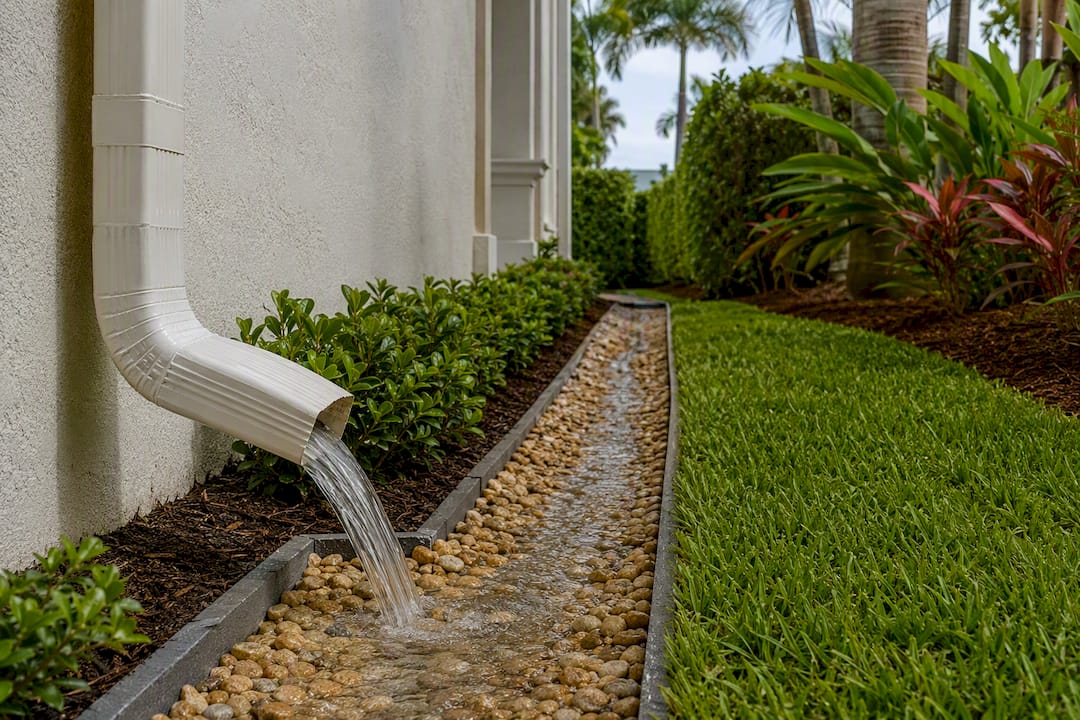
Chlorine's environmental footprint is the sharper edge of the comparison. Sodium hypochlorite runoff is tougher on plants, grass, and nearby ponds or canals, which matters a lot in yards with mature landscaping. Oxygen bleach breaks down into soda ash and water, making it the more forgiving option when a garden bed sits directly under the drip line.
A few practical habits protect your yard no matter which cleaner you use:
- Pre-wet vulnerable plants and cover the most sensitive ones with plastic sheeting before starting.
- Divert or dam runoff away from garden beds during the rinse.
- Skip application on windy days, since overspray travels further than you'd expect.
- Rinse thoroughly and consider a neutralizing agent for chlorine runoff before it reaches soil.
If you share a fence line with a neighbor's yard or a shared drainage area, oxygen bleach is generally the better-mannered choice. It's the same logic homeowners use when protecting fabric or awnings from mold without harsh runoff: gentler chemistry, applied carefully, usually beats brute force.
When Should You DIY vs Call a Preservation Pro?
Light staining on an accessible, gentle slope, treated with a diluted oxygen cleaner and careful runoff control, is a reasonable DIY project. Once you see granule loss, curling, brittleness, or growth that keeps coming back after treatment, you're past a cleaning problem. That's a preservation conversation. Shingle Roof Renewal's process starts there: inspect the roof, assess its actual condition, then recommend whether cleaning, preservation, or something more is the right move, before you spend money on the wrong fix.
— Daniellison
Get a Free Roof Assessment Before You Reach for Bleach
Shingle Roof Renewal is is n't a roof cleaning company, and we're not the crew you call to spray bleach on your shingles. We're the company you call before that decision, so you know whether your roof can handle it in the first place.
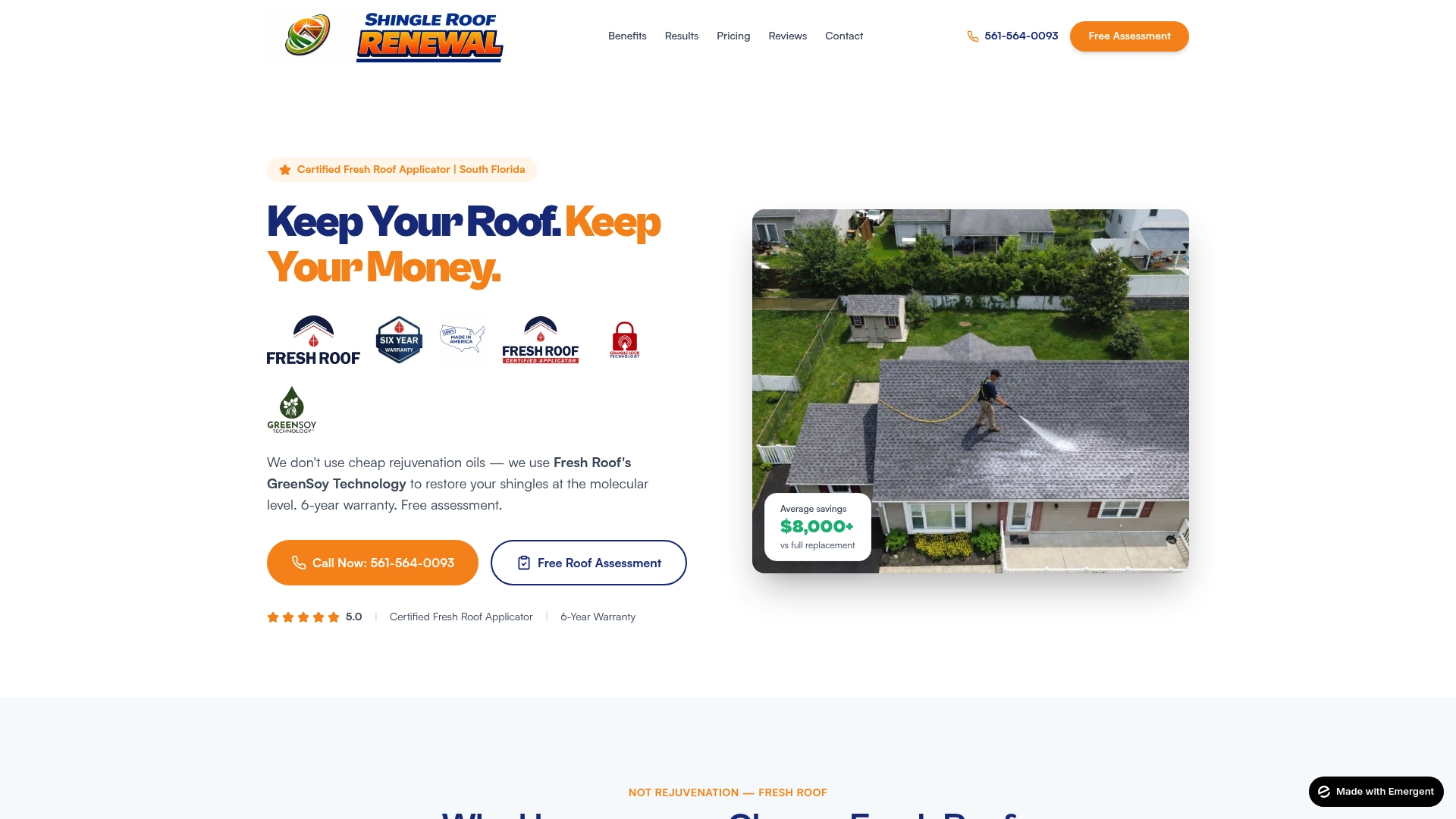
Our process starts with a free inspection, followed by an honest assessment of your shingles' flexibility and remaining life. If your roof qualifies for preservation instead of a full tear-off, that distinction can be worth thousands of dollars. Homeowners dealing with early to moderate granule loss, mild curling, or stubborn algae stains that keep returning are exactly who this service is built for. Chemistry alone won't fix brittle shingles. Restoring flexibility at the material level might. Call us before you call the roofer, and schedule your free roof assessment to find out where your roof actually stands.
Sources
- Asphalt Roofing Manufacturers Association - Algae and Moss prevention / cleaning asphalt roofing systems
- Roof cleaning chemicals safe for shingles — expert guide
- How to clean roof shingles with bleach — RoofScour
FAQ
Is oxygen bleach safe for asphalt shingle roofs?
Yes. Oxygen bleach (sodium percarbonate) is biodegradable and gentler on both shingles and surrounding landscaping than chlorine bleach, though it works more slowly on heavy growth.
Which is stronger, chlorine bleach or oxygen bleach?
Chlorine bleach acts faster and handles heavier algae and lichen infestations more efficiently, but oxygen bleach is safer for plants, metal fixtures, and shingle granules when time isn't a constraint.
Can pressure washing be used instead of bleach on a roof?
No. Pressure washing can strip granules and shorten shingle lifespan by roughly 20 to 30%, which is why soft-wash application is the safer standard for both chlorine and oxygen cleaners.
How often should a shingle roof be cleaned?
Most Sun Belt roofs need attention every one to three years depending on shade, humidity, and tree canopy, though zinc or copper strips near the ridge can slow algae regrowth between cleanings.
How much does Shingle Roof Renewal charge for a roof assessment?
Shingle Roof Renewal offers a free roof assessment, with pricing for preservation services provided after that on-site inspection.