
The fastest way to build climate resilience into your roof is to inspect it now, fix drainage and flashing problems immediately, and apply a targeted preservation treatment or reflective coating suited to your roofing material. These three moves cost far less than waiting for a leak, a wind failure, or a full tear-off, and they work whether you own a single-family home or manage a portfolio of properties.
Here's what to do this week:
- Walk your roofline from the ground and check for curled, cracked, or missing shingles.
- Clear gutters, downspouts, and scuppers so water has somewhere to go.
- Check flashing around chimneys, vents, and skylights for gaps or lifted edges.
- Look for ponding water or soft spots visible from the attic.
- Trim overhanging branches that could become storm debris.
- Photograph anything that looks questionable before calling a professional.
- Schedule a preservation assessment before committing to a full replacement quote.
Pro Tip: Work in phases. Inspect first, patch anything urgent second, and only then consider a preservation coating or restoration treatment, since applying a coating over an unresolved leak just traps the problem underneath.
Key Takeaways
Climate-resilient roofing works best as a layered strategy: seasonal inspection catches problems early, targeted repairs address wind and water risk, and preservation extends the life of roofs that don't yet need replacement.
| Point | Details |
|---|---|
| Inspect twice a year | Check before heat season and before storm season to catch small issues before they escalate. |
| Fix drainage and flashing first | Clear gutters and secure flashing before considering coatings or cosmetic upgrades. |
| Match material to climate stress | Use reflective coatings for heat, reinforced fastening and flashing for wind, and tapered insulation for water. |
| Restore when the deck is sound | Restoration costs a fraction of replacement and works well for aging but structurally healthy roofs. |
| Shingleroofrenewal offers preservation-first assessments | A free inspection determines if your roof qualifies for Green Soy Technology restoration with a 6-year transferable warranty. |
Table of Contents
- Seasonal Roof Maintenance Checklist for Climate Adaptation
- What Reduces Heat Stress on a Roof?
- How Do You Storm-Proof a Roof Against Wind and Hail?
- Preventing Ponding Water and Drainage Failures
- Are Green Roofs Worth It for Climate Resilience?
- Should You Restore or Replace Your Shingle Roof?
- What Does It Cost to Improve Roof Resilience?
- How to Inspect Your Roof Safely Before Calling a Pro
- If Your Shingle Roof Still Has Life, Here's What to Do Next
- Frequently Asked Questions
- Sources
Seasonal Roof Maintenance Checklist for Climate Adaptation
Roofs age on two clocks: the heat clock and the storm clock. Most durable roofing tips for homeowners boil down to hitting both on schedule, not waiting for a symptom to force your hand.
Before heat season, inspect attic ventilation and insulation levels, look for shingle brittleness or curling at the edges, and consider whether a reflective coating makes sense for your roof's condition. Before storm season, clear gutters completely, secure any loose flashing you spotted earlier, check fasteners along ridges and edges, and remove debris and overhanging limbs that could become projectiles.
- Pre-heat: ventilation check, insulation check, shingle flexibility check, coating evaluation.
- Pre-storm: gutter clearing, flashing security, fastener inspection, debris and branch removal.
Twice a year, minimum. Maintenance experts recommend inspecting a roof before heat season and again before storm season, since small issues like loose flashing or clogged drainage escalate quickly when left unchecked. A detailed inspection checklist can help you stay on schedule.
What Reduces Heat Stress on a Roof?
Reflective coatings and cool-roof treatments reduce heat stress by reflecting solar radiation instead of absorbing it, and they're often a cost-effective alternative to full replacement for asphalt-shingle roofs that are otherwise sound. Attic ventilation and insulation matter just as much. A reflective surface with poor attic airflow underneath still traps heat where it damages your deck and drives up cooling bills.
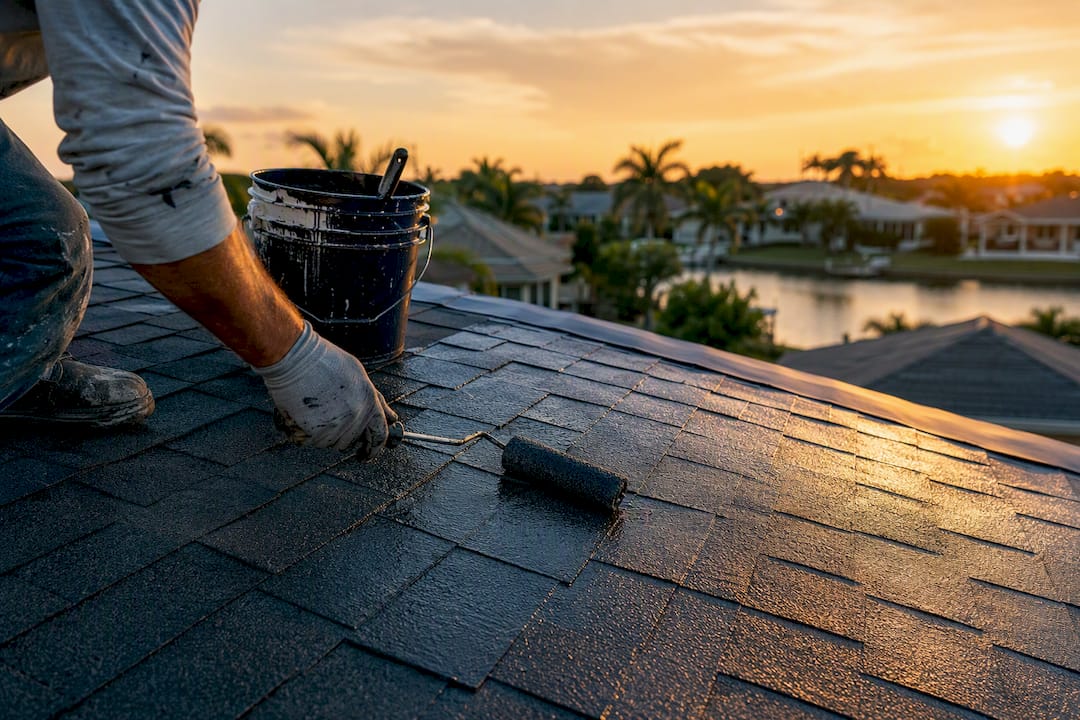
Cool-roof strategies can meaningfully reduce heat absorption and cooling demand, and reflective roofing systems have been shown to cut building energy use by up to 15% in hot climates. Shade helps too. Well-placed trees and landscaping reduce solar heat gain on a home enough to lower cooling loads noticeably.
Material-appropriate heat resilience options include:
- Reflective or granular coatings for aging asphalt shingles that still have structural life left.
- Light-colored or granule-enhanced shingle products for new installations.
- Reflective membrane coatings for low-slope or flat sections.
- Improved ridge and soffit ventilation paired with attic insulation upgrades.
Pro Tip: Sequence matters here too. Fix ventilation problems before you apply any coating. Trapped heat underneath a reflective surface can shorten the life of the treatment itself. For a deeper breakdown, see this energy efficiency guide for shingle roofs.
How Do You Storm-Proof a Roof Against Wind and Hail?
Wind resistance comes down to details most homeowners never see: fastener quality, sealed roof decks, reinforced edges, and hand-sealed flashing. Construction quality at these points is often as critical as the roofing material itself. Overdriven, underdriven, or crooked nails and poorly hand-sealed flashing are common culprits behind post-storm failures, even on roofs with well-rated materials, according to Fine Homebuilding's analysis of resilient roof construction.
What you can do as a homeowner:
- Walk the perimeter and check for lifted or loose shingles at edges and ridges, the most vulnerable zones for wind uplift.
- Photograph fastener patterns and flashing conditions if you can safely see them.
- Ask your roofing contractor whether hurricane straps or additional securing hardware fit your roof type.
- Remove or secure anything on the roof or nearby that could become debris in high wind.
Climate variability is also shifting storm intensity and precipitation patterns in many regions, which means roofs built to older assumptions may face loads they weren't originally designed for.
A roof's wind performance is decided as much by installation quality as by the shingle brand on the label. The nail pattern and the hand-sealing at every flashing joint often matter more than the material rating printed on the wrapper.
Temporary patches (tarps, sealant over a crack) buy you time, not a permanent solution. If a storm has already compromised your roof deck or underlayment, call a professional before the next rain event, not after.
Preventing Ponding Water and Drainage Failures
Standing water is one of the fastest ways to destroy a roof system, and drainage problems are usually fixable before they become structural ones. Gutters and downspouts need enough capacity for your roof's actual runoff, not just what came standard when the house was built. Scuppers and tapered insulation help direct water off flat or low-slope sections where gravity alone won't do the job.
Ponding areas show up as discoloration, soft spots, or visible pooling 48 hours after rain. Small ponding issues can sometimes be corrected with minor slope adjustments; persistent ponding usually needs a professional look at the underlying structure.
- Clean gutters and valleys on a regular schedule, not just once a year.
- Skim debris from flat roof sections after every significant storm.
- Check for granule buildup in downspouts, a sign shingles are shedding faster than normal.
- Flag any ponding that lasts more than two days after rainfall.
Ponding water accelerates membrane failure over time, which is why EPA guidance on stormwater management treats drainage as a resilience issue, not just a maintenance chore.
Are Green Roofs Worth It for Climate Resilience?
Green roofs work well for heat reduction and stormwater retention, less so as a primary storm-resistance strategy, and they demand real upkeep in exchange for their benefits. Extensive green roofs use shallow soil and hardy, low-maintenance plants; intensive systems support deeper soil, more plant variety, and sometimes foot traffic, but need irrigation, structural reinforcement, and more frequent care.
Vegetated roofs can run significantly cooler than conventional surfaces and help lower nearby air temperatures, while also slowing stormwater runoff during heavy rain.
- Best for heat reduction: strong. Vegetation and soil buffer heat absorption effectively.
- Best for storm resistance: limited. Structural load and drainage design matter more than the vegetation layer.
- Best for water management: strong. Retention capacity reduces peak runoff.
- Maintenance needs: ongoing irrigation, periodic plant replacement, and structural inspections.
Upfront installation costs and structural requirements make green roofs a bigger commitment than a coating or a preservation treatment, which is why they suit new construction or major retrofits more often than aging shingle roofs.
Should You Restore or Replace Your Shingle Roof?
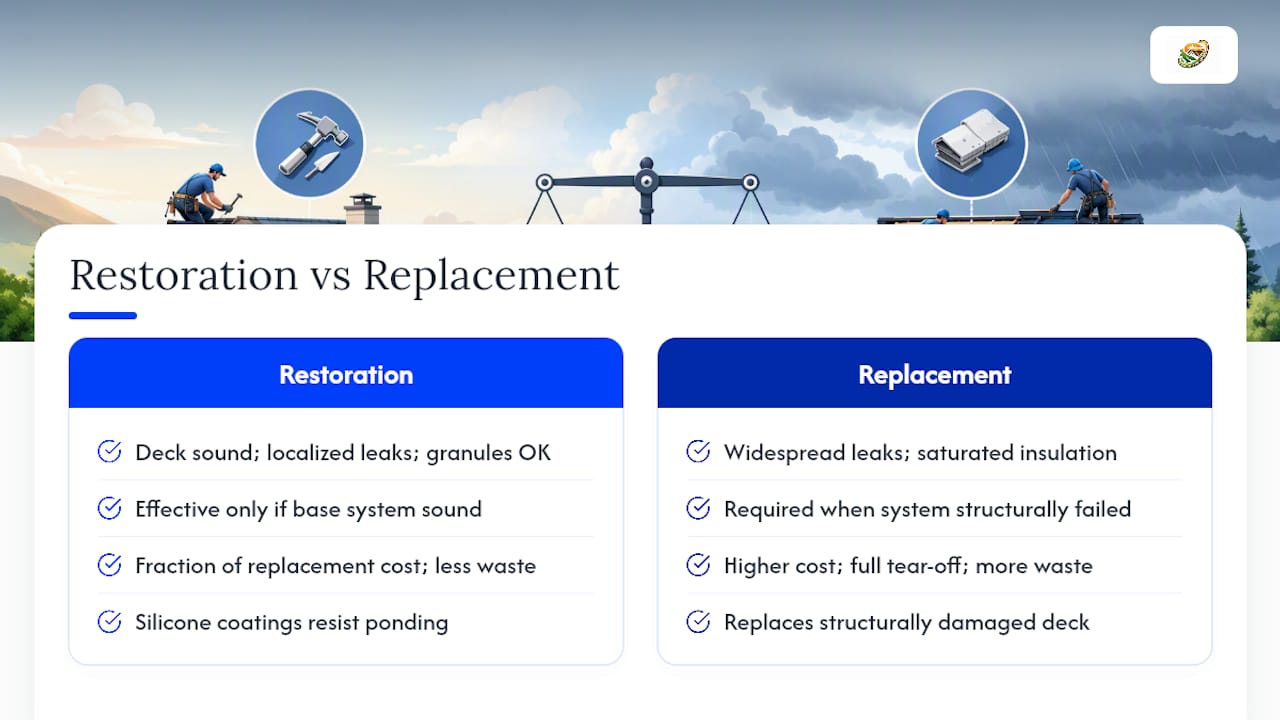
Restoration is the right call when the roof deck is sound, leaks are localized, and granule loss hasn't progressed too far. Replacement becomes necessary when leaks are widespread, insulation is saturated, or the deck itself has structural damage. Restoration is highly effective only when the underlying roof system is fundamentally sound; it isn't a fix for a roof that's already failed structurally.
Peer-reviewed analysis of restoration outcomes shows it can return an aging roof to near-watertight condition at a fraction of replacement cost, while cutting the waste that comes with a full tear-off. Coating systems used in restoration, including silicone-based options, can resist ponding water and provide long-term weather protection when the base system is solid.
Experts increasingly treat restoration as a strategic, sustainable choice for roofs that are aging but structurally sound, not a stopgap. It reduces landfill waste and delivers a strong return compared with tearing off a roof that still has usable life left.
Shingleroofrenewal's Green Soy Technology is one such preservation option, backed by a 6-year transferable warranty for qualifying roofs. Read more about when restoration makes more sense than replacement.
Pro Tip: Triage in this order: visual inspection, then a moisture scan if anything looks questionable, then decide between restoration and replacement. Skipping the moisture check is how homeowners end up paying for a coating over a problem it can't fix.
What Does It Cost to Improve Roof Resilience?
Costs vary widely depending on what your roof actually needs, but a reasonable planning sequence looks like this: inspection first (often free from preservation-focused providers), followed by a quote for the specific work, then scheduling, execution, and a follow-up check.
- Minor drainage and flashing fixes: typically the fastest and least expensive resilience upgrades.
- Reflective coatings or ventilation improvements: mid-range cost, often paid back through energy savings over time.
- Preservation or restoration treatments: a fraction of full replacement cost when the roof qualifies.
- Full replacement: the highest cost and longest timeline, generally $15,000 to $30,000 for many homes.
If a storm caused the damage, document everything: dated photos, invoices, and a written record of when the damage occurred, since insurers will ask for this before approving a claim. Major structural work or full recovers often require permits, so confirm requirements with your local building department before scheduling anything. Planning timeline: inspect, get quotes, prep the site, complete the work, then follow up in a year to confirm everything held.
How to Inspect Your Roof Safely Before Calling a Pro
Stay on the ground. Use binoculars to scan your roofline, and never climb onto a roof you're not trained to walk on safely, especially one with wind or storm damage.
Look for: missing or brittle shingles, curled edges, loose or lifted flashing, visible granule loss in gutters, ponding water, and soft or discolored spots on your attic ceiling.
- Photograph problem areas up close and from a wider angle for context.
- Note any signs of moisture staining inside the attic or ceiling below.
- Write down the dates of any prior roof work or storm events.
- Flag anything that changed noticeably after the last major storm.
Durability often comes down to installation quality: deck condition, underlayment, fasteners, and ventilation matter as much as the shingle material itself. That's exactly why a trained eye matters. If you see soft spots, active moisture, or anything you can't explain from the ground, skip the guesswork and request a professional moisture scan or core cut before deciding anything. A guide to the roof areas most likely to hide damage is worth keeping on hand.
Why Preservation-First Thinking Changes the Math
Most homeowners assume a failing-looking roof means replacement. In practice, a roof that's aging but structurally sound usually has more life left than it looks like from the ground. That's the whole premise behind calling a preservation specialist before a roofer: you get an honest read on whether the deck and structure are still sound before anyone talks about tearing anything off. Shingleroofrenewal's assessment process, backed by a 6-year transferable warranty, exists specifically for that moment, before the decision gets made for you by a bigger problem.
If Your Shingle Roof Still Has Life, Here's What to Do Next
Shingleroofrenewal is the preservation-first alternative to a rushed replacement quote. Where a standard roofing estimate jumps straight to tear-off pricing, our free assessment tells you honestly whether your existing shingles can be restored instead, often saving homeowners a substantial amount compared with full replacement.

The process is simple: we inspect your roof, evaluate its condition (including whether a moisture scan makes sense), and tell you plainly whether it qualifies for preservation. If it does, our certified Green Soy Technology restores shingle flexibility, locks in granules, and extends roof life, backed by a 6-year transferable warranty. If it doesn't qualify, we'll tell you that too. Homeowners in Delray Beach can check local preservation options and expected savings, and those near Plantation can see what a preservation assessment looks like in their area. Either way, schedule your free inspection before you schedule a replacement quote. You may be closer to a solution than you think, and it may cost far less than tearing the whole thing off. Learn more about the cost-effective preservation process and see if your roof qualifies.
Frequently Asked Questions
What are climate-resilient roofs? Climate-resilient roofs are systems designed or maintained to withstand heat, wind, and heavy rain without premature failure, using strategies like reflective coatings, reinforced fastening, proper drainage, and preservation treatments that extend material life.
What is the best roof type for extreme weather? No single material wins across every stressor. Reflective membranes and coated shingles handle heat well, while properly fastened and sealed systems, regardless of material, handle wind best. Installation quality often matters more than the material choice itself.
How often should I inspect my roof for climate resilience? At minimum, twice a year: once before heat season and once before storm season, with an additional check after any major storm event.
Can an old asphalt shingle roof be made climate resilient without full replacement? Often, yes, if the deck and structure are sound. Preservation treatments like reflective coatings and Green Soy Technology restoration can extend shingle life and improve resilience at a fraction of replacement cost.
When is roof replacement unavoidable? Replacement becomes necessary when leaks are widespread, insulation is saturated, or the roof deck has structural damage that restoration can't correct.
Sources
- Roof Restoration or Roof Replacement?
- Restoration vs. Replacement
- A more resilient roof (Fine Homebuilding)