
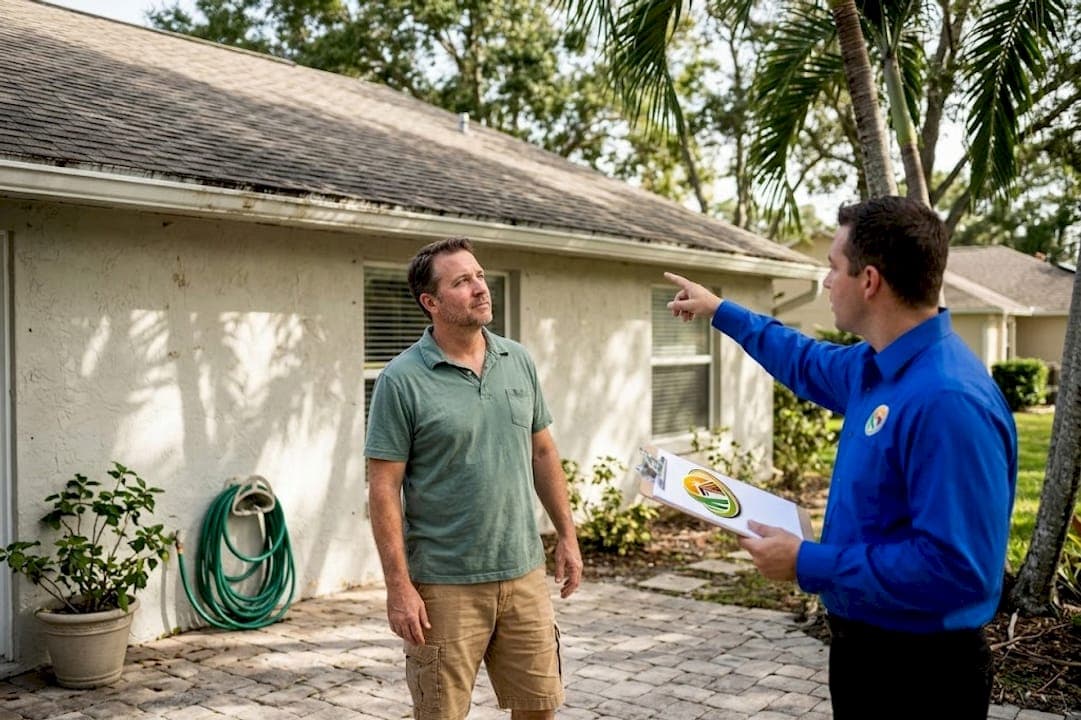
TL;DR:
- Molecular roof restoration is an innovative, non-chemical treatment that penetrates asphalt shingles, making them hydrophobic and restoring flexibility. It suits South Florida homes with 8-15-year-old roofs showing early wear, offering up to 80% savings compared to full replacement. This process extends roof lifespan by 10 to 15 years and is ideal as a preservation solution before major deterioration occurs.
Most South Florida homeowners facing an aging, worn-out asphalt shingle roof believe they have two choices: pay for a full replacement or keep patching and hoping. Both paths are expensive and stressful. But there is a third option growing in popularity across Broward and Palm Beach counties, and it is called molecular roof restoration. This molecular roof restoration overview will walk you through exactly what the treatment is, how it works on aging shingles, who qualifies, and how much money you can realistically save. Roofing experts describe it as the "third option" for homeowners with structurally sound roofs showing early signs of wear.
Table of Contents
- What is molecular roof restoration and how does it work?
- Is your asphalt shingle roof a good candidate for molecular restoration?
- Molecular restoration vs roof replacement: a cost and lifespan comparison
- The molecular roof restoration process: what to expect in South Florida
- Why molecular roof restoration makes sense for South Florida homeowners
- Why molecular roof restoration is the smarter roofing choice in South Florida
- Schedule your molecular roof restoration with certified South Florida experts
- Frequently asked questions
Key Takeaways
| Point | Details |
|---|---|
| Third roofing option | Molecular roof restoration offers a smart middle ground between doing nothing and costly replacement. |
| Best roof candidates | Ideal roofs are 8-15 years old with intact granules and no leaks or structural damage. |
| Significant cost savings | Restoration costs about 10-15% of replacement, saving homeowners thousands of dollars. |
| Process critical timing | Roof must be bone-dry before treatment for effective penetration and long-lasting protection. |
| South Florida benefits | This solution addresses local challenges like intense sun, storms, and moss growth effectively. |
What is molecular roof restoration and how does it work?
Molecular roof restoration is not a paint, coating, or sealant. It works at a level you cannot see with the naked eye. The treatment uses nanoparticle technology that physically penetrates the asphalt shingle, bonding with it from the inside rather than sitting on the surface.
Here is why that distinction matters. Surface coatings peel, crack, and trap moisture. They fight against South Florida's brutal heat cycles and lose. A molecular treatment, by contrast, becomes part of the shingle itself. GoNano uses nanoparticles to make shingles hydrophobic, meaning water beads up and rolls off rather than soaking in, which also cuts off the moisture source that moss and algae need to grow.
At Shingle Roof Renewal, we use Fresh Roof's GreenSoy Technology, which works on the same molecular principle. It penetrates deep into the shingle matrix, restoring lost flexibility and locking in the granules that UV exposure and rain are slowly pulling away. Think of it like rehydrating a dried-out material from the inside rather than spraying something on top that will flake off in six months.
What the treatment does:
- Penetrates the asphalt shingle at the molecular level, not just the surface
- Makes shingles hydrophobic so water, moss, and algae cannot get a foothold
- Locks in remaining granules, slowing the granule loss that signals a roof in decline
- Restores some of the shingle flexibility lost to years of UV exposure
- Produces no odor or dust during application, and the effects last 10 to 15 years under the right conditions
The hydrophobic effect is especially important in South Florida. Our wet season dumps moisture on your roof daily. Our dry season bakes it. That cycle is what breaks down shingles faster here than in most other parts of the country. A molecular treatment gives your shingles the water resistance they need to survive those swings.
Pro Tip: If you notice your shingles look dull, faded, or feel brittle when you tap them, that is a sign the oils and flexibility in the asphalt are depleted. That is exactly the stage where a molecular treatment delivers the most value. Learn more in our restore shingle flexibility guide.
Now that you understand what molecular roof restoration is, let's explore how to know if your roof qualifies for this solution.
Is your asphalt shingle roof a good candidate for molecular restoration?
Not every roof qualifies, and that honesty is important. A molecular treatment is not a rescue operation for a roof in critical condition. It is a preservation tool for a roof that still has structural integrity but is showing the early and mid-stage signs of wear common in South Florida homes.
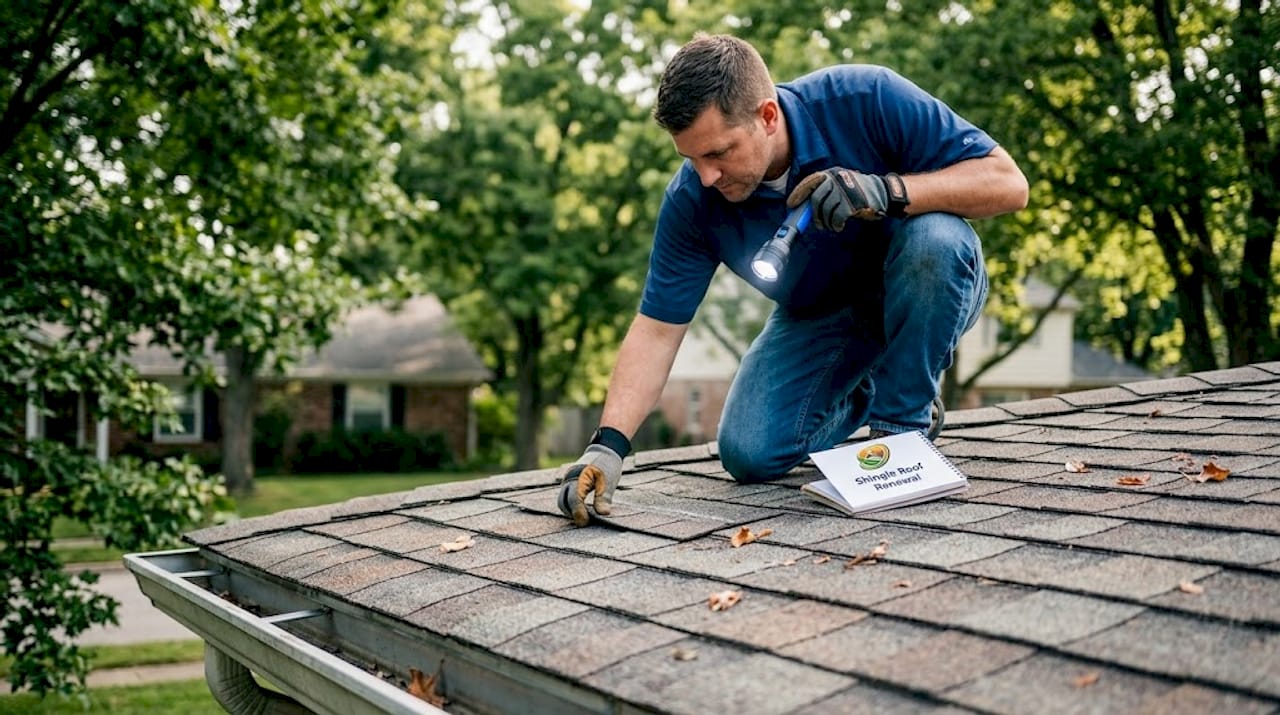
The best candidates are roofs between 8 and 15 years old with intact granules and no active leaks. Before recommending any treatment, a professional assessment checks flexibility, moss presence, curling, cracking, and the overall condition of the roofing system.
Signs your roof may be a good candidate:
- Age is between 8 and 15 years
- Granules are still present on the shingles (check your gutters for heavy granule buildup)
- No active leaks or water intrusion inside the home
- Shingles are not severely curled, cracked, or blistered
- The decking below feels solid, not spongy or soft when walked on
- Moss or algae growth is present but contained
Common disqualifiers:
- Shingles are "bald," meaning granules have washed away completely
- Active leaks or signs of interior water damage
- Structural rot in the decking
- Severe curling at shingle edges
- Roof is already past 20 years with significant deterioration
Pro Tip: Do not rely on a visual check from the ground alone. A proper inspection identifies issues that are invisible from the driveway, including soft spots in the decking and hidden granule loss. Use our roof inspection checklist to know what to look for before your assessment.
If your roof does not qualify today, understanding why it doesn't qualify gives you a clear action plan. You may need targeted roof repair steps for aging shingles first, then reassess.
With criteria clear, let's compare molecular restoration with full roof replacement and other options to understand benefits and trade-offs.
Molecular restoration vs roof replacement: a cost and lifespan comparison
The numbers here are what stop most homeowners in their tracks. A full roof replacement in South Florida typically runs between $15,000 and $30,000 depending on home size, pitch, and materials. Molecular restoration costs a fraction of that.
GoNano treatment costs between $0.80 and $1.80 per square foot versus full replacement at $7.50 to $10.00 per square foot, and the treatment extends roof life by 10 to 15 years. That math is hard to ignore. On a typical 2,000 square foot roof, you are looking at roughly $1,600 to $3,600 for molecular restoration compared to $15,000 to $20,000 for a new roof.
| Factor | Molecular restoration | Full replacement |
|---|---|---|
| Average cost | $1,600 to $3,600 | $15,000 to $30,000 |
| Lifespan extension | 10 to 15 years | 20 to 30 years (new roof) |
| Installation disruption | A few hours, no tear-off | Several days, major disruption |
| Best for | Roofs aged 8 to 15 years | Severely deteriorated roofs |
| Savings potential | Up to 80% vs. replacement | None (full cost) |
The treatment can buy 5 to 10 extra years before an expensive replacement becomes necessary. That window of time matters enormously when you are managing a household budget.
Key financial advantages of restoration:
- Delays a $20,000 or more expense by a decade or more
- No need to finance or take on debt for an emergency replacement
- Far less disruptive than a full tear-off with crews working for multiple days
- Compared to cleaning-only options, the molecular treatment actually locks in long-term protection and slows moss regrowth
Pro Tip: Timing your restoration correctly is the biggest financial lever here. Apply the treatment too late, and your roof no longer qualifies. Apply it at the right stage and you get the maximum return. Explore our full roof restoration vs replacement breakdown to see the numbers for your specific situation.
Understanding these benefits, it's important to know the practical steps involved in molecular roof restoration for South Florida homes.
The molecular roof restoration process: what to expect in South Florida
Knowing what happens on the day of treatment removes any uncertainty. The process is straightforward, but the preparation is what separates a successful application from a failed one.
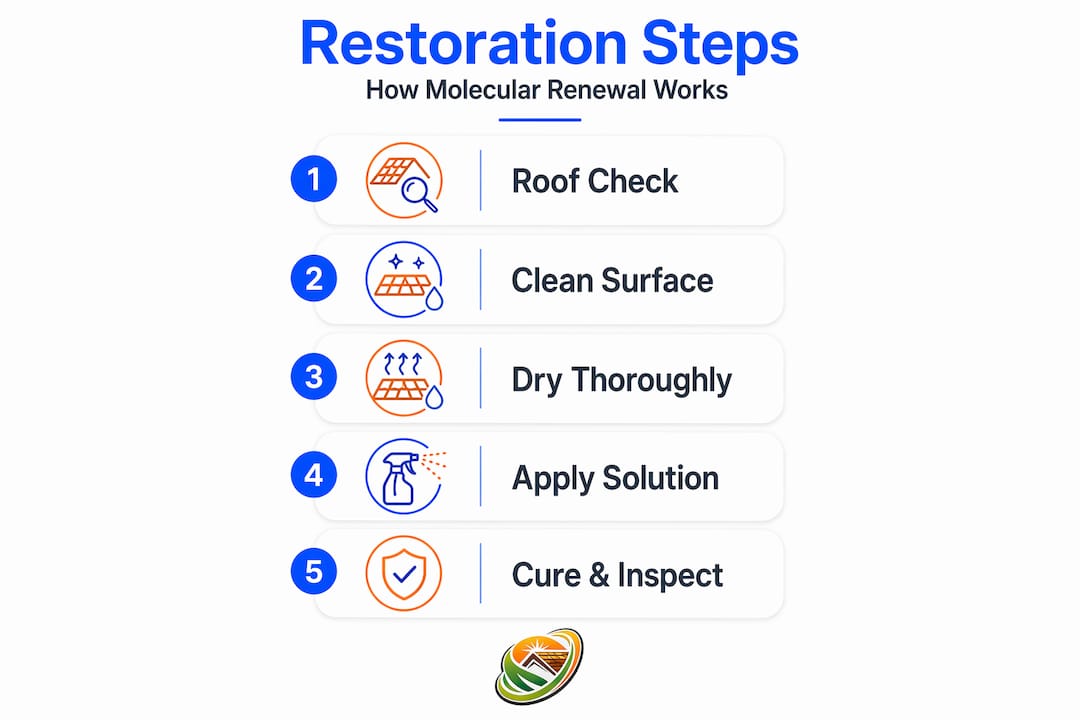
- Professional assessment. A certified applicator inspects your roof in person, checking shingle condition, granule presence, moisture levels, and structural integrity. This step determines whether your roof qualifies.
- Moss and debris removal. Any existing moss, algae, or loose debris is carefully removed using low-pressure methods that will not strip additional granules or damage the shingle surface.
- Drying period. This is the step that surprises most homeowners. The roof must be bone-dry before application, which is why we follow a strict protocol before any treatment. Moisture inside the shingle prevents the nanoparticles from penetrating properly.
- Dry day waiting period. In South Florida's climate, waiting 3 to 5 dry days post-rain is critical. Damp shingles cause the treatment to fail because the nanoparticles cannot displace water already sitting in the shingle pores.
- Application of molecular treatment. The GreenSoy Technology solution is applied evenly across all shingles. The process typically takes a few hours for a standard home.
- Gradual activation. The hydrophobic effect does not appear instantly. Over the following days, the nanoparticles settle into the shingle matrix, and the water-beading effect becomes visible.
Important for South Florida homeowners: Our rainy season runs from June through October. Scheduling your restoration during the drier months, typically November through April, gives you the best chance of meeting the dry-day requirement and getting the most out of your treatment.
Pro Tip: Before scheduling, check your local 10-day weather forecast. You want to be confident that at least 3 to 5 consecutive dry days exist before and on your treatment day. Use our roof inspection checklist to prep your roof before the crew arrives.
With the process clear, now see how molecular restoration fits with typical South Florida homeowner concerns and conditions.
Why molecular roof restoration makes sense for South Florida homeowners
South Florida's climate is one of the most demanding environments for asphalt shingles in the entire country. UV index levels here rival tropical destinations, and the combination of intense sun, heavy rain, and high humidity creates a relentless cycle that strips shingles of their oils and granules years ahead of their rated lifespan.
Molecular restoration helps stop granule loss, extends roof life by up to 15 years, and reduces moss growth by eliminating the moisture that moss needs to survive. Those three outcomes directly address the three biggest problems South Florida roofs face.
Why it fits our climate so well:
- Hydrophobic shingles shed rainwater faster, reducing the moisture that feeds moss and algae
- Preserved granules maintain the UV protection layer that keeps your home cooler
- Restored flexibility means shingles can expand and contract through heat cycles without cracking
- Financially, saving up to 80% versus replacement means you can extend your shingle roof life without a massive financial hit
- A well-maintained roof also protects you during insurance renewals, where insurers in Florida are increasingly scrutinizing roof age and condition
The core truth: In Florida, a neglected roof does not just age slowly. It deteriorates fast. A roof that qualifies for molecular restoration today may not qualify in two years. Early action is where the real savings live.
If you want more context on why restoration often beats replacement for South Florida homeowners, see our full breakdown of the top reasons to restore your roof.
Having seen its benefits, let's share our unique insights on why this restoration is a strategic choice for local homeowners.
Why molecular roof restoration is the smarter roofing choice in South Florida
Here is something the roofing industry rarely tells you: most full roof replacements happen too early. Not because the roof is truly beyond saving, but because homeowners either wait too long and miss the restoration window, or they call a company whose only product is replacement.
We see this pattern constantly in Broward and Palm Beach counties. A homeowner ignores minor granule loss for a couple of years. Then a storm season hits, and suddenly the options narrow fast. The right timing and professional selection are what separate a $2,000 restoration from a $20,000 emergency replacement.
Molecular restoration is not a magic fix. It cannot rescue a roof that has already passed its structural limit. Applying it to a bald or leaking roof is a waste of money, and any honest applicator will tell you that before taking your check. But applied to the right roof at the right time, it functions as a genuine bridge solution. It buys you a decade. It keeps your roof watertight, flexible, and granule-intact while you plan your finances and replacement on your own timeline rather than a contractor's emergency schedule.
The most common mistake we see is homeowners applying a "wait and see" approach after they notice early warning signs. Dull shingles, granules in the gutters, slight curling at the edges. These symptoms are not cosmetic. They are the start of a process that accelerates if ignored. Use our roof inspection checklist and get an honest assessment early. The cost of knowing is zero. The cost of waiting too long is very high.
Schedule your molecular roof restoration with certified South Florida experts
If any part of this overview sounded familiar, your roof may already be in the window where molecular restoration delivers its best results.
At Shingle Roof Renewal, we are certified applicators of Fresh Roof's GreenSoy Technology, and we specialize exclusively in South Florida asphalt shingle roofs across Broward and Palm Beach counties. We offer a free inspection to determine whether your roof qualifies, and we will give you an honest answer either way. No pressure, no hard sell. If your roof is not a good candidate, we will tell you that too. Our roof renewal services are backed by a 6-year transferable warranty, and qualifying homeowners save up to 80% compared to full replacement. If you are in the area, explore our Boca Raton roof restoration services as a starting point. Schedule your free inspection today and find out if your roof qualifies before that window closes.
Frequently asked questions
What roof age is ideal for molecular roof restoration?
Molecular restoration works best on asphalt shingle roofs between 8 and 15 years old with intact granules and no leaks. Roofs outside this range either have too little wear to benefit significantly or too much deterioration to qualify.
How much can molecular roof restoration save compared to full replacement?
It typically costs about 10 to 15% of a full replacement, with treatment running $0.80 to $1.80 per sq. ft. compared to $7.50 to $10.00 for a new roof, representing potential savings of up to 80%.
Why does the roof need to be completely dry before treatment?
Moisture trapped in the shingles blocks the nanoparticles from penetrating. A bone-dry roof is required before application, which is why we follow a strict dry-day protocol in South Florida's humid climate.
Can molecular restoration fix leaking roofs?
No. Molecular restoration does not seal gaps or repair structural damage. Active leaks must be repaired mechanically before any molecular treatment can be applied.
How long does a molecular roof restoration last?
Most applications perform for 10 to 15 years depending on the product tier used, the condition of the roof at the time of application, and the level of environmental exposure over time.